Manduka PRO vs Öko Living Herbal Yoga Mat: Which One Should You Buy?
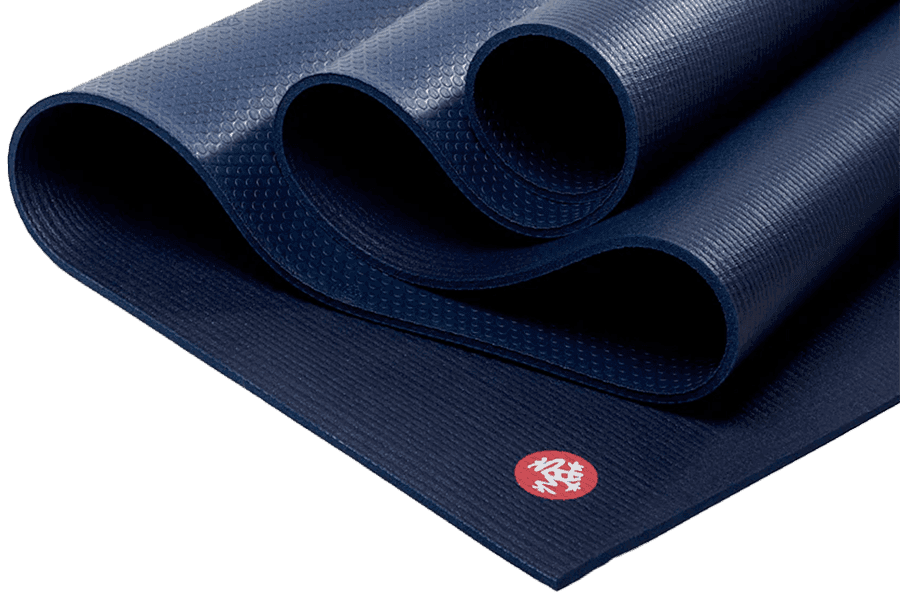
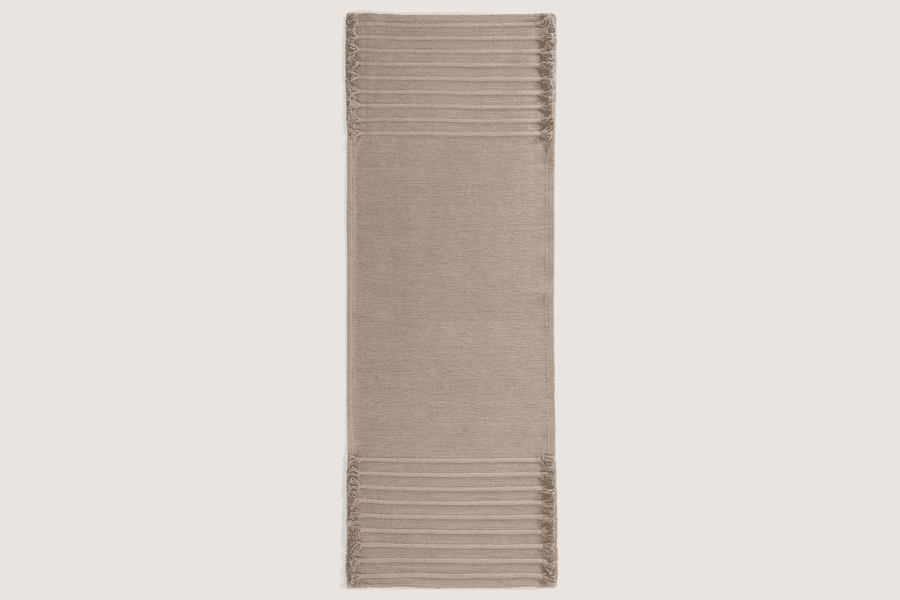
These two barely belong in the same category. The PRO is 7.5 pounds of compressed PVC built to outlast the person practicing on it. The Öko Living mat is a six-ply cotton rug, handwoven in India, dyed with medicinal plants, backed with tree rubber, and machine washable. It also costs more than the PRO.
As an Amazon Associate, we earn from qualifying purchases made through links on this page. How this works
The quick answer
The PRO is the safer purchase and the more versatile mat. It topped GearLab's 2026 test at 91 out of 100, it is firm and stable under every kind of pose, and it will still be usable in a decade. The Öko Living mat is a traditional cotton yoga rug brought up to date: GOTS certified organic cotton, twenty Ayurvedic plant dyes, no plastic anywhere in it, and a natural rubber coating on the underside so it does not slide. It lists at $202, and colorway listings on Öko's site have been running closer to $172.
Get the PRO unless you specifically want a cotton rug. Get the Öko Living mat if you practice Ashtanga or another sweaty style where a woven surface is the tradition, if you want something you can throw in the washing machine, or if avoiding plastic entirely is the whole point of the purchase.
Get the Manduka PRO if...
- You want firm, stable footing under standing and balance poses
- You want one mat that handles every style of class
- You'd rather wipe a mat down than launder it
- You want a lifetime guarantee and you'd rather keep $58
Get the Öko Living mat if...
- You want a cotton rug rather than a foam or PVC mat
- You want to machine wash the thing you sweat on
- You want no plastic, no PVC, and no off-gassing
- You'd rather carry 3.4 pounds than 7.5
Side by side
Price
The PRO lists for $58 less.
$144
List price · check price at Amazon
$202
List price · check price at okoliving.com
Thickness
The PRO is 20% thicker.
6 mm0.24″
5 mm0.2″
Weight
The Öko Living is 4.1 lbs lighter.
7.5 lbs3.4 kg
3.4 lbs1.54 kg
Size
The Öko Living is 3″ longer; the Öko Living is 1″ wider.
Same on both
- About 5 to 6 mm thick
- Lie flat without curling at the corners
- Wider and longer than a standard 68 by 24 inch mat
- Firm rather than squishy, with no foam to sink into
Full specs
Dimensions
Materials & build
Buying
- Short68" × 26"
- Long85" × 26"
- Long & Wide79" × 52"
- Squared78" × 78"
- 3 mm74" × 27"
- 7 mm74" × 27"
One is a mat, the other is a rug
The PRO is 7.5 pounds of PVC compressed in a German factory into something that behaves like a firm floor. The Öko Living mat is a handloomed cotton rug: six plies of GOTS certified organic cotton, dyed with about twenty Ayurvedic plants, with a coating of natural tree rubber on the underside so it stays put. It is made in India, weighs 3.4 pounds, and you can put it in the washing machine.
It also costs more. Öko lists the 5 mm mat at $202 against the PRO’s $144, though the individual colorway pages on Öko’s site have been running closer to $172. Cotton rugs have been part of yoga far longer than foam has, so this is less a budget question than a question about what surface you want under your hands.
Two ways to stop sliding
The PRO stops you sliding by being tacky, eventually. GearLab scored it 9 out of 10 for dry grip and 7 out of 10 wet, and a new one is slick for the first few weeks until regular use breaks it in. Manduka retired its salt-scrub advice a while back and now says the slickness resolves on its own, which matches owner reports.
The Öko mat stops you sliding by drinking the sweat. A woven cotton surface does not stick to a palm the way rubber does, but it soaks moisture away instead of letting a film build up between hand and mat, which is why cotton rugs became standard in Ashtanga rooms in the first place. If you want tack, the PRO broken in or a rubber mat like the Jade Harmony will suit you more.
You can wash one of these
The Öko mat goes in the machine. Öko ships it with soap nut detergent and expects you to launder it, and the cotton softens each time. If the idea of only ever surface-wiping something you sweat into bothers you, that is a real advantage and there is no equivalent on the PVC side.
The PRO takes a damp cloth and nothing more. Because nothing soaks into closed-cell PVC, deep cleaning never comes up, which is the other reasonable answer to the same problem. Both mats degrade in direct sunlight, so line-dry the Öko in the shade.
Cushion: firm in both cases, and thinner than you think
Neither of these is a soft mat. The PRO is 6 mm of dense PVC and GearLab gave it a perfect 10 for comfort and support, which is a score about stability rather than plushness. Nothing sinks, and knees land on something that holds them up.
The Öko mat is 5 mm of woven cotton, which cushions less than the same thickness of foam would. For kneeling on a hard floor most people will want a folded blanket under a knee on either mat. If joint pain is the thing you are shopping to fix, neither of these is the right answer and a thicker foam mat is.
Size: the rug is the bigger one
The Öko mat is 74″ × 27″, which is three inches longer and one inch wider than the PRO’s 71″ × 26″. Both are bigger than the standard 68″ × 24″ mat, and for anyone over about six foot the Öko’s extra length is welcome.
Öko also sells the same rug at 3 mm and 7 mm in the same footprint, so you can pick your thickness. Manduka’s answer to length is the PRO Long at 85″, which is a lot of mat and a lot of weight.
Materials, dyes and the no-plastic argument
The Öko mat contains no plastic at all: organic cotton certified to GOTS, plant dyes including turmeric, neem and holy basil, tree rubber on the base, and zero plastic packaging. There is no off-gassing because there is nothing to off-gas. Öko makes wellness claims about the herbal dyes that we would treat as marketing rather than medicine, but the material story underneath them is real and verifiable.
The PRO is PVC, which is the material environmental critics of yoga mats object to most. Manduka’s counterargument is longevity and certification: the mat is OEKO-TEX Standard 100 certified, made in a zero-waste German facility, and it lasts long enough that one PRO replaces several cheaper mats. Which argument you find more convincing is genuinely a matter of what you weigh.
Durability and what each warranty covers
Dense PVC barely wears. GearLab has testers still using the same PRO after two decades and scored it a perfect 10 for materials. Manduka’s lifetime guarantee amounts in the fine print to roughly ten years of regular use, one replacement, and proof of purchase from an authorized seller, with Amazon qualifying only when the mat is sold and shipped by Amazon itself.
The Öko mat ages the way a good rug ages: it thins, it fades, the colors soften. Cotton takes repeated washing better than most people expect, but there is no warranty to speak of, just a 15 day return window. If you want a mat you will never think about again, that is a point for the PRO.
Price and value
List prices are $144 for the PRO and $202 for the Öko, with Öko’s single-colorway pages recently running lower than the list. Check the current price on the PRO at Amazon; the Öko is sold direct from okoliving.com with no Amazon listing.
On pure performance per dollar, the PRO wins and it is not close. The Öko’s price reflects hand-loomed cotton, small-batch plant dyeing and fair production in India, none of which shows up in a spec table. Buy it because you want that object, not because you expect it to out-perform a PRO.
Bottom line
Buy the Manduka PRO unless you specifically want a cotton rug. It is firmer, more versatile across styles, cheaper, and it will outlast almost anything else you could put on the floor.
Buy the Öko Living mat if you practice a sweaty traditional style where a woven surface is the point, if being able to launder your mat matters, or if avoiding plastic entirely is the reason you are shopping. If you want a natural material with more tack than cotton, our PRO vs eKO comparison covers Manduka’s natural rubber option.
Manduka PRO
List price $144
Öko Living Herbal Yoga Mat 5mm
List price $202
Frequently Asked Questions
- Is a cotton rug actually grippy?
- It grips differently. A woven cotton surface does not stick to your palm the way rubber does, but it absorbs sweat instead of letting it pool, so your hands stay dry rather than sliding on a wet film. That is why cotton rugs have been standard in Ashtanga rooms for decades. Öko backs the mat with a natural tree rubber coating so the rug itself does not travel across the floor. If you want tack rather than absorption, the PRO broken in, or a rubber mat, will suit you better.
- Why does the Öko Living mat cost more than a Manduka PRO?
- Because of how it is made. Each mat is handloomed in India from GOTS certified organic cotton and dyed in small batches with about twenty Ayurvedic plants, including turmeric, neem and holy basil, using a process that takes days rather than minutes. The list price is $202, though individual colorway pages on okoliving.com have been running $172. The PRO is $144 and made on an industrial line in Germany. You are paying for craft and materials, not for performance.
- Can you really put it in the washing machine?
- Yes, and that is one of its best features. Öko ships the mat with soap nut detergent and expects you to launder it; the cotton softens with each wash. A PRO cannot be washed, only wiped, and nothing soaks into it anyway. If you practice hot yoga and hate the idea of sweat living in a mat you can only surface clean, the washable option is worth a lot.
- Which one lasts longer?
- The PRO, comfortably. Dense PVC barely wears; GearLab found testers still using PROs after 20 years, and Manduka's lifetime guarantee amounts to roughly ten years of regular use with one replacement, bought from an authorized seller. Öko's mat is cotton, so it thins and fades over the years the way a good rug does, and the return window is 15 days. Cotton also handles repeated washing better than most people expect, but it is not a decade-long product in the same sense.
- Is the Öko mat too thin for sore knees?
- It is 5mm of six-ply cotton, so it cushions less than 6mm of dense PVC and much less than a foam mat. For kneeling poses on a hard floor, most people will want to fold a blanket under a knee on either mat, but the PRO is the firmer, better-supported of the two. If your main problem is joint pain, neither of these is really the answer; a thicker foam mat is.
- Does the PRO smell when it arrives?
- Mildly, and it fades within a week or two of unrolling and airing. The Öko mat has no off-gassing at all, because there is no plastic in it, which is one of the reasons people choose it. Manduka also retired its old salt-scrub break-in advice; the PRO's initial slickness now just resolves with regular use.
Related comparisons
- Manduka PRO vs b, halfmoon B Mat Strong 6mm
- Manduka PRO vs Alo Warrior
- Manduka PRO vs Yoloha Unity Pro Cork
- Manduka PRO vs JadeYoga Harmony XW
- Manduka PRO vs Lululemon The (Big) Mat 5mm
- Manduka PRO vs Lululemon The Mat 5mm
- Manduka PRO vs Liforme Classic
- Manduka PRO vs JadeYoga Fusion 68"
- Öko Living Herbal Yoga Mat 5mm vs Liforme Classic