Manduka PRO vs B Mat Strong: Which One Should You Buy?
These two land on the same $144 price tag, the same 6 mm thickness, and the same 71 by 26 inch footprint, which almost never happens. What differs is the surface you put your hands on and how long the mat will be around. The PRO is dense PVC that starts slick and gets better for years; the B Mat Strong is rubber that grips from the first class and wears faster.
As an Amazon Associate, we earn from qualifying purchases made through links on this page. How this works
The quick answer
The PRO is the more durable mat by a wide margin. It is 7.5 pounds of closed-cell PVC with a lifetime guarantee behind it, and GearLab ranked it first of the 19 mats in its 2026 test, with one tester still on the same PRO after 20 years. The catch is the first month or two, when a new PRO is genuinely slippery, plus the fact that it gets slicker as you sweat.
The B Mat Strong solves that problem on day one. Its rubber surface grips immediately, holds when your palms are wet, and it carries 2.5 pounds lighter. It also collects hair and dirt, smells strongly for the first couple of days, and comes with a one-year warranty against a mat b, halfmoon says is designed to last two or more years. If you sweat hard or hate waiting for a mat to break in, buy the B Mat Strong. If you want one mat for the next decade, buy the PRO.
Get the Manduka PRO if...
- You want a mat that outlasts everything else in the studio
- You practice dry or mildly sweaty styles where break-in grip is enough
- You want the firmest floor feel available at 6 mm
- You want a lifetime guarantee rather than a one-year warranty
Get the B Mat Strong if...
- You want full grip from the first class with no break-in period
- You sweat a lot and slide on closed-cell mats
- You carry your mat and would rather haul 5 pounds than 7.5
- You want rubber rather than PVC, made in Spain and OEKO-TEX certified
Side by side
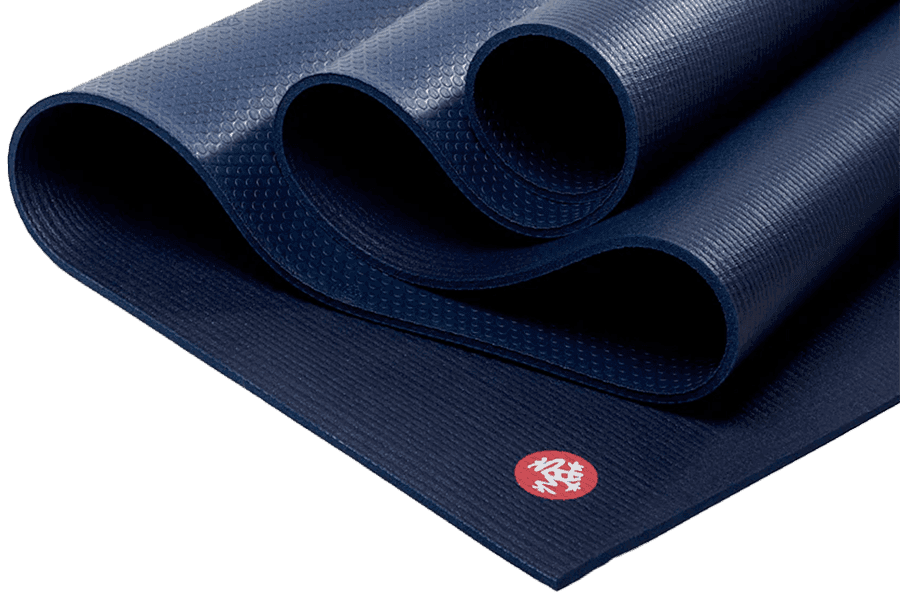
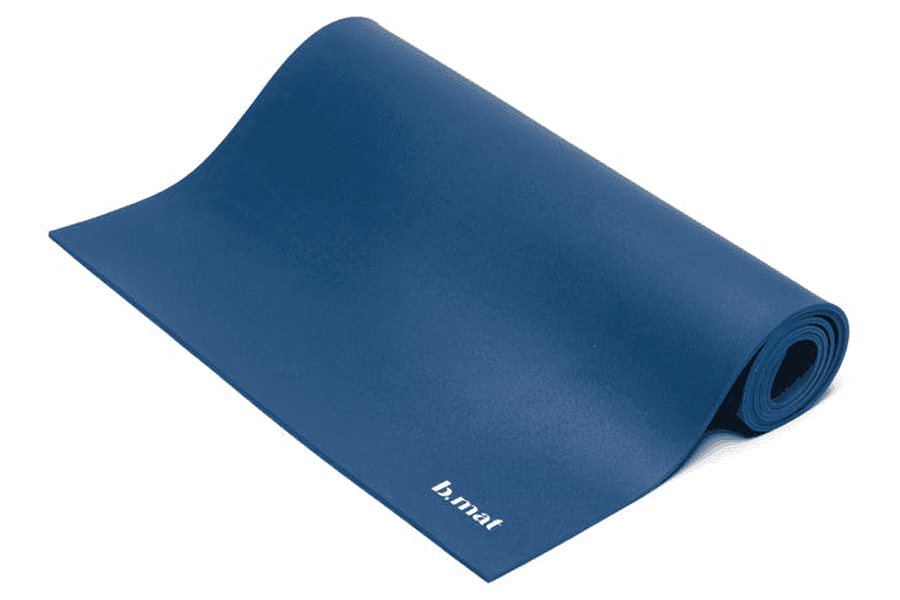
Price
Same list price.
$144
List price · check price at Amazon
$144
List price · check price at bhalfmoon.com
Thickness
Identical thickness.
6 mm0.24″
6 mm0.23″
Weight
The B Mat Strong is 3 lbs lighter.
8 lbs3.6 kg
5 lbs2.27 kg
Size
Same length; same width.
Same on both
- 6 mm thick
- 71″ × 26″, wider than a standard mat
- $144 list price
- OEKO-TEX Standard 100 certified
- Sweat sits on the surface instead of soaking in
Full specs
Dimensions
Materials & build
Buying
Same $144, same 6 mm, same 71 by 26
Comparisons usually start with a price gap or a size gap. This one has neither. Both mats list at $144, both are 6 mm thick, and both measure 71″ × 26″, which is 3 inches longer and 2 inches wider than the 68 by 24 cut most brands still treat as standard. Even the certifications match: both carry OEKO-TEX Standard 100.
What differs is the surface and the timescale. The PRO is dense PVC that starts slippery and improves for years. The B Mat Strong is rubber that grips the moment you unroll it and wears out much sooner. Everything below follows from those two facts.
Grip: one mat is ready on day one
A new PRO is slick. Not subtly, either: hands creep forward in down dog for the first few weeks, and Manduka has published advice on the problem for years. The company has since retired its old salt-scrub instructions and now says the slickness resolves with regular use, which matches what owners report. Once broken in, the fabric-like surface holds well and keeps getting better, and GearLab scored the PRO 8 out of 10 for grip in its 2026 test.
The B Mat needs none of that. GearLab tested the 4 mm B Mat Everyday, which uses the identical rubber surface, and found it required no break-in and ranked among the grippiest mats it had tried, dry or wet, scoring 9 out of 10. The trade shows up in transitions. GearLab’s testers found the surface grabbed hands and feet hard enough that they started stepping between poses instead of sliding, and flagged it as a poor match for styles built on gliding transitions. If you drag a foot across it, you feel it.
Sweat is where they separate
Neither mat absorbs anything. The PRO is closed-cell by design, so nothing soaks in and nothing grows inside it. The B Mat is non-absorbent too: sweat that does not evaporate sits on the surface in a film or a puddle.
What happens then is the difference. On the PRO, a wet surface means less grip, which GearLab lists as the mat’s main drawback, and Manduka sells a towel cut to the PRO’s dimensions for exactly this reason. On the B Mat, the rubber keeps holding even with moisture on it; GearLab named the B Mat its favorite for hot yoga when it reviewed the mat, describing traction that survived a puddle. You still wipe the surface between rounds, but you are not fighting it.
If your classes are heated, that single difference should decide this. If you practice in a cool room, it barely comes up.
Cushion: dense floor against springy rubber
Same 6 mm, different feel. The PRO’s PVC is compressed hard enough that the mat weighs 7.5 pounds, and it feels almost like a firm floor: no sink, no sway, nothing moving under a standing leg. GearLab gave it a perfect 10 for comfort and support and ranked it first of the 19 mats in the test.
The B Mat Strong is springier. The rubber compresses a little and rebounds, which testers liked for elbows and knees, and at 6 mm it is the most cushioned mat b, halfmoon makes in this line. For kneeling work and floor sequences that give is welcome. For single-leg balance the PRO is the steadier platform.
If 6 mm is more than you want under you, b, halfmoon sells the same surface at 4 mm. We compare those two in B Mat Strong vs B Mat Everyday.
Weight: 7.5 pounds against 5
The PRO is heavy and everyone knows it. GearLab lists heft as one of its two cons, and plenty of owners end up leaving theirs in one room permanently. Two and a half pounds does not sound like much until it is on your shoulder for a walk to the studio several times a week.
At 5 pounds the B Mat Strong is not light either, but it is a mat you can carry without planning around it. If you want a Manduka you can actually travel with, the PROlite is the version to look at instead of the PRO.
Durability: a decade against a couple of years
This is where the PRO earns its reputation. Dense PVC barely wears; GearLab has one tester who has been on the same PRO for 20 years and reports it still looks and feels new. Manduka’s lifetime guarantee sits behind that, with fine print that works out to roughly ten years of regular use, one replacement, and proof of purchase from an authorized seller.
b, halfmoon is straightforward about the other side of it. The company says a b, mat is designed to support your practice for two or more years when stored properly, and the one-year warranty excludes sun damage, stains, and normal wear, including the marks that develop where your hands and feet land. GearLab reached the same conclusion from owner reports of the top layer peeling in those spots, and rated the mat 6 out of 10 on materials. The B Mat is a consumable in a way the PRO is not.
Care: the B Mat asks more of you
The PRO’s care routine is a wipe-down. Closed-cell PVC does not hold moisture, so nothing soaks in and nothing needs a deep clean.
The B Mat’s grip works against it here. GearLab found it collects dirt, hair and lint constantly and recommends storing it in a bag rather than a car trunk, and noted water staining on lighter colors after the test period. b, halfmoon asks you to wipe it with plain water and a neutral soap, air dry it flat, roll it with the logo facing out to prevent creasing and peeling, and keep it out of the sun. Skip that and the warranty goes with it. Buy a dark color if you care how it looks in a year.
Materials: PVC against rubber
The PRO is PVC made in Germany, OEKO-TEX certified for harmful substances, and latex-free, which makes it one of the standard picks when a latex allergy rules out rubber. What it is not is biodegradable, and that is the honest trade for a mat built to last a decade.
The B Mat is rubber made in Spain, also OEKO-TEX Standard 100 certified and PVC-free. b, halfmoon describes it as mostly natural rubber with a small share of synthetic added for durability, and says the material is biodegradable enough that it recommends donating an old mat rather than binning it. Anyone with a latex allergy should stay away; GearLab flags natural rubber mats for exactly that reason.
If rubber appeals but the price does not, the Jade Harmony is the other well-known day-one-grip mat and costs about $44 less.
Price and where to buy
Both list at $144. The PRO turns up on Amazon regularly and its price moves with sales, so check before you buy; note that Manduka’s guarantee only recognizes Amazon purchases sold and shipped by Amazon itself. The B Mat is sold direct from b, halfmoon, and the third-party listings you will find are unreliable, partly because the brand used to trade as B Yoga and rebranded.
Over ten years the PRO is the cheaper mat by a distance, since the B Mat is a two-to-three-year purchase at the same sticker price. That only matters if you practice enough to wear one out. If you are on the mat twice a week in a cool room, both will serve you for a long time and you should pick on feel.
Bottom line
Buy the B Mat Strong if you sweat. It grips from the first class, holds when the surface is wet, weighs 2.5 pounds less, and gives you springier cushion for knees. Accept that it collects hair, smells like a tire for two days, and will need replacing years before a PRO would.
Buy the Manduka PRO if you want one mat and want to stop thinking about mats. It is firmer, far more durable, and backed by a guarantee that means something, as long as you are willing to spend a month breaking it in and keep a towel handy for hot classes. If you want the PRO’s build in a bigger footprint, the PRO Long is the same mat at 85 inches.
Manduka PRO
List price $144
B Mat Strong 6mm
List price $144
Frequently Asked Questions
- Does the B Mat Strong need breaking in like the Manduka PRO?
- No, and that is its main advantage. GearLab tested the 4 mm B Mat Everyday, which uses the same rubber surface, and found it needed no break-in period and was one of the grippiest mats in its lineup dry or wet. A new Manduka PRO is the opposite: it is famously slick out of the wrapper and takes a few weeks of regular practice before the surface comes into its own. Manduka has dropped its old salt-scrub advice and now says the slickness resolves with use.
- Which one is better for hot yoga?
- The B Mat Strong, though neither mat drinks sweat. Both surfaces are non-absorbent, so moisture ends up sitting on top. The difference is what happens next: the B Mat rubber keeps holding when it is wet, and GearLab named the B Mat Everyday its favorite for hot yoga back when it reviewed it in 2023. The PRO gets slippery when you are genuinely dripping, which GearLab lists as its main drawback, and Manduka sells a towel sized to cover it for exactly that reason.
- Which mat lasts longer?
- The PRO, and it is not close. Manduka backs it with a lifetime guarantee that works out to roughly ten years of regular use in the fine print, with one replacement and proof of purchase from an authorized seller. b, halfmoon says a b, mat is designed to support your practice for two or more years when stored properly, and its one-year warranty specifically excludes normal wear such as the marks that appear where your hands and feet land. GearLab also noted user reports of the top layer peeling in those spots over time.
- Does the B Mat smell when you unroll it?
- Yes, strongly. GearLab described a terrible rubber tire smell out of the packaging and found it gone after two days of airing out somewhere shaded. That is normal for natural rubber and it does fade. The PRO has a milder plastic smell that also passes, and b, halfmoon asks you to leave the mat in its wrapper until you are ready to use it so the rubber does not oxidize early.
- Is the B Mat safe if you have a latex allergy?
- Treat it as unsafe. b, halfmoon builds the b, mat from rubber that is mostly natural with a small share of synthetic added for durability, and GearLab specifically advises against natural rubber mats for anyone with a latex allergy. The Manduka PRO is PVC and latex-free, which is why it and mats like it are the standard recommendation when latex is a problem.
- Why is the B Mat Strong lighter if both mats are 6 mm?
- Density. Manduka compresses the PRO into a dense closed-cell slab that comes out at 7.5 pounds, and that mass is what makes it feel like a firm floor and survive a decade. The B Mat Strong is 5 pounds of springier rubber, so it cushions with more give and is much easier to carry. You feel the difference most in balance poses, where the PRO stays flatter underfoot.
- Where do you actually buy a B Mat?
- Directly from b, halfmoon. The brand used to sell as B Yoga and rebranded, so older reviews and third-party listings can be confusing or out of date, and the Amazon listings for these mats are unreliable. Buying from bhalfmoon.com is also what keeps the one-year warranty valid, since coverage depends on the mat being cared for according to their instructions.
Related comparisons
- b, halfmoon B Mat Strong 6mm vs Manduka PRO Terra 6mm
- Manduka PRO vs Alo Warrior
- Manduka PRO vs Yoloha Unity Pro Cork
- Manduka PROlite Long & Wide vs b, halfmoon B Mat Strong 6mm
- Manduka GRP Adapt 2.0 Long vs b, halfmoon B Mat Strong 6mm
- Manduka PRO vs JadeYoga Harmony XW
- Yoloha Unity Pro Cork vs b, halfmoon B Mat Strong 6mm
- JadeYoga Harmony XW vs b, halfmoon B Mat Strong 6mm
- Manduka GRP Adapt 2.0 vs b, halfmoon B Mat Strong 6mm