Manduka PRO vs Yoloha Unity Pro: Which One Should You Buy?
This is the classic against the newcomer: Manduka's German-made PVC slab against the cork mat that keeps coming up in eco and hot yoga threads. They cost within $15 of each other, weigh about the same, and disagree completely about how a mat should grip. One is at its best bone dry. The other asks for a little moisture before it does its best work.
As an Amazon Associate, we earn from qualifying purchases made through links on this page. How this works
The quick answer
The PRO took first place in OutdoorGearLab's 19-mat test at 91 of 100, on density, stability, and a build that runs a decade behind a lifetime guarantee; its weaknesses are a slick break-in period and a closed surface that leaves sweat sitting on top. The Yoloha finished 10th at 66 of 100 with no award. Testers called it moderately grippy wet or dry and recommend spritzing water where your hands land to build traction, which is Yoloha's own advice as well. Water doesn't absorb into cork, so a towel still comes out when sweat pools, and the listed drawbacks are that it's expensive, heavy, bulky, and slick when wet.
Where the Yoloha does win is firmness and materials: GearLab called it extra-firm and among the most stable mats it tested, and it's 83% USDA-certified renewable with no PVC. Get the PRO unless one of those is your reason to buy. Get the Yoloha if you want cork, renewable materials, a mat you can take outside, or a size up to 84 by 30 inches.
Get the PRO if...
- Your palms stay mostly dry in practice
- You want the mat that lasts a decade or more
- You want a real warranty behind the price
- A latex allergy rules out natural rubber
Get the Yoloha if...
- You want cork and renewable materials rather than PVC
- You practice outdoors or on uneven ground
- You want an extra-firm, grounded platform underfoot
- You want the 80″ or extra-wide 84″ × 30″ sizes
Side by side
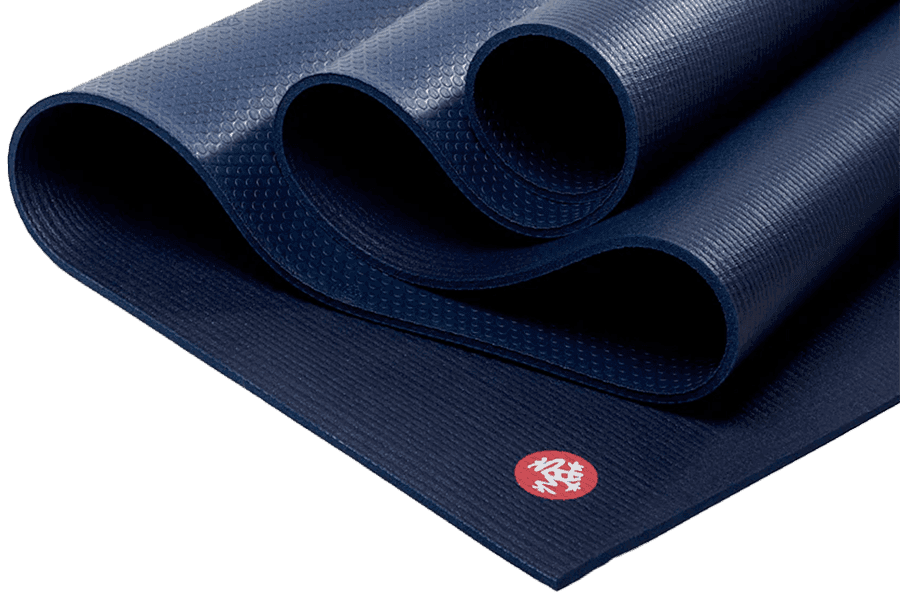
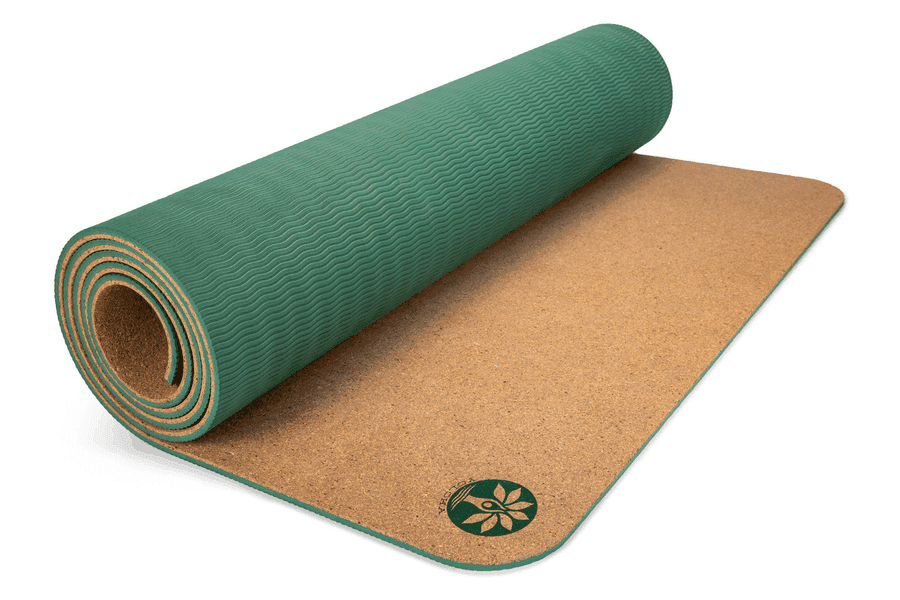
Price
The PRO lists for $15 less.
$144
List price · check price at Amazon
$159
List price · check price at yolohayoga.com
Thickness
Identical thickness.
6 mm0.24″
6 mm0.24″
Weight
The Unity Pro is 0.5 lbs lighter.
7.5 lbs3.4 kg
7 lbs3.2 kg
Size
The Unity Pro is 1″ longer; same width.
Same on both
- About 6 mm thick and around 7 pounds
- Firm, stable support underfoot
- Bigger than standard footprints
- Sweat sits on the surface of both
- A grip routine to live with (break-in on one, a spritz of water on the other)
Full specs
Dimensions
Materials & build
Buying
Two very different materials at nearly the same price
On the spec sheet these two look like siblings: both about 6 mm thick, both around 7 pounds, both bigger than standard, priced $144 and $159. They part company on material and on what each one asks of you. The PRO is closed-cell PVC that grips best with dry hands, once it’s broken in, and lets sweat pool on top. The Yoloha is a cork-and-rubber surface over plant foam that testers found moderately grippy either way, and better with a little water sprinkled on it first.
Neither is the mat to buy for a dripping hot class, which is worth establishing early because the marketing on one of them suggests otherwise. What follows is where each one is actually the better buy.
Grip: neither one is the sweat specialist
Cork grip does strengthen with moisture, and Yoloha’s own grip tip is to sprinkle water where your hands and feet go before practice. Independent testing puts that in perspective: GearLab rated the Unity Pro moderately grippy wet or dry, scored its grip 7 of 10, and listed slickness when wet among its drawbacks, because water sits on cork instead of soaking in. Yoloha markets the mat as an unmatched non-slip surface in wet or dry conditions with no towel needed. Testers found something more ordinary, and kept a towel handy once sweat began to pool.
The PRO’s grip account is the mirror image. New, it’s famously slick; Manduka has retired its old salt-scrub advice and now says the slickness resolves with a few weeks of use. Broken in, it grips well with dry hands, and then sweat undoes it: the closed surface leaves moisture pooling where wet palms slide, and heated classes mean a towel.
So the grip question isn’t dry mat against wet mat. It’s a mat that grips well once broken in against a mat that grips adequately and would like a spray bottle nearby. If heated classes are your normal practice, GearLab’s pick for that was neither of these; it was the Manduka GRP Adapt 2.0, whose absorbent top is built for sweat.
Feel and cushion: smooth slab vs grainy cork
The PRO practices like a firm floor: 6 mm of dense PVC that your hand sinks into a millimeter and stops, stable under balance work and kind to joints through sheer support. Its fabric-like top is smooth under skin. GearLab put it first of 19 mats largely on this planted, permanent feel.
The Yoloha’s 6 mm reads differently, and firmer than the number suggests. GearLab called the Unity Pro extra-firm and among the most stable mats it tested, putting it squarely on the some-like-it-firm side of the spectrum, with the kind of grounded feel that suits standing work and outdoor practice. The surface itself is grainy cork rather than smooth, which is the part people react to in both directions. If you can put a hand on one before buying, do; it’s not a texture the product photos convey.
Durability: a decade mat vs a returns window
The PRO’s case here is the strongest in the category: dense PVC that barely wears, decade-old mats in regular service, and a lifetime guarantee defined in the fine print as roughly 10 years of regular use with one replacement, valid through authorized sellers (on Amazon, sold and shipped by Amazon itself).
The Yoloha held together through GearLab’s test period and cork is easy to keep clean, but the paperwork is thin: 30 day returns rather than any warranty, and the 84 inch size isn’t eligible for free return shipping. Natural-material rules apply either way: no hot cars, no direct sun. If you plan to own one mat for ten years, only one of these two is making that promise.
Materials: the eco story runs one direction
If environmental credentials drive the decision, the Yoloha wins it. Yoloha builds the mat from 83% USDA-certified renewable materials, cork and natural rubber over a plant-based foam, and calls it a fully vegan product with no PVC or plasticizers anywhere in it. The PRO is exactly what the Yoloha defines itself against: PVC, though responsibly made German PVC with an OEKO-TEX Standard 100 certification, and its decade lifespan is its own quiet environmental argument.
Allergy note, running the other way: the Yoloha blends natural rubber into its cork top, so the usual trace-latex caution applies. The PRO contains no natural rubber and is the safe pick for a latex allergy.
Sizes and looks
Both lines serve big bodies well. The PRO family runs from the standard 71″ × 26″ through the 85″ Long, Long & Wide, and PRO Squared, in black plus 13 more colorways at last count. The Yoloha Unity Pro comes in 72″ × 26″, an 80″ Long, and an 84″ × 30″ XL, in natural cork or printed art designs at $189; note the XL is excluded from Yoloha’s free return shipping.
Price and where to buy
List prices are $144 and $159, close enough that price shouldn’t decide this. Check the current price of the PRO at Amazon; the Yoloha sells direct through yolohayoga.com and isn’t on Amazon. Remember the warranty asymmetry when comparing totals: the PRO’s price includes a decade of coverage, the Yoloha’s includes thirty days.
Bottom line
Get the PRO unless you have a specific reason not to. It scored 91 of 100 to the Yoloha’s 66, it outlasts almost anything on the market, it carries real coverage, and a latex allergy settles it outright. Get the Yoloha for what it genuinely is: renewable cork instead of PVC, an extra-firm grounded platform, a mat you can take outside, and sizes up to 84″ × 30″.
If sweat is the problem you’re actually solving, neither of these is the tool. The polyurethane-topped mats grip damp or dry without a spray bottle. Our Liforme vs Yoloha and PRO vs Liforme pages cover that option from both directions.
Manduka PRO
List price $144
Yoloha Unity Pro Cork
List price $159
Frequently Asked Questions
- Which is better for hot yoga, the Manduka PRO or the Yoloha?
- Neither, and it's worth saying plainly. Cork does grip better with moisture on it, and Yoloha's own product page suggests sprinkling water where your hands and feet go before practice, but water doesn't soak into the surface, so GearLab's testers kept a towel handy once sweat started to pool. The PRO is closed-cell PVC, so sweat pools on that too and wet palms slide. GearLab's hot yoga award went to a third mat entirely, the Manduka GRP Adapt 2.0, whose absorbent top is built for the job.
- Is the Yoloha slippery when it's dry?
- It's moderate rather than bad. GearLab described the Unity Pro as moderately grippy wet or dry and recommended spritzing water where your hands land at the start of practice to build traction, which matches the grip tip on Yoloha's own product page. That's a routine rather than a defect, but it's a routine a broken-in PRO doesn't ask for. Yoloha markets the mat as an unmatched non-slip surface in wet or dry conditions with no towel needed; independent testing is more measured than the marketing.
- Which lasts longer, and what about warranties?
- The PRO, comfortably. Its dense PVC barely wears, decade-old PROs are common, one GearLab tester has been on the same mat for 20 years, and Manduka's lifetime guarantee (about 10 years of regular use in the fine print, one replacement, authorized sellers only) stands behind it. The Yoloha came through GearLab's testing intact and cork is easy to keep clean, but Yoloha offers 30 day returns rather than a warranty, and the 84 inch size isn't eligible for free return shipping. Keep the cork out of hot cars and direct sun.
- What does the cork surface actually feel like?
- Grainy and firm rather than smooth, which is the appeal for the people who buy it. GearLab called the Unity Pro extra-firm and among the most stable mats it tested, the kind of grounded platform some practitioners want and others find unforgiving. The PRO's fabric-like finish is smooth by comparison, at the cost of being slick until it's broken in. Cork is the one surface people react to strongly in both directions, so feel one before spending $159 if you can.
- Which is safer for a latex allergy?
- The PRO. It's PVC with no natural rubber anywhere in it, plus an OEKO-TEX Standard 100 certification. The Yoloha blends natural rubber into its cork top, and natural rubber can carry trace latex proteins, so it's the riskier pick for a genuine latex allergy.
- What sizes does each come in?
- Both go big. The PRO line includes the standard 71″ × 26″, an 85″ Long, a Long & Wide, and the enormous PRO Squared. The Yoloha Unity Pro comes in 72″ × 26″, an 80″ Long, and an 84″ × 30″ XL, though the XL is excluded from Yoloha's free return shipping. The natural cork version lists at $159; Yoloha's printed art designs run $189.
Related comparisons
- Manduka PRO vs b, halfmoon B Mat Strong 6mm
- Manduka PRO vs Alo Warrior
- Manduka PRO Long vs Yoloha Unity Pro Cork
- Manduka PRO vs JadeYoga Harmony XW
- JadeYoga Harmony XW vs Yoloha Unity Pro Cork
- Alo Warrior vs Yoloha Unity Pro Cork
- Yoloha Unity Pro Cork vs b, halfmoon B Mat Strong 6mm
- Manduka PROlite Long & Wide vs Yoloha Unity Pro Cork
- Manduka PRO vs Lululemon The (Big) Mat 5mm