Manduka PRO vs PRO Long: Which One Should You Buy?
The PRO Long is not a different mat. It's the standard Manduka PRO cut 14 inches longer, with identical thickness, width, surface, and warranty, so there's no quality tradeoff in either direction. What you're actually deciding is whether your body needs an 85 inch mat, and whether that's worth an extra $20, an extra 2 pounds, and a much smaller color selection.
As an Amazon Associate, we earn from qualifying purchases made through links on this page. How this works
The quick answer
These are the same mat in two lengths, so nobody gets a better or worse product here. The standard PRO is 71 inches long, which covers most bodies comfortably. The PRO Long stretches that to 85 inches for $20 more, weighs 9.5 pounds instead of 7.5, and comes in about a third as many colors.
This one comes down to height. If you're under six feet, get the standard PRO and keep the $20. If you're six feet or taller, get the Long. It's the version you can actually lie down on without your head or heels landing on the floor.
Get the PRO if...
- You're under six feet tall
- You carry your mat to class and 7.5 lbs is already plenty
- You want the full color lineup, around 14 choices to the Long's 5
- You'd rather keep the $20
Get the PRO Long if...
- You're six feet or taller
- You want your whole body on the mat in reclining poses
- Your practice has long lunges or big steps that walk off a 71" mat
- The mat mostly stays at home, so the extra 2 lbs never gets carried
Side by side
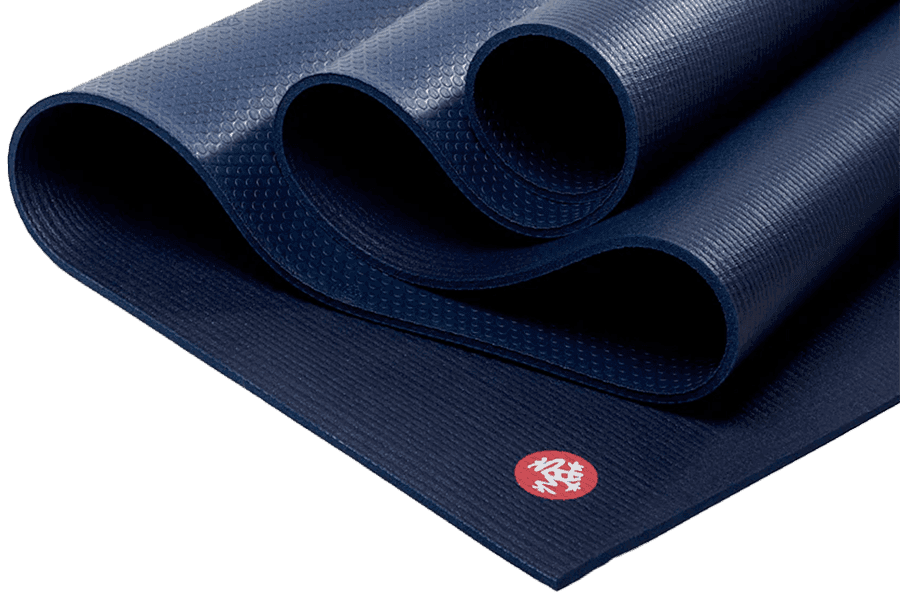
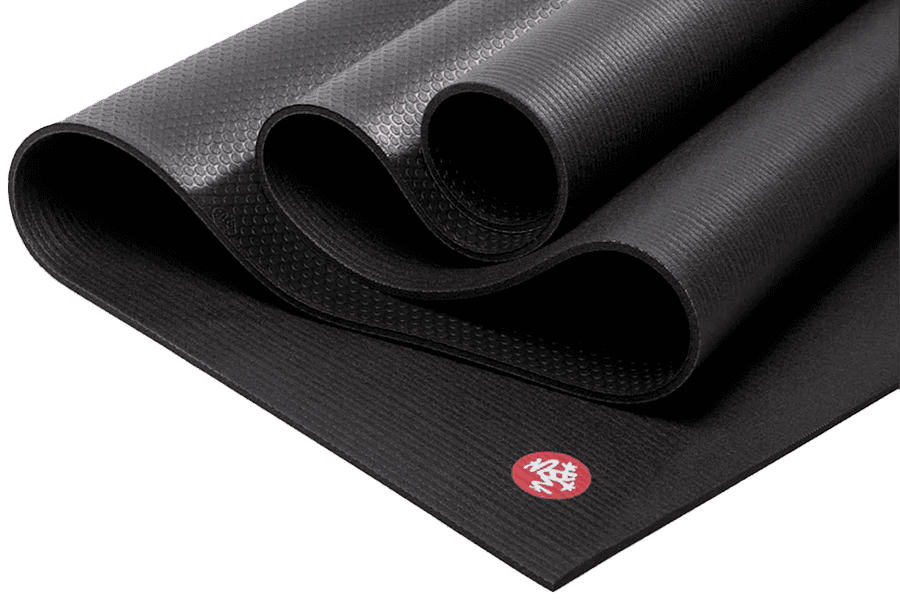
Price
The PRO lists for $20 less.
$144
List price · check price at Amazon
$164
List price · check price at Amazon
Thickness
Identical thickness.
6 mm0.24″
6 mm0.24″
Weight
The PRO is 1.5 lbs lighter.
8 lbs3.6 kg
9.5 lbs4.3 kg
Size
The PRO Long is 14″ longer; same width.
Same on both
- 6 mm thick
- 26" wide
- Closed-cell PVC
- Fabric-like top surface
- Made in Germany
- Lifetime guarantee
- OEKO-TEX certified
- Needs a break-in period
Full specs
Dimensions
Materials & build
Buying
- Short68" × 26"
- Long85" × 26"
- Long & Wide79" × 52"
- Squared78" × 78"
- Short68" × 26"
- Standard71" × 26"
- Long & Wide79" × 52"
- Squared78" × 78"
One mat, two lengths
Most mat comparisons involve weighing real tradeoffs. This one doesn’t. The PRO Long is the standard Manduka PRO with 14 extra inches of length, and that is the entire difference. Both are 6 mm of very dense PVC, both are 26″ wide, both have the fabric-like top surface and dot-pattern bottom, both come out of the same German factory, and both carry the lifetime guarantee.
That makes this one of the easiest decisions we cover, because it hangs almost entirely on one number: your height. The rest of this review covers what the extra length costs you in weight, money, and color choices, and the couple of situations where the answer isn’t obvious.
The six-foot rule
A yoga mat should be at least as long as you are tall. The test is savasana: lie flat on your back, and if your head or your heels land on bare floor, the mat is too short for you. On a 71″ mat, that starts happening somewhere around the six-foot mark. Under five foot ten, you have room to spare. At six feet, you fit with nothing left over, and one scoot in either direction puts you off the end. Past six feet, you simply don’t fit.
The PRO Long’s 85″ removes the problem completely. A six foot five practitioner still has 8 inches to spare lying down. The extra length also pays off in flowing practices even for people who technically fit the standard mat: long low lunges, walking the feet forward from downward dog, and big step-throughs all drift toward the ends of a 71″ mat, and tall folks with long strides end up planting a foot on the floor mid-flow.
Two honest counterpoints. First, plenty of six-footers practice happily on 71″ mats and just let their heels hang off in savasana; it’s a comfort issue, not a safety one. Second, the length only helps lengthwise. Both mats are the same 26″ wide, so if your problem is hands slipping off the sides in wide-legged poses, the Long doesn’t fix it and you’d want to look at the PRO Long & Wide instead.
Cushion and grip: nothing to compare
Everything about how these two mats feel is identical, so we’ll keep this short. Both give you 6 mm of PVC so dense it reads as firm, almost hard, when you come to it from squishy foam. That density is the appeal: knees and hips get real support on hard floors without the wobble a soft mat adds to balance poses. It’s a big part of why OutdoorGearLab ranked the PRO first out of 19 mats it tested, with a perfect score for comfort and support, and the Long is the same slab.
Both also share the PRO line’s famous flaw: they’re slippery when new. The closed-cell surface starts out slick and breaks in over a few weeks of regular practice. Manduka used to recommend a salt scrub to speed this up but has since walked that back; its current position is that the slickness resolves on its own with use. And because the surface is closed-cell, sweat sits on top rather than soaking in, so sweaty hands slide on either mat. Heated-class regulars lay a towel over the top. None of this should move you between these two, since it’s identical on both.
Weight: from heavy to heavier
Here’s the real cost of the extra length. The standard PRO weighs 7.5 pounds, which is already the most common complaint about it. The Long weighs 9.5, and it rolls into a longer, fatter cylinder that doesn’t fit standard mat bags or the mat straps on most backpacks. If the standard PRO feels like carrying a gallon of milk over your shoulder, the Long adds a couple of quarts.
Whether that matters depends entirely on where the mat lives. At home, weight is irrelevant, and the heft even helps the mat lie perfectly flat. On a fifteen minute walk to the studio, plus a bus or a bike, 9.5 pounds gets old fast. Yoga forums are full of people who love their PRO but leave it home because hauling it became a chore, and the Long makes that failure mode more likely.
If you’re tall and your mat commutes, there’s a better answer than either of these: the PROlite Long gives you a 79″ version of the same closed-cell build at roughly half the weight. You give up a little thickness and 2 inches of width; our PRO vs PROlite comparison walks through that tradeoff in detail.
Living with 85 inches
An 85″ mat is a real piece of floor. At home, measure before you buy: you need a hair over 7 feet of clear space, plus room to step around it. In apartments that rules out some hallway and living room setups that a 71″ mat squeezes into.
In studios, the Long fits but sticks out, literally. Class rows are spaced around standard-length mats, so in a packed room the extra 14 inches can crowd the row ahead of you. Tall practitioners deal with this all the time and it’s rarely a problem in practice, but if your studio runs mat-to-mat full, expect to angle yours or pull it back from the line. Storage cubbies and mat racks built for standard rolls can also be a tight fit for the Long’s bigger cylinder.
Durability and the guarantee are identical
Nothing separates them here. Dense closed-cell PVC is about the most durable mat material there is; GearLab’s testers noted instructors’ PRO mats five to twenty years old that were still in near-mint condition. The Long is the same material at the same density, so there’s no reason to expect a different lifespan, and both carry Manduka’s lifetime guarantee.
The fine print applies equally to both: Manduka defines a mat’s lifetime as roughly ten years of regular use, covers wear that affects performance but not cosmetic wear, allows one replacement per purchase, and requires proof of purchase from an authorized seller. Amazon qualifies when the mat is sold and shipped by Amazon itself. Durability should not factor into this decision at all.
Colors, price, and the other sizes
Color selection is the sneaky difference. The standard PRO comes in around 14 colorways at last count. The Long comes in 5: Black, Midnight, Black Sage, Odyssey, and Verve. They’re all handsome, muted options, but if you wanted one of the standard mat’s brighter colors, check it exists in the Long before you commit.
On price, the gap is small: $144 for the standard PRO and $164 for the Long at list. Amazon prices move around by colorway, so check current prices on both the standard PRO and the PRO Long before you buy; sales regularly shuffle which one is the better deal. For a mat you might own for a decade, $20 is noise.
The PRO line has two more sizes worth knowing about if neither of these fits: the 79″ × 52″ Long & Wide for home studios, and the 78″ × 78″ PRO Squared, which is essentially a small practice floor.
Bottom line
Buy by height. If you’re under six feet, get the standard PRO: it fits you, it’s 2 pounds lighter, it costs $20 less, and it comes in nearly three times as many colors. The extra length would do nothing for you.
If you’re six feet or taller, get the PRO Long and don’t overthink it. You’re buying the exact same mat, sized so your whole body actually fits on it, and the small premium buys the difference between tolerating your mat and forgetting it’s there. The only exception is the tall commuter: if 9.5 pounds on your shoulder several times a week sounds miserable, the lighter PROlite Long is the smarter buy.
Manduka PRO
List price $144
Manduka PRO Long
List price $164
Frequently Asked Questions
- How much longer is the Manduka PRO Long than the standard PRO?
- 14 inches. The standard PRO is 71" long and the PRO Long is 85", and both are 26" wide and 6 mm thick. The useful rule of thumb is that a mat should be at least as long as you are tall so you can lie down fully on it. A 71" mat covers you up to about five foot eleven; the 85" Long covers essentially everyone.
- Is the Manduka PRO Long worth the extra $20?
- If you're six feet or taller, yes. The material, thickness, width, and lifetime guarantee are identical, so the $20 buys length and nothing else, and for a tall person that length is the difference between fitting on the mat and hanging off both ends of it. If you're under six feet, the extra 14 inches does nothing for you except add 2 pounds to your carry.
- How heavy is the Manduka PRO Long?
- 9.5 pounds, up from the standard PRO's 7.5. Neither number is fun to carry across town, and the Long rolls into a noticeably bigger cylinder too. If you're tall and commute to class with your mat, it's worth looking at Manduka's lighter PROlite line, which comes in a 79" long version at roughly half the weight.
- Does the PRO Long come in the same colors as the PRO?
- No, and this catches people out. The standard PRO comes in around 14 colorways at last count, while the Long comes in 5: Black, Midnight, Black Sage, Odyssey, and Verve. If you had your heart set on one of the standard mat's brighter colors, check that it exists in the Long before deciding.
- Will an 85 inch mat fit in a yoga studio class?
- Usually, but not always gracefully. Studio rows are laid out around standard 68" to 71" mats, so an 85" mat can crowd the person in front of you when class is packed. Plenty of tall practitioners use a Long in studios without trouble; just expect to angle it or scoot it back in a full room. At home, all that matters is that you have 7 feet of clear floor.
- Do the PRO and PRO Long have the same lifetime guarantee?
- Yes, identical coverage, so the warranty shouldn't sway you either way. The fine print applies to both: Manduka defines a mat's lifetime as roughly 10 years of regular use, covers performance-affecting wear but not cosmetic wear, allows one replacement per purchase, and requires proof of purchase from an authorized seller. Amazon qualifies when the mat is sold and shipped by Amazon.
Related comparisons
- Manduka PRO vs Alo Warrior
- Manduka PRO vs b, halfmoon B Mat Strong 6mm
- Manduka PRO Long vs Yoloha Unity Pro Cork
- Manduka PRO vs Yoloha Unity Pro Cork
- Manduka PRO vs JadeYoga Harmony XW
- Manduka PRO vs Lululemon The (Big) Mat 5mm
- Manduka PRO Long vs Alo Warrior
- Manduka PRO Long vs JadeYoga Fusion 68"
- Manduka PRO Long vs Liforme Classic