Manduka PRO vs Lululemon The (Big) Mat: Which One Should You Buy?
The Manduka PRO has been the default studio mat for two decades. The Lululemon (Big) Mat is the largest thing either brand sells, 84 by 28 inches of natural rubber under an absorbent polyurethane top. They land $16 apart and weigh about the same, so this isn't a budget decision. It's a choice between a normal-sized mat that outlives everything and a much larger one that works perfectly from the first class.
As an Amazon Associate, we earn from qualifying purchases made through links on this page. How this works
The quick answer
The PRO is the more durable mat by a wide margin, the only one of the two that's safe with a latex allergy, and the one that never stains. It also arrives slick and needs a few weeks of practice before the grip comes good. The (Big) Mat grips immediately, covers about 40% more floor, and costs $16 less, in exchange for a surface that marks up over time, a warranty with no stated term, and a single color option.
If you're tall or practice at home where the space is free, get the (Big) Mat. If you want one mat for the next ten years and 71 by 26 inches fits you, get the PRO.
Get the Manduka PRO if...
- You want a mat that will still be in service in ten years
- You have a latex allergy; the PRO is PVC, the Lululemon is rubber
- You'd rather not manage a surface that stains where your hands land
- You want a color other than black, or a mat that fits one spot in a packed class
Get The (Big) Mat if...
- You're six feet or taller, or your hands keep creeping off the front edge
- You want grip on day one instead of a break-in period
- You practice mostly at home, where 84 by 28 inches costs you nothing
- You'd rather spend $128 than $144
Side by side
Price
The Big Mat lists for $16 less.
$144
List price · check price at Amazon
$128
List price · check price at lululemon.com
Thickness
The PRO is 20% thicker.
6 mm0.24″
5 mm0.2″
Weight
The Big Mat is 0.9 lbs lighter.
8 lbs3.6 kg
7.1 lbs3.2 kg
Size
The Big Mat is 13″ longer; the Big Mat is 2″ wider.
Same on both
- Firm support rather than plush cushioning
- About 7 pounds each, so neither is a happy daily carry
- Wipe-clean only; neither goes in a washing machine
- Heavy enough to stay put on hardwood
- Sweat eventually beats both, and a towel helps either one
Full specs
Dimensions
Materials & build
Buying
A decade of mat, or a lot more mat
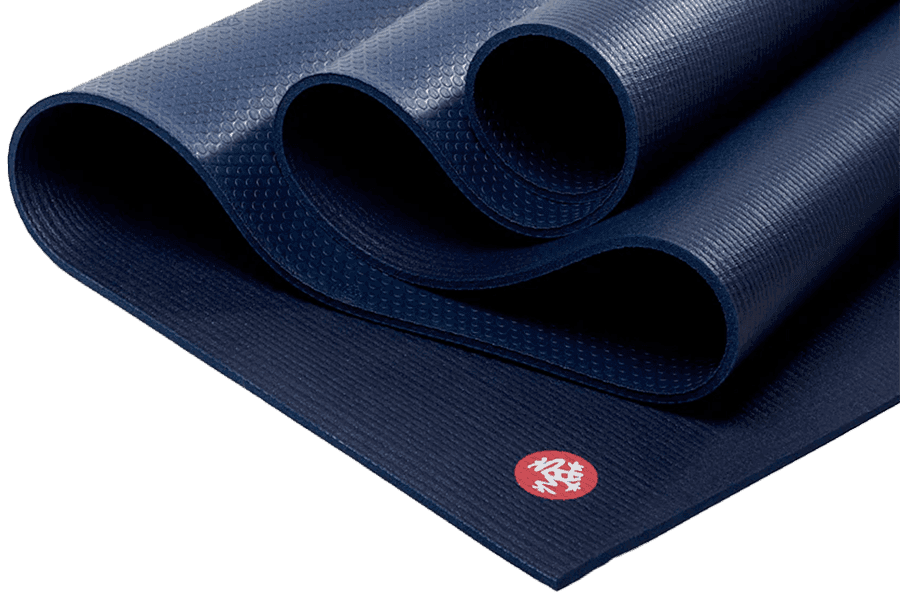
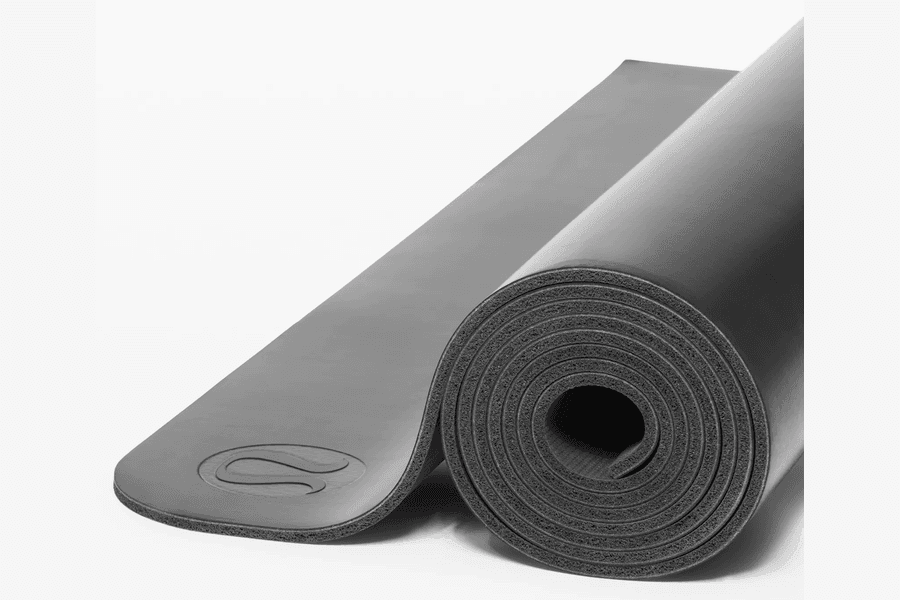
The Manduka PRO is the mat teachers have been standing on since the early 2000s: 6 mm of dense German PVC, 71″ × 26″, heavy, and engineered so that the surface improves rather than degrades over years of practice. Lululemon’s (Big) Mat is the largest thing either brand sells: 84″ × 28″ of natural rubber under an absorbent polyurethane skin, grippy the day it arrives.
They weigh within half a pound of each other and sit $16 apart, so neither weight nor budget breaks the tie. What separates them is how long you plan to own a mat and how much floor you want to own while you do.
The size gap is the headline
Thirteen inches of extra length and two of extra width work out to roughly 40% more mat under you. That’s enough to change how poses feel rather than just how they measure: hands stop creeping off the front edge in down dog, a six-foot-four practitioner lies flat in savasana with margin, and wide-legged standing work lands on rubber instead of hardwood.
The width is the part people underestimate. Twenty-six inches is the standard the PRO helped set, and 28 gives broad shoulders and wide stances proper clearance. The flip side is etiquette: an 84″ × 28″ mat takes up meaningfully more than one spot in a full studio, and in a sold-out class that margin belongs to somebody else. If you need length but not that much of it, Manduka’s 85″ PRO Long splits the difference at the standard width.
Grip: one works today, one works in a month
A new PRO is slick. It’s the single most common complaint about the mat, and it’s real: the surface needs a few weeks of regular practice before it grips properly. Manduka has retired its old salt-scrub advice and now says the slickness simply resolves with use, which matches what long-term owners report. Once it comes good it stays good, and it keeps improving for years.
The (Big) Mat asks for none of that patience. Its polyurethane face grips from the first class and gets tackier as your palms dampen, because it absorbs moisture rather than letting it bead on top. Flip it over and the textured rubber underside gives you a second, drier surface.
The sweat numbers are less flattering to Lululemon than you’d expect. GearLab lists “sticky when wet” among the strengths of the standard Mat that shares this build, and made it a top pick, but in the same 2026 roundup its side-by-side wet-grip scoring put that mat at 4.5 of 10 against 7 for the PRO. Our read is that the PRO’s broken-in surface holds a dry or lightly damp palm beautifully and the polyurethane holds a damp one, and that once sweat starts pooling both want a towel. For a genuinely heated practice, GearLab’s pick was neither of these; it was the Manduka GRP Adapt 2.0.
Feel and cushion
GearLab gave both builds a perfect 10 for comfort and support, which is rare and says something about how well matched they’re here. They get there differently. The PRO’s 6 mm of compressed PVC reads as firm bordering on hard: your hand sinks a millimeter and stops, which is exactly the platform you want for standing balances and inversions.
The (Big) Mat’s 5 mm of rubber is a touch softer and warmer under the hand, cushioned enough for long holds without turning squishy. On a wood floor the difference is close to imperceptible. On tile or concrete, the PRO’s extra millimeter and higher density edge ahead for kneeling work.
Weight: a wash, and not in a good way
The PRO weighs 8 pounds and the (Big) Mat about 7.1, so the larger mat is very slightly the lighter one. That’s a quiet engineering achievement and a practical non-event, because neither is a mat you want on a shoulder for a fifteen-minute walk several times a week.
The (Big) Mat’s roll is the bigger nuisance of the two: 84 inches of rubber makes a long, fat tube that overwhelms most mat straps and sticks out of standard bags. If your mat travels daily, the honest answer is that you want neither of these. Lululemon’s standard Mat at 5.24 pounds or Manduka’s PROlite are the mats for that job.
Durability: this is where the PRO earns the price
Dense closed-cell PVC barely wears. GearLab’s testers came across instructors’ PRO mats between five and twenty years old and still in service, and Manduka’s lifetime guarantee makes the claim contractual: the fine print works out to roughly ten years of regular use with one replacement, from an authorized seller, and Amazon purchases qualify only when sold and shipped by Amazon itself.
The (Big) Mat wears like the consumable it’s. Its grip fades from the top down with use, which GearLab lists among the drawbacks of this build, and puts the realistic lifespan at four to six years. It also stains: an absorbent surface keeps some of what it absorbs, and marks show where hands and feet land. Since the mat only comes in black, that ages better than it would in a pale colorway.
Lululemon’s Quality Promise covers gear that doesn’t perform as designed but names no term and is handled case by case. It’s better than nothing and considerably vaguer than a written guarantee.
Materials, latex, and care
The PRO is PVC, made in Germany, certified to OEKO-TEX Standard 100, and contains no natural rubber. That last detail settles the decision outright for anyone with a latex allergy, because the (Big) Mat sits on a natural rubber base and natural rubber carries trace latex proteins. GearLab lists latex content among this build’s drawbacks for the same reason.
Care runs the other way. The PRO is the low-maintenance one: wipe it down and store it anywhere. The (Big) Mat wants regular cleaning to stay ahead of staining, should never bake in a hot car or direct sun, and arrives with a rubber smell that takes a few days of airing out. Neither goes in a washing machine.
On the environmental side the (Big) Mat’s rubber is FSC certified, which is a genuine credential. The PRO’s counterargument is its lifespan: one mat lasting a decade is its own kind of low-impact purchase.
Colors and where you can buy
Colors are lopsided. The PRO comes in black plus 13 more colorways at last count. The (Big) Mat comes in black. Lululemon rotates mat colors through the year, so it’s worth checking, but historically the oversized version gets one or two conservative options while the standard size gets the range.
Where you buy matters more than usual. The PRO sells through Amazon and manduka.com, discounts fairly often, and returns easily. Lululemon doesn’t sell through Amazon at all, so the (Big) Mat comes from lululemon.com or a store. Anything you see for it on Amazon is a reseller marking it up, with no Quality Promise attached.
Price and value
List prices are $144 for the PRO and $128 for the (Big) Mat, so the bigger mat is also the cheaper one. That’s unusual enough to state plainly: you aren’t paying extra for the size here, you’re paying extra for longevity.
Whether that’s worth $16 depends on how long you keep gear. One $144 mat that runs a decade beats three $128 mats over the same stretch, and it isn’t close. But that arithmetic only pays out if you’re still practicing on it in year eight, and plenty of people would rather have the mat that fits them properly today.
Bottom line
Buy the PRO if you want one mat for the next ten years, if you have a latex allergy, or if 71″ × 26″ already fits you. Budget a month of practice before you judge the grip, keep a towel handy in heated rooms, and expect it to look about the same in year five as in month one.
Buy the (Big) Mat if size is the problem you’re actually solving. Eighty-four by twenty-eight inches is the largest mainstream mat sold, it grips from the first class, and it costs less than the PRO. Accept the staining, the single color, and a lifespan measured in years. If you like the Lululemon surface but not the acreage, our PRO vs the standard Mat comparison covers the same argument at 71″ × 26″.
Manduka PRO
List price $144
Lululemon The (Big) Mat 5mm
List price $128
Frequently Asked Questions
- How much bigger is the (Big) Mat than the PRO?
- A lot. The PRO is 71 by 26 inches; the (Big) Mat is 84 by 28. That's 13 more inches of length and 2 more of width, or roughly 40% more mat on the floor. In practice it means a six-foot-four person lies flat in savasana with margin and wide-legged standing poses land on rubber instead of hardwood. It also means a longer, fatter roll that overwhelms most mat straps.
- Which one is better for hot yoga?
- Neither is the category's best, and the record here is messier than you'd expect. Lululemon's polyurethane top is designed to soak up sweat, and GearLab lists 'sticky when wet' among The Mat's strengths, but in the same 2026 roundup its side-by-side wet-grip scoring put The Mat at 4.5 out of 10 and the PRO at 7. The PRO's own problem is that sweat sits on its sealed surface with nowhere to go. If heated classes are the main event, GearLab's pick was the Manduka GRP Adapt 2.0, not either of these.
- Does the PRO really need a break-in period?
- Yes, and it is the complaint that comes up more than any other. Out of the box the surface is genuinely slippery, and it takes a few weeks on the mat before the traction arrives. The old advice was to scrub it with sea salt; Manduka dropped that guidance and now tells owners the slickness clears on its own with practice. The (Big) Mat asks nothing of you; it grips the day you unroll it. If you want a mat that works this week, that's a real difference.
- Which mat lasts longer?
- The PRO, by years. Dense closed-cell PVC barely wears; GearLab came across teachers still practicing on PROs bought anywhere from five to twenty years earlier. Manduka's lifetime guarantee puts numbers behind that: roughly a decade of regular use and one replacement, per the fine print. Lululemon's absorbent top is a consumable: GearLab pegs the realistic lifespan at four to six years and lists 'may lose grip with use' among its drawbacks. Lululemon's Quality Promise covers gear that doesn't perform as designed but names no term.
- Can I buy either one on Amazon?
- The PRO, yes. Lululemon keeps everything inside its own channel, so the (Big) Mat comes from lululemon.com or a store. Anything bearing its name on Amazon is a reseller marking it up, and none of that stock carries the Quality Promise. Worth noting for the PRO: Manduka's guarantee only recognizes Amazon purchases that are sold and shipped by Amazon itself, not marketplace sellers.
- Is either mat safe for a latex allergy?
- The PRO is. It's PVC with no natural rubber in it, which is exactly why plenty of allergy-sensitive practitioners still buy one. The (Big) Mat is built on a natural rubber base, and natural rubber carries trace latex proteins, so it isn't safe if your allergy is genuine. GearLab lists latex content among The Mat's drawbacks for the same reason.
Related comparisons
- Manduka GRP Adapt 2.0 vs Lululemon The (Big) Mat 5mm
- Manduka eKO Long vs Lululemon The (Big) Mat 5mm
- Manduka GRP Adapt 2.0 Long vs Lululemon The (Big) Mat 5mm
- Manduka PRO vs Alo Warrior
- Manduka eKO vs Lululemon The (Big) Mat 5mm
- Manduka PRO vs b, halfmoon B Mat Strong 6mm
- Manduka PROlite Long & Wide vs Lululemon The (Big) Mat 5mm
- Manduka PROlite Long vs Lululemon The (Big) Mat 5mm
- Manduka PRO vs Yoloha Unity Pro Cork