Manduka PRO vs Alo Warrior: Which One Should You Buy?
These two cost within $4 of each other and want completely different owners. The Manduka PRO is studio equipment: dense, hard, and built to survive decades. The Alo Warrior is the mat Alo built its studio-to-street reputation on, with a plush polyurethane leather top that grips the moment you unroll it. Here's how the $144 tank and the $148 crowd favorite actually compare.
As an Amazon Associate, we earn from qualifying purchases made through links on this page. How this works
The quick answer
The PRO is the long-haul purchase: 6 mm of dense PVC, a lifetime guarantee, and a surface that takes a few weeks to break in but then grips for decades. The Warrior is the better mat on day one. It's grippy immediately, its top absorbs sweat instead of letting it pool (though reviewers split on how well that holds up in a truly sweaty class), it runs 3 inches longer, and it feels plusher underneath you. The catch is that its polyurethane top collects dirt, shows wear sooner, and Alo backs it for 30 days rather than for life.
Get the PRO if you're buying once and your palms stay mostly dry. Get the Warrior if day-one grip, sweat handling, and a softer feel matter more than how the mat looks in year five.
Get the PRO if...
- You want a decade-plus mat with a lifetime guarantee behind it
- You want the firmer, more stable surface for balance work
- You'd rather have a low-maintenance mat you just wipe down
- You don't mind a few weeks of break-in for grip that keeps improving
Get the Warrior if...
- You want real grip on day one, including with sweaty palms
- You want the extra 3 inches of length (74.4 inches vs 71)
- You want a plusher, softer feel under knees and hands
- You practice in heated rooms and want a top that soaks up sweat
Side by side
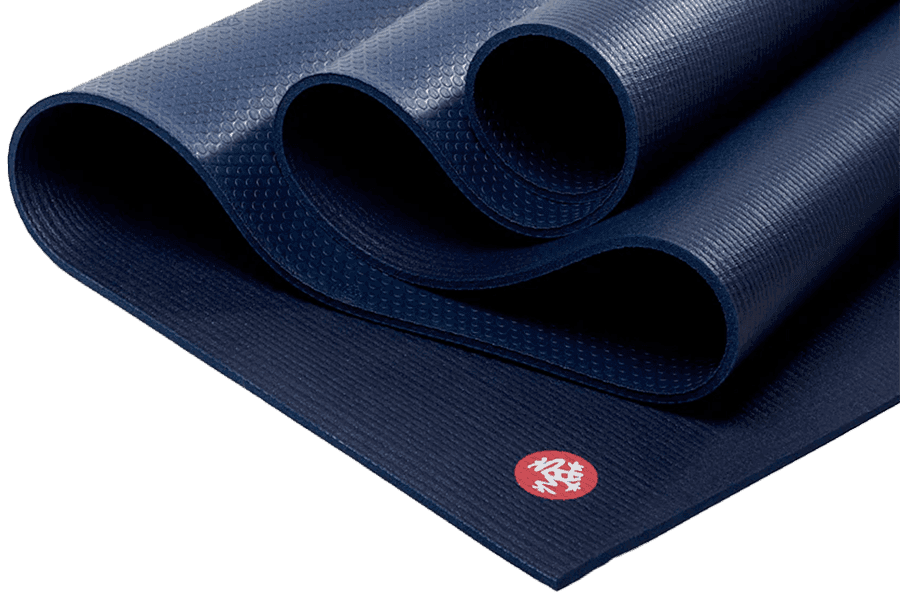
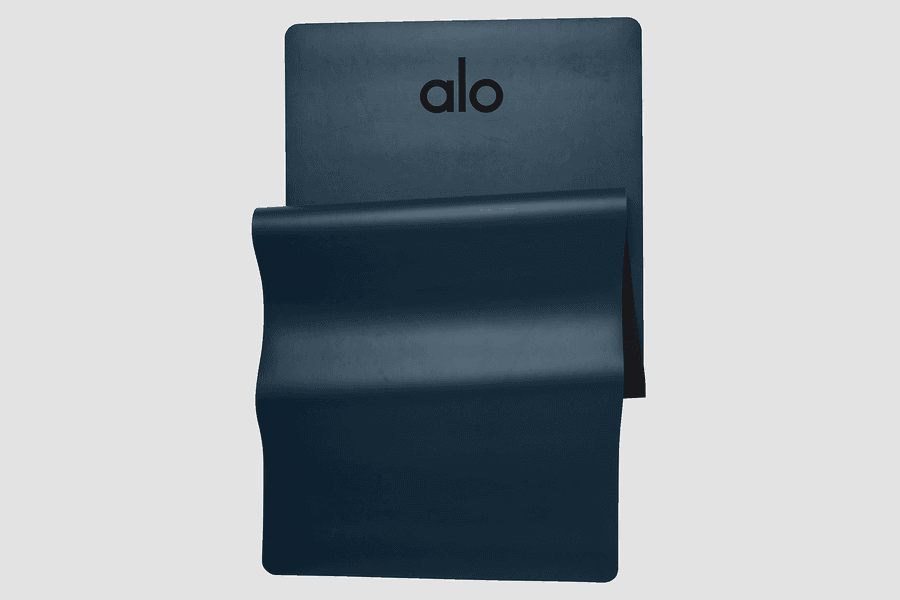
Price
The PRO lists for $4 less.
$144
List price · check price at Amazon
$148
List price · check price at aloyoga.com
Thickness
The PRO is 20% thicker.
6 mm0.24″
5 mm0.2″
Weight
The PRO is 0.5 lbs lighter.
7.5 lbs3.4 kg
8 lbs3.6 kg
Size
The Warrior is 3.4″ longer; the Warrior is 0.4″ wider.
Same on both
- Wider than the standard 24 inch mat
- Heavier than the average mat
- Premium list prices within $4 of each other
- Wipe-down cleaning only
Full specs
Dimensions
Materials & build
Buying
Studio equipment vs the studio-to-street favorite
Four dollars separate these list prices, and almost nothing else about them is close. The Manduka PRO is gear in the plainest sense: a dense, German-made PVC slab designed to survive decades of daily classes. The Alo Warrior is the mat a fashion brand built its fitness reputation on: a plush polyurethane leather top over natural rubber that looks good, feels soft, and grips the moment you unroll it.
Neither is a bad mat. They’re just answering different questions. The PRO asks how long a mat can last. The Warrior asks how good a mat can feel today. Your answer decides this comparison.
Grip and sweat: the Warrior works on day one
Unroll the Warrior and it’s ready. The matte polyurethane top is grippy immediately, and it absorbs moisture as it lands. T3’s reviewer put it through sweaty flows and HIIT sessions and found it stayed planted without getting slick, which earned it a T3 Recommends award. We’ll note the record isn’t unanimous: GearLab’s standardized wet-grip test rated the Warrior mediocre once hands were properly soaked. Damp is fine; dripping is where reviewers part ways.
A new PRO is the opposite experience. The closed-cell surface ships slick and needs a few weeks of regular practice before the grip comes in; it’s the most common complaint about an otherwise beloved mat. Manduka has retired its old salt-scrub break-in advice and now simply says the slickness resolves with use, which it does. But even a broken-in PRO handles sweat poorly: nothing absorbs, so moisture pools on the surface and wet palms slide. Sweaty practice on a PRO means a towel, full stop.
Against the PRO specifically, the Warrior still wins this section: an absorbent top with a mixed sweat record beats a surface that absorbs nothing. If your practice is dry, the gap narrows to the break-in period, and patience closes it.
Feel: dense and hard vs plush and spongy
The PRO’s 6 mm of compressed PVC feels closer to a firm floor than to foam. There’s no sink, no wobble under a standing balance, and real protection for knees on hard surfaces. It’s a feeling people either love or find punishing, and it’s a big part of why GearLab ranked the PRO first among the 19 mats it tested.
The Warrior is 5 mm and reads softer than the number: T3 described the material as soft and spongy in a way that stays comfortable under hands and knees through long sessions. It still holds a balance pose fine, but the personality is plush where the PRO is austere. Try a kneeling lunge on both and you’ll know within seconds which camp you’re in.
Size and weight
The Warrior is the bigger mat: 74.4″ × 26.4″ against the PRO’s 71″ × 26″. That extra 3.4 inches of length matters if you’re close to six feet tall, and both brands go longer still: Alo sells an 84″ Long Warrior, and Manduka makes the 85″ PRO Long.
Neither carries easily. Alo lists the Warrior at approximately 8 pounds, which makes it slightly heavier than the 7.5 pound PRO. Both roll into fat, gym-bag-defeating cylinders, and if your mat commutes daily, both brands sell lighter mats for exactly that reason. Plenty of PRO owners admit theirs simply stopped leaving the house.
Durability and care: a decade vs a nice couple of years
The PRO’s case is overwhelming here. Dense closed-cell PVC barely wears; GearLab’s testers encountered instructors’ PROs five to twenty years old and still going. Manduka backs it with a lifetime guarantee, defined in the fine print as roughly ten years of regular use, one replacement, proof of purchase from an authorized seller. Care is nothing: wipe it down, forget about it.
The Warrior holds up reasonably well for its construction, and owners regularly report mats looking close to new after a year. But polyurethane tops as a class are delicate: they scuff, stain, absorb sweat, and show wear with hard use, and T3 noted the surface picks up dirt and lint easily. Alo’s care rules are stricter too: roll it top-side out, clean with a diluted soap or vinegar solution applied to a cloth, keep lotions and oils away. And if something goes wrong, Alo’s return window is 30 days. There’s no warranty after that.
Where you can actually buy them
The PRO sells everywhere Manduka gear sells, including Amazon, with one caveat worth knowing: the lifetime guarantee only covers Amazon purchases sold and shipped by Amazon itself, not third-party sellers. The Warrior sells only through Alo, online or in its stores; there’s no Amazon listing to comparison-shop against.
Colorways favor the Warrior if aesthetics matter to you. Alo rotates muted, fashion-forward colors through the year, while the PRO’s range runs classic: black plus a rotating cast of solids.
Price and value
List prices sit at $144 for the PRO and $148 for the Warrior, close enough that price shouldn’t drive this decision. You can check the current price on the PRO at Amazon and the Warrior at Alo’s site.
Value over time is a different story. One PRO that runs a decade beats replacing a polyurethane-topped mat every few years, and the guarantee makes that math dependable. The Warrior asks you to pay premium money for the experience rather than the lifespan. Whether that’s a fair trade depends on how much the day-one grip and plush feel are worth to you; for a lot of Alo’s customers, the answer is clearly plenty.
Bottom line
Buy the PRO if you’re buying once. It costs a few weeks of slick break-in and 7.5 pounds of carrying weight, and it repays you with a firm, stable surface that outlasts everything in its class, guarantee included. Keep a towel handy if you sweat.
Buy the Warrior if you want the mat that’s excellent right now: immediate grip, real sweat handling, a soft landing, and three extra inches of length. Treat it gently and accept that Alo’s commitment ends 30 days after checkout. If you like the Warrior’s construction but want to comparison-shop it, the Lululemon The Mat vs Warrior matchup is the natural next read, and our PRO vs The Mat comparison covers the cheaper version of this same decision.
Manduka PRO
List price $144
Alo Warrior
List price $148
Frequently Asked Questions
- Which is better for hot yoga, the Manduka PRO or the Alo Warrior?
- The Warrior. Its polyurethane top absorbs moisture as it lands, and T3's reviewer found it stayed grippy through sweaty sessions, though GearLab's testers were harder on it and rated its wet grip mediocre. The PRO is closed-cell PVC, so sweat pools on the surface and wet palms slide, which means heated classes on a PRO mean a towel. If hot or heavily sweaty classes are your normal, the Warrior is the right tool of these two.
- Which lasts longer, the Manduka PRO or the Alo Warrior?
- The PRO, comfortably. Dense closed-cell PVC barely wears, PRO mats routinely serve for a decade or more, and Manduka's lifetime guarantee backs that up. The Warrior holds up reasonably well for a polyurethane-topped mat, and plenty of owners report theirs looking close to new after a year of use, but PU surfaces as a class pick up scratches, stains, and visible wear with hard use, and Alo's return window is 30 days. There's no long-term warranty to fall back on.
- Is the Alo Warrior worth $148?
- If its strengths line up with your practice, yes. You're paying for immediate grip, real sweat handling, a plush feel, and a bigger-than-standard footprint, and T3 gave it a Recommends award on exactly those grounds. What you're not getting is longevity insurance: no warranty beyond 30-day returns, and a top layer that needs gentle cleaning and picks up dirt and lint easily. The PRO at $144 is the better pure investment; the Warrior is the better daily experience.
- Can I buy the Alo Warrior on Amazon?
- Alo doesn't sell the Warrior through Amazon the way Manduka sells the PRO, so buying one means going through aloyoga.com or an Alo store. The PRO is widely available, including on Amazon, with one caveat: Manduka's lifetime guarantee only applies to Amazon purchases sold and shipped by Amazon itself, not third-party sellers.
- Are these mats too heavy to carry to class?
- Neither is a commuter mat. The PRO weighs 7.5 pounds and the Warrior about 8 by Alo's own spec, and both are noticeably bulkier than a standard 3 pound mat. If your mat rides a shoulder strap across town every day, a lighter mat will serve you better. Both brands sell lighter alternatives for exactly that reason.
- Does the Manduka PRO's slippery break-in period ever end?
- Yes. The closed-cell surface ships slick and needs a few weeks of regular practice before the grip comes in, and it genuinely improves with age after that. Manduka used to suggest a salt scrub to speed the process but has retired that advice; the current position is that the slickness resolves with use. The Warrior skips the problem entirely, which is a real point in its favor for anyone who wants the mat to work immediately.
Related comparisons
- JadeYoga Harmony XW vs Alo Warrior
- Manduka PROlite Long & Wide vs Alo Warrior
- Manduka PRO vs b, halfmoon B Mat Strong 6mm
- Manduka PRO vs Yoloha Unity Pro Cork
- Manduka GRP Adapt 2.0 Long vs Alo Warrior
- Manduka PRO vs JadeYoga Harmony XW
- Manduka eKO Long vs Alo Warrior
- Alo Warrior vs Lululemon The (Big) Mat 5mm
- Alo Warrior vs Yoloha Unity Pro Cork