Manduka PRO vs Manduka X: Which One Should You Buy?
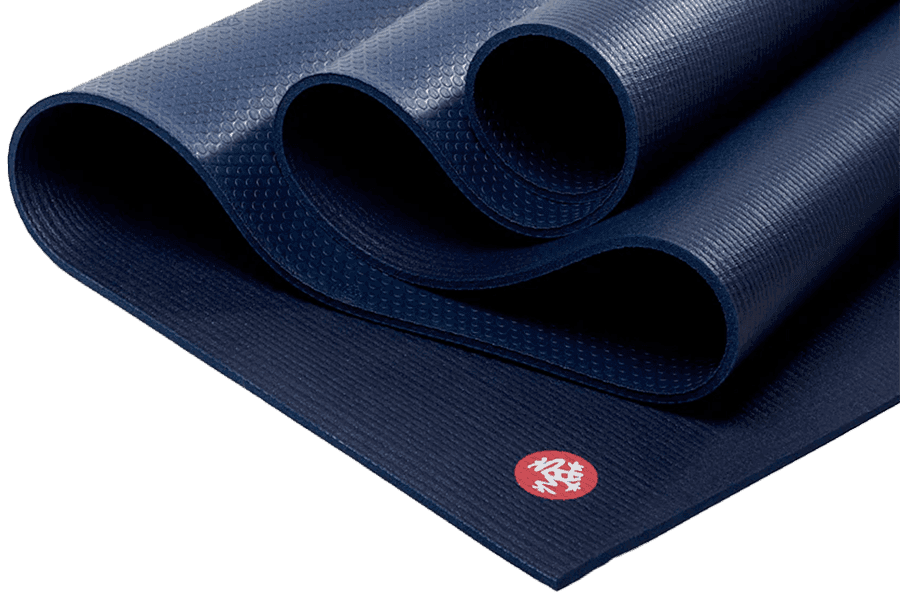
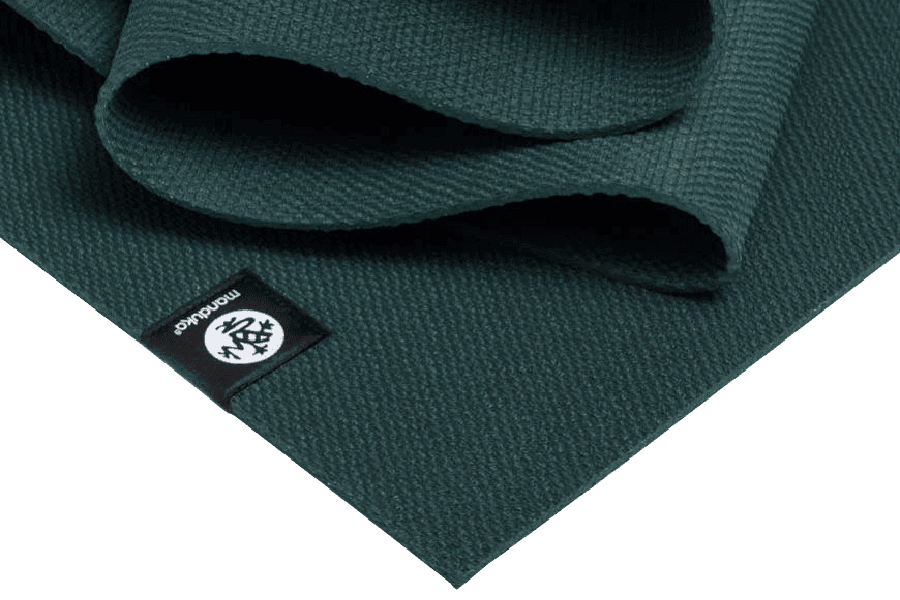
The PRO is built for a serious, yoga-first practice: 7.5 pounds of dense PVC, guaranteed for life. The X is built to handle yoga, HIIT, pilates, and a garage gym at half the price: 5 mm of light TPE that Manduka now sells as the X Hybrid Fitness Mat. You give up a lot of durability for the $72 you save, which either matters a lot or not at all, depending on how you train.
As an Amazon Associate, we earn from qualifying purchases made through links on this page. How this works
The quick answer
The PRO is the better yoga mat, full stop: thicker feel underfoot despite a similar spec, wider at 26" versus 24", far more durable, and covered by Manduka's lifetime guarantee. The X is the better all-purpose mat: 3.4 pounds instead of 7.5, grippy enough in dry conditions, tough enough for shoes and mixed training, and $72 instead of $144. TPE is the least durable material in Manduka's lineup, and the X carries no warranty.
If yoga is the main event, save for the PRO or look at the $112 PROlite. Buy the X if your mat needs to handle a bit of everything through the week and yoga is one item on the list.
Get the PRO if...
- Yoga is your primary practice, not one workout among many
- You want a mat that lasts decades, with the guarantee to match
- You like the wider 26" footprint
- You're fine breaking in the surface for a few weeks
Get the X if...
- Your mat pulls double duty: yoga, HIIT, pilates, stretching
- You want something light enough to grab and go at 3.4 pounds
- You want decent grip on day one without a break-in
- You'd rather keep $72
Side by side
Price
The X lists for $72 less.
$144
List price · check price at Amazon
$72
List price · check price at Amazon
Thickness
The PRO is 20% thicker.
6 mm0.24″
5 mm0.2″
Weight
The X is 4.3 lbs lighter.
8 lbs3.6 kg
3.7 lbs1.7 kg
Size
Same length; the PRO is 2″ wider.
Same on both
- Made by Manduka
- Same 71" length
- Closed-cell surface (sweat can't soak in)
- Lies flat without curling
Full specs
Dimensions
Materials & build
Buying
A specialist against a generalist
The PRO does one thing: it’s a yoga mat, arguably the yoga mat, 7.5 pounds of dense German PVC that studios have trusted for decades. The X does many things: yoga, pilates, HIIT, stretching between lifts, a workout in the park. It’s 5 mm of light TPE that Manduka now sells outright as the X Hybrid Fitness Mat, and at $72 it costs half of the PRO’s $144.
Comparing them isn’t unfair so much as clarifying. If you search for either mat you’ll land on both, and the question underneath is one worth answering directly: is your mat a yoga mat that occasionally sees a workout, or a workout mat that occasionally sees yoga?
About that rename
For years this mat sold as the Manduka X Yoga Mat, and plenty of reviews still call it that. Manduka has since repositioned it as the X Hybrid Fitness Mat 5mm, pitching it for mixed movement, outdoor training, and the throw-it-in-the-car workflow. Nothing structural changed: it’s the same 71″ × 24″, 5 mm, high-density TPE mat made in Taiwan. The rename just says out loud what the mat always was, a general-purpose surface rather than a dedicated yoga tool.
Cushioning: same number, different feel
On paper it’s 6 mm against 5. In practice the materials split them further: the PRO’s PVC is dense and barely compresses, which is why kneeling on it over concrete feels protected, while the X’s TPE is lighter foam with more give and a bit of bounce underfoot. For flowing standing work the X feels fine, even pleasant. For long kneeling holds and bony landings, the PRO’s density is the difference, part of why OutdoorGearLab scored the PRO’s comfort at the top of the category.
Grip: the X shows up ready
The X’s textured TPE surface, same treatment on both sides, has usable traction from the first session. A new PRO doesn’t: the break-in weeks are its most complained-about trait, and Manduka now simply says the slickness resolves with use. Once broken in, the PRO grips well dry and keeps improving for years.
Both are closed-cell surfaces, so neither absorbs sweat, and a dripping practice slides on either without a towel. If sweat is your defining problem, skip both for Manduka’s GRP Adapt, which was built for it.
Weight: four pounds apart
The X weighs 3.4 pounds; the PRO weighs 7.5. That’s the whole portability story, and it’s a big one if your mat rides to a gym or a park rather than living in a practice corner. The PRO repays its mass by planting itself and never bunching mid-flow, but nobody carries one for fun. The X also rolls slimmer, being thinner and 2 inches narrower at 24″ to the PRO’s 26″.
Durability: the shortest lifespan in the lineup
Here’s the X’s honest weakness. TPE is the least durable common mat material: light and inexpensive, but the surface wears, dents, and can flake within a couple of years of frequent use, faster in sunlight. Manduka backs the X with a 30 day return window and no warranty, while the PRO carries the lifetime guarantee, roughly ten years of regular use with one replacement in the fine print, and GearLab has found PRO mats still serving after twenty. For an occasional cross-training surface the X’s lifespan is fine; as a daily yoga mat it’s a consumable.
Sizes and colors
The X comes in one size, 71″ × 24″, and around seven colorways at last count. The PRO offers around fourteen colorways plus a full size run: an 85″ Long, a double-wide, and a squared home-studio cut. Tall practitioners have options on one side of this page and a hard ceiling on the other.
Price and value
List prices are $144 for the PRO and $72 for the X. Check the current price on the PRO and the X at Amazon before you decide.
If yoga is the main use, the math favors the PRO despite the sticker: one purchase against an X you’d replace every few years, with a guarantee behind it. If the mat’s job description is broader than yoga, the math flips, because you’d be wearing out a $144 specialist doing burpees on it. In between sits Manduka’s $112 PROlite, lighter than the PRO with the same guarantee, for people torn between the two.
Bottom line
Buy the PRO if yoga is your practice rather than one of your workouts. Nothing at the X’s price, including the X, approaches its cushioning or its lifespan, and the break-in weeks are a one-time toll.
Buy the X if your mat needs range more than pedigree. It’s light, ready on day one, tough enough for shoes and mixed training, and cheap enough to replace without grief when the TPE eventually wears, which it will. That’s not a flaw so much as the deal: half the price, a fraction of the lifespan, twice the job description.
Manduka PRO
List price $144
Manduka X
List price $72
Frequently Asked Questions
- Is the Manduka X good for yoga, or just for workouts?
- It's a competent yoga mat, especially for flowing, dry practices: 5 mm of cushioning, a double-sided textured TPE surface with decent day-one grip, and very little weight to haul. What it lacks is the PRO's density under kneeling poses, the extra 2 inches of width, and long-term durability. Dedicated yogis tend to outgrow it, while people doing mixed training are usually happy with it.
- Why is the Manduka X now called the X Hybrid Fitness Mat?
- Manduka renamed it. The mat sold for years as the Manduka X Yoga Mat and is now listed as the X Hybrid Fitness Mat 5mm, positioned for cross-training and outdoor use as much as yoga. Same 71" × 24", 5 mm TPE mat at its core, so reviews of the older name still broadly apply. It lists at $72 at last check.
- How durable is TPE compared to the PRO's PVC?
- Not close. TPE is light and inexpensive but it's the shortest-lived common mat material: under frequent practice the surface wears and can start to flake or dent within a couple of years, faster outdoors in sun. The PRO's dense PVC routinely serves a decade or more, and Manduka's warranty terms say the same thing: lifetime guarantee on the PRO, 30 day returns on the X.
- Which grips better, the PRO or the X?
- Out of the box, the X; its textured TPE has usable traction immediately, while a new PRO is slick for its first few weeks until the surface breaks in. Once broken in, the PRO's grip is excellent and keeps improving. Both are closed-cell surfaces, so sweat sits on top of either, and heavy sweaters will want a towel or a mat built to absorb moisture, like Manduka's GRP Adapt.
- How big is the weight difference?
- Four pounds: the X weighs 3.4 pounds to the PRO's 7.5. The X is the kind of mat you carry without thinking about it; the PRO is the kind you leave in one place. If you commute to classes daily, that difference matters more than most spec-sheet lines.
- Is the Manduka X eco-friendly?
- Middling. TPE is marketed as a greener plastic because it's recyclable in principle and free of PVC, and Manduka makes the X in Taiwan to the same emissions-conscious standards as its eKO line. But TPE mats wear out fastest of any material here, and a mat you replace every couple of years has its own footprint. If eco matters most, Manduka's natural rubber eKO line is the better answer.
Related comparisons
- Manduka X vs Gaiam Performance Dry-Grip 5mm
- Manduka X vs Gaiam Performance Dry-Grip Long & Wide
- Manduka PRO vs Alo Warrior
- Manduka X vs IUGA Eco Friendly Non Slip PU
- Manduka X vs JadeYoga Level One
- Manduka PRO vs b, halfmoon B Mat Strong 6mm
- Manduka X vs Hugger Mugger Earth Elements 5mm
- Manduka PRO vs Yoloha Unity Pro Cork
- Manduka PRO vs JadeYoga Harmony XW