Manduka PRO vs IUGA PU Mat: Which One Should You Buy?
The IUGA PU mat is Amazon's favorite budget version of the sweat-gripping polyurethane surface. The Manduka PRO is the opposite kind of mat: a dense, closed-cell slab built to outlast every mat around it. People cross-shop them anyway, because both are pitched as the sensible buy at their price. The right answer depends on sweat, weight, and how long you want one purchase to last.
As an Amazon Associate, we earn from qualifying purchases made through links on this page. How this works
The quick answer
These mats disagree about nearly everything. The PRO is 7.5 pounds of closed-cell PVC: slick for its first few weeks, indifferent to the sweat that sits on its surface, and essentially permanent, with first place in GearLab's 19-mat test and a lifetime guarantee behind it. The IUGA weighs 2.1 pounds, grips best exactly when your hands are wet, and earned GearLab's Best Value award at 75 of 100, but it wears out in a few hard years and the PU surface can flake as it ages.
If your practice is sweaty or your mat commutes, get the IUGA and plan on replacing it eventually. If you practice with dry hands and want to buy one mat this decade, get the PRO.
Get the PRO if...
- You want a mat that's still working ten years from now
- You want dense, planted support under balance work
- Your palms stay mostly dry in practice
- A real warranty matters to you
Get the IUGA if...
- You'd rather keep about $77
- You sweat; the PU top grips wet from day one
- You carry your mat to class (2.1 pounds vs 7.5)
- You want a slightly bigger surface (72″ × 26″ vs 71″ × 26″)
Side by side
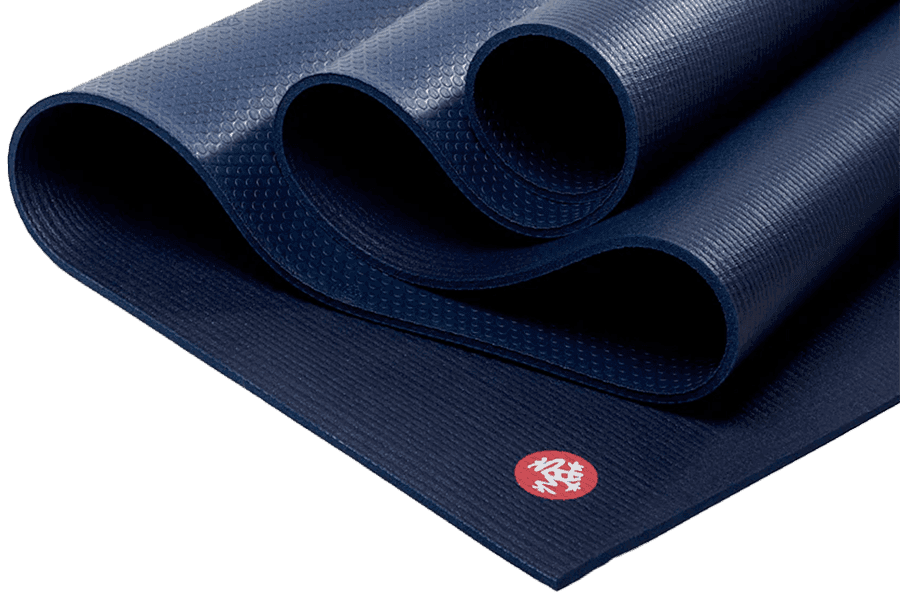
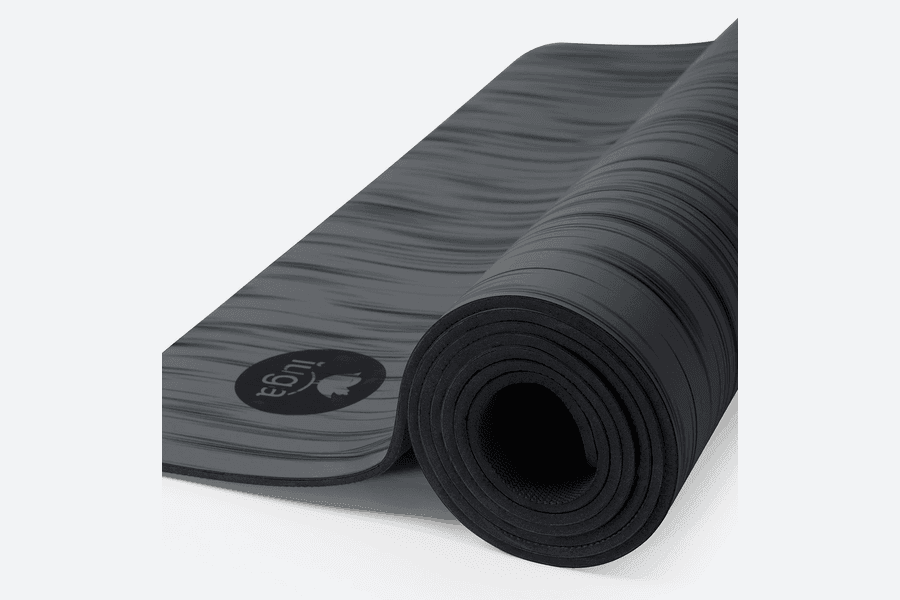
Price
The IUGA lists for about $77 less.
$144
List price · check price at Amazon
$66.99
List price · check price at Amazon
Thickness
The PRO is 20% thicker.
6 mm0.24″
5 mm0.2″
Weight
The IUGA is 5.4 lbs lighter.
7.5 lbs3.4 kg
2.1 lbs0.95 kg
Size
The IUGA is 1″ longer; same width.
Same on both
- 26 inches wide, roomier than the standard 24
- Enough cushion for bare-floor practice
- A few days of airing needed when new
Full specs
Dimensions
Materials & build
Buying
A permanent mat vs a grippy consumable
Most head-to-heads on this site compare mats that are at least trying to do the same job. Not this one. The Manduka PRO is 7.5 pounds of closed-cell PVC engineered to still be on your floor in ten years. The IUGA is 2.1 pounds of sweat-absorbing polyurethane over natural rubber, engineered to grip brilliantly right now and gracefully wear out. People cross-shop them because both are the sensible-sounding option at their price: $144 for the buy-it-once argument, $66.99 for the why-pay-more argument.
Both arguments are correct for different people, and figuring out which person you are takes about four questions: do you sweat, does your mat travel, how hard do you practice, and how do you feel about replacing gear.
Grip: they fail in opposite conditions
The IUGA’s polyurethane top is the whole reason the mat exists: it absorbs sweat as it lands, and GearLab found the surface performed exceptionally well when wet, calling it well suited to hot yoga on its way to a Best Value award at 75 of 100 in a 19-mat test. There’s no break-in period; it grips on day one, damp or dry.
The PRO’s grip story is the reverse. New, the closed-cell surface is slick, the mat’s most common complaint, and it needs a few weeks of practice before traction settles in; Manduka has retired its old salt-scrub advice and now simply says the slickness resolves with use. Broken in, it grips well with dry hands, but sweat sits on the closed surface and wet palms slide, so heated classes mean a towel. GearLab still ranked the PRO first overall in that same 19-mat test on the strength of everything else it does.
Practical translation: sweaty practice favors the IUGA outright, dry practice favors the broken-in PRO, and there’s no configuration where a new PRO out-grips a new IUGA.
Cushion and stability: density favors the PRO
The PRO’s 6 mm is compressed so dense it reads as a firm floor: you sink in a millimeter and stop, joints get support rather than squish, and standing balances feel anchored. The IUGA’s 5 mm has more give, and its bigger limitation is underneath: at 2.1 pounds the mat is light enough that GearLab noticed it can wrinkle slightly mid-practice, something the PRO’s sheer mass makes impossible.
The IUGA does counter with footprint: 72″ × 26″ against the PRO’s 71″ × 26″, both a size up from the standard cut. If you want even more room, the PRO family includes Long and Long & Wide versions; the IUGA comes in one size.
Portability: not a contest
The IUGA weighs 2.1 pounds, ships with a carry strap, and goes over a shoulder like a rolled towel. The PRO weighs 7.5 pounds and rolls into a dense cylinder that gets heavy on a shoulder within a block or two; most PROs simply live where their owners practice. If your mat commutes daily, this section alone may settle the comparison.
Durability: a decade vs a few good years
This is where the PRO earns its price. Dense closed-cell PVC barely wears, decade-old PROs are unremarkable, and Manduka backs the mat with a lifetime guarantee, defined in the fine print as roughly 10 years of regular use, one replacement, proof of purchase from an authorized seller; on Amazon, that means sold and shipped by Amazon itself.
The IUGA is honest about being a consumable even if its marketing isn’t: GearLab’s durability research points to the absorbent surface wearing with regular sweaty use and possible flaking after several years of intensive practice, and heavy hot yoga shortens the timeline further because the sweat it absorbs works into the mat. Coverage is 45-day returns and nothing after. At $66.99, a few good years is a fair deal. It’s just a different deal than the PRO is offering.
Materials, smell, and allergies
The PRO is PVC with no natural rubber anywhere in it, carries an OEKO-TEX Standard 100 certification, and is made in Germany. That makes it the safe pick for latex allergies; the IUGA’s natural rubber base can carry trace latex proteins. The IUGA’s eco framing (the name literally leads with it) rests on the rubber base and the PVC-free build, but neither mat here carries an environmental certification worth weighing.
Both need airing when new. The IUGA’s is the stronger case: despite odorless marketing, GearLab’s testers reported a strong out-of-box smell that faded over days, echoed in owner reviews. The PRO’s new-mat smell is milder and fades on a similar timeline.
Price and the cost-per-year view
List prices are $144 and $66.99, and the IUGA’s street price often drifts lower on Amazon. Check the current price of the PRO at Amazon and the IUGA at Amazon.
Stretched over time, the gap shrinks for committed practitioners: one $144 mat that runs a decade costs less per year than replacing a $66.99 mat every three or four. But that arithmetic only works if the PRO actually suits your practice; a decade of towel-covered hot yoga on a closed-cell mat is a decade of the wrong mat, however durable.
Bottom line
Get the PRO if your palms stay mostly dry, your mat stays mostly home, and you like the idea of never shopping for one again. It’s the better surface for balance and joint support and the only mat here with a real warranty. Get the IUGA if you sweat, carry your mat, or simply won’t spend three digits; it grips better than mats twice its price and asks only that you accept its lifespan.
Two adjacent comparisons worth a look before deciding: if the IUGA’s grip style appeals but you want the premium version, see Liforme vs IUGA; if you want the PRO’s durability with better sweat handling than PVC offers, see PRO vs Jade Harmony.
Manduka PRO
List price $144
Frequently Asked Questions
- Which is better for hot yoga, the Manduka PRO or the IUGA?
- The IUGA, decisively. Its polyurethane top absorbs sweat as it lands, and GearLab found the surface performed exceptionally well when wet, calling it well suited to hot yoga. The PRO is closed-cell PVC: sweat pools on the surface and wet palms slide, so a towel becomes mandatory in heated classes. One caveat: heavy sweat gradually soaks into the IUGA's absorbent top, which GearLab notes shortens its lifespan with regular hot practice.
- How long does each mat last?
- This is the PRO's whole argument. Dense closed-cell PVC barely wears, PRO mats routinely stay in service for a decade or more, and Manduka backs it with a lifetime guarantee. The IUGA is a few-year mat: GearLab's durability research points to the absorbent surface wearing with regular sweaty use and possible flaking after several years of intensive practice. At $66.99 that's a fair trade, but it is the trade.
- Does the Manduka PRO really start out slippery?
- Yes, and it's the most common complaint about the mat. The closed-cell surface ships slick and needs a few weeks of regular practice before the grip comes in. Manduka retired its old salt-scrub advice; the current position is that the slickness resolves with use. The IUGA has no break-in at all, which is part of what makes it feel like the easier mat in its first month.
- How big is the weight difference in practice?
- Larger than the numbers suggest. The PRO's 7.5 pounds rolls into a dense cylinder you feel on a shoulder by the end of a block's walk; it's a mat that mostly stays where you practice. The IUGA's 2.1 pounds goes over a shoulder like a beach towel, and IUGA includes a carry strap in the box. The flip side of that lightness is that GearLab noticed the IUGA can wrinkle slightly mid-practice, where the PRO lies planted.
- Which is safer for a latex allergy?
- The PRO. It's PVC with no natural rubber anywhere in it, and it carries an OEKO-TEX Standard 100 certification. The IUGA is built on a natural rubber base, and natural rubber can carry trace latex proteins, so it's the riskier choice for a genuine latex allergy.
- Does the IUGA smell out of the box?
- Expect an initial odor. IUGA markets the mat as odorless, but GearLab's testers reported a strong smell that faded with airing out, and owner reviews mention the same. Give it a few days unrolled in a ventilated room. The PRO has a milder new-mat smell on a similar timeline.
Related comparisons
- Manduka Begin vs IUGA Eco Friendly Non Slip PU
- Manduka X vs IUGA Eco Friendly Non Slip PU
- Manduka PRO vs b, halfmoon B Mat Strong 6mm
- Gaiam Performance Dry-Grip 5mm vs IUGA Eco Friendly Non Slip PU
- Manduka PRO vs Alo Warrior
- IUGA Eco Friendly Non Slip PU vs Hugger Mugger Earth Elements 5mm
- Manduka PRO vs Yoloha Unity Pro Cork
- JadeYoga Level One vs IUGA Eco Friendly Non Slip PU
- Manduka PRO vs JadeYoga Harmony XW