Gaiam Dry-Grip vs IUGA PU Mat: Which One Should You Buy?
These two live on the same Amazon shelf at nearly the same price, and both pitch themselves as the affordable performance upgrade. Independent testing splits them decisively on the thing their names promise, which makes most of this comparison simpler than the usual coin flip. There are still two specific buyers who should take the Gaiam.
As an Amazon Associate, we earn from qualifying purchases made through links on this page. How this works
The quick answer
GearLab tested both in the same 19-mat lineup and the results weren't close: the IUGA earned a Best Value award at 75 of 100, with a polyurethane surface that performed exceptionally well with sweat, while the Dry-Grip's wet grip landed near the bottom and GearLab steered it toward stretch practice and slower flows. The IUGA is also lighter at 2.1 pounds, bigger at 72 by 26 inches, and cheaper at list. The Gaiam's real advantages are narrower: it's latex-free PVC where the IUGA sits on a natural rubber base, it's softer for gentle practice, and it carries a lifetime guarantee against the IUGA's 45-day return window.
Most people cross-shopping these should get the IUGA. Get the Gaiam if a latex allergy rules out rubber, or if your practice is slow and dry and the plush feel plus lifetime coverage appeal.
Get the Dry-Grip if...
- You have a latex allergy; it's latex-free PVC
- Your practice is slow, unheated, and mostly dry
- You want a softer, more forgiving surface
- A lifetime guarantee on paper matters to you
Get the IUGA if...
- You sweat at all; its wet grip tested excellent
- You carry your mat (2.1 pounds vs 4.25)
- You want the bigger surface (72″ × 26″ vs 68″ × 24″)
- You'd rather pay less at list price
Side by side
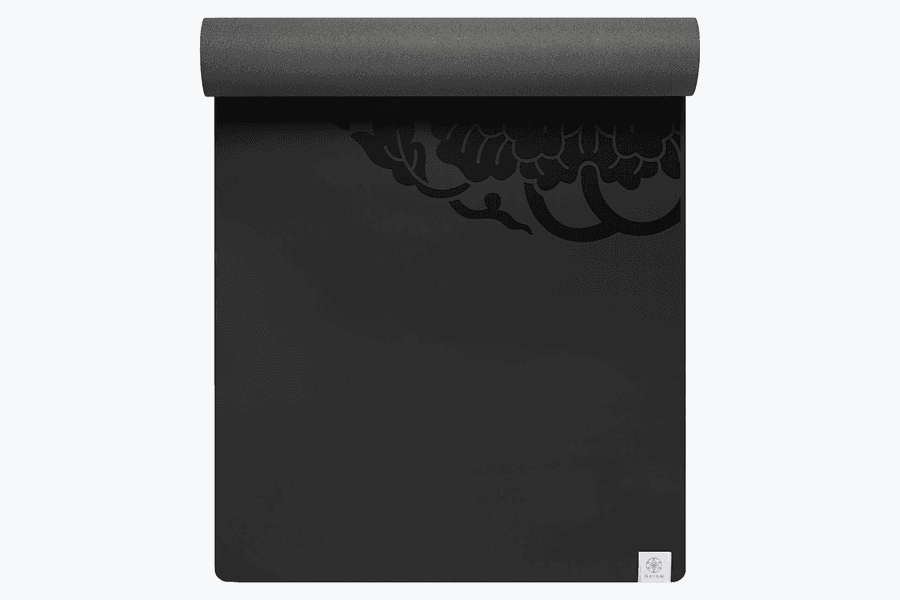
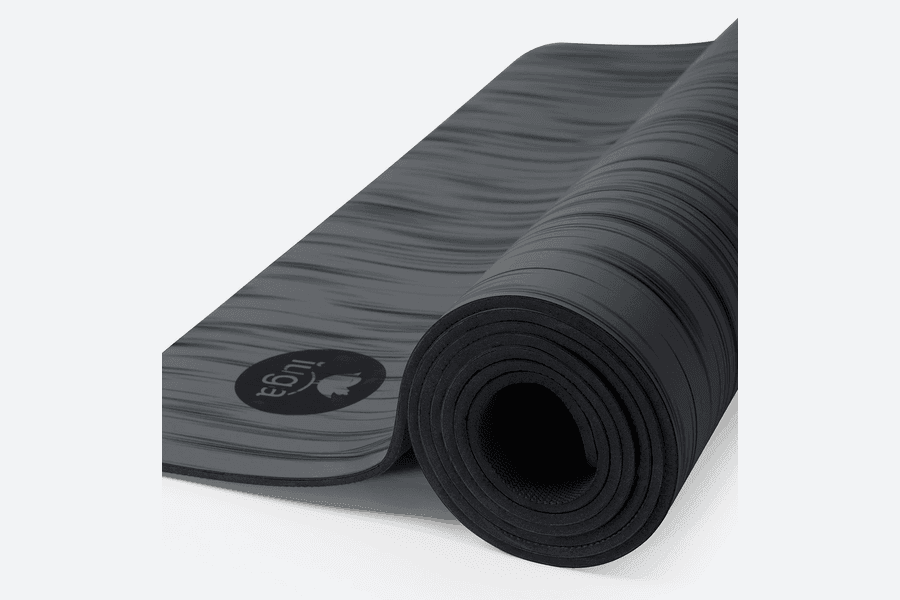
Price
The IUGA lists for about $3 less.
$69.98
List price · check price at Amazon
$66.99
List price · check price at Amazon
Thickness
Identical thickness.
5 mm0.2″
5 mm0.2″
Weight
The IUGA is 2.1 lbs lighter.
4.25 lbs1.9 kg
2.1 lbs0.95 kg
Size
The IUGA is 4″ longer; the IUGA is 2″ wider.
Same on both
- About 5 mm of cushion
- Smooth, non-tacky top surfaces
- An airing-out ritual when new
- Street prices that drift below list on Amazon
Full specs
Dimensions
Materials & build
Buying
Same shelf, same pitch, very different test results
Search Amazon for a yoga mat between fifty and seventy dollars and these two dominate the results: the Gaiam Performance Dry-Grip at $69.98 and the IUGA PU mat at $66.99. Both promise the same thing, a surface that handles sweat without the price of a Lululemon or Liforme, and from product photos they look interchangeable: smooth tops, similar thickness, similar money.
GearLab put both through the same 19-mat test, and the results split them so cleanly that most of this page writes itself. We’ll cover the split first, then the two situations where the loser is still the right buy.
Grip: one of these does what both promise
The IUGA’s top is polyurethane over natural rubber, the construction premium sweat mats use, and it behaves like one: GearLab found the surface performed exceptionally well when wet, called it well suited to hot yoga, and gave the mat a Best Value award at 75 of 100. There’s no break-in; it grips from the first class, damp or dry.
The Dry-Grip is PVC under a coating, and the coating handles light moisture at best. GearLab rated its wet grip near the bottom of the same lineup, found traction fell apart in sweaty sessions, and recommends the mat for stretch practice and slower flows rather than hot or dynamic classes. With dry palms it’s perfectly secure; the name just promises a condition it can’t deliver.
If sweat is any part of your practice, this section decides the comparison and the IUGA wins it outright.
Cushion and feel: the best category for the Gaiam
Both are about 5 mm thick, and here the Dry-Grip earns real points: GearLab rated its comfort highly, and its softer, more forgiving foam is genuinely pleasant for the stretch and restorative work it grips well enough to serve. The IUGA is a bit firmer, which suits moving practice, and its drawback is underneath: at 2.1 pounds it’s light enough that GearLab noticed slight wrinkling mid-practice, where the heavier Gaiam stays put.
If your practice is slow, floor-based, and dry, this is the one section the Gaiam wins on merit rather than by exception.
Size and weight: the IUGA gives you more and carries easier
The IUGA is 72″ × 26″, a size up from the standard cut in both directions; the Dry-Grip is a standard 68″ × 24″. Four inches of length and two of width are the difference between fitting a six-footer and not. The IUGA also weighs half as much, 2.1 pounds against 4.25, and includes a carry strap in the box. For a mat that commutes, there’s no contest; the weight only cuts the other way in the wrinkling noted above.
Durability and the backwards warranty situation
Neither mat is a long-haul purchase. The IUGA’s absorbent top wears with regular sweaty use, and GearLab flags possible flaking after several years of hard practice. The Dry-Grip’s weak points are its coating, which GearLab flagged for limited long-term durability, and its dye, which transferred onto testers’ clothing when new.
The paper coverage runs backwards from the test results: Gaiam backs its mat for life while IUGA offers a 45-day return window and nothing after. As always, lifetime guarantees cover manufacturing defects rather than the gradual wear that actually retires mats, so treat Gaiam’s as a nice-to-have rather than a reason to pick the weaker performer. Realistically, plan on a few good years from either mat.
Materials and the latex question
This is the second situation where the Gaiam is the right buy. It’s PVC, latex-free, and marketed as free of six common phthalates; the IUGA sits on a natural rubber base, which can carry trace latex proteins. For a genuine latex allergy, the Gaiam is the only safe option of the two, and no grip score changes that.
New-mat rituals apply to both. The Gaiam wants two to three days of airing per Gaiam’s own care instructions plus a towel buff to deal with the dye transfer. The IUGA, despite odorless marketing, ships with a strong smell that GearLab’s testers and plenty of owners report; a few days unrolled in a ventilated room clears it.
Price and where to buy
At list the IUGA is the cheaper mat, $66.99 against $69.98, and it’s the better one, which doesn’t happen often. Street prices drift below list on both, so check the current price of the Dry-Grip at Amazon and the IUGA at Amazon. The Gaiam’s one retail advantage: big-box stores stock it, so it’s the mat you can see in person and take home today.
Bottom line
Get the IUGA unless one of two things is true. It grips when wet, which is the job both mats claim; it’s bigger, lighter, and cheaper at list; and independent testing backs all of that up. Get the Dry-Grip if a latex allergy takes rubber off the table, or if your practice is genuinely slow and dry and the softer cushion plus lifetime paper appeal more than performance you wouldn’t use.
If the IUGA has you curious what its construction looks like further up the price ladder, our Liforme vs IUGA and Lululemon The Mat vs IUGA pages cover both premium versions of this surface.
Frequently Asked Questions
- Which is better for hot yoga or sweaty practice?
- The IUGA, and it's the clearest call in this comparison. GearLab found its polyurethane surface performed exceptionally well when wet and called it well suited to hot yoga. The same test put the Dry-Grip's wet traction near the bottom of 19 mats, with grip falling apart in sweaty sessions. One IUGA caveat: heavy sweat gradually works into the absorbent top and shortens its lifespan with regular hot practice.
- Is the Gaiam Dry-Grip's name accurate?
- Not really, by GearLab's testing. The topcoat handles light moisture, but wet palms slide, and GearLab recommends the mat for stretch practices and slower flows rather than hot or dynamic classes. Think of it as a comfortable dry-conditions mat with a coating, not a sweat mat. If the name is what drew you to it, the IUGA is the mat actually doing that job.
- Which is safer for a latex allergy?
- The Gaiam, without question. It's PVC, marketed as latex-free and free of six common phthalates. The IUGA is built on a natural rubber base, and natural rubber can carry trace latex proteins. For a genuine latex allergy this single difference should decide the comparison, whatever the grip scores say.
- How do durability and warranties compare?
- It's a strange pairing. The IUGA is the better mat with the worse coverage: GearLab flags surface wear with regular sweaty use and possible flaking after several years, and IUGA offers only 45-day returns. The Gaiam carries a lifetime guarantee, rare at this price, but GearLab flagged its coating's long-term durability too, and guarantees cover defects rather than the wear that actually retires mats. Plan on a few good years from either.
- What should I know about each mat when it's new?
- Both have a first-week ritual. The Gaiam needs two to three days of airing out per Gaiam's own instructions, and GearLab found its surface dye transferred onto clothing at first, so buff it with a towel before class. The IUGA is marketed as odorless but testers and owners report a strong initial smell that fades with a few days unrolled in a ventilated room. Neither issue persists.
- Which is actually cheaper?
- At list, the IUGA: $66.99 against the Gaiam's $69.98, and the IUGA includes a carry strap. Both sell mostly through Amazon, where street prices drift below list on both sides, so check current prices before assuming; the gap moves around. The Gaiam is also stocked at big-box stores, so it's the one you can buy in person today.
Related comparisons
- Manduka X vs Gaiam Performance Dry-Grip 5mm
- Manduka Begin vs IUGA Eco Friendly Non Slip PU
- Manduka X vs IUGA Eco Friendly Non Slip PU
- JadeYoga Level One vs Gaiam Performance Dry-Grip 5mm
- IUGA Eco Friendly Non Slip PU vs Hugger Mugger Earth Elements 5mm
- Manduka Begin vs Gaiam Performance Dry-Grip 5mm
- JadeYoga Level One vs IUGA Eco Friendly Non Slip PU
- Gaiam Performance Dry-Grip 5mm vs Hugger Mugger Earth Elements 5mm
- IUGA Eco Friendly Non Slip PU vs Gaiam Performance Dry-Grip Long & Wide