Liforme vs IUGA PU Mat: Which One Should You Buy?
The IUGA exists because mats like the Liforme exist: a polyurethane top over a natural rubber base, the construction that made grippy-when-wet the premium standard, sold at well under half the price. GearLab tested both and liked both. What's left is figuring out what the $98 gap actually buys, and whether you'd use any of it.
As an Amazon Associate, we earn from qualifying purchases made through links on this page. How this works
The quick answer
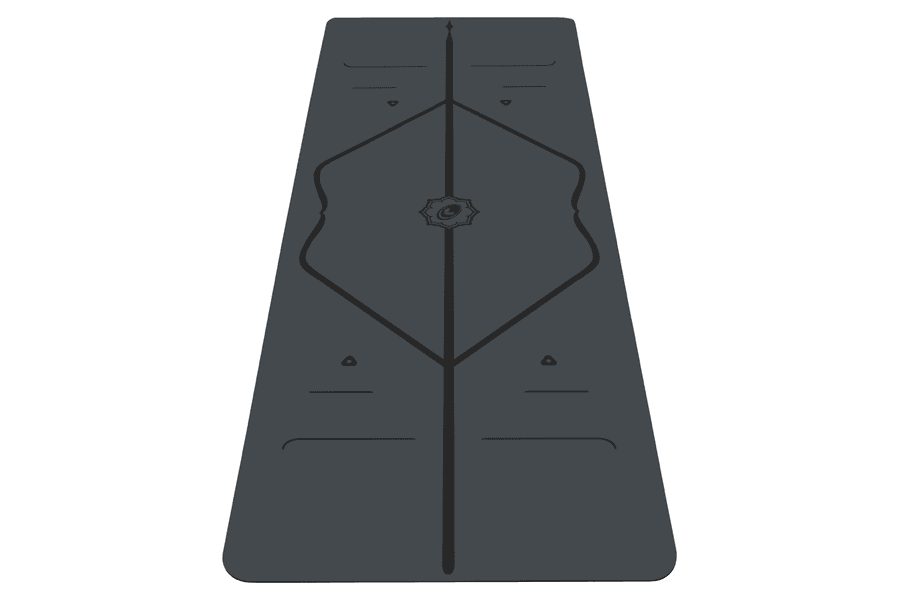
Both mats use the same recipe, and both grip when wet: GearLab rated the Liforme's traction among the best it tested, and found the IUGA's surface performed exceptionally well with sweat on its way to a Best Value award at 75 of 100. The Liforme's case is everything around the grip. It's a bigger platform at 72.8 by 26.8 inches, a denser 5.5 pound build that stays put where the 2.1 pound IUGA can wrinkle mid-flow, and its etched alignment lines took GearLab's top pick for fine-tuning placement. Both tops wear down with hard use, and neither carries a warranty worth naming.
If the alignment lines and the planted feel are features you'll use every practice, the Liforme earns its price. If you mainly want the wet grip, the IUGA delivers most of it for $98 less.
Get the Liforme if...
- You'll actually use the etched alignment lines
- You want the bigger 72.8″ × 26.8″ platform
- You want a mat that stays flat under fast transitions
- You want the stronger tested wet grip of the two
Get the IUGA if...
- You'd rather keep about $98
- Your mat commutes daily (2.1 pounds vs 5.5)
- You're fine replacing a worn mat every few years
- You want slightly more cushion (5 mm vs 4.2)
Side by side
Price
The IUGA lists for about $98 less.
$165
List price · check price at Amazon
$66.99
List price · check price at Amazon
Thickness
The IUGA is 19% thicker.
4.2 mm0.17″
5 mm0.2″
Weight
The IUGA is 3.4 lbs lighter.
5.5 lbs2.5 kg
2.1 lbs0.95 kg
Size
The Liforme is 0.8″ longer; the Liforme is 0.8″ wider.
Same on both
- Polyurethane top over a natural rubber base
- Grip that holds with sweaty palms
- Wears like a consumable; no long-term warranty either way
- Trace-latex caution: not for latex allergies
Full specs
Dimensions
Materials & build
Buying
The original and the copy that mostly works
The Liforme helped define the modern premium mat: a polyurethane top that absorbs sweat and grips harder as your hands get damp, bonded to a natural rubber base, with alignment lines etched into the surface. It costs $165. The IUGA takes that construction, drops the lines, and sells it for $66.99, and unlike most budget copies it has independent testing on its side.
So this page isn’t about whether the IUGA is a scam; it’s not. It’s about the three real things the extra $98 buys, and how to tell whether you’d use any of them.
Grip: both deliver, one has the stronger record
The shared surface chemistry means both mats do the thing this category is famous for: grip that holds with sweaty palms. GearLab rated the Liforme’s traction among the best it tested, describing the surface as gecko-like, with a waterproof middle layer that keeps sweat from reaching the rubber core. The same outlet found the IUGA’s surface performed exceptionally well when wet, called it well suited to hot yoga, and gave it a Best Value award at 75 of 100 in a 19-mat lineup.
If you’re buying purely for grip, the fair summary is that the IUGA gets you most of the way there. The Liforme’s edge is real but incremental; the differences that actually justify its price are elsewhere on this page.
The alignment lines: the feature with no cheap substitute
The Liforme’s etched AlignForMe markers are the one thing the IUGA doesn’t even try to copy. They give you consistent reference points for hand and foot placement, spacing, and centering, and GearLab named the Liforme its best mat for fine-tuning alignment. Home practitioners without a teacher watching get the most from them; teachers use them for demonstrating placement.
Be honest with yourself here, because this is most of the money. If you’d glance at the lines daily, the Liforme is buying you something no other mat in this comparison offers. If you’d stop noticing them in a month, you’re paying a premium for etching you ignore.
Size and stability: the quiet second difference
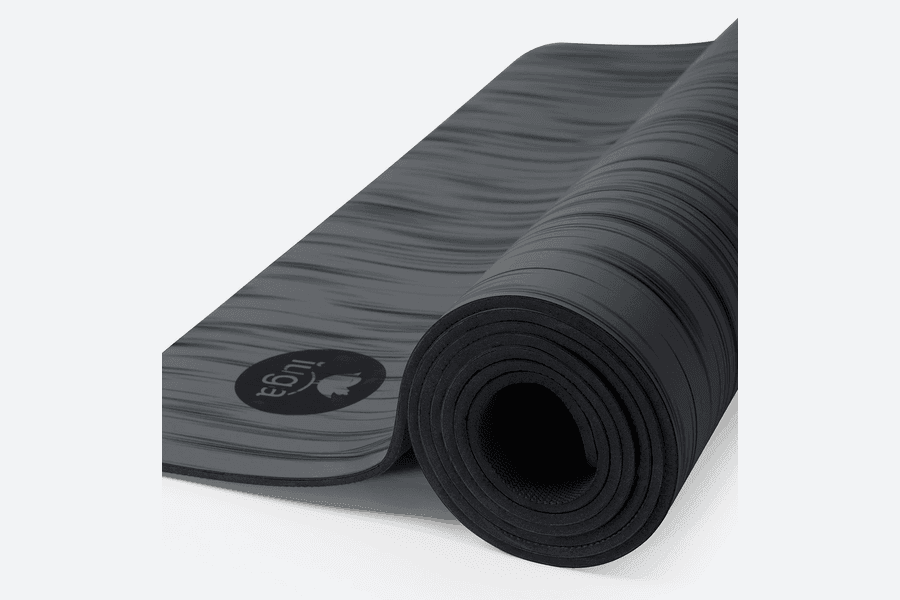
The Liforme is the bigger platform: 72.8″ × 26.8″ against the IUGA’s 72″ × 26″, both generously larger than a standard mat. The more meaningful gap is mass. The Liforme’s 5.5 pounds hold it dead flat through fast transitions, while the 2.1-pound IUGA is light enough that GearLab noticed slight wrinkling mid-practice. If your practice is quick vinyasa with jump-backs, that difference surfaces every session; in slow practice you may never see it.
Underfoot, the Liforme is thinner and firmer at 4.2 mm, which reads as stability under standing balances. The IUGA’s 5 mm is slightly more forgiving on knees. Neither is plush; these are grip-first mats.
Carrying them: the IUGA wins easily
At 2.1 pounds with an included carry strap, the IUGA is a mat you take everywhere without thinking about it. The Liforme is 5.5 pounds and bigger in every direction, and while it ships with a nice carry bag, a daily commute with it is a commitment. Light weight cuts both ways, as the stability section explains, but for pure portability there’s no contest.
Durability: two consumables on different clocks
Polyurethane tops wear; that’s the tax on this grip style, and both mats pay it. The IUGA pays sooner: GearLab flags surface wear with regular sweaty practice and possible flaking after several years of hard use, since the sweat the top absorbs works into the mat over time. The Liforme lasts longer under equal care, but Liforme is unusually candid that its materials are designed to biodegrade and that lifespan depends on how hard you practice.
Neither backs the wear with coverage: Liforme offers a 30-day money-back guarantee, IUGA a 45-day return window, and that’s it on both sides. Budget for replacement eventually with either; the question is whether you’re replacing a $66.99 mat or a $165 one when the time comes.
Materials, smell, and allergies
Construction is near-identical: polyurethane over natural rubber, which means the same latex caution applies to both. Natural rubber can carry trace latex proteins, so neither mat suits a genuine latex allergy; a PVC or TPE mat sidesteps that question.
On smell, expect an airing-out period with the IUGA despite its odorless marketing; GearLab’s testers reported a strong out-of-box smell that faded over days, and owner reviews agree. Care is the same for both: gentle cleaners, no machine washing, and keep them out of prolonged sun, which degrades the rubber base.
Price and where to buy
List prices are $165 and $66.99. The IUGA’s street price frequently drifts below list on Amazon; the Liforme mostly holds its number. Check the current price of the Liforme at Amazon and the IUGA at Amazon. Both include a carry solution in the box, a bag with the Liforme and a strap with the IUGA.
One framing that helps: the $98 gap is not buying grip, which both deliver. It’s buying the alignment system, the bigger and steadier platform, and a longer (though still finite) lifespan. Price those three against your own practice and the decision usually makes itself.
Bottom line
Get the Liforme if the alignment lines would be part of your daily practice, if you move fast enough that a wrinkling mat would grate, or if you want the most proven version of this grip with the biggest platform under it. Get the IUGA if grip is the point and $98 is real money to you; it’s the strongest budget mat in this style we know of, and testing backs it up.
If you’re still mapping the category, the IUGA also stands in for Lululemon’s version of this surface in our The Mat vs IUGA comparison, and the Liforme faces its premium rivals in Alo Warrior vs Liforme and Jade Harmony vs Liforme.
Liforme Classic
List price $165
Frequently Asked Questions
- Is the IUGA a good budget alternative to the Liforme?
- For the grip, yes. It copies the construction that makes the Liforme work, a sweat-absorbing polyurethane top on natural rubber, and GearLab's testing found the surface gripped exceptionally well when wet, awarding it Best Value. What the copy doesn't include: the Liforme's etched alignment lines, its bigger footprint, and the density that keeps a mat flat under fast transitions. Whether those are worth $98 is the whole question.
- Are the Liforme's alignment lines worth paying for?
- They're the main feature the IUGA can't imitate, so it depends on your practice. The etched markers give consistent reference points for hand and foot placement and centering, GearLab named the Liforme its best mat for fine-tuning alignment, and teachers and home practitioners get daily value from them. If you know you'd never look down at them, the IUGA's plain surface loses you nothing.
- Which is better for hot yoga?
- Both are genuinely good, which is why they're cross-shopped. GearLab rated the Liforme's wet grip among the best it tested, helped by a waterproof middle layer that keeps sweat from soaking through to the rubber. The IUGA's surface also excelled when wet in GearLab's testing, with one caveat: heavy sweat works into the absorbent top over time, which shortens its lifespan with regular hot practice. For occasional heated classes, either works.
- How long will each mat last?
- Plan on both wearing out; they differ in how soon. The IUGA's lifespan is a few good years: GearLab flags surface wear with regular sweaty use and possible flaking after several years of hard practice. The Liforme lasts longer under equal care but is deliberately built from materials that biodegrade, and Liforme itself says lifespan depends on how hard you practice. Neither offers real coverage: Liforme gives a 30-day money-back guarantee, IUGA 45-day returns.
- How different do they feel underfoot?
- More than the shared surface suggests. The Liforme is firmer and thinner at 4.2 mm, with 5.5 pounds of mat holding it flat, which reads as stability under standing balances. The IUGA is 5 mm with a bit more give, and at 2.1 pounds it's light enough that GearLab noticed slight wrinkling mid-practice. Neither is plush; these are grip-first mats.
- What comes in the box with each?
- Both include a carry solution: the Liforme ships with a free carrying bag, the IUGA with a strap. The Liforme sells through liforme.com and Amazon; the IUGA sells on Amazon and IUGA's own site, and its street price often drifts below the $66.99 list.
Related comparisons
- Manduka Begin vs IUGA Eco Friendly Non Slip PU
- Manduka X vs IUGA Eco Friendly Non Slip PU
- Gaiam Performance Dry-Grip 5mm vs IUGA Eco Friendly Non Slip PU
- IUGA Eco Friendly Non Slip PU vs Hugger Mugger Earth Elements 5mm
- JadeYoga Level One vs IUGA Eco Friendly Non Slip PU
- IUGA Eco Friendly Non Slip PU vs Gaiam Performance Dry-Grip Long & Wide
- 42 Birds The Robin vs IUGA Eco Friendly Non Slip PU
- JadeYoga Harmony XW vs Liforme Classic
- Liforme Classic vs Yoloha Unity Pro Cork