Manduka Begin vs IUGA Eco Friendly PU: Which One Should You Buy?
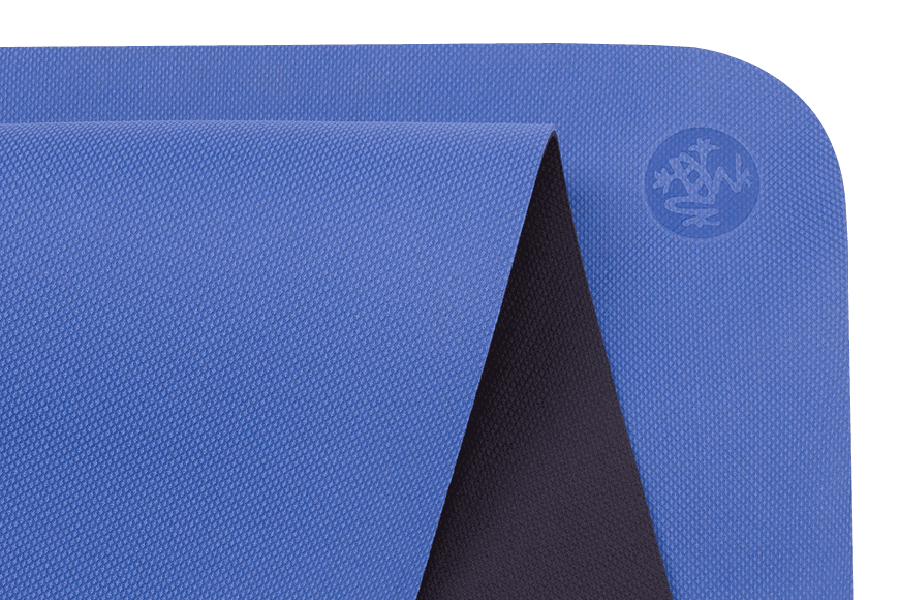
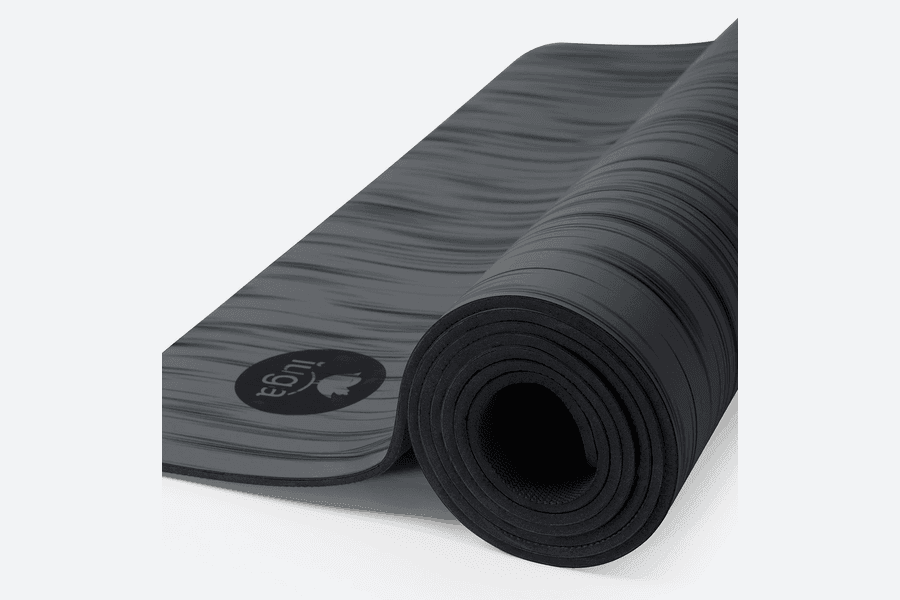
Five dollars separates these, and they are aimed at different beginners. The Manduka Begin is a light TPE mat with a stripe down the middle to line yourself up against, sold to people in their first year. The IUGA is a polyurethane-topped rubber mat sold for hot yoga, and it picked up OutdoorGearLab's Best Value Upgrade award. Same money, very different mats.
As an Amazon Associate, we earn from qualifying purchases made through links on this page. How this works
The quick answer
The IUGA is the stronger mat on paper and in testing. GearLab rated it 8 of 10 for dry grip, 7 for wet, and 8 for comfort and support, placing it 8th of 19 overall at 75 of 100, ahead of mats at twice the price. It weighs 2.1 pounds, comes with a carry strap, and is two inches wider. The Begin's case is narrower and real: a center alignment stripe that gives beginners symmetry feedback nothing else at this price offers, plus a closed-cell surface that never soaks up sweat and wipes clean in seconds.
If you sweat, or you want the better all-round mat, buy the IUGA. If you are new and want the alignment help, the Begin is worth the trade.
Get the Manduka Begin if...
- You want the center alignment stripe to practice against
- You want a closed-cell surface that never absorbs sweat or holds odor
- You want the simplest possible cleaning routine
- You like that it is reversible, with a usable surface on both faces
Get the IUGA if...
- You practice hot yoga or sweat a lot and need grip that holds up
- You want the wider mat, 26 inches against 24
- You want the longer mat, 72 inches against 68
- You want GearLab's Best Value Upgrade pick, rated 75 of 100
Side by side
Price
The Begin lists for about $5 less.
$62
List price · check price at Amazon
$66.99
List price · check price at Amazon
Thickness
Identical thickness.
5 mm0.2″
5 mm0.2″
Weight
The IUGA is 0.4 lbs lighter.
2.5 lbs1.1 kg
2.1 lbs0.95 kg
Size
The IUGA is 4″ longer; the IUGA is 2″ wider.
Same on both
- Roughly the same price, within about $5
- 5 mm thick
- Light enough to carry without planning around it
- No warranty beyond a return window
Full specs
Dimensions
Materials & build
Buying
Same money, two different beginners
About $5 separates these. The Manduka Begin is $62 of closed-cell TPE with an alignment stripe printed down the middle, sold to people in their first year. The IUGA is $66.99 of polyurethane over natural rubber, sold explicitly for hot yoga, and it took OutdoorGearLab’s Best Value Upgrade award.
Both are 5 mm and both are light. After that they diverge completely, and the divergence is about sweat. One mat sends it into the surface and one leaves it on top.
Grip: the IUGA has the tested record
GearLab rated the IUGA 8 of 10 for dry grip and 7 for wet, placed it 8th of 19 overall at 75 of 100, and gave it the Best Value Upgrade award, ahead of several mats at twice the price. The polyurethane top pulls sweat down away from your palms, which is what holds that wet number up.
The Begin was not in that test. With dry hands its soft-touch TPE holds a steady beginner practice without complaint, and Manduka is upfront that it does not grip like the brand’s premium mats. Closed-cell means sweat has nowhere to go, so it sits where it lands. For a calm home practice that is fine. For a warm studio it is the mat’s ceiling.
The gap shows up in a specific way. On the Begin a wet patch stays exactly where it lands until you wipe it, so the slick spot ends up being where your hands keep going. The IUGA moves that moisture down out of the contact area, so the surface under your palms late in a class resembles what it was at the start. That is worth more than the single point separating their dry ratings.
The alignment stripe, and who it is for
The Begin’s one distinguishing feature is a stripe down the middle. Square your hands to it in down dog, your back heel to it in warrior, your spine to it lying down, and you get symmetry feedback that otherwise requires a teacher watching. Beginners drift off center constantly and rarely know it. The IUGA has nothing comparable.
It is worth two caveats. The stripe is printed rather than etched, so heavy use fades it over the years. And it stops mattering once the basic check becomes automatic, usually somewhere in the first year or two. If you are already past that, the stripe is not a reason to choose this mat.
Cushion and support
GearLab scored the IUGA 8 of 10 for comfort and support, which is strong for a 5 mm mat and better than several thicker ones in the same lineup. It sits on a natural rubber base that gives without collapsing under a knee.
The Begin is 5 mm of soft-touch TPE, comfortable to lie on and softer under a concentrated load than a dense mat would be. It is pleasant rather than supportive. Neither mat bottoms out, and for a gentle practice you would be happy on either; the IUGA is the one that holds up better through a long floor sequence on tile.
Size, where the Begin gives up ground
The Begin is 68 by 24 inches. The IUGA is 72 by 26. Four inches of length and two of width sounds minor and is not: at 68 inches, anyone around five foot eight or taller will put a hand or a heel on the floor in a long lunge.
Manduka does not sell a longer Begin, so the footprint is fixed. If you already find standard mats tight, the IUGA solves that for roughly the same money, and this is probably the single strongest practical argument for it.
The upside of the Begin’s footprint is storage. At 68 by 24 inches and 5 mm it rolls small enough to live behind a door or under a sofa, which matters more in a small apartment than the four inches of length do in a lunge. If your mat has to disappear between sessions, that is a real point in its favor.
Weight and carrying
Both are unusually light. The Begin is 2.5 pounds by Manduka’s spec; the IUGA is 2.1 pounds, and GearLab measured exactly that on their own scale, which does not always happen.
The IUGA also ships with an adjustable carry strap, which at this price is a real extra rather than a token one. The Begin comes with nothing in the box. Neither is a mat you plan a commute around, but the IUGA is marginally lighter and easier to carry over a shoulder.
Cleaning, odor, and drying time
This is the Begin’s clearest win. Closed-cell TPE keeps sweat and dirt on the surface, so a wipe finishes the job and you can roll it up straight after a session. Nothing sits inside the mat, so nothing develops a smell, and it is the easier mat to share or leave somewhere.
The IUGA absorbs by design, so it needs real drying time before it gets rolled, and absorbent mats put away damp are how odor problems start. GearLab still scored its care and cleaning 8 of 10, so this is a habit rather than a headache, but it is a habit the Begin does not ask for.
Durability and coverage
Neither is a long-horizon mat. The Begin’s printed stripe fades and its TPE shows wear where hands and feet land, though TPE tends to give up slowly by compressing rather than by the surface failing. The IUGA’s polyurethane top is the same material that scuffs and stains on much more expensive mats, and surface wear is its usual complaint.
Coverage is thin on both sides: 30 days from Manduka, 45 from IUGA, and no warranty from either. Manduka’s lifetime guarantee applies to the PRO line rather than to the Begin, which catches people out regularly.
Price and where to buy
Both sell on Amazon as well as direct and both discount by colorway often enough that the $5 gap can invert on any given week. Compare the current Begin price at Amazon and the current IUGA price at Amazon rather than assuming list. Manduka has also been running the Black Begin colorway below the others on its own site.
On choice, the Begin wins: ten colorways to the IUGA’s five. On what you get for the money, the IUGA is the more surprising mat, since it outscored several $150 competitors in a standardized test.
Availability differs too. The Begin turns up in Manduka’s own stores and most yoga retailers, so returns are straightforward. IUGA is largely an online brand, and its 45 day window is longer than Manduka’s 30, which partly offsets the difference.
Bottom line
Get the Begin if you are new, practicing at home, and the alignment stripe sounds useful to you. It is the easier mat to clean, it never holds odor, and the stripe is the best teaching feature at this price. Its limits are a small footprint and no answer for sweat.
Get the IUGA if you go to a studio, especially a warm one. Better grip, more length and width, a strap in the box, and a test result that puts it above much pricier mats. If you want to see how the Begin fares against the other budget option, our Begin vs Gaiam Premium Reversible comparison covers it.

Manduka Begin
List price $62
Frequently Asked Questions
- Which is better for hot yoga?
- The IUGA, and it is not close. Its polyurethane top pulls sweat off the surface, which is why GearLab rated its wet grip 7 of 10, and IUGA sells it explicitly as a hot yoga mat. The Begin is closed-cell TPE: sweat sits on top with nowhere to go, and it will get slick. Manduka positions the Begin as a starter mat for a home or studio practice, not a heated one. If your classes are hot, the Begin needs a towel from day one.
- How useful is the Begin's alignment stripe?
- Genuinely useful in the first year and largely irrelevant after. Squaring your hands to it in down dog, your back heel to it in warrior poses, and your spine to it lying down gives you the symmetry check that otherwise takes a teacher watching. New practitioners drift off-center without noticing. The IUGA has no equivalent. The catch is that the stripe is printed, so heavy use will fade it.
- Which is easier to clean?
- The Begin, clearly. Closed-cell TPE keeps sweat and dirt on the surface, so a wipe finishes the job and you can roll it straight after a session. The IUGA absorbs by design, so it needs real drying time before it gets rolled, and absorbent mats put away damp are how odor problems start. GearLab still scored the IUGA 8 of 10 for care and cleaning, so this is a habit rather than a headache.
- How much does the size difference matter?
- More than the numbers suggest. The Begin is 68 by 24 inches, the IUGA 72 by 26. Four inches of length is the difference between hands landing on the mat in a long lunge and landing on the floor if you are around five foot eight or taller. Two inches of width shows up in wide-legged poses. The Begin's footprint is the most common complaint about it.
- Which is more durable?
- Roughly comparable, with different weak spots. The Begin's printed stripe fades and its soft-touch TPE shows wear where hands and feet land. The IUGA's polyurethane top is the same material that scuffs and stains on much more expensive mats, and surface wear is its usual complaint rather than the mat failing. Coverage is thin either way: 30 days from Manduka, 45 from IUGA, no warranty from either. Manduka's lifetime guarantee covers the PRO line, not the Begin.
- Which is the better first mat?
- It depends what kind of beginner you are. If you are practicing at home from videos and want feedback on your positioning, the Begin's stripe is the single best reason to buy it and nothing else at $62 offers it. If you are going to a studio, especially a warm one, the IUGA is the better mat in almost every other respect: grippier, bigger, lighter, and it comes with a strap.
Related comparisons
- Manduka X vs IUGA Eco Friendly Non Slip PU
- Gaiam Performance Dry-Grip 5mm vs IUGA Eco Friendly Non Slip PU
- IUGA Eco Friendly Non Slip PU vs Hugger Mugger Earth Elements 5mm
- Manduka Begin vs Gaiam Performance Dry-Grip 5mm
- Manduka Begin vs Hugger Mugger Earth Elements 5mm
- JadeYoga Level One vs IUGA Eco Friendly Non Slip PU
- Manduka Begin vs JadeYoga Level One
- IUGA Eco Friendly Non Slip PU vs Gaiam Performance Dry-Grip Long & Wide
- 42 Birds The Robin vs IUGA Eco Friendly Non Slip PU