Manduka PRO vs Gaiam Premium: Which One Should You Buy?
On paper these two look like siblings: both 6 mm thick, both PVC, both latex-free, both claiming lifetime guarantees. In practice one costs almost five times the other, and the $114 gap buys a completely different mat. This is really a comparison between committing to yoga and trying it out, and there's no shame in either.
As an Amazon Associate, we earn from qualifying purchases made through links on this page. How this works
The quick answer
The PRO is dense enough to feel like a firm floor: stable under balance poses, supportive on bone-on-floor work, and famously still in service a decade later. The Gaiam is soft, light foam that's kind to knees in gentle practice but wobbles under one-legged work, loses grip once your palms sweat, and compresses with regular use. GearLab scored the Gaiam 62 of 100 and ranked it 11th of 19 mats tested; the PRO took first place in the same test.
If yoga is already a habit, the PRO costs less per year than it looks and is much better to practice on. If you're just starting out or practice casually, the Gaiam is a perfectly sensible $30, and you can upgrade later once you know what you want.
Get the PRO if...
- You practice regularly and want a mat that lasts a decade or more
- You want firm, stable support for balance poses and joints
- You want a bigger surface (71 by 26 inches vs 68 by 24)
- You'd rather buy once than replace a soft mat every couple of years
Get the Gaiam if...
- You're new to yoga and don't want to spend $144 to find out if it sticks
- You want a light mat (3.3 pounds vs 7.5) that's easy to carry
- You prefer a softer, squishier feel for gentle or floor-based practice
- You'd rather keep about $114
Side by side
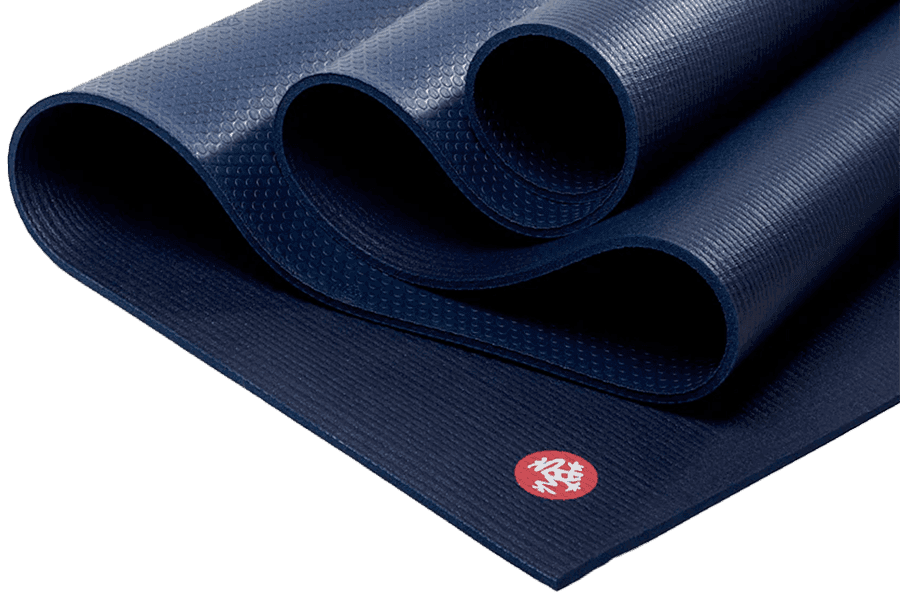
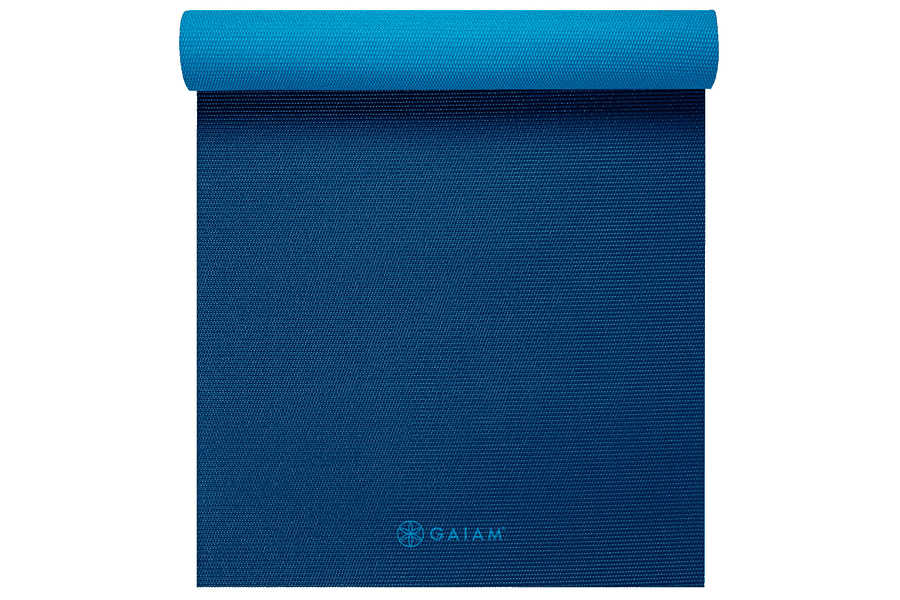
Price
The Gaiam Premium lists for about $114 less.
$144
List price · check price at Amazon
$29.98
List price · check price at Amazon
Thickness
Identical thickness.
6 mm0.24″
6 mm0.24″
Weight
The Gaiam Premium is 4.2 lbs lighter.
7.5 lbs3.4 kg
3.3 lbs1.5 kg
Size
The PRO is 3″ longer; the PRO is 2″ wider.
Same on both
- 6 mm thick
- Made of PVC, latex-free
- Slippery once palms get sweaty
- Lifetime guarantees on paper
Full specs
Dimensions
Materials & build
Buying
Same spec sheet, wildly different mats
Read the listings side by side and you’d wonder what the fuss is about: both mats are 6 mm thick, both are PVC, both are latex-free, and both come with a lifetime guarantee. Then you notice one costs $144 and the other $29.98, and one weighs 7.5 pounds while the other weighs 3.3.
That weight difference is the whole story. The PRO packs its 6 mm with dense, compressed PVC; the Gaiam fills the same height with soft, light foam. Density is what you’re paying for, and it changes how the mat feels, how it holds a balance pose, and how many years it survives. This comparison is really about whether you need what density buys.
Cushion and stability: firm floor vs soft foam
The PRO feels almost hard underfoot, in a way regulars come to love: no sink, no wobble, real support for knees and wrists on hard floors. GearLab ranked it first of the 19 mats it tested, with a perfect comfort score, largely on that supportive density.
The Gaiam is genuinely comfortable in a different way. The soft foam is kind to knees in gentle, floor-based practice, and GearLab credits its cushioning for joint protection. The cost shows up when you stand on one leg: testers found the soft surface unstable under balance poses and inversions, with your foot sinking and tilting where the PRO stays flat. The foam also compresses visibly over time with regular use.
If your practice is mostly seated, restorative, or stretching, the Gaiam’s softness is a feature. The more standing and balancing you do, the more it becomes the problem.
Grip: neither loves sweat, one improves with age
Both mats are closed-surface PVC, which means neither absorbs a drop of sweat. GearLab rated the Gaiam’s dry grip 6 of 10 and its wet grip 4 of 10, with hands slipping noticeably once things got sweaty; its textured, sticky surface is fine for a dry, gentle class and out of its depth in a heated one.
The PRO starts worse and ends better. New PRO mats are famously slick and take a few weeks of regular practice to break in, but the broken-in surface grips well and keeps improving for years. Sweat still defeats it, though. If hot yoga is your practice, neither of these is the right tool; a natural rubber mat like the Jade Harmony or an absorbent-top mat serves you better.
Size and weight
The PRO gives you a bigger platform: 71″ × 26″ against the Gaiam’s 68″ × 24″. Three inches of length and two of width are noticeable in practice, especially the width if you have broad shoulders. If you’re under about five foot eight, the Gaiam’s 68″ is plenty.
Carrying flips the result. The Gaiam’s 3.3 pounds goes over a shoulder or into a tote without a thought; it’s a genuinely portable mat. The PRO’s 7.5 pounds is a commitment, and plenty of owners eventually stop carrying theirs anywhere. If your mat rides to a studio daily, that difference matters more than it looks.
Durability: decades vs a couple of good years
Dense PVC barely wears; GearLab’s testers came across PRO mats five to twenty years old and still in service, and Manduka’s lifetime guarantee, roughly ten years of regular use in the fine print, backs the reputation. Daily practice on a PRO is a rounding error.
The Gaiam’s soft foam shows compression with regular use, which GearLab flagged as its main durability concern. For a casual practice a few times a month, it can serve for years; under daily use, expect it to pack down and lose its cushion within a couple. Gaiam does cover the mat with a lifetime guarantee, unusual at this price, though guarantees at every price tier cover defects rather than foam softening from normal use.
One shared care note: Gaiam recommends airing the mat out for two to three days before first use to release the new-mat smell, and advises keeping it out of extended sun. The PRO’s care list is shorter: wipe it down.
Who each mat is actually for
The Gaiam is a starter mat, and a good one. It’s the mat you buy when you’re not yet sure yoga will stick, when class is a once-a-week experiment, or when the mat mostly supports stretching and floor work. At $29.98 it does that job well, and GearLab recommends it for exactly this audience.
The PRO is for an established practice. If you’re on the mat several times a week, its stability, size, and lifespan repay the price many times over. Between the two extremes there’s a real middle tier worth knowing about: Manduka’s own Begin and X give you firmer footing than starter foam without the PRO’s price or weight.
Price and value
List prices are $144 and $29.98, and street prices on the Gaiam swing by colorway. Check the current price on both the PRO at Amazon and the Gaiam at Amazon before deciding.
The per-year comparison depends on your practice. For a daily practitioner, one $144 mat that runs a decade beats replacing a compressed foam mat every year or two. For an occasional practitioner, the Gaiam may never wear out, and the PRO’s advantages would mostly sit unused. Neither purchase is a mistake if it matches how often you’ll actually be on it.
Bottom line
Buy the Gaiam if you’re starting out, practice casually, or want a light mat for gentle floor work. It’s a fair $30 product with a soft feel and honest limits: shaky under balance poses, slippery when sweaty, and destined to compress under heavy use.
Buy the PRO if yoga is already part of your week. It’s firmer, bigger, and built on a different timescale entirely, and its real competition isn’t the Gaiam; it’s the other premium mats. If you’re weighing those, our PRO vs Liforme comparison covers the opposite end of this price ladder.
Manduka PRO
List price $144
Gaiam Premium 6mm
List price $29.98
Frequently Asked Questions
- Is the Gaiam Premium good enough for a beginner?
- Yes, and that's exactly who it's for. GearLab recommends it for beginners, gentle practice, and budget-conscious shoppers, and at $29.98 it's a low-risk way to find out whether yoga sticks. Its real limits show up as your practice grows: the soft foam wobbles under balance poses, the grip fades when your hands sweat, and the surface compresses with heavy use. Plenty of people practice happily on one for years; plenty of others outgrow it in six months.
- Why does the Manduka PRO cost almost five times as much?
- Density and lifespan. The PRO's PVC is compressed into a dense, closed-cell slab that weighs 7.5 pounds, supports you like a firm floor, and barely wears; mats a decade old are common. It's made in Germany, OEKO-TEX certified, and backed by a lifetime guarantee with real fine print behind it. The Gaiam is light, soft foam built to a $30 price. Whether the PRO is worth it depends entirely on how often you'll be on it.
- Which is better for hot yoga or sweaty practice?
- Honestly, neither. Both are closed-surface PVC mats, so sweat sits on top and wet palms slide. GearLab rated the Gaiam's wet grip 4 of 10, and a new PRO is slick even before sweat gets involved, though a broken-in PRO does better. If heated or heavily sweaty classes are your normal, you want an absorbent-top mat or a natural rubber surface instead, or plan on a towel over either of these.
- How long does the Gaiam Premium actually last?
- It depends on use. GearLab's testers noted the foam is softer than higher-end mats and shows visible compression over time, so daily practice will pack it down within a couple of years. For a casual practice a few times a month it can go much longer. Gaiam covers the mat with a lifetime guarantee, which is unusual at this price, though guarantees like this cover defects rather than the normal softening of foam.
- Does the Gaiam Premium smell when new?
- Expect some odor out of the package. Gaiam's own care instructions say to unroll the mat and air it out for two to three days before first use to release the new-mat smell. The PRO has a milder version of the same thing. Both fade with airing and regular use.
- Is there a middle ground between a $30 mat and a $144 mat?
- Yes, and it's worth knowing about. Manduka's own Begin and X mats sit in the middle of the price range and give you firmer, more durable footing than starter foam without the PRO's price or weight. Jade's natural rubber mats and Lululemon's The Mat also live between these two extremes. If the Gaiam feels too flimsy but $144 feels like too much, the middle tier is where to look.
Related comparisons
- Gaiam Premium 6mm vs Gruper TPE 6mm
- Amazon Basics 1/4 Inch Thick TPE vs Gaiam Premium 6mm
- Gaiam Premium 6mm vs YogaAccessories Extra Thick Deluxe 1/4"
- Manduka PRO vs b, halfmoon B Mat Strong 6mm
- Manduka PRO vs Alo Warrior
- Manduka PRO vs Yoloha Unity Pro Cork
- Manduka PRO vs JadeYoga Harmony XW
- Manduka PRO vs Lululemon The (Big) Mat 5mm
- Manduka Begin vs Gaiam Premium 6mm