Manduka PRO vs Liforme Classic: Which One Should You Buy?
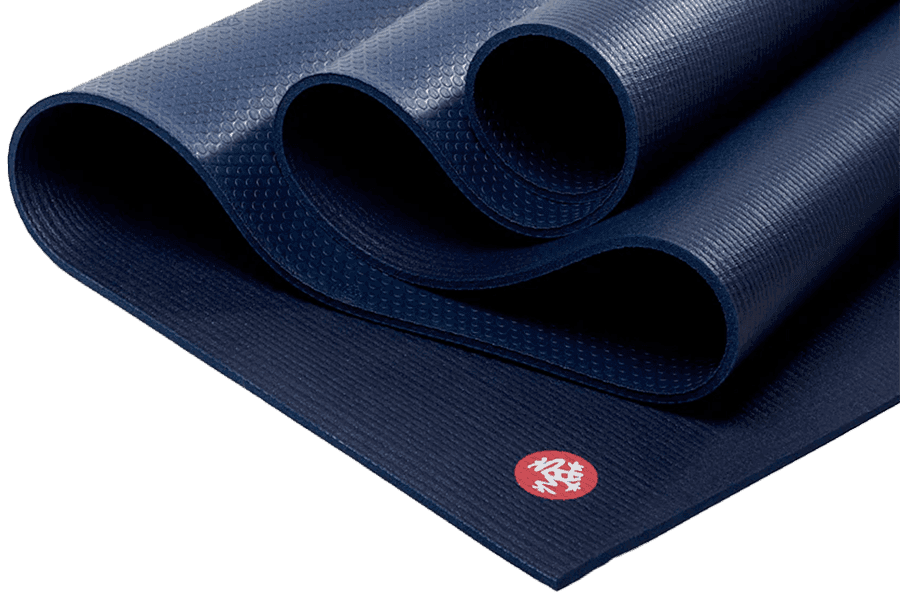
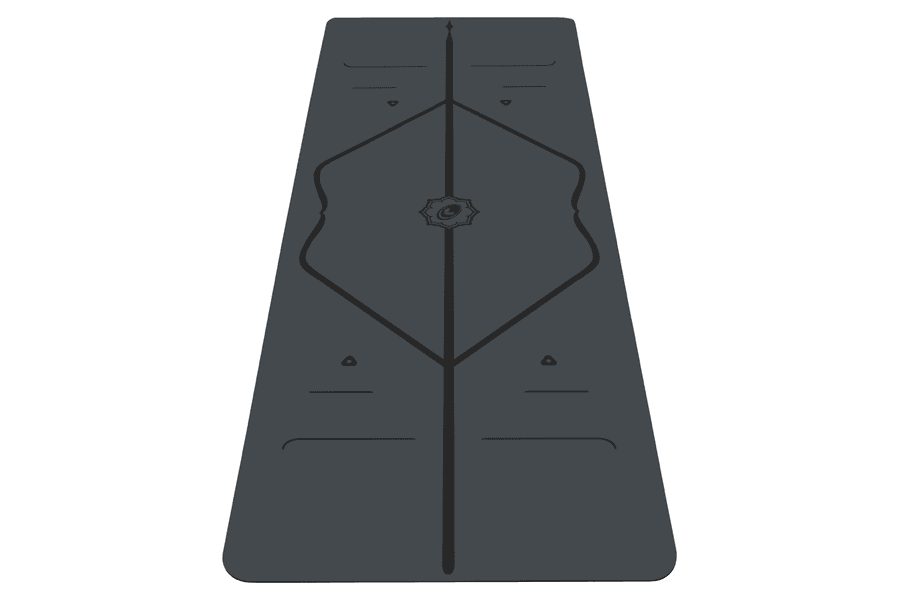
These are the two mats serious practitioners argue about most. The Manduka PRO is a dense, German-made PVC slab that outlasts everything around it but starts out slick. The Liforme Classic is a grippy polyurethane-topped rubber mat with alignment lines etched right into the surface, and at $165 it is one of the most expensive standard-size mats we cover. Here's where each one actually earns its price.
As an Amazon Associate, we earn from qualifying purchases made through links on this page. How this works
The quick answer
The PRO wins on longevity and nothing else comes close: dense 6 mm PVC, a lifetime guarantee, and a track record of decade-plus service. The tradeoffs are a slick break-in period and a closed-cell surface that leaves sweat sitting on top. The Liforme grips hard from the first class, wet hands or dry, and its etched alignment lines are genuinely useful, but it wears like the natural material it is and carries no warranty at all.
If you want one mat for the next decade and your palms stay mostly dry, get the PRO. If grip and alignment feedback matter more to you than lifespan, get the Liforme and accept that you're buying a consumable.
Get the PRO if...
- You want a mat that lasts a decade or more, with a lifetime guarantee behind it
- You want the thickest, firmest cushion of the two (6 mm vs 4.2 mm)
- You'd rather wipe a mat down than baby a natural rubber base
- You don't mind a few weeks of break-in for grip that keeps improving
Get the Liforme if...
- You want serious grip on day one, with wet hands or dry
- You want the etched alignment lines for hand and foot placement
- You want the wider 26.8 inch surface and 2 pounds less to carry
- A biodegradable, PVC-free build matters to you
Side by side
Price
The PRO lists for $21 less.
$144
List price · check price at Amazon
$165
List price · check price at Amazon
Thickness
The PRO is 43% thicker.
6 mm0.24″
4.2 mm0.17″
Weight
The Liforme is 2.5 lbs lighter.
8 lbs3.6 kg
5.5 lbs2.5 kg
Size
The Liforme is 1.8″ longer; the Liforme is 0.8″ wider.
Same on both
- Wider than the standard 24 inch mat
- Firm, stable footing for balance poses
- Lies flat without curling
- Favorites among yoga teachers
Full specs
Dimensions
Materials & build
Buying
Grip: the Liforme wins early and stays ahead when wet
Out of the box, this isn’t close. The Liforme’s “GripForMe” polyurethane surface is tacky the moment you unroll it, and GearLab’s testers described the stickiness as gecko-like, holding firm even when they applied deliberate oppositional force. There is no break-in period and nothing to wait out.
A new PRO, by contrast, is slick, and that’s the single most common complaint about it. The closed-cell surface needs a few weeks of regular practice before the grip arrives. Manduka used to suggest a salt scrub to hurry it along and has since retired that advice; the official position now is that the slickness resolves with use. It does, and a broken-in PRO grips well for years, but plenty of one-star PRO reviews come from people who quit during week one.
Sweat widens the gap. The Liforme’s top layer absorbs and wicks moisture, with a waterproof middle layer protecting the rubber underneath, and GearLab rated its wet grip among the best in a 19-mat test. The PRO absorbs nothing, so sweat pools on the surface and wet palms slide. If your practice runs hot or your hands sweat, the Liforme handles it on its own where the PRO needs a towel.
The alignment lines are a real feature, not a gimmick
The Liforme’s signature is its “AlignForMe” system: a center line, placement markers, and angled guides etched into the surface rather than printed on it. They give you fixed reference points for where hands and feet land, how wide your stance sits, and whether you’re actually centered. GearLab named the Liforme its best mat for fine-tuning alignment, and it’s a favorite of traveling teachers partly for that reason.
Who benefits? Mostly home practitioners without a teacher’s eye on them, and anyone actively working on form. If your practice is settled and you never look down, the lines become decoration you paid a premium for. The PRO offers nothing comparable; its surface is a plain, uniform field, which some people prefer anyway.
Cushioning: thicker and firmer vs thinner and grippier
The PRO gives you 6 mm of extremely dense PVC. It feels almost hard, in a supportive way, with no sink and no wobble, and it’s the better mat for kneeling work on concrete or tile. That density is a big part of why GearLab ranked the PRO first out of the 19 mats it tested.
The Liforme is 4.2 mm, noticeably thinner on paper, but the dense rubber base supports better than the number suggests. GearLab’s testers found it comfortable even on unforgiving floors. Still, if you have sensitive knees and a lot of floor work in your practice, the PRO’s extra thickness is the more comfortable platform. The Liforme’s counterargument is stability: thinner and firmer means less material between you and the floor in balance poses.
Size and weight
The Liforme is the bigger surface: 72.8″ × 26.8″ against the PRO’s 71″ × 26″. Nearly two extra inches of length and almost an inch of width sounds minor, but the width in particular is welcome if you have broad shoulders. Taller practitioners can also step up to the 85″ PRO Long on the Manduka side, or Liforme’s XL on theirs.
Weight favors the Liforme too: 5.5 pounds against 7.5. Neither is a featherweight, but two pounds is the difference between a mat you carry to class without thinking and one that starts negotiating to stay home. The Liforme also ships with a free carrying bag, which at this price feels less like a gift and more like the least they could do.
Durability: this is the PRO’s whole argument
Dense closed-cell PVC barely wears. GearLab’s testers ran across instructors’ PRO mats five to twenty years old and still in near-mint shape, and Manduka backs the mat with a lifetime guarantee, which its fine print defines as roughly ten years of regular use with one replacement and proof of purchase from an authorized seller. A PRO is plausibly the last mat you ever buy.
The Liforme makes no such promise, and to its credit, it doesn’t pretend to. The company is explicit that its materials are designed to biodegrade, that lifespan depends on how hard you practice and how well you care for the mat, and that there is no formal warranty, just a 30-day money-back guarantee on purchases from its own site. Some teachers report years of premium performance from one mat; heavy daily practice wears the grippy top faster. Either way, you’re buying a consumable, and at $165 that’s the single hardest thing to swallow about it.
Care follows the same pattern. The PRO shrugs at casual ownership: wipe it down and move on. The Liforme wants gentler treatment, mild cleaning, and reasonable storage to protect the rubber base.
The eco question
If environmental impact drives the decision, the Liforme has the cleaner story: PVC-free, built on natural rubber with a polyurethane surface, and designed to biodegrade in one to five years under normal landfill conditions. That last claim is rare in this category and Liforme leans on it hard.
The PRO is PVC through and through, and PVC isn’t practically recyclable. Manduka’s counterargument is longevity: one mat that serves for twenty years can beat a series of natural mats that each lasted four. The PRO is also OEKO-TEX certified for harmful substances in manufacturing. Both positions are defensible; it depends on whether you measure impact by the material or by the replacement cycle.
Price and value
List prices are $144 for the PRO and $165 for the Liforme, a $21 gap that’s small enough to ignore in this decision. Street prices move around, especially by colorway, so check the current price on both the PRO at Amazon and the Liforme at Amazon before you decide.
Cost per year is where they separate. A PRO that runs a decade costs less per year than almost anything, guarantee included. The Liforme has no warranty and a top surface that hard practice wears down, so its per-year cost depends entirely on how you treat it. If day-one grip is what you’re paying for but the price stings, the Jade Harmony delivers immediate rubber grip for far less, with tradeoffs of its own.
Bottom line
Buy the PRO if you’re settling in for the long haul and your practice doesn’t run sweaty. It demands patience up front and repays it for a decade or more, with a guarantee that gives the claim teeth. It’s the clear value pick even at $144.
Buy the Liforme if grip and feedback are the point. Nothing here matches its wet-hands traction or its alignment system, and for teachers, home practitioners, and anyone refining their form, those are daily-use features, not luxuries. Just go in with clear eyes: you’re paying the most for the mat that promises the least about its own lifespan. If you like the grippy polyurethane idea at a lower price, the Lululemon The Mat comparison is worth a read before you commit.
Manduka PRO
List price $144
Liforme Classic
List price $165
Frequently Asked Questions
- Which is better for hot yoga, the Manduka PRO or the Liforme?
- The Liforme, clearly. Its polyurethane top absorbs and wicks sweat, and a waterproof middle layer keeps moisture from soaking through to the rubber base. GearLab's testers rated its wet grip among the best they tried. The PRO is closed-cell PVC, so sweat pools on the surface and wet palms slide, which means a towel becomes mandatory in heated classes. If sweaty practice is your normal, this question alone settles the comparison.
- Which lasts longer, the Manduka PRO or the Liforme?
- The PRO, by a wide margin. Dense closed-cell PVC barely wears, and PRO mats routinely stay in service for a decade or more, backed by Manduka's lifetime guarantee. The Liforme is deliberately built from materials that biodegrade, and Liforme itself says the mat's lifespan depends heavily on how hard you practice and how well you care for it. Some teachers report years of premium performance, but heavy daily use wears the grippy top surface down, and there's no warranty when it does.
- Are the Liforme alignment lines actually useful or just a gimmick?
- They're useful, especially if you practice at home without a teacher watching. The etched AlignForMe markers give you consistent reference points for hand and foot placement, spacing, and centering, and GearLab named the Liforme its top pick for fine-tuning alignment. Experienced practitioners with a settled practice may never look at them, in which case you'd be paying a premium for lines you ignore.
- Does the Liforme have a warranty?
- No. Liforme doesn't offer a formal warranty on its mats, on the reasoning that the materials are biodegradable and lifespan depends on use. Purchases from liforme.com are covered by a 30-day money-back guarantee, and that's it. Manduka backs the PRO for life, which its fine print defines as roughly 10 years of regular use, with one replacement and proof of purchase from an authorized seller. On Amazon, that means sold and shipped by Amazon.
- Is the Manduka PRO really slippery when it's new?
- Yes, and it's the most common complaint about the mat. The closed-cell surface ships slick and needs a few weeks of regular practice before the grip comes in. Manduka used to recommend a salt scrub to speed this up but has retired that advice; its current position is that the slickness resolves with use. The Liforme has no break-in period at all, which is a real part of what you're paying for.
- Which mat is safer for a latex allergy?
- The PRO. It's PVC with no natural rubber anywhere in it. The Liforme is built on a natural rubber base, and natural rubber can carry trace latex proteins, so it's the riskier choice if you have a genuine latex allergy. If that's your situation, the PRO or another PVC or TPE mat is the safer route.
Related comparisons
- Manduka PRO vs Alo Warrior
- Manduka PRO vs b, halfmoon B Mat Strong 6mm
- Manduka PRO vs Yoloha Unity Pro Cork
- Manduka PRO vs JadeYoga Harmony XW
- JadeYoga Harmony XW vs Liforme Classic
- Manduka PRO vs Lululemon The (Big) Mat 5mm
- Liforme Classic vs Yoloha Unity Pro Cork
- Manduka PROlite Long & Wide vs Liforme Classic
- Alo Warrior vs Liforme Classic