Amazon Basics 1/4 Inch Thick TPE vs Gaiam Premium 6mm: Which One Should You Buy?
Two 6 mm beginner mats at almost the same price, and the spec sheets nearly match. The Amazon Basics is TPE and about five and a half inches longer; the Gaiam is PVC and has been through an independent test. That test result is the only hard evidence on this page, so it is worth understanding what it does and does not say.
As an Amazon Associate, we earn from qualifying purchases made through links on this page. How this works
The quick answer
GearLab scored the Gaiam Premium 62 out of 100 and gave it a Best Buy award, with comfort 6.5, materials 6, care 8, and grip of 6 dry and 4 wet. That reads as a mat that does everything adequately and nothing well, which is fair at thirty dollars. Nobody has tested the Amazon Basics, so its grip is described rather than measured.
Get the Gaiam if you want the mat someone actually measured and 68 inches is enough length for you. Get the Amazon Basics if you are tall, want the lighter mat, or would rather avoid PVC.
Get the Amazon Basics TPE if...
- You want 73.6 inches instead of 68
- You would rather have TPE than PVC in your house
- You want to carry 2 pounds rather than 3.3
- The list price sits below the Gaiam on the day
Get the Gaiam Premium if...
- You want a mat an independent lab has scored
- You are under about five foot eight
- You want the denser, steadier surface underfoot
- A lifetime guarantee on defects appeals
Side by side
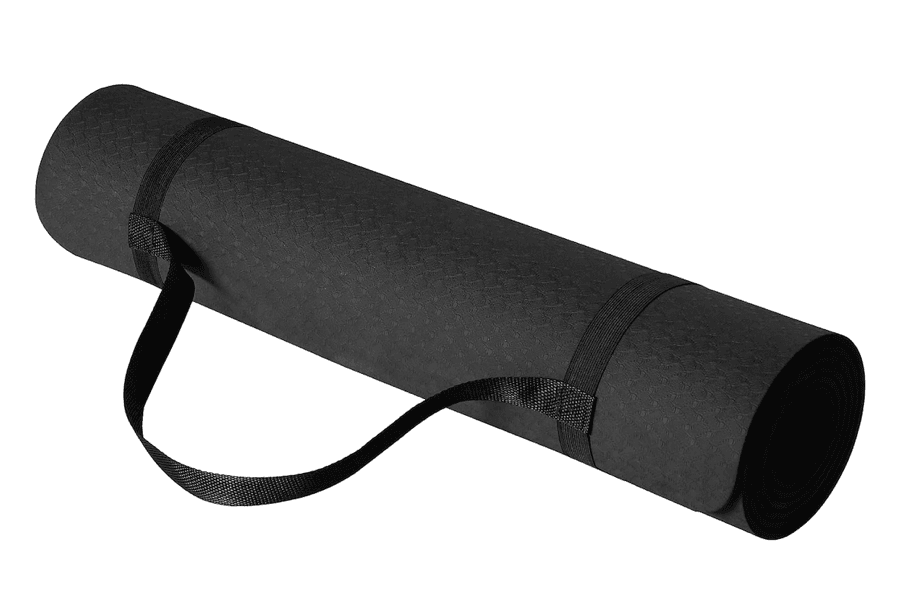
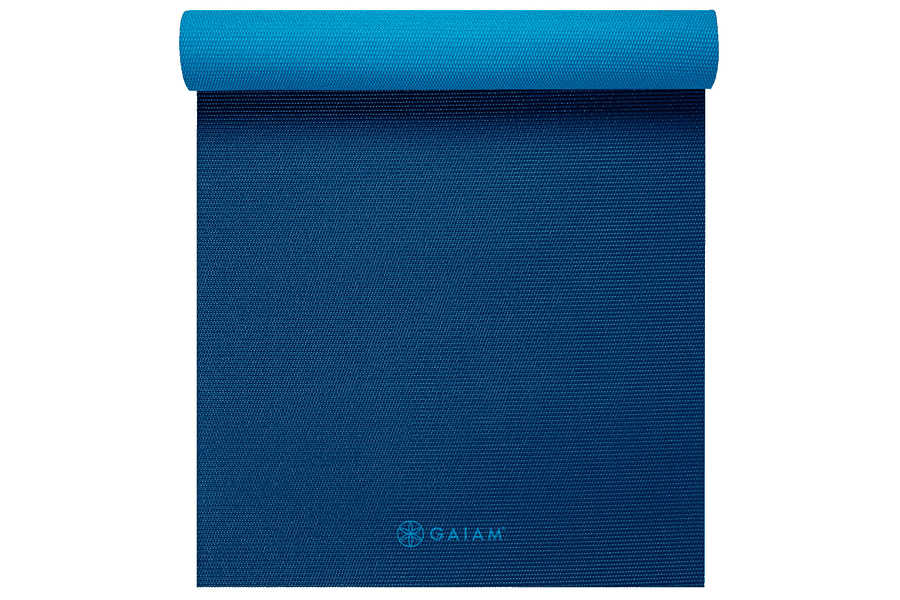
Price
The Amazon Basics lists for about $4 less.
$26.36
List price · check price at Amazon
$29.98
List price · check price at Amazon
Thickness
Identical thickness.
6 mm0.24″
6 mm0.24″
Weight
The Amazon Basics is 1.3 lbs lighter.
2 lbs0.9 kg
3.3 lbs1.5 kg
Size
The Amazon Basics is 5.6″ longer; same width.
Same on both
- 6 mm thick and 24 inches wide
- Closed-cell surfaces that do not absorb sweat
- Textured grip that fails once your hands are damp
- No third-party certifications
Full specs
Dimensions
Materials & build
Buying
Same thickness, different plastic
Both mats are 6 mm and 24 inches wide, and they list at $26.36 and $29.98. The Amazon Basics is TPE, the Gaiam is PVC, and the Amazon Basics is a bit over five inches longer.
That is genuinely the whole difference on paper. What tips it is that one of these has been through an independent test and the other has not.
What the Gaiam actually scored
GearLab put the Premium 6mm at 62 out of 100 in its 2026 field of 19 mats and gave it a Best Buy award as the best first mat. Behind that headline: comfort and support 6.5, materials 6, care and cleaning 8, dry grip 6, wet grip 4.
Read those as a mat that does everything adequately and nothing well. That is a reasonable thing to be at thirty dollars, and it is more than we can say with confidence about the Amazon Basics, which no outlet we would cite has tested.
So the comparison below is a measured mat against an unmeasured one. We can compare materials and dimensions honestly; we cannot pretend to compare grip numbers.
TPE against PVC
TPE has no PVC and no phthalate plasticizers, it is lighter, and it is recyclable in principle if you can find somewhere that takes it. Plenty of people choose it on those grounds alone and that is a fair reason.
PVC is tougher and easier to keep clean, which is where the Gaiam’s 8 out of 10 for care comes from. It is also the material most environmental criticism of yoga mats is aimed at. Gaiam’s is latex-free, which matters if you react to natural rubber.
They also fail differently, which is more useful to know than the material argument. TPE dents where knees land and starts tearing at the edges once the first nick appears. PVC wears smooth instead, so the grip goes before the mat does and you end up practicing on a slippery sheet that still looks perfectly fine.
Five and a half inches to the Amazon Basics
73.6″ against 68″. Sixty eight inches is the short end of normal and it runs out under anyone much over five foot eight, usually as heels hanging off in savasana.
Seventy three and a half inches covers most people. If you are tall and the Gaiam appeals otherwise, the Gaiam Essentials is the same 6 mm at 72 inches and costs less than the Premium.
Grip once your hands are damp
The Gaiam’s wet score of 4 out of 10 is the number to keep in mind. Its finish is mildly tacky and holds a dry palm; add sweat and the moisture sits on the surface with nowhere to go.
TPE behaves the same way for the same reason: the grip is a pressed-in texture on a closed-cell surface, so it works dry and stops working wet. Neither of these is a hot yoga mat, whatever the listing says, and if you sweat you want a polyurethane or rubber top instead.
Six millimetres each, but not the same feel
TPE is springier and PVC is denser at the same depth. On the Amazon Basics you sink in slightly more and get a bit more bounce back; on the Gaiam you feel the floor sooner and get a steadier platform.
Neither is a cushioning mat by the standards of a thick foam pad, and both are noticeably softer than a dense studio mat like a Manduka. Six millimetres is the compromise most beginners are happy with.
The TPE mat is a pound and a bit lighter
2 pounds against 3.3. GearLab measured the Gaiam at 3.3 pounds, which matches its listing, and that is light enough for a walk to a studio.
Two pounds is lighter still and it is genuinely nice on a commute. Both are easy to carry compared with a real studio mat, which typically runs five to seven.
Both smell when new
TPE and PVC both off-gas out of the packaging. Owners of each describe a chemical smell that fades over one to two weeks with the mat unrolled somewhere with air moving.
Neither smell is the natural rubber smell people complain about on eco mats, which is stronger and lasts longer. If odour is your main worry, either of these is the safer choice.
Coverage and price
Gaiam puts a lifetime guarantee on the Premium; Amazon Basics gives 1 year. Both cover defects rather than a surface worn smooth, so treat them as return policies.
List prices are $26.36 and $29.98, and both drift below those regularly by colorway. Check the Amazon Basics and check the Gaiam on the day, because whichever is cheaper changes.
Bottom line
Get the Gaiam Premium if you want the mat someone actually measured, or if you are under about five foot eight and the length does not matter to you. The Best Buy award is a modest thing but it is more than the other mat has.
Get the Amazon Basics TPE if you are tall, if you want the lighter mat, or if avoiding PVC matters to you. You give up the test result and you gain five and a half inches, which for a lot of people is the better trade.
Amazon Basics 1/4 Inch Thick TPE
List price $26.36
Gaiam Premium 6mm
List price $29.98
Frequently Asked Questions
- Is TPE better than PVC?
- It depends what you mean by better. TPE has no PVC and no phthalate plasticizers, is lighter, and is recyclable in principle. PVC is tougher and easier to clean, which is where the Gaiam’s 8 out of 10 for care comes from, and it is the material most environmental criticism of yoga mats is aimed at. This is a values decision more than a performance one.
- Is 68 inches long enough?
- For people under about five foot eight, yes. Above that, heels hang off the end in savasana. The Amazon Basics at 73.6 inches covers most people. If you like the Gaiam otherwise, the Gaiam Essentials is the same 6 mm at 72 inches and costs less than the Premium.
- Do either of these work for hot yoga?
- No. The Gaiam scored 4 out of 10 for wet grip, and TPE behaves the same way for the same reason: the grip is a pressed-in texture on a closed-cell surface, so moisture sits on top with nowhere to go. If you sweat, you want a polyurethane or natural rubber top instead.
- They are both 6 mm, so do they feel the same?
- No. TPE is springier and PVC is denser at the same depth. On the Amazon Basics you sink in slightly more and get more bounce back; on the Gaiam you feel the floor sooner and get a steadier platform for standing poses. Neither is a cushioning mat by the standards of a thick foam pad.
- Do they smell?
- Both do out of the packaging, and both clear in one to two weeks with the mat unrolled somewhere with air moving. Neither smell is the natural rubber smell people complain about on eco mats, which is stronger and lasts longer. If odour worries you, either of these is the safer choice.
- What do the warranties cover?
- Gaiam puts a lifetime guarantee on the Premium and Amazon Basics gives one year. Both cover manufacturing defects rather than a surface worn smooth after a year of daily use, which is what actually finishes mats at this price. Treat them as return policies.
Related comparisons
- Amazon Basics 1/4 Inch Thick TPE vs Gruper TPE 6mm
- Gaiam Premium 6mm vs Gruper TPE 6mm
- Gaiam Premium 6mm vs YogaAccessories Extra Thick Deluxe 1/4"
- Amazon Basics 1/4 Inch Thick TPE vs Gaiam Essentials 6mm
- Amazon Basics 1/4 Inch Thick TPE vs YogaAccessories Extra Thick Deluxe 1/4"
- Amazon Basics 1/4 Inch Thick TPE vs Gaiam Premium Reversible 6mm
- Amazon Basics 1/4 Inch Thick TPE vs Gaiam Classic Print 4mm
- Manduka Begin vs Gaiam Premium 6mm
- Manduka Begin vs Amazon Basics 1/4 Inch Thick TPE