Manduka eKO vs Gaiam Premium: Which One Should You Buy?
This is the upgrade question with the two most recognizable names on the shelf. The Gaiam Premium is the $29.98 soft PVC mat half of every beginner class is standing on. The Manduka eKO is what a rubber upgrade looks like: dense, planted, genuinely grippy dry, at nearly four times the price. Whether that multiple makes sense depends on what's actually wrong with your current mat.
As an Amazon Associate, we earn from qualifying purchases made through links on this page. How this works
The quick answer
The eKO is the better mat at almost everything a practice eventually cares about: real grip with dry hands, a firm surface that holds still in balances, a bigger 71 by 26 inch footprint, and rubber that feels like equipment rather than padding. The Gaiam counters with the price, half the weight, softer foam for kneeling, and a latex-free build the rubber mat can't offer. One caution before you spend: the eKO's sealed surface still gets slick under heavy sweat, so it fixes wobble and dry-hands slipping, not hot yoga.
If you practice a few times a month or need latex-free, keep it simple and get the Gaiam. If you practice weekly or more and your complaints are wobble and grip, the eKO is a real upgrade worth the money.
Get the Manduka eKO if...
- You practice regularly and the mat has become the limiting equipment
- You want a firm, planted surface for standing balances, not soft foam
- You want real rubber grip with dry hands from the first class
- You want the bigger footprint, 71″ × 26″ against 68″ × 24″
Get the Gaiam Premium if...
- You're new or casual; $29.98 is the right spend until the practice sticks
- You have a latex allergy; the Gaiam is PVC with no rubber in it
- You want soft cushion for stretching, floor work, and sore knees
- You want a 3.3 pound mat you can buy at Target today
Side by side
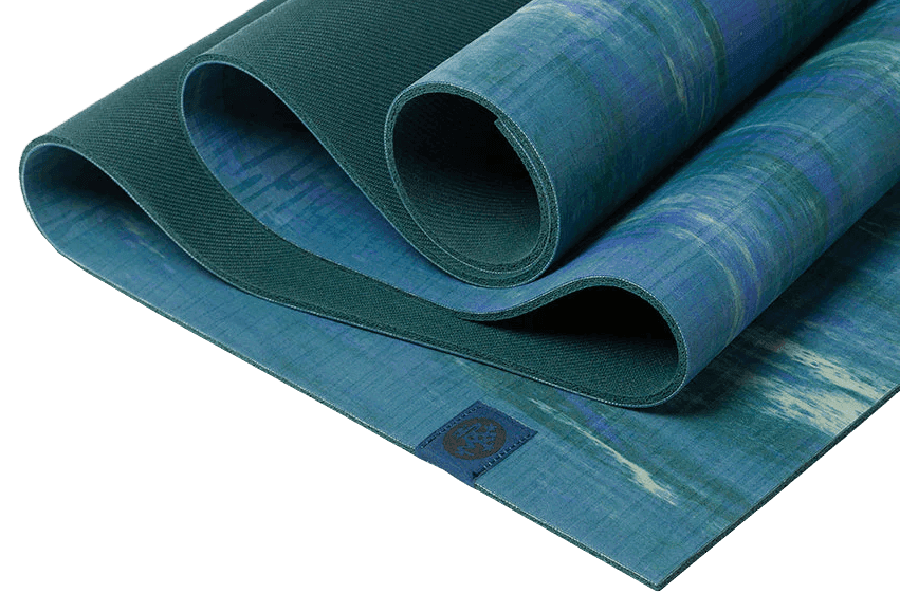
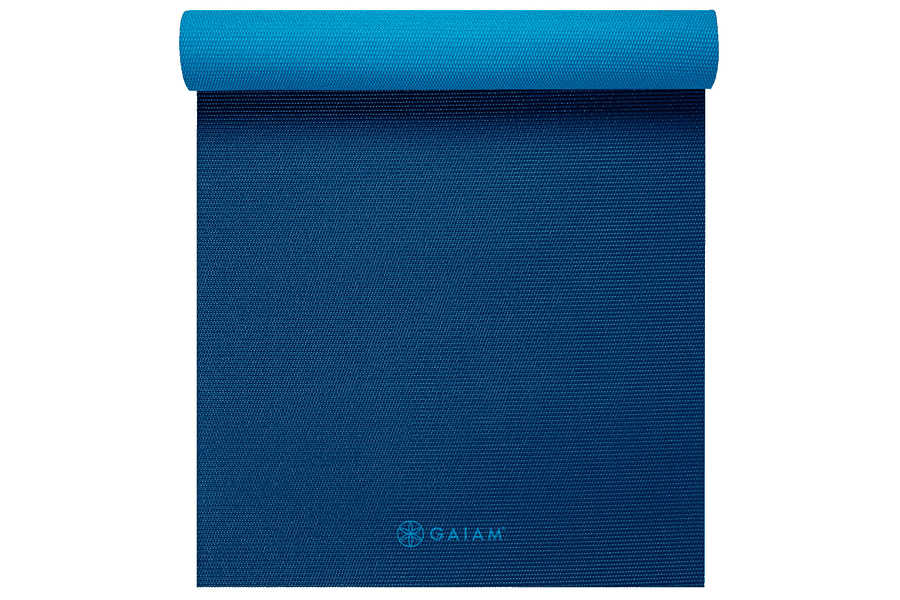
Price
The Gaiam Premium lists for about $84 less.
$114
List price · check price at Amazon
$29.98
List price · check price at Amazon
Thickness
The Gaiam Premium is 20% thicker.
5 mm0.2″
6 mm0.24″
Weight
The Gaiam Premium is 3.7 lbs lighter.
7 lbs3.2 kg
3.3 lbs1.5 kg
Size
The eKO is 3″ longer; the eKO is 2″ wider.
Same on both
- Sweat sits on the surface of both rather than soaking in
- Neither is the right mat for hot yoga
- Both lie flat and sell readily on Amazon
- Neither carries a third-party certification
Full specs
Dimensions
Materials & build
Buying
The starter mat and the upgrade, by name
These are probably the two most recognizable names in this decision. The Gaiam Premium is the $29.98 soft PVC mat sold at Target, on Amazon, and everywhere else a first mat gets bought. The Manduka eKO is the $114 rubber mat people move to when the Gaiam’s two weaknesses, wobble and slipping, start costing them poses.
Nearly four times the price should buy a lot, and mostly it does. It buys one thing less than eKO shoppers tend to assume, though, so before the spec sections: if heavy sweat is your problem, read the grip section twice, because the eKO is not the fix for that.
Grip: the eKO wins dry, nobody wins wet
With dry hands there is no contest. The eKO’s textured natural rubber grips from the first class and bites a little harder the more you press into it. The Gaiam’s textured PVC holds fine in slow classes, but it is the surface people eventually stop trusting; owner reviews repeat the same story of hands sliding once effort shows up.
Sweat levels the field, unflatteringly. Both surfaces are sealed, so moisture sits on top: GearLab’s tester described the Gaiam getting slippery enough to shake confidence in a wide-legged forward fold, and the eKO’s traction is something Manduka itself describes in dry-hands terms, with wet palms sliding on it too. If your classes are heated or you sweat hard, the correct upgrade is absorbent rubber like the Jade Harmony or a polyurethane-topped mat, not either of these.
Stability is the eKO argument
This is where the money goes. The eKO is 5 mm of rubber dense enough to weigh 7 pounds, and it feels planted: it lies dead flat, holds position on the floor, and reads clearly under a standing foot. Balance work happens on the mat instead of against it.
The Gaiam’s 6 mm of soft foam does the opposite under load. GearLab found it went squishy and sacrificed stability in balance poses like tree, with the standing foot wobbling on the compression. For stretching and floor work that softness is fine, even pleasant. For a standing practice it is the single best reason to upgrade.
Comfort: the cheap mat wins the floor
Fair is fair: the Gaiam is the nicer mat to kneel on. Its soft foam has a real squish that makes kneeling sequences, restorative classes, and workout videos comfortable, and GearLab praised it for exactly those uses. It is most of why the mat succeeds as a first mat.
The eKO lands firm. Its dense rubber protects knees by refusing to compress to nothing, which is a different kind of comfort, support rather than plush. People who love the eKO describe it as grounded; people who return it usually wanted padding. Know which camp you are in before spending $114.
Size and weight: bigger mat, twice the carry
The eKO gives you 71″ × 26″ against the Gaiam’s 68″ × 24″, three extra inches of length and two of width. The width is the part you notice daily; hands and feet stop finding the floor at the mat’s edges.
The scale swings back hard at the door: 7 pounds against 3.3. The Gaiam goes into a tote without a thought, which is why these mats end up in car trunks and dorm rooms. The eKO is a commitment on a shoulder strap, and if the carry is the sticking point, Manduka’s 5 pound eKO Lite is the middle path.
Durability: better rubber, not a lifetime
The Gaiam ages the way foam does: cushion packing down where hands and feet land, texture wearing smooth after a year or two of steady practice. Its lifetime guarantee covers manufacturing defects, not that wear, so read it as a nice gesture rather than a lifespan promise. Under once-a-week use it lasts considerably longer.
The eKO buys real improvement here but not immortality: owners report surface flaking after a few years of hard practice, sunlight degrades the rubber, and Manduka backs it with only a 30-day return window. If a decade of service is the actual goal, the answer in Manduka’s own lineup is the PVC PRO, compared against the eKO here.
Materials: rubber, PVC, and the latex question
The eKO has the environmental story: natural rubber, made in Taiwan with over 30% recycled content, re-engineered enough that some retailers label it eKO 2.0. The Gaiam is PVC, the material rubber mats exist to replace. Neither carries a third-party certification.
The Gaiam holds one trump card: it is latex-free, which makes it one of the safest cheap mats for a latex allergy, while the eKO’s natural rubber can carry trace latex proteins and is off the list entirely. Allergy shoppers wanting an upgrade should look at PVC and TPE mats, not rubber. Both ship with a new-mat smell; Gaiam’s own advice is to air its mat for two to three days out of the box.
Price and where to buy
Both are easy purchases. The Gaiam lists at $29.98 and sells everywhere; check its current price at Amazon. The eKO lists at $114 and discounts fairly often; check the current eKO price at Amazon.
The in-between options are worth knowing before you commit to either extreme: the $67 IUGA adds genuine wet grip for half the eKO’s price, and Manduka’s own Begin is the brand’s answer to the Gaiam.
Bottom line
Get the Gaiam Premium if you are new, casual, latex-allergic, or mostly on the floor. It is comfortable, cheap, sold everywhere, and genuinely good at the job it was built for. GearLab’s Best First Mat award is deserved; the mat only disappoints when the practice outgrows it.
Get the eKO when that happens, if what outgrew it is dry-hands grip and stability. It is a proper piece of equipment: planted, bigger, grippy from the first class, with the better materials story. Just buy it for those reasons and not for hot yoga, because sweat is the one problem this upgrade does not solve.
Manduka eKO
List price $114
Gaiam Premium 6mm
List price $29.98
Frequently Asked Questions
- Is the Manduka eKO really worth four times the Gaiam's price?
- If you practice regularly, yes, with one caveat. The eKO's dense rubber grips properly with dry hands, holds dead still in standing balances where the Gaiam's foam squishes and wobbles, and gives you a bigger platform. GearLab's testing of the Gaiam found exactly the weaknesses eKO buyers are escaping: squishy instability in balance poses and a surface that turns slick as moisture builds. The caveat is sweat, covered below. If your practice is casual stretching, the Gaiam already does that job and the eKO is over-buying.
- Which mat is better for hot yoga?
- Honestly, neither, and it's the most important thing to know before spending $114. The eKO's closed-cell surface lets sweat bead on top, and Manduka describes its traction in dry-hands terms; genuinely sweaty palms slide on it. The Gaiam behaves the same way for less money. If sweat is the problem you're solving, the right upgrade is absorbent rubber like the Jade Harmony or a polyurethane-topped mat, not either of these.
- Which is more comfortable for knees and floor work?
- The Gaiam. Its 6 mm of soft PVC foam has a genuinely pleasant squish for kneeling poses, restorative classes, and stretching; GearLab praised it for exactly those uses. The eKO's 5 mm of dense rubber protects joints by refusing to bottom out, but it lands firm, not plush. If your practice is mostly on the floor, the cheap mat is the comfortable one, and that's a fine reason to keep it.
- How do the weights compare?
- It's a big gap: the eKO is 7 pounds of dense rubber, the Gaiam 3.3 pounds of foam. The eKO's weight is where its planted, grounded feel comes from, and it's fine if the mat lives at home or in a studio cubby, but it gets old on a daily shoulder carry. The Gaiam tosses into a tote without a thought. If you want the eKO's surface at a friendlier carry weight, the 5 pound eKO Lite is the middle path.
- What about the warranties?
- Read both lightly. The Gaiam carries a lifetime guarantee that covers manufacturing defects, not the way foam mats actually age, which is compressing flat and shedding texture under steady use. Manduka backs the eKO with only a 30-day return window, no warranty at all, and eKO owners report surface flaking after a few years of hard practice. Rubber buys you grip and stability, not immortality; the decade mat in Manduka's lineup is the PVC PRO, not the eKO.
- Is either mat safe for a latex allergy?
- Only the Gaiam. It's latex-free PVC with no rubber in it, which makes it one of the safest cheap mats for allergy sufferers. The eKO is natural rubber, which can carry trace latex proteins, so it's off the list for a genuine latex allergy no matter how good the upgrade case is. Latex-safe upgrades exist; they're PVC and TPE mats like the Manduka PRO family, not rubber.
Related comparisons
- Gaiam Premium 6mm vs Gruper TPE 6mm
- Amazon Basics 1/4 Inch Thick TPE vs Gaiam Premium 6mm
- Gaiam Premium 6mm vs YogaAccessories Extra Thick Deluxe 1/4"
- Manduka eKO vs Lululemon The (Big) Mat 5mm
- Lululemon The Mat 5mm vs Manduka eKO
- JadeYoga Harmony 74" vs Manduka eKO
- Manduka eKO vs Suga SugaMat
- JadeYoga Harmony 68" vs Manduka eKO
- Manduka eKO vs Yoga Design Lab Combo 3.5mm