Jade Harmony vs Gaiam Premium: Which One Should You Buy?
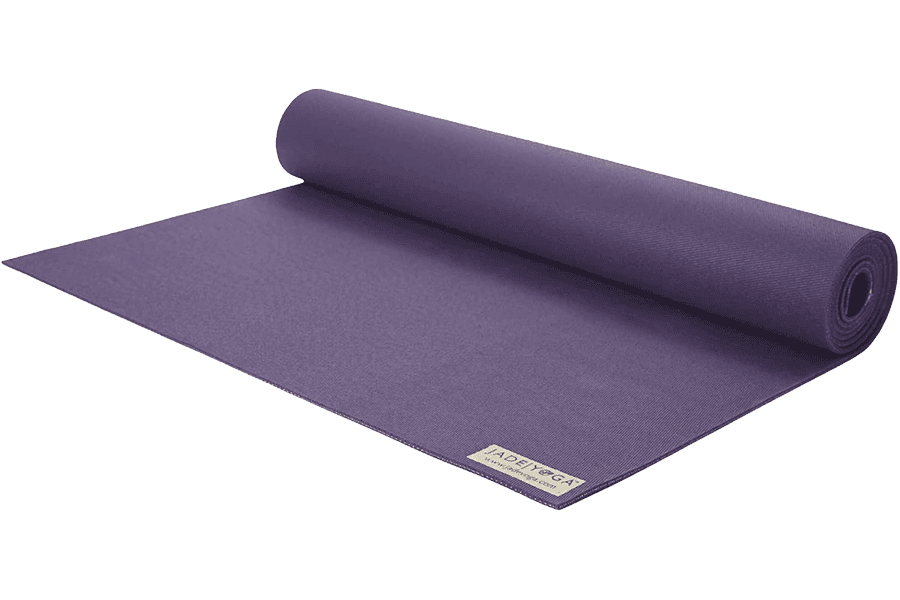
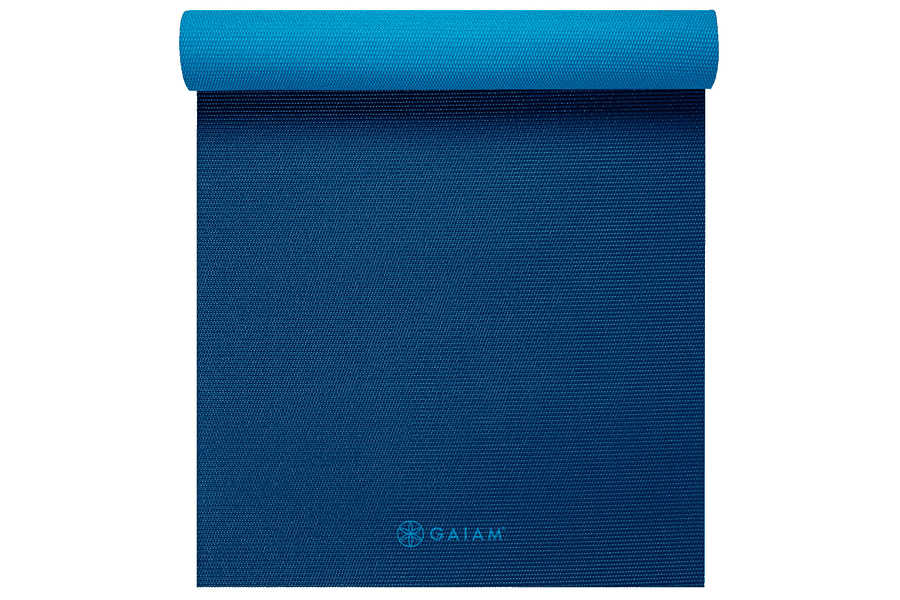
This is the classic starter-mat-versus-first-upgrade question, and the two mats even share a 68 by 24 inch footprint. The Gaiam Premium is the soft PVC mat half the beginners in any class are standing on. The Jade Harmony is the natural rubber mat people replace it with once their palms start sweating. The $70 between them buys exactly one thing that matters, and it's grip.
As an Amazon Associate, we earn from qualifying purchases made through links on this page. How this works
The quick answer
The Gaiam Premium is light, cheap, and comfortable for slow classes and stretching, which is why GearLab named it Best First Mat in its March 2026 roundup. Its soft PVC gets slippery the moment your hands sweat, and that is the complaint that ends most people's time with it. The Harmony is tacky open-cell rubber that keeps holding through a sweaty vinyasa class, weighs a pound and a half more, and costs more than three times as much.
If you're new to yoga or mostly stretch, start with the Gaiam; $30 is the right price to find out what you need. If you've already slid on a mat like the Gaiam, the Harmony is the standard fix.
Get the Jade Harmony if...
- Your palms sweat and you're tired of sliding in down dog
- You practice several times a week, not a few times a month
- You want natural rubber instead of PVC foam
- A USA-made mat with a tree planted for it matters to you
Get the Gaiam Premium if...
- You're new to yoga and $30 is the right size of experiment
- You mostly stretch or take slow classes where grip is never stressed
- You have a latex allergy; the Gaiam is latex-free PVC
- You want the lighter carry at 3.3 pounds against 4.8
Side by side
Price
The Gaiam Premium lists for about $70 less.
$99.95
List price · check price at Amazon
$29.98
List price · check price at Amazon
Thickness
The Gaiam Premium is 25% thicker.
4.8 mm0.19″
6 mm0.24″
Weight
The Gaiam Premium is 1.5 lbs lighter.
4.8 lbs2.2 kg
3.3 lbs1.5 kg
Size
Same length; same width.
Same on both
- Identical 68″ × 24″ footprint
- Textured non-slip bottoms
- No third-party certifications on either mat
- Both are studio and home mats, not travel mats
Full specs
Dimensions
Materials & build
Buying
The mat you start on and the mat you switch to
Walk into any beginner class and half the room is on a Gaiam. It is the $29.98 mat sold at Target, on Amazon, and everywhere else a first mat gets bought. The Jade Harmony is what a lot of those same people end up on two years later, usually after a summer of sliding around in down dog convinced them the problem was not their technique.
The two share a 68″ × 24″ footprint, and almost nothing else. One is soft PVC foam, the other tacky natural rubber, and the $70 between them is nearly all about what happens when your hands get damp.
Grip is the entire argument for the Harmony
The Harmony’s open-cell rubber is tacky dry and stays planted when your palms sweat, because the surface pulls moisture in rather than letting it sit between skin and mat. That absorption is what Wirecutter credits for the Harmony’s traction in sweaty practice, and it is the single quality that has kept this mat in studios for over two decades. There is no break-in; it grips out of the box.
The Gaiam’s textured PVC holds fine with dry hands in slow classes. Add sweat and it turns slick, which is the recurring complaint in owner reviews and the reason so many Gaiams get retired early. A towel over the mat patches the problem, but at that point the towel is doing the mat’s job.
Cushion: soft foam actually wins this one
Credit where due: the Gaiam is 6 mm of soft PVC foam and it is genuinely comfortable to kneel on. For restorative classes, stretching, and floor work, the squish is pleasant, and it is part of why the mat works so well as a first mat.
The Harmony is thinner on paper at 4.8 mm (Jade specs it at 3/16 of an inch; retailers round to 5), but the rubber is denser, so it supports rather than swallows. In standing balances that firmness reads as stability, where the Gaiam’s foam lets your foot wobble on the compression. Sore knees favor the Gaiam; everything else favors the Harmony.
Weight and carry
The Gaiam weighs 3.3 pounds, the Harmony 4.8. A pound and a half is noticeable on a shoulder strap but neither mat is a burden; both roll to a normal size and ride to class without planning.
The difference you feel sooner is on the floor: the Harmony’s rubber base holds position on wood and tile, while lightweight PVC mats can creep on slick floors during vigorous flows.
Durability and the warranty trap
Here the labels mislead. The Gaiam carries a lifetime guarantee, the Jade a one-year warranty, and the Jade is still the mat that typically lasts longer in regular use. Gaiam’s guarantee covers manufacturing defects, and the way a $30 PVC mat actually dies, flaking, compressing flat, shedding its texture after a year or two of steady practice, is wear, not defect.
The Harmony has its own aging process: open-cell rubber drinks in sweat, so heavy sweaters wear it faster, and sunlight degrades natural rubber outright, which Jade excludes from its warranty along with harsh cleaners. Kept indoors and rinsed gently, several years of steady practice is a fair expectation. Neither is a decade mat; that market belongs to the Manduka PRO.
Materials: rubber, PVC, and the latex question
The Harmony is natural rubber tapped from trees, made in the USA, and Jade plants a tree for every mat sold, over two million so far. The rubber comes with two costs: a rubber smell for the first days out of the box, and latex. Jade says its mats are 99% latex free, which is not safe for a latex allergy.
The Gaiam is latex-free PVC, which makes it the safe pick for allergy sufferers and the less appealing one on every environmental axis; PVC is the material rubber mats exist to replace. Owners report a mild plastic smell when new that fades with airing. Neither mat carries a third-party certification.
Mind the versions on both sides
Jade sells a Harmony 2.0 alongside the original, and they are different mats: the 2.0 is made in Spain, carries FSC and OEKO-TEX certifications the original lacks, and is the version that won OutdoorGearLab’s eco-friendly grip award in its 2026 test. This page covers the original USA-made Harmony at $99.95, so check which one a review is praising before you lean on it.
Gaiam’s catalog is its own maze: Premium, Premium Reversible, Classic, Essentials, and Performance lines that all look similar in a thumbnail. The mat here is the Premium 6mm, the reversible two-color one, and it is the mat GearLab named Best First Mat in its March 2026 update. The $22 Essentials is a lesser mat despite the family resemblance.
Price: $30 now or $100 once you mean it
The Gaiam lists at $29.98; check the current price at Amazon. The Harmony lists at $99.95 and holds close to that everywhere; check its price at Amazon too. If the Harmony’s price stings but the grip argument landed, Jade’s own $66.50 Level One gets you the same rubber grip in a thinner, two-color package.
As for value: if you practice a few times a month, the Gaiam does the job and the Harmony is overspending. At three or four classes a week, a worn-out Gaiam a year plus a towel to fight the slipping adds up to Harmony money anyway.
Bottom line
Get the Gaiam Premium if you are new, casual, or latex-allergic. GearLab’s Best First Mat nod is deserved: it is comfortable, cheap, sold everywhere, and a fine way to find out what you actually want from a mat. Just do not expect it to hold your hands once you sweat.
Get the Jade Harmony when the practice is real. It fixes the exact failure that ends most Gaiam ownerships, comes from a company that makes its mats in the USA and plants a tree for each one, and feels like equipment rather than an accessory. That is what the $70 is for.
Jade Harmony
List price $99.95
Gaiam Premium 6mm
List price $29.98
Frequently Asked Questions
- Is the Gaiam Premium good for hot yoga or sweaty hands?
- No, and this is the honest limit of a $30 mat. The textured PVC surface holds fine with dry hands and gets slick once you sweat, which owners report consistently. A towel over the mat patches it in a pinch. If your hands sweat in a normal-temperature class, that is precisely the problem the Jade Harmony exists to solve; in an actually hot room you'd want the Harmony or a polyurethane-topped mat.
- Why is the Jade Harmony more than three times the price?
- Materials and where it's made. The Harmony is natural rubber tapped from trees and manufactured in the USA, and open-cell rubber is simply a grippier, denser, more expensive material than the PVC foam in the Gaiam. You're also paying for Jade's tree-planting program, over two million so far. Whether that's worth $70 depends on how often you practice; at a few sessions a month it probably isn't, at four a week it is.
- The Gaiam has a lifetime guarantee and the Jade only one year. Is the Gaiam more durable?
- No. Gaiam's lifetime guarantee covers manufacturing defects, not the normal flaking and compression that soft PVC foam shows after a year or two of regular practice, and none of that wear counts as a defect. The Harmony's one-year warranty is short because open-cell rubber wears too, especially with heavy sweat, but the mat itself typically outlasts the Gaiam in regular use. Neither warranty should be the deciding factor.
- Can I use either mat with a latex allergy?
- Only the Gaiam, which is latex-free PVC and one of the reasons it works as a default first mat. The Harmony is natural rubber; Jade describes its mats as 99% latex free, which is not safe for a latex allergy.
- Do these mats smell out of the box?
- Both, differently. The Harmony arrives with a natural rubber smell that fades over days of airing out, faster with airflow than with scrubbing. Owners of the Gaiam report a milder plastic smell that also dissipates; Gaiam sells the mat as latex-free PVC, and newer versions carry less odor than PVC mats used to. Neither smell is permanent.
- Is this the Gaiam mat GearLab recommends, and which Harmony is this?
- Yes on the Gaiam: the Premium 6mm is the mat GearLab named Best First Mat in its March 2026 update. On the Jade side, mind the version: Jade also sells a Harmony 2.0, a different mat made in Spain with FSC and OEKO-TEX certifications, and the 2.0 is what won OutdoorGearLab's eco-friendly grip award. This page covers the original USA-made Harmony at $99.95, so check which version any review is describing.
Related comparisons
- JadeYoga Harmony 68" vs Suga SugaMat
- Gaiam Premium 6mm vs Gruper TPE 6mm
- Amazon Basics 1/4 Inch Thick TPE vs Gaiam Premium 6mm
- Gaiam Premium 6mm vs YogaAccessories Extra Thick Deluxe 1/4"
- JadeYoga Harmony 68" vs Manduka eKO Lite
- Manduka PROlite vs JadeYoga Harmony 68"
- JadeYoga Harmony 68" vs Manduka GRP Adapt 1.0
- JadeYoga Harmony 68" vs Manduka eKO Lite Long
- JadeYoga Harmony 68" vs Lululemon The Mat 5mm