IUGA vs Gaiam Premium: Which One Should You Buy?
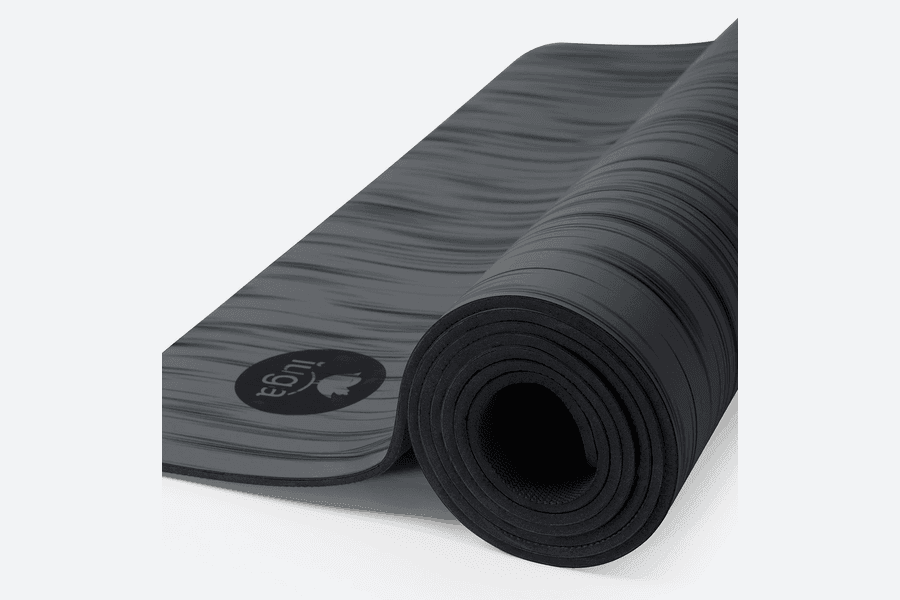
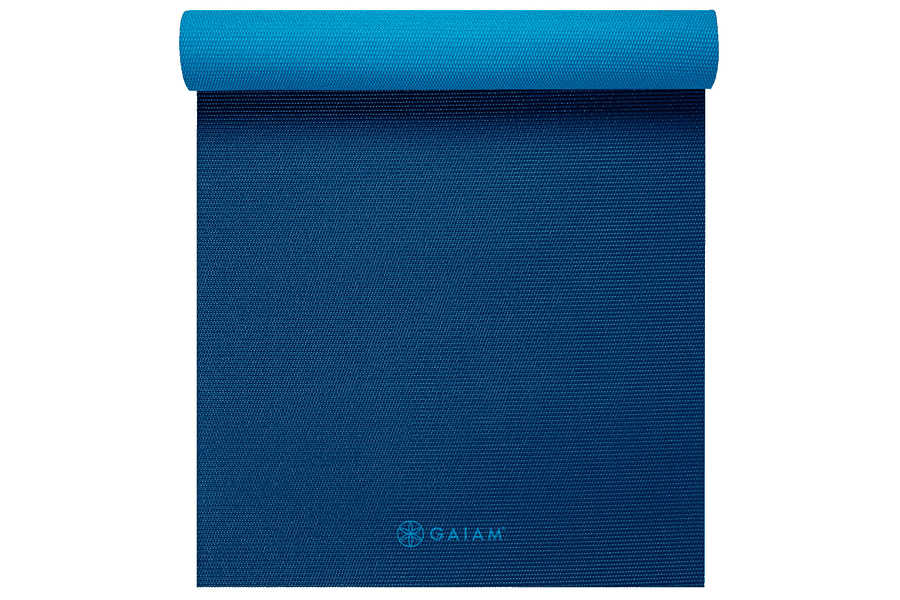
Two of Amazon's best-selling mats, a shelf apart in price and a category apart in what they're for. The Gaiam Premium is the $29.98 soft PVC starter mat sold everywhere a first mat gets bought. The IUGA borrows the smooth polyurethane-top construction of $165 mats, builds it to a $67 list price, and won GearLab's Best Value Upgrade award doing it. Which one you want depends almost entirely on whether you sweat.
As an Amazon Associate, we earn from qualifying purchases made through links on this page. How this works
The quick answer
The IUGA is the more serious mat: bigger at 72 by 26 inches, startlingly light at 2.1 pounds, with a polyurethane surface that absorbs sweat and keeps gripping where the Gaiam's PVC turns slick. The Gaiam counters with a $37 lower price, softer foam that's kinder to knees, a latex-free build, and a lifetime guarantee against defects.
If yoga is a weekly experiment or you need latex-free, get the Gaiam and see if the practice sticks. If you're practicing regularly or sweating at all, spend the $67 on the IUGA; it's the cheapest mat that actually solves slipping.
Get the IUGA if...
- Your palms sweat; the polyurethane top absorbs moisture and keeps gripping
- You want a bigger mat, 72″ × 26″ against 68″ × 24″
- You carry your mat anywhere, since 2.1 pounds is barely a carry at all
- You want the mat GearLab named Best Value Upgrade in its 2026 roundup
Get the Gaiam Premium if...
- You're new and not yet sure yoga will stick; $29.98 is the right-sized bet
- You have a latex allergy; the Gaiam is PVC with no rubber in it
- Sore knees lead your list, since the softer 6 mm foam kneels more comfortably
- You want a mat you can buy at Target today
Side by side
Price
The Gaiam Premium lists for about $37 less.
$66.99
List price · check price at Amazon
$29.98
List price · check price at Amazon
Thickness
The Gaiam Premium is 20% thicker.
5 mm0.2″
6 mm0.24″
Weight
The IUGA is 1.2 lbs lighter.
2.1 lbs0.95 kg
3.3 lbs1.5 kg
Size
The IUGA is 4″ longer; the IUGA is 2″ wider.
Same on both
- No third-party certifications on either mat
- Both discount below list price on Amazon regularly
- Light enough to carry to class daily
- Fine for unheated, dry-hands practice
Full specs
Dimensions
Materials & build
Buying
Two Amazon best sellers for two different buyers
Search yoga mat on Amazon and both of these sit near the top. The Gaiam Premium is the $29.98 soft PVC mat that half of every beginner class is standing on. The IUGA takes the smooth polyurethane-top construction that Liforme sells for $165, builds it to a $66.99 list price, and earned GearLab’s Best Value Upgrade award in its March 2026 roundup doing it.
They are not really rivals; they are stages. The Gaiam is the mat you buy to find out if yoga sticks. The IUGA is the cheapest mat that fixes the problem that makes people replace their Gaiam: hands sliding the first time a class works up a sweat.
Grip: the $37 gap in one section
The IUGA’s smooth polyurethane surface absorbs sweat into the coating as it lands, the same trick as the premium PU mats, and GearLab rated its wet grip highly for the price. Dry, it holds by a friction you only notice when you try to slide. Heavy sweaters can saturate the top mid-class, and a quick towel wipe resets it.
The Gaiam’s textured PVC holds fine with dry hands in slow classes. Add sweat and it turns slick, the recurring complaint in owner reviews and the reason so many Gaiams get retired in their first hot summer. One GearLab tester described the surface getting slippery enough to lose confidence in a wide-legged forward fold. If your palms are dry, this section is a tie. If they are not, it is the whole decision.
Size and weight: the IUGA gives more and weighs less
The IUGA is the bigger platform at 72″ × 26″ against the Gaiam’s 68″ × 24″. Four extra inches of length and two of width is the difference between adjusting your down dog to the mat and never thinking about it, and it matters from about five foot eight up.
It manages that while weighing 2.1 pounds to the Gaiam’s 3.3. Both are easy carries, but the IUGA barely registers on a shoulder, and that changes how often the mat actually leaves the house. The one floor note: lightweight mats can creep on slick floors during vigorous flows, where the IUGA’s textured rubber base does a better job holding position than light PVC.
Cushion: the Gaiam is kinder to knees
Credit where due: the Gaiam’s 6 mm of soft foam is genuinely pleasant to kneel on, and for stretching, restorative classes, and floor-heavy home workouts, the squish is the feature. The IUGA’s 5 mm is firmer, with less give under a kneecap.
The softness cuts both ways. GearLab found the Gaiam’s foam compresses enough to hold a handprint for a while, and its buying advice warns that a mat that soft can let a standing foot turn in or out, where the IUGA’s firmer build reads more stable. Sore knees favor the Gaiam; everything done standing favors the IUGA.
Materials and the latex allergy question
This is the one spec where the Gaiam simply wins for a specific group: it is latex-free PVC with no rubber in it, one of the safest cheap mats for a latex allergy. The IUGA is a polyurethane top over a natural rubber base, and natural rubber can carry trace latex proteins, so it is not safe for a genuine allergy no matter how little rubber your skin touches.
Beyond that, neither mat has much of a materials story. IUGA states no country of manufacture; the Gaiam’s PVC is the material rubber mats exist to replace; neither carries a third-party certification. The IUGA’s rubber base does add one care rule the Gaiam skips: keep it out of the sun.
Durability: two honest question marks
Polyurethane tops are the delicate part of every mat that has one, including the $165 ones: the coating can stain, wear smooth, or peel in high-contact spots after a year or two of heavy use. IUGA prices that risk honestly with a 45-day return window and no warranty. Two solid years of regular practice is a fair expectation; more is a bonus on a $67 mat.
The Gaiam ages differently: the foam compresses where hands and feet land and the texture wears smooth under steady practice, usually within a couple of years of regular use. Its lifetime guarantee covers manufacturing defects, not foam that packed down from doing its job, so weight it lightly. Under casual once-a-week use, the Gaiam probably outlasts the IUGA; under real practice, they are on similar clocks.
Care and living with each
The IUGA is the easier roommate. The smooth top wipes clean in seconds, repels the lint that tacky mats collect, and does not absorb sweat into the mat body; upkeep is a spray and a towel. Store it indoors, away from sunlight, for the rubber’s sake.
The Gaiam is nearly as simple, a wipe-down mat with no special rules beyond Gaiam’s own advice to unroll and air it for two to three days out of the box to clear the new-mat smell. Neither mat asks for the maintenance schedule that open-cell rubber mats like the Jade Harmony require.
Price and where to buy
The Gaiam lists at $29.98 and sells everywhere, Target included; check its current price at Amazon. The IUGA lists at $66.99 but is a brand whose prices cycle through discounts and coupons, so check its current price rather than taking the list number at face value; it routinely sells below it.
If the IUGA’s smooth-top formula appeals and you want to know what more money buys, the answer is mostly alignment lines and finish quality, covered in our Liforme vs IUGA comparison.
Bottom line
Get the Gaiam Premium if you are new, casual, latex-allergic, or shopping for knees first. It is comfortable, sold everywhere, and the right-sized spend for finding out whether the practice sticks. GearLab’s Best First Mat award is deserved; just know its surface gives up once you sweat.
Get the IUGA if you already practice, or you sweat, or you want the mat you will not need to replace at the first heated class. Bigger, far lighter, and genuinely grippy when wet, it is the best answer under $70 to the exact problem the Gaiam creates, and the trade is written on the box: no warranty, and a polyurethane top that may not see year three of heavy use.
Gaiam Premium 6mm
List price $29.98
Frequently Asked Questions
- Is the IUGA really worth $37 more than the Gaiam?
- If you sweat or practice more than about once a week, yes. The IUGA's polyurethane top absorbs moisture the way $165 Liforme-style mats do, and GearLab rated its wet grip highly for the price, which is exactly the failure point of the Gaiam; owner reviews of the Premium consistently describe the surface turning slick in sweaty sessions. If your practice is gentle stretching with dry hands, the Gaiam does the same job for $37 less, and the IUGA is spending on grip you won't use.
- Which mat is better for hot yoga?
- The IUGA, clearly. Its sweat-absorbing polyurethane surface is the same basic recipe as mats costing twice as much, and it holds damp palms well; heavy sweaters may saturate the top mid-class, at which point a towel wipe resets it. The Gaiam is the wrong tool here: closed-surface PVC that gets slippery as moisture builds, which GearLab's testers found undermined confidence even in basic standing poses. If hot classes are the plan, the Gaiam shouldn't be on the list.
- Which is safe for a latex allergy?
- Only the Gaiam. It's latex-free PVC with no rubber in it, which makes it one of the safest cheap mats for allergy sufferers. The IUGA is a polyurethane top over a natural rubber base, and natural rubber can carry trace latex proteins, so it isn't safe for a genuine latex allergy no matter how little of the rubber your skin touches.
- Which mat is more comfortable to kneel on?
- The Gaiam. Its 6 mm of soft PVC foam has a genuinely pleasant squish for kneeling poses, floor work, and restorative classes; that softness is most of why it makes a good first mat. The IUGA is 5 mm and firmer, better under standing balances but less forgiving bone-on-floor. The Gaiam's softness has a cost the other direction: GearLab found its foam compresses enough to hold a handprint, and its buying advice warns that a mat that soft can let a standing foot turn in or out. Pick by which kind of pose actually bothers you.
- How long does the IUGA last?
- Polyurethane tops are the delicate part of every mat that has one, including the expensive ones: the coating can stain, wear smooth, or peel in high-contact spots after a year or two of heavy use. IUGA prices that risk honestly with a 45-day return window and no warranty. Treat two solid years of regular practice as the expectation and anything past that as a bonus on a $67 mat. The Gaiam wears differently, foam compressing flat over a similar timeline of steady use, though it lasts longer under casual use.
- What about the warranties?
- The Gaiam carries a lifetime guarantee, the IUGA a 45-day return window and nothing after. Read the Gaiam's guarantee for what it is: coverage for manufacturing defects, not for foam that compressed from normal practice, which is how these mats actually age. In practice neither company is replacing a worn mat in year two, so weight the warranties lightly in this decision.
Related comparisons
- Gaiam Premium 6mm vs Gruper TPE 6mm
- Manduka Begin vs IUGA Eco Friendly Non Slip PU
- Amazon Basics 1/4 Inch Thick TPE vs Gaiam Premium 6mm
- Gaiam Premium 6mm vs YogaAccessories Extra Thick Deluxe 1/4"
- Manduka X vs IUGA Eco Friendly Non Slip PU
- Gaiam Performance Dry-Grip 5mm vs IUGA Eco Friendly Non Slip PU
- IUGA Eco Friendly Non Slip PU vs Hugger Mugger Earth Elements 5mm
- JadeYoga Level One vs IUGA Eco Friendly Non Slip PU
- IUGA Eco Friendly Non Slip PU vs Gaiam Performance Dry-Grip Long & Wide