Manduka eKO vs Lululemon The (Big) Mat: Which One Should You Buy?
Both weigh about seven pounds, so neither is a mat you carry cheerfully, and that clears the way for the actual question. The Manduka eKO is 71 by 26 inches of natural rubber that finished second of 19 mats in GearLab's most recent test. Lululemon's (Big) Mat is 84 by 28 inches with an absorbent polyurethane top over rubber. Fourteen dollars separate them.
As an Amazon Associate, we earn from qualifying purchases made through links on this page. How this works
The quick answer
On the testing the eKO is the stronger mat and the cheaper one: 87 of 100 against 81 for the build the (Big) Mat uses, with a perfect 10 for dry grip, the best of anything measured. It is also the mat you can buy on Amazon, return without a conversation, and get in five colors.
The Lululemon's answer is size and sweat. It covers roughly 40% more floor, and its polyurethane top pulls moisture in where the eKO's sealed rubber lets it bead. If you are tall or you sweat, that is worth $14. If neither applies, the eKO is the better mat.
Get the Manduka eKO if...
- You want the better-tested mat: 87 of 100 against 81
- You practice dry; GearLab rated its dry grip a perfect 10
- You want colors, easy Amazon returns, and a mat that discounts
- You would rather not manage a surface that stains
Get The (Big) Mat if...
- You are tall or broad; 84 by 28 inches is 13 longer and 2 wider
- You sweat, and want a top that absorbs rather than beads
- You want a reversible mat with a textured rubber second side
- The mat lives at home, where the size costs you nothing
Side by side
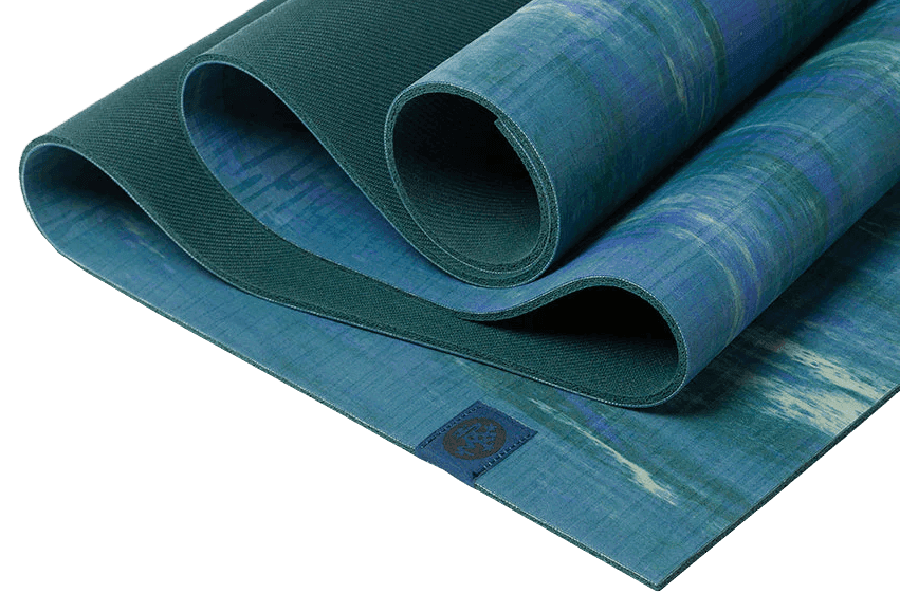
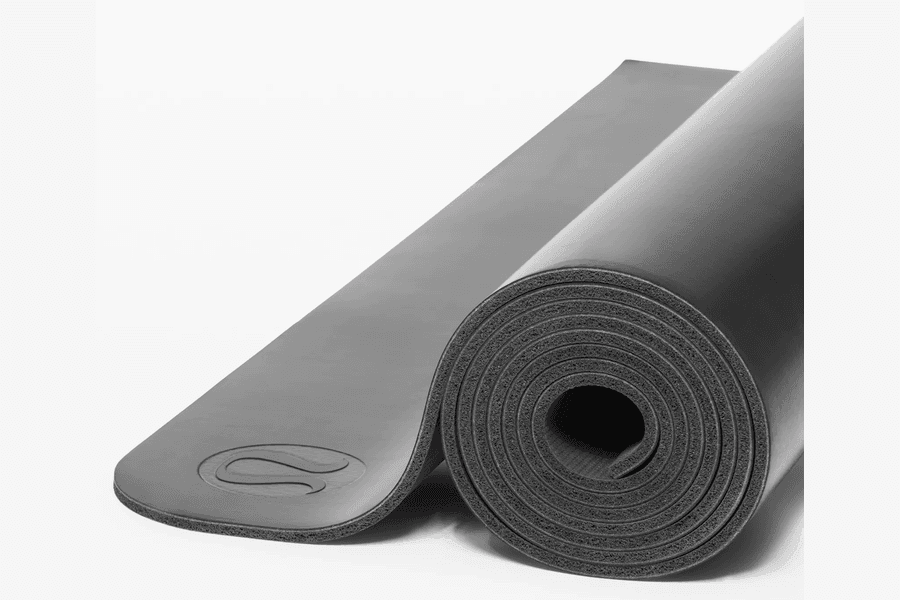
Price
The eKO lists for $14 less.
$114
List price · check price at Amazon
$128
List price · check price at lululemon.com
Thickness
Identical thickness.
5 mm0.2″
5 mm0.2″
Weight
The eKO is 0.1 lbs lighter.
7 lbs3.2 kg
7.1 lbs3.2 kg
Size
The Big Mat is 13″ longer; the Big Mat is 2″ wider.
Same on both
- About 7 pounds each, so neither is a happy daily carry
- Natural rubber in the build, so neither suits a latex allergy
- Grip from the first class with no break-in
- Must stay out of direct sun and hot cars
- Wipe-clean care; neither goes in a washing machine
Full specs
Dimensions
Materials & build
Two seven-pound mats with different ambitions
The eKO weighs 7 pounds and the (Big) Mat about 7.1, which is unusual: normally the oversized mat is the one you have to plan around. Here neither is a cheerful daily carry, so the usual portability argument cancels out before it starts.
What is left is a mat that scored near the top of the category against a mat that’s 40% larger. The eKO is 71″ × 26″ of natural rubber at $114; the (Big) Mat is 84″ × 28″ with an absorbent polyurethane skin over rubber at $128.
What the testing found
GearLab put the eKO second of 19 mats at 87 of 100, behind only the Manduka PRO. Its category scores were comfort 9, grip 9, materials 8 and care 8, and the summary described a mat that walks the comfort and support line perfectly with great dry grip for a less sweaty practice.
The Lululemon build placed fourth at 81, with a perfect 10 for comfort and support and a top pick award for mixed fitness routines. Its listed drawbacks are more pointed: contains latex, stains easily, needs deep cleans, may lose grip with use.
Grip: best in test dry, second best wet
The eKO’s dry grip is the best number in the entire field, a perfect 10, and it needs no break-in at all. GearLab also noted textured rails along the edges that add traction where hands land. Wet it scored 7, which is respectable, but “more slippery when wet” is one of only three cons the testers listed against it, because a closed-cell surface lets moisture bead on top with nowhere to go.
The Lululemon is the opposite trade. Its polyurethane face pulls sweat in rather than letting it pool, and the same review lists “sticky when wet” among its strengths. The wet-grip chart in that roundup put it at 4.5 out of 10 all the same, which sits oddly with the prose. Our reading is that the eKO grips brilliantly right up until sweat beads on it, the Lululemon copes better once that happens, and a genuinely heated room defeats both.
Size: the Lululemon’s whole argument
Thirteen more inches of length and two more of width work out to roughly 40% more mat. A six-foot-four practitioner lies flat in savasana with margin, hands stop creeping off the front edge in down dog, and wide-legged standing work stays on rubber instead of straddling the edge.
The costs come with it. An 84 inch roll overwhelms most mat straps and pokes out of standard bags, and a mat that size takes up more than one person’s share of floor in a packed class. If you want length without going that far, Manduka sells a 79 inch eKO at the standard width.
Feel and cushion
Both are 5 mm and both are firm. The eKO’s dense rubber reads as planted and solid, and GearLab praised it on hard and soft ground alike. The Lululemon is a touch softer where the polyurethane meets your hands, and it earned the perfect comfort score on that.
Texture is the bigger difference. The eKO is textured rubber that you feel under a palm; the Lululemon is smooth and slightly cool, closer to skin than to fabric, and it flips over to a textured rubber side if you want the other sensation. Longtime rubber practitioners sometimes find the Lululemon slick-feeling at first touch and never quite trust it.
How each one ages
Neither is a decade mat. eKO owners report surface flaking after a few years of heavy practice, and GearLab lists creasing among its drawbacks; Manduka backs it with a 30-day return window and no warranty at all, which remains a strange gap for the brand whose PVC mats carry a lifetime guarantee.
The Lululemon wears from the top down as its grip fades, with a realistic lifespan of four to six years, and the absorbent face stains where hands and feet land. It only comes in black, which hides that better than a pale colorway would. Lululemon’s Quality Promise says it will stand behind gear that fails to perform as designed without committing to a period.
Care and materials
The eKO is the easier one to live with. GearLab rated its care and cleaning 8 of 10 and noted it wipes down without fuss, where the Lululemon needs regular attention to stay ahead of the staining and drew a call-out for needing deep cleans.
Both are latex-bearing tree rubber, so neither is safe with a genuine latex allergy, and GearLab lists latex content among the Lululemon’s cons for exactly that reason. On sourcing, Manduka describes the eKO’s rubber as biodegradable and non-Amazon harvested with over 30% recycled content; Lululemon’s base rubber is FSC certified. Both are real, neither is decisive.
Colors and where you can buy
The eKO had five colorways at last count and sells through manduka.com and Amazon, discounts fairly often, and comes back through Prime without a conversation.
The (Big) Mat comes in black, from lululemon.com or a store. Lululemon doesn’t sell through marketplaces, so what you find under its name elsewhere is resold stock without the Quality Promise. When two mats are $14 apart, the ease of sending one back counts for more than usual.
Bottom line
Get the eKO unless size or sweat is your specific problem. It scored higher, costs $14 less, grips better dry than anything measured, cleans more easily, comes in colors, and is far simpler to buy and return.
Get the (Big) Mat if you’re tall or broad, or if you sweat enough that a sealed rubber surface starts letting go. Thirteen extra inches of length and two of width is a different practice, and the absorbent top handles damp palms better than the eKO does. If you want the Lululemon surface at a normal size, our The Mat vs eKO comparison runs the same matchup at 71″ × 26″.
Manduka eKO
List price $114
Lululemon The (Big) Mat 5mm
List price $128
Frequently Asked Questions
- Which one is better for hot yoga?
- The Lululemon, though the numbers are less lopsided than you would expect. The polyurethane face draws moisture in instead of leaving it on the surface, and the review of the standard Mat, which uses the same build, counts wet stickiness among its strong points. But the same roundup's wet-grip chart put that mat at 4.5 out of 10 and the eKO at 7. Our read: the eKO grips brilliantly until moisture beads on its sealed surface, the Lululemon copes better once it does, and both want a towel in a genuinely heated room.
- How much bigger is the (Big) Mat?
- Thirteen inches longer and two wider, which works out to roughly 40% more mat under you. A six-foot-four practitioner lies flat in savasana with margin, hands stop creeping off the front edge in down dog, and wide stances stay on rubber. The costs are an 84 inch roll that most straps will not close around and more than one person's share of floor in a packed class.
- Which mat is more comfortable?
- The Lululemon, marginally. GearLab gave this build a perfect 10 for comfort and support against 9 for the eKO, and both are 5 mm thick. The eKO's dense rubber reads as planted and solid, and the testers praised it on hard and soft ground alike; the Lululemon is a touch softer where the polyurethane meets your hands. Neither is plush and both are steady under a standing balance.
- How long does each one last?
- Both are consumables, not decade mats. eKO owners report surface flaking after a few years of heavy practice, and GearLab lists creasing among its drawbacks; Manduka backs it with a 30-day return window and no warranty at all. The Lululemon loses grip gradually from the top down, with a realistic lifespan of four to six years, and it stains where hands and feet land. Its Quality Promise names no term.
- Which is easier to buy and return?
- The eKO, comfortably. It sells through manduka.com and Amazon, discounts fairly often, and comes back through Prime without a conversation. Lululemon keeps sales inside its own stores and site, so the (Big) Mat has no marketplace option and no discount to hunt; anything listed under its name elsewhere is resold stock without the Quality Promise attached.
- What about colors and the environment?
- The eKO had five colorways at last count against black for the (Big) Mat, and Lululemon's oversized version has historically stayed conservative while the standard size gets the range. On materials, Manduka describes the eKO's rubber as biodegradable and non-Amazon harvested with over 30% recycled content, and Lululemon's base rubber is FSC certified. Both are real credentials and neither is decisive.
Related comparisons
- Manduka GRP Adapt 2.0 vs Lululemon The (Big) Mat 5mm
- Manduka eKO Long vs Lululemon The (Big) Mat 5mm
- Manduka GRP Adapt 2.0 Long vs Lululemon The (Big) Mat 5mm
- Lululemon The Mat 5mm vs Manduka eKO
- JadeYoga Harmony 74" vs Manduka eKO
- Manduka eKO vs JadeYoga Harmony 2.0 68"
- Manduka PROlite Long & Wide vs Lululemon The (Big) Mat 5mm
- Manduka PROlite Long vs Lululemon The (Big) Mat 5mm
- Alo Warrior vs Lululemon The (Big) Mat 5mm