Manduka Begin vs Gaiam Premium: Which One Should You Buy?
These are the two mats most first-time buyers actually choose between, and they're closer than the price suggests. Both are 68 by 24 inches, both are soft enough to be forgiving, and both are sold as the sensible way to start. The Manduka Begin adds an alignment stripe and cuts the weight to 2.5 pounds; the Gaiam Premium adds a millimeter of cushion and costs half as much.
As an Amazon Associate, we earn from qualifying purchases made through links on this page. How this works
The quick answer
The Gaiam is the better value and the more cushioned mat. OutdoorGearLab named it Best First Yoga Mat, scoring it 62 of 100, and praised its 6 mm of padding for stretch classes, slower flows, and long kneeling sequences. The same testers found that softness goes squishy in balance poses like tree and headstand, rated its dry grip 6 of 10 and wet grip 4, and noted the foam compresses where hands and feet land. Gaiam covers it with a lifetime guarantee, which is unusual at $29.98.
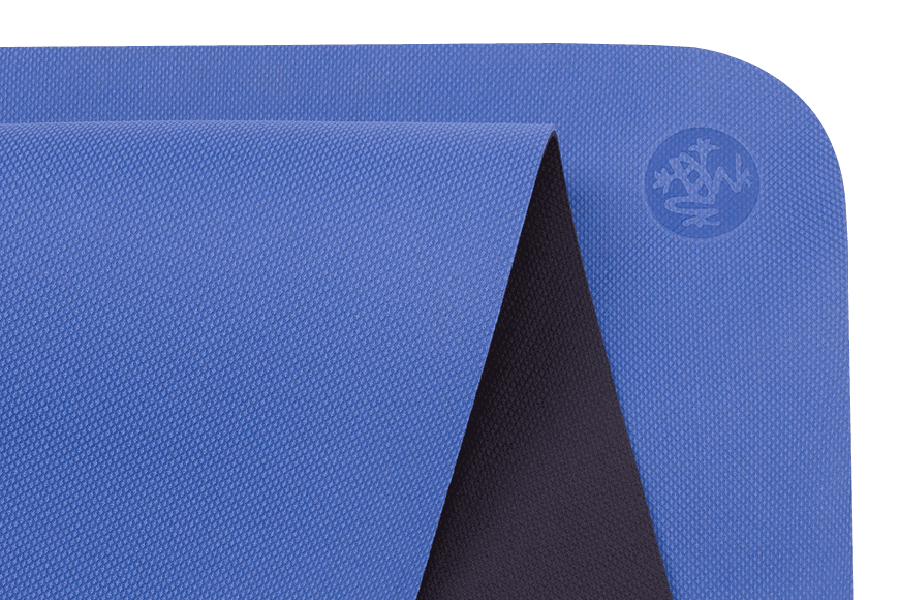
The Begin costs $32 more and spends it on three things: a center alignment stripe that gives beginners a reference for placing hands and feet, a lighter 2.5 pound carry, and TPE instead of PVC, which is latex-free and closed-cell so it wipes clean. If you're carrying a mat to class or you want the alignment guide, the Begin earns the difference. If the mat lives on your living room floor, the Gaiam does the same job for less.
Get the Begin if...
- You want the center alignment stripe to learn placement
- You carry your mat: 2.5 pounds against 3.3
- You want TPE rather than PVC
- You want a closed-cell surface that wipes clean
Get the Gaiam if...
- You want more cushion for kneeling and floor work
- Your practice is gentle, seated, or restorative
- You want a lifetime guarantee at a starter price
- You'd rather keep about $32
Side by side
Price
The Gaiam Premium lists for about $32 less.
$62
List price · check price at Amazon
$29.98
List price · check price at Amazon
Thickness
The Gaiam Premium is 20% thicker.
5 mm0.2″
6 mm0.24″
Weight
The Begin is 0.8 lbs lighter.
2.5 lbs1.1 kg
3.3 lbs1.5 kg
Size
Same length; same width.
Same on both
- Both are 68 by 24 inches
- Both are soft, beginner-friendly surfaces
- Both are latex-free
- Neither holds grip once your palms are sweaty
- Both come in one size only, with no longer version
Full specs
Dimensions
Materials & build
Buying
The two mats most beginners actually choose between
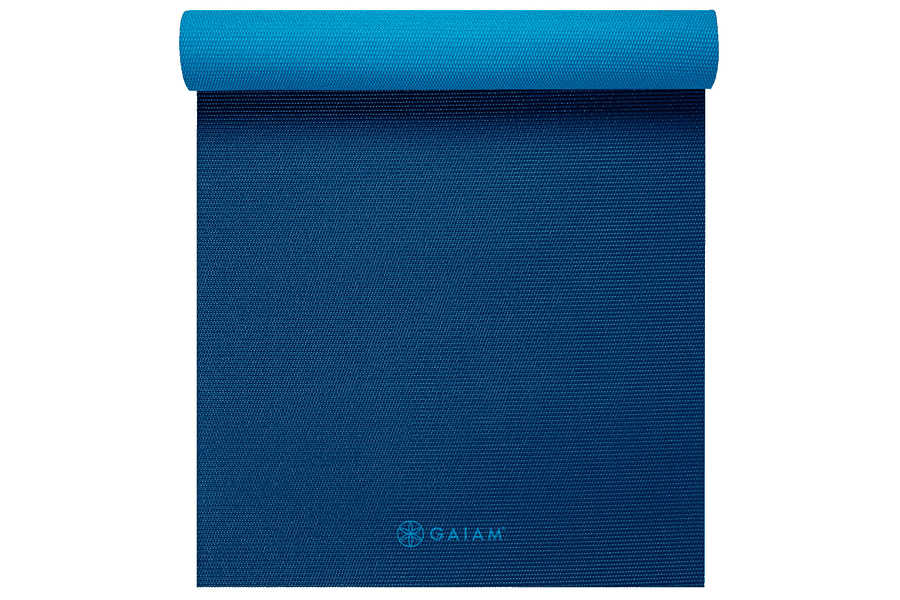
Neither of these is trying to be a serious studio mat, and that is the point. The Gaiam Premium is $29.98 of soft PVC foam, the mat OutdoorGearLab named Best First Yoga Mat in a 19-mat test. The Manduka Begin is $62 of TPE with a center alignment stripe printed down the middle, sold to the same person a step later in the decision.
They share a footprint, 68″ × 24″, and they share a ceiling: both are soft, and neither holds a sweaty palm. What separates them is a millimeter of cushion, most of a pound, and a printed line.
Cushion: the Gaiam is softer, for better and worse
The Gaiam is 6 mm to the Begin’s 5, and it feels like more than the number suggests because the foam is softer as well as thicker. GearLab’s testers singled out that cushion for kneeling poses, seated stretches, and long floor holds. On a hard floor it is the kinder of the two.
Then you stand on one leg. The same testers found the cushion goes squishy and sacrifices stability in balance poses like tree and in headstands, which is the standard cost of soft foam. The Begin is a little firmer and gives up less underfoot, though it is still a soft mat by any studio standard. If your first months include a lot of standing work, that firmness is worth something.
Grip: fine dry, finished when damp
Both grip well enough for a dry, unheated class and neither survives sweat. GearLab rated the Gaiam’s dry grip 6 of 10 and its wet grip 4, with one tester describing the foam turning slippery as moisture built up, enough to lose confidence in a wide-legged forward fold. The Begin’s closed-cell TPE has the same limitation for the same reason: nothing absorbs, so moisture sits on the surface.
The practical rule for both is to keep a towel nearby if you run warm, and to skip both entirely if you already know heated classes are your practice. That is not a knock on either mat; it is what sub-$70 closed-surface mats do.
The alignment stripe, and whether it earns $32
The Begin’s one real feature is a straight line down the center of the mat. It gives you a visual reference for centering yourself and lining up hands, feet, and hips, and beginners consistently find it useful in the first months. No mat in Manduka’s premium line includes one, the PRO included.
It is not magic, and if you have practiced before and never think about placement, it is decoration. But it is the clearest answer to why the Begin costs more than the Gaiam, and for someone learning at home without a teacher correcting them, it is a fair thing to buy.
Weight and size
Same footprint on both, 68″ × 24″, which is the short standard. At around five foot ten or taller you will hang off either one in savasana, and neither comes in a longer version, so height is a reason to look past both rather than a way to choose between them.
The Begin weighs 2.5 pounds against the Gaiam’s 3.3. Under a pound of difference sounds trivial, and it is at home; it stops being trivial on a walk to a studio a few times a week.
Durability and a backwards guarantee
Both wear by going soft rather than falling apart. GearLab lists compression over time and moderate durability among the Gaiam’s weaknesses, with visible indentations already showing where hands and feet land during testing. The Begin’s TPE surface wears with vigorous practice on a similar clock. A few years from either under regular use is a fair expectation, less if you are on it daily.
The coverage runs opposite to the price. Gaiam backs its $29.98 mat with a lifetime guarantee, while Manduka gives the Begin a 30 day return window and nothing after, because the lifetime guarantee belongs to the PRO series. Both cover manufacturing defects rather than foam softening from normal use, so neither should decide the purchase on its own.
Materials and cleaning
The Begin is TPE, a synthetic with no PVC and no latex, and Manduka’s closed-cell construction means it wipes clean easily. The Gaiam is latex-free PVC marketed as free of six common phthalates. Both are safe choices for a latex allergy, which is more than most premium mats can say.
Gaiam’s own care instructions ask you to unroll the mat and air it for two to three days before your first practice to clear the new-mat smell, and that is worth doing. Cleaning either one is a damp cloth and mild soap; a washing machine ruins both.
Price and where to buy
List prices are $62 and $29.98, and both drift below list. Manduka’s colorway sales bring the Begin close to $50 with some regularity, which narrows the gap to about $20 and makes the alignment stripe much easier to justify. Check the current price of the Begin at Amazon and the Gaiam at Amazon before deciding; the Gaiam also sits on big-box shelves if you want to press a thumb into one first.
Bottom line
Buy the Gaiam Premium if the mat lives at home and your practice is gentle, seated, or floor-heavy. It is more cushion for less money, it carries an unusual lifetime guarantee, and professional testers named it the best first mat for exactly this reader. Its softness under balance poses is the price you pay.
Buy the Begin if you want the alignment stripe while you learn, or if you carry your mat and want the lighter one. Whichever you choose, know what you are not getting: neither handles sweat, and both are 68 inches long. When you outgrow that, our The Mat vs Begin and PRO vs Gaiam Premium pages map where each upgrade path leads.

Manduka Begin
List price $62
Gaiam Premium 6mm
List price $29.98
Frequently Asked Questions
- Is the Manduka Begin worth $32 more than the Gaiam Premium?
- It depends on whether you'll use what the extra money buys. The Begin's alignment stripe is genuinely useful for beginners learning to center themselves and stack hands and feet, and no mat in Manduka's premium lineup offers one. It's also nearly a pound lighter, which matters if the mat rides to a studio. What it doesn't buy is more cushion or better grip. For a home practice on carpet or a rug, the Gaiam is the better value.
- Which one is more comfortable?
- The Gaiam, on paper and in practice for floor work. Its 6 mm of soft PVC foam is a millimeter thicker than the Begin's 5 mm TPE, and GearLab's testers singled out that cushion as comfortable during kneeling poses, seated stretches, and long floor holds. The trade is stability: the same softness gives under one leg, which makes tree pose and standing balances wobblier than they need to be. The Begin is a touch firmer but not dramatically so.
- Can either handle a sweaty or hot yoga class?
- No, and this is the shared ceiling on both mats. The Gaiam's foam becomes slippery as moisture builds, which GearLab's tester described as losing confidence in poses like a wide-legged forward fold, and its wet grip rated 4 of 10. The Begin's closed-cell TPE doesn't absorb anything either, so damp palms slide. If you already know heated classes are your practice, skip both and look at an absorbent-top mat.
- How long will each one last?
- Plan on a few years from either, less under daily use. The Gaiam's soft foam compresses where hands and feet land, which GearLab lists among its weaknesses, and the Begin's TPE surface wears with vigorous practice. The paperwork runs backwards from the price: Gaiam covers its $29.98 mat with a lifetime guarantee while Manduka gives the Begin a 30 day return window and nothing after, since the lifetime guarantee belongs to the PRO series. Both guarantees cover defects rather than foam that softened from normal use.
- What does the alignment stripe actually do?
- It's a straight line down the center of the mat that gives you a visual reference for centering your body and lining up hands, feet, and hips in standing and seated poses. Nothing magic, but beginners consistently find it useful in the first months, and it's the single clearest reason to choose the Begin. If you've practiced before and never think about placement, it's decoration.
- Which is better for a taller practitioner?
- Neither, unfortunately. Both are 68 inches long, which is the short standard, and neither brand offers a longer version of this specific mat. If you're around five foot ten or taller you'll hang off both in savasana. Taller beginners should look at a 71 inch mat instead, like the Manduka X at $72, rather than choosing between these two on length.
Related comparisons
- Gaiam Premium 6mm vs Gruper TPE 6mm
- Manduka Begin vs IUGA Eco Friendly Non Slip PU
- Amazon Basics 1/4 Inch Thick TPE vs Gaiam Premium 6mm
- Gaiam Premium 6mm vs YogaAccessories Extra Thick Deluxe 1/4"
- Manduka Begin vs Gaiam Performance Dry-Grip 5mm
- Manduka Begin vs Hugger Mugger Earth Elements 5mm
- Manduka Begin vs JadeYoga Level One
- Manduka Begin vs Gaiam Performance Dry-Grip Long & Wide
- Manduka Begin vs 42 Birds The Robin