Lululemon The Mat vs Manduka eKO: Which One Should You Buy?
This is one of the cleanest matchups we cover: identical 71" x 26" footprints, identical 5 mm thickness, and list prices $4 apart. Everything comes down to the surface and the scale. The Mat covers its rubber base with smooth polyurethane that absorbs sweat; the eKO is textured natural rubber top to bottom and carries almost 2 extra pounds. Your sweat level and your commute decide it.
As an Amazon Associate, we earn from qualifying purchases made through links on this page. How this works
The quick answer
The Mat is the better mat for most people in this pair. It matches the eKO's footprint and cushion at 5.24 pounds instead of 7, and its polyurethane top held grip through GearLab's heated test classes, something the eKO's closed-cell rubber can't claim once palms get wet. The eKO's advantages are real but narrower: a warmer all-rubber feel, over 30% recycled content, Amazon availability, and a planted, heavier presence on the floor.
If you sweat, commute with your mat, or want the surface testers keep recommending, get The Mat. If you want pure rubber underhand and a mat that stays put at home, get the eKO.
Get The Mat if...
- You practice hot or sweaty: the absorbent top keeps traction
- You carry your mat: 5.24 pounds against 7 is a real gap
- You want the option of a second, tackier rubber side
- You're fine buying direct from lululemon.com
Get the eKO if...
- You want textured natural rubber underhand, not polyurethane
- You'd rather buy on Amazon
- Recycled content matters: the eKO is built with over 30%
- Your mat lives at home, where its 7 pounds is a feature
Side by side
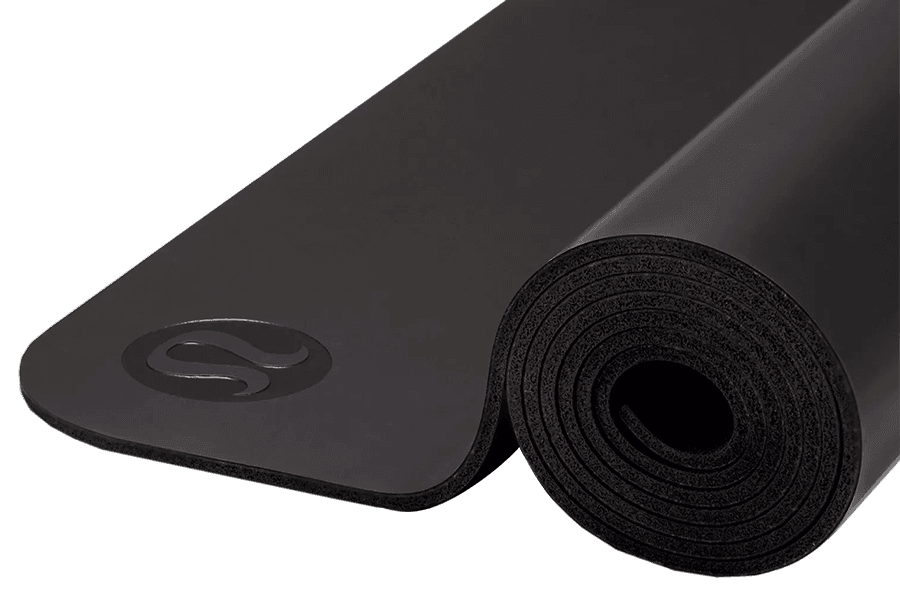
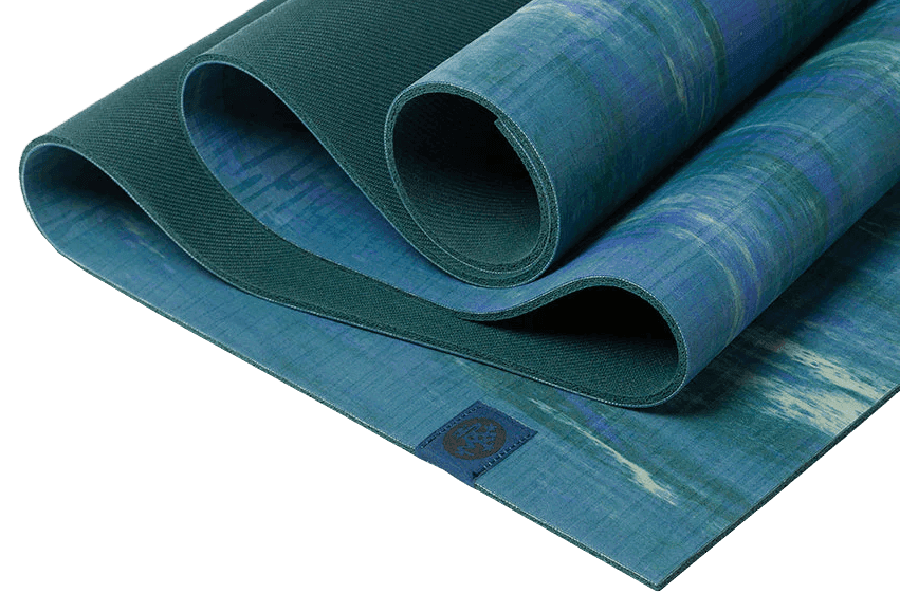
Price
The eKO lists for $4 less.
$118
List price · check price at lululemon.com
$114
List price · check price at Amazon
Thickness
Identical thickness.
5 mm0.2″
5 mm0.2″
Weight
The Mat is 1.8 lbs lighter.
5.2 lbs2.4 kg
7 lbs3.2 kg
Size
Same length; same width.
Same on both
- Same 71" x 26" footprint
- 5 mm thick, firm and stable
- Natural rubber (not for latex allergies)
- Grippy from day one
- Must stay out of direct sun and hot cars
Full specs
Dimensions
Materials & build
Buying
Identical dimensions, different skins
You can lay these two mats on top of each other and lose track of which is which: both are exactly 71″ × 26″, both are 5 mm thick, and their list prices sit $4 apart. Both are even built on natural rubber. It’s about as controlled an experiment as mat shopping offers, which makes the two remaining differences easy to see.
The first is the surface. The eKO is textured rubber top to bottom; The Mat covers its rubber with a smooth polyurethane layer that absorbs sweat. The second is mass: 7 pounds of eKO against The Mat’s listed 5.24. Surface decides how each grips a wet palm. Mass decides which one still leaves the house in six months.
Grip: the sweat test settles it
Both mats grip immediately, with no break-in, and in a dry room we’d call them equals with different personalities: the eKO’s rippled rubber feels warm and organic, The Mat’s polyurethane smooth and almost silky. Plenty of people pick between them on that feel alone.
Wet palms end the tie. The Mat’s top layer soaks sweat in as it lands, and GearLab’s testers found it kept traction through classes at 90 to 105 degrees. The eKO is closed-cell, so sweat stays beaded on the surface, and Manduka itself frames the eKO’s grip as reliable in dry conditions. Once your hands are properly wet, the eKO wants a towel and The Mat mostly doesn’t. If your practice runs hot, this section is the whole comparison.
Cushion and feel: honestly, a tie
Five millimeters of rubber-based mat is five millimeters of rubber-based mat. Both are firm and stable with a slight natural spring, both hold a balance pose without wobble, and both protect knees adequately on wood floors while leaving something to be desired on concrete. The eKO’s all-rubber build feels a touch denser underfoot; The Mat’s surface feels softer to the touch without actually giving more. Nobody should pick either mat on cushioning grounds, and buyers with genuinely sore knees should be reading about thicker mats like the 8 mm Jade Fusion instead.
Weight: 2 pounds you’ll feel every trip
Lululemon lists The Mat at 5.24 pounds, and GearLab’s scale put it closer to 6. The eKO is 7 flat. However you count it, the eKO is the heaviest mat most people will ever carry to a class, and it shares the PRO-series habit of becoming a stay-at-home mat within a season. The Mat is no featherweight, but it clears the carry-without-thinking bar. At home the ranking flips: the eKO’s mass keeps it dead flat and planted, one of the things owners like most about it.
Durability: two consumables, no real coverage
Buy either mat with clear eyes about lifespan. The Mat wears from the top: its grippy polyurethane layer gradually loses hold, and GearLab pegs realistic life at 4 to 6 years, with visible staining along the way as the absorbent surface keeps some of what it soaks up. The eKO wears from use: owners report the rubber surface flaking after a few years of hard daily practice.
Neither company puts real paper behind its mat. Manduka’s lifetime guarantee is a PRO-series benefit, so the eKO gets a 30 day return window and nothing after. Lululemon’s Quality Promise covers gear that doesn’t perform as designed but names no term and is decided case by case. That’s two shrugs, and it tells you both makers price these mats as multi-year purchases, not decade ones. If a written guarantee matters to you, this pair isn’t where you’ll find it; a PRO against The Mat is that conversation.
Care is the same for both, because tree rubber sets the rules: out of the sun, out of hot cars, gentle cleaners only, and expect a rubber smell for the first weeks. The Mat adds routine wipe-downs to slow the staining.
Materials and the eco angle
The eKO has the more substantial story here: natural tree rubber built with over 30% recycled content and none of the polyurethane or synthetic layers The Mat carries. The Mat answers with FSC-certified rubber sourcing, a certification the eKO doesn’t carry. Both beat PVC on material grounds, neither is compostable in any meaningful sense, and both contain latex, so a latex allergy rules out this entire matchup in favor of PVC or TPE.
Sizes, colors, and where to buy
Long-mat buyers get a real choice: the eKO Long at 79″ × 26″ for $124, or Lululemon’s The (Big) Mat at 84″ × 28″. Colors run about 10 for The Mat against 5 for the eKO, with darker Mat colorways the smart pick given the staining. The eKO line also includes the lighter eKO Lite if 7 pounds is the dealbreaker but the rubber isn’t.
Purchasing is a genuine split. The eKO sells through Amazon at normal prices. Lululemon doesn’t sell on Amazon, so The Mat means lululemon.com or a store, and any Amazon listing for it is a marked-up reseller without the Quality Promise attached.
Price and value
List prices are $118 for The Mat and $114 for the eKO. Four dollars separates them, which rounds to nothing on mats at this price. Check the current price of the eKO at Amazon and The Mat at lululemon.com; the eKO in particular drifts by colorway.
With price and size off the table, you’re paying the same money for different strengths: The Mat’s wet grip and lighter carry against the eKO’s all-rubber feel and recycled content. That’s an unusually pure features decision, and for most buyers the feature that matters more often is grip.
Bottom line
The Mat is the better buy for most people. It matches the eKO on footprint, cushion, and money while running nearly 2 pounds lighter, and its surface keeps working after your palms start sweating, which is the failure point of every closed-cell mat including the eKO. Its staining and the Lululemon-only purchase are the real costs.
The eKO earns its place if you specifically want rubber under your hands rather than polyurethane, if recycled content is a deciding value, or if Amazon convenience matters and the mat will live at home in a mostly dry practice. Those are real reasons, just narrower ones. Sweat tips this matchup, and The Mat handles it better.
Lululemon The Mat 5mm
List price $118
Manduka eKO
List price $114
Frequently Asked Questions
- Which is better for hot yoga, The Mat or the Manduka eKO?
- The Mat. Its polyurethane top absorbs sweat, and GearLab's testers found it kept traction in classes run at 90 to 105 degrees. The eKO is closed-cell rubber, so sweat sits on the surface, and Manduka itself frames the eKO's grip as reliable in dry conditions. For heated practice the eKO needs a towel; The Mat mostly doesn't.
- Are The Mat and the Manduka eKO the same size?
- Yes, exactly: both are 71" x 26" and 5 mm thick, which is roomier than the standard 68" x 24" mat by 3 inches of length and 2 of width. The difference you'll feel is weight. Lululemon lists The Mat at 5.24 pounds, though GearLab's scale put it closer to 6, and the eKO is 7.
- Which lasts longer, The Mat or the eKO?
- Both are consumables by premium-mat standards. GearLab pegs The Mat at 4 to 6 years as the top layer gradually loses grip, and it stains along the way. eKO owners report surface flaking after a few years of hard practice. Neither carries a real warranty term: Lululemon's Quality Promise names no duration and is handled case by case, and Manduka covers the eKO with nothing beyond a 30 day return window.
- Does the Manduka eKO have a warranty?
- No. Manduka's lifetime guarantee covers its PRO series only. The eKO gets the standard 30 day return window and nothing after that, which is worth knowing on a $114 mat made of a material that wears with use.
- Can I buy either mat on Amazon?
- The eKO, yes, through Manduka's normal listing. The Mat, no: Lululemon doesn't sell through Amazon, so Amazon listings for it are third-party resellers at inflated prices without the Quality Promise behind them. If Amazon is your default store, that's a genuine point for the eKO.
- Do these mats smell when new?
- Both arrive with a rubber smell, since both are built on natural tree rubber. Owners of each report it fading over the first days to weeks of airing out. It's not a deciding factor between these two; it's the price of the material.
Related comparisons
- JadeYoga Harmony 74" vs Lululemon The Mat 5mm
- Manduka PROlite Long vs Lululemon The Mat 5mm
- Lululemon The Mat 5mm vs JadeYoga Harmony 2.0 68"
- Manduka PROlite vs Lululemon The Mat 5mm
- Lululemon The Mat 5mm vs Manduka GRP Adapt 2.0
- Manduka eKO vs Lululemon The (Big) Mat 5mm
- Lululemon The Mat 5mm vs Yoga Design Lab Infinity 5mm
- Manduka eKO vs Hugger Mugger Para Rubber 5mm
- JadeYoga Harmony 74" vs Manduka eKO