Liforme vs Yoloha Unity Pro: Which One Should You Buy?
One dollar separates these two, and both are aimed at practitioners who are tired of practicing on a towel. They go about it with opposite materials. The Liforme's polyurethane top grips from the first touch and absorbs moisture as it lands. The Yoloha's cork is moderate until there's moisture on it, which is why both Yoloha and independent testers suggest a spritz of water before class. Which one suits you comes down to what the rest of your practice looks like.
As an Amazon Associate, we earn from qualifying purchases made through links on this page. How this works
The quick answer
Testing separates these two more than the price does. OutdoorGearLab put the Liforme 6th of 19 at 76 of 100, named it Best for Fine-Tuning Alignment, and praised excellent traction wet or dry, describing a mat that looks slippery and sticks like a gecko on a window. The Yoloha finished 10th at 66 of 100 with no award: moderately grippy wet or dry, better with a little water sprinkled on it first, and slick when wet is on its list of drawbacks, along with expensive, heavy, and bulky. Both score the same 7.0 for comfort despite the Yoloha's 6 mm against the Liforme's 4.2, because the cork mat is extra-firm rather than plush.
For most people the Liforme is the better mat: it grips in every condition without a routine, it weighs 5.5 pounds against 7, it packs into an included zippered bag, and it was one of the easiest mats in the test to clean. Choose the Yoloha for what it is rather than for grip: renewable cork, an extra-firm grounded feel, outdoor use, and sizes up to 84 by 30 inches.
Get the Liforme if...
- You practice dry some days and sweaty others
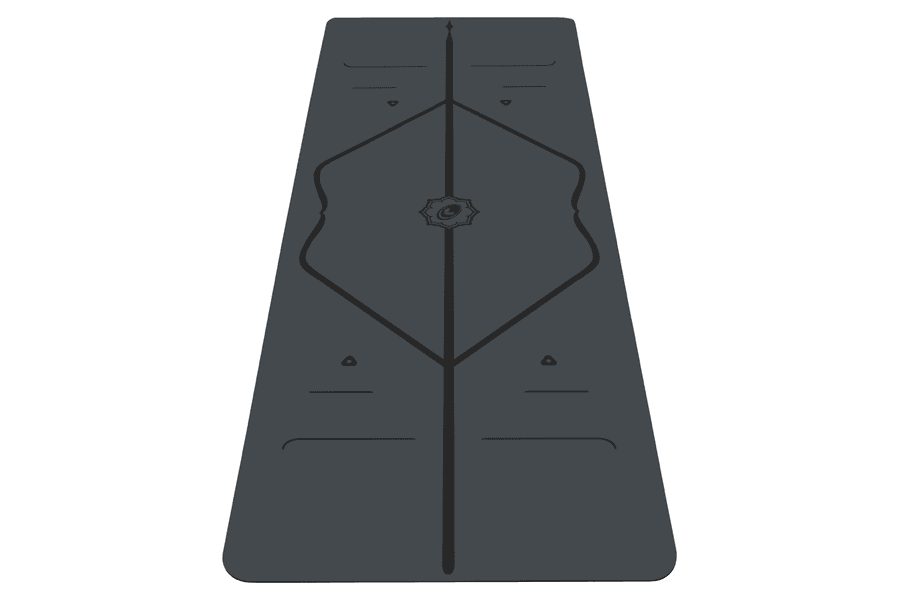
- You'd use the etched alignment lines
- You prefer a smooth surface against your skin
- You want the lighter carry (5.5 pounds vs 7)
Get the Yoloha if...
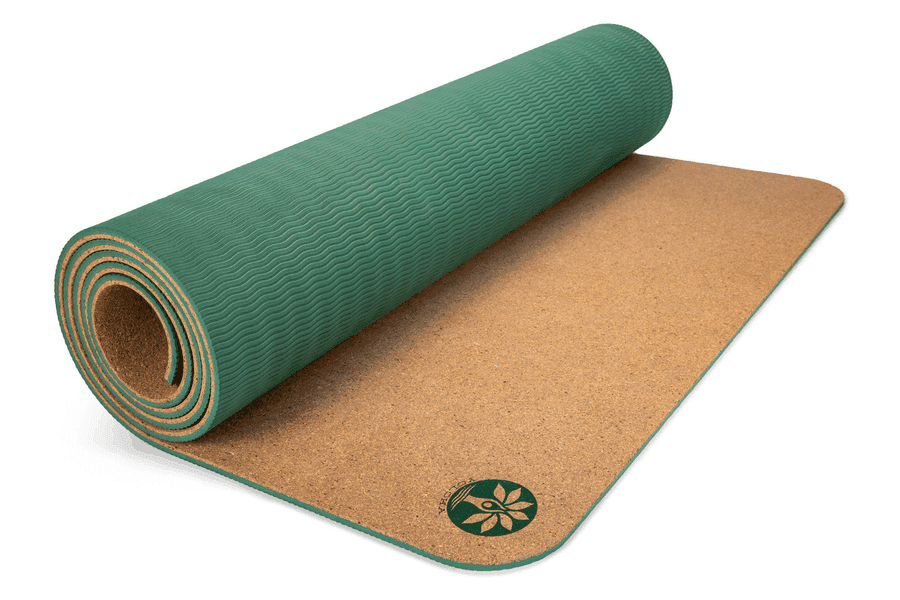
- You want cork and renewable materials rather than polyurethane
- You want an extra-firm, grounded platform underfoot
- You want the 80″ or 84″ × 30″ sizes
- You practice outdoors, where the firm base is a real advantage
Side by side
Price
The Unity Pro lists for $6 less.
$165
List price · check price at Amazon
$159
List price · check price at yolohayoga.com
Thickness
The Unity Pro is 43% thicker.
4.2 mm0.17″
6 mm0.24″
Weight
The Liforme is 1.5 lbs lighter.
5.5 lbs2.5 kg
7 lbs3.2 kg
Size
The Liforme is 0.8″ longer; the Liforme is 0.8″ wider.
Same on both
- Priced within a dollar of each other
- Premium mats built on natural materials
- Natural rubber content, so a latex caution on both
- No warranty beyond a 30 day window
- Keep both out of direct sun and hot cars
Full specs
Dimensions
Materials & build
Buying
- Long80" × 26"
- XL84" × 30"
Six dollars apart, sold to the same shopper
At $165 and $159, these mats are priced like direct rivals because they are: both are pitched at practitioners whose palms sweat and who would rather not practice on a towel. They go about it with opposite materials. The Liforme wraps natural rubber in a smooth polyurethane top that absorbs sweat as it lands. The Yoloha tops plant foam with a cork-and-rubber blend whose grip strengthens as moisture arrives.
One of those approaches tests better than the other, which is the least fun sentence to write about two mats this expensive. The rest of the decision is about what touches your skin, how big a mat you want, and what each one asks of you as an owner.
Grip: the Liforme wins this outright
The Liforme grips everywhere on the moisture spectrum. Dry hands hold from the first touch, the surface turning almost suction-like as your palms warm; sweaty hands sink into an absorbent top backed by a waterproof middle layer. GearLab listed excellent traction wet or dry among its strengths, scored its grip 8 of 10, and described a mat that looks as smooth as a glass castle and sticks like a gecko on a window.
The Yoloha is a step behind at 7 of 10. Testers called it moderately grippy wet or dry and recommended spritzing water where your hands land at the start of practice to build traction, which matches the grip tip on Yoloha’s own product page. Cork does improve as moisture arrives, but water doesn’t absorb into the surface, so testers kept a towel nearby once sweat began to pool, and slickness when wet sits on the mat’s list of drawbacks.
That is worth being blunt about, because Yoloha markets the Unity Pro as an unmatched non-slip surface in wet or dry conditions with no towel needed. Independent testing is more measured, and the mat you buy for grip alone is the Liforme.
Feel: smooth polyurethane vs grainy cork
Skin contact is where owners diverge hardest. The Liforme is smooth and slightly warm, unremarkable in the best sense; nothing about it registers during transitions. The Yoloha is grainy cork, an organic texture that some practitioners genuinely love underfoot and others never warm to. It is the one thing here that product photos can’t tell you, so put a hand on cork before committing $159 to it if you get the chance.
Cushion is closer than the numbers suggest. The Yoloha lists 6 mm to the Liforme’s 4.2, but GearLab described it as extra-firm and among the most stable mats it tested, and scored both mats the same 7 of 10 for comfort and support. Neither is plush: the Liforme is thin enough that GearLab flagged it for sensitive joints, and the Yoloha spends its extra millimeters on stability rather than softness.
Alignment lines vs oversized cuts
Each mat has one feature the other simply lacks. The Liforme’s etched AlignForMe markers give consistent references for placement and centering, and GearLab named it the best mat for fine-tuning alignment; home practitioners and teachers get daily value, settled practitioners may never glance down.
The Yoloha’s answer is territory. Beyond the standard 72″ × 26″, it offers an 80″ Long and a genuinely oversized 84″ × 30″ XL, while the Liforme Classic comes in its one 72.8″ × 26.8″ size. If you’re six foot three, or you simply want maximum real estate, only one of these brands is selling it.
Durability: two consumables, two failure modes
Neither mat pretends permanence. Liforme designs its materials to biodegrade in landfill conditions within one to five years, which GearLab likes and also names as the reason the mat is less durable than others in its price class; staining is the complaint that comes up most. The Yoloha’s cork-rubber face came through GearLab’s testing intact and cork wipes clean easily, but heat and sun are its enemies, so hot cars and sunny windows are off-limits.
Coverage is a wash and a weakness on both sides: a 30-day money-back guarantee from Liforme, 30 day returns from Yoloha, nothing after. Yoloha’s 84 inch size isn’t even eligible for free return shipping. At this price that stings, and it’s worth knowing before either checkout page.
Materials, origin, and allergies
Eco stories are central to both brands, told differently. Yoloha builds from 83% USDA-certified renewable materials and calls the Unity Pro a fully vegan product with no PVC or plasticizers. The Liforme builds from natural rubber and materials designed to break down at end of life, without stating a country of origin. Neither carries a third-party certification, so both stories rest on brand trust.
Both also contain natural rubber, the Liforme in its base and the Yoloha blended into its top, so the trace-latex caution applies equally: neither suits a genuine latex allergy.
Price and where to buy
The six dollars between list prices decides nothing, but the buying experience differs. Check the current price of the Liforme at Amazon, which ships with a carry bag; the Yoloha sells direct through yolohayoga.com in natural cork at $159 or printed art designs at $189, with free return shipping on the two smaller sizes only.
Bottom line
Get the Liforme if grip is what you’re paying for. It outscored the Yoloha in testing, holds wet or dry with no routine attached, packs into an included zippered bag, and the alignment lines are a real feature if you’d use them. Get the Yoloha for the things the Liforme can’t offer: renewable cork instead of polyurethane, an extra-firm grounded platform, outdoor practice, and cuts up to 84″ × 30″.
Both sit at the top of the sweat-mat market, so if the budget won’t stretch to either, the IUGA runs the Liforme’s construction for a third of the price; our Liforme vs IUGA page covers that trade, and PRO vs Yoloha runs the cork mat against the durability king.
Liforme Classic
List price $165
Yoloha Unity Pro Cork
List price $159
Frequently Asked Questions
- Which grips better, the Liforme or the Yoloha?
- The Liforme, in testing and in most conditions. GearLab scored its grip 8.0 and listed excellent traction wet or dry among its strengths, describing a surface that looks smooth and sticks like a gecko on a window. The Yoloha scored 7.0 and was described as moderately grippy wet or dry, with a recommendation to spritz water where your hands land before practice to build traction. Cork does improve as moisture arrives, but water sits on the surface rather than soaking in, so heavy sweat still calls for a towel.
- Which is better for hot yoga?
- The Liforme, though neither is the specialist. Its absorbent top over a waterproof middle layer takes sweat as it lands and testers rated its wet traction among the best in the lineup. The Yoloha's cork grips better with moisture on it, which is genuinely useful, but GearLab's testers kept a towel nearby once sweat pooled because water doesn't absorb into the surface. If heated classes are your normal practice, GearLab's hot yoga pick was neither of these; it was the Manduka GRP Adapt 2.0.
- How do they feel under hands and body?
- Very different, and it's worth caring about. The Liforme is smooth and almost suction-like once your hands warm up, thinner and firmer underfoot at 4.2 mm, and GearLab noted it's thin for sensitive joints. The Yoloha is grainy cork at 6 mm, but it reads as extra-firm rather than cushioned; GearLab called it among the most stable mats it tested and grouped it with the firm end of the spectrum. Both scored the same 7.0 for comfort and support, which is a fair summary: neither is a plush mat.
- Are the Liforme's alignment lines a real advantage?
- If you'd use them, yes, and nothing on the Yoloha answers them. The etched markers give consistent placement and centering references, and GearLab named the Liforme its best mat for fine-tuning alignment. Home practitioners and teachers get the most value; experienced practitioners with a settled practice may never look down. The Yoloha's counter-features are size and firmness, not guidance.
- How long will each last?
- Treat both as multi-year purchases rather than heirlooms. Liforme designs its materials to biodegrade in landfill conditions within one to five years, and GearLab notes that makes them less durable than other mats, with staining the most common complaint. The Yoloha's cork-rubber surface came through GearLab's testing intact and cork is easy to wipe clean, though heat and sun are its enemies. Coverage is thin on both sides: a 30 day money-back guarantee from Liforme, 30 day returns from Yoloha, and the 84 inch Yoloha isn't eligible for free return shipping.
- What sizes and looks does each come in?
- The Liforme Classic comes in one 72.8″ × 26.8″ size in gray, blue, purple, and several more colorways at last count, with a carry bag included. The Yoloha comes in 72″ × 26″, an 80″ Long, and an 84″ × 30″ XL, in natural cork at $159 or printed art designs at $189. If you need a truly oversized mat, only the Yoloha side offers one.
Related comparisons
- Yoloha Unity Pro Cork vs Manduka PRO Terra 6mm
- Manduka PRO Long vs Yoloha Unity Pro Cork
- Manduka PRO vs Yoloha Unity Pro Cork
- JadeYoga Harmony XW vs Yoloha Unity Pro Cork
- Alo Warrior vs Yoloha Unity Pro Cork
- Yoloha Unity Pro Cork vs b, halfmoon B Mat Strong 6mm
- JadeYoga Harmony XW vs Liforme Classic
- Manduka PROlite Long & Wide vs Yoloha Unity Pro Cork
- Manduka GRP Adapt 2.0 Long vs Yoloha Unity Pro Cork