Lululemon The Mat vs IUGA PU Mat: Which One Should You Buy?
The IUGA PU mat is the mat that shows up every time someone asks for a cheaper version of Lululemon's The Mat: same polyurethane-over-rubber construction, same 5 mm thickness, $51 less. Unusually for a budget dupe, independent testing mostly backs it up. This page is about the differences that survive the spec sheet, because there are real ones.
As an Amazon Associate, we earn from qualifying purchases made through links on this page. How this works
The quick answer
The dupe reputation is earned. GearLab scored the IUGA 75 of 100, eighth of 19 mats, gave it a Best Value award, and found its surface performed exceptionally well with sweat, the exact job this construction exists for. The Mat scored 81 and took a top pick in the same lineup. The gap shows up elsewhere: The Mat weighs 5.24 pounds to the IUGA's 2.1, and that density is why it feels planted where the featherweight IUGA can wrinkle mid-flow. It should also last longer: GearLab flags the IUGA's lifespan at a few hard years, and its surface can flake with age.
If you want the grippy PU experience for the least money, or a light mat you carry everywhere, get the IUGA. If you practice hard and often and want the denser, longer-lived version, The Mat is worth its $51 premium.
Get The Mat if...
- You want the dense, planted feel under fast transitions
- You practice hard enough that a few-year lifespan would annoy you
- You like the reversible rubber side as a second surface
- You want the mat GearLab made a top pick
Get the IUGA if...
- You'd rather keep about $51
- You carry your mat to class and want 2.1 pounds, not 5.24
- You want a slightly bigger surface (72 by 26 inches vs 71 by 26)
- A carry strap in the box appeals to you
Side by side
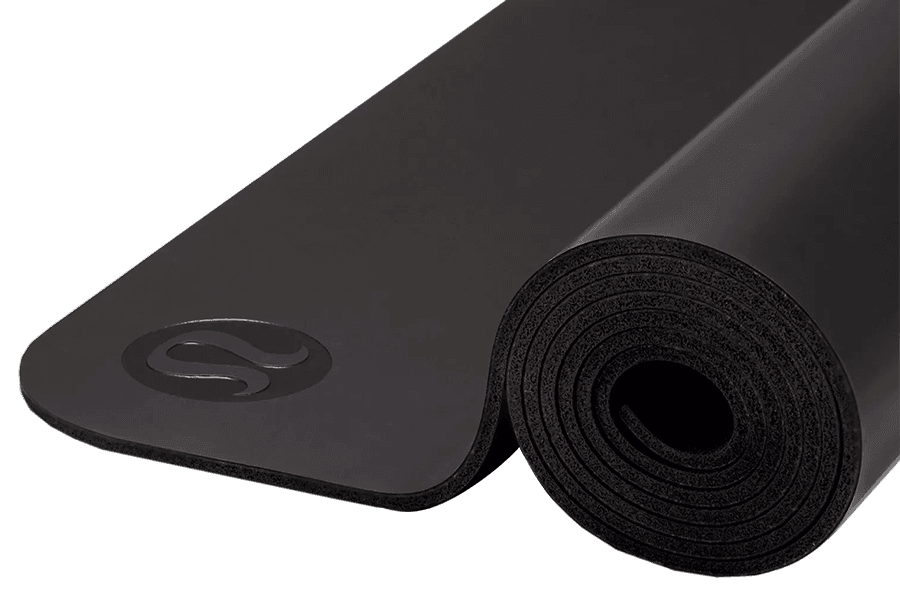
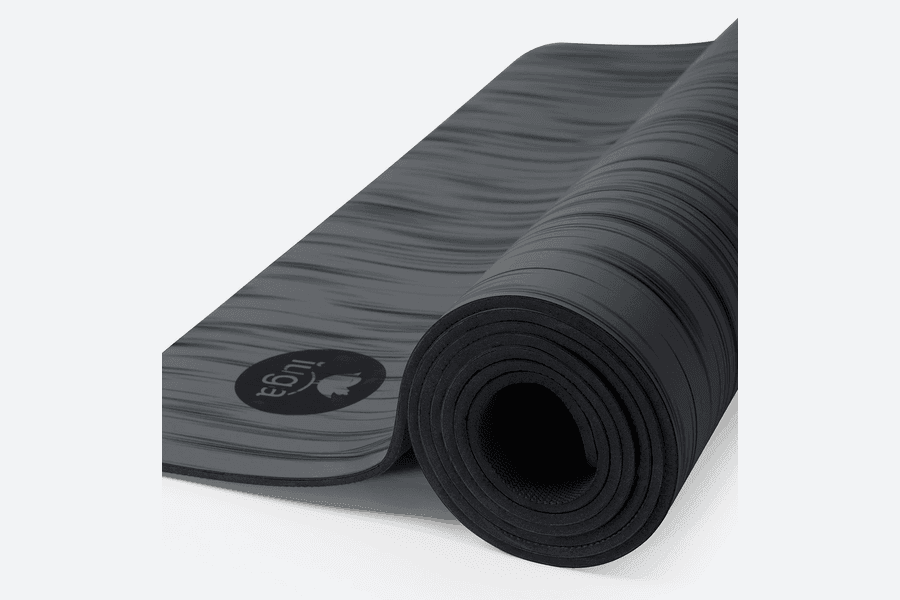
Price
The IUGA lists for about $51 less.
$118
List price · check price at lululemon.com
$66.99
List price · check price at Amazon
Thickness
Identical thickness.
5 mm0.2″
5 mm0.2″
Weight
The IUGA is 3.1 lbs lighter.
5.2 lbs2.4 kg
2.1 lbs0.95 kg
Size
The IUGA is 1″ longer; same width.
Same on both
- Polyurethane top over a natural rubber base
- 5 mm thick
- Grip that holds with sweaty palms
- No long-term warranty either way
Full specs
Dimensions
Materials & build
Buying
The dupe that testing takes seriously
Search for a cheaper version of Lululemon’s The Mat and the IUGA PU mat is what the internet hands you: the same polyurethane-over-natural-rubber construction, the same 5 mm thickness, a nearly identical footprint, at $66.99 against $118. Most dupes fall apart under scrutiny. This one mostly doesn’t: GearLab tested both mats in the same 19-mat lineup, made The Mat a top pick at 81 of 100, and gave the IUGA a Best Value award at 75.
Six points and $51 is the whole comparison in two numbers. The interesting part is where those six points live, because it isn’t in the grip.
Grip and sweat: both deliver the PU promise
The reason to buy either mat is the surface: a smooth polyurethane top that absorbs sweat as it lands instead of letting it pool. Both keep that promise. GearLab found The Mat held traction in classes run at 90 to 105 degrees, and found the IUGA’s sticky surface performed exceptionally well when wet, calling it well suited to hot yoga. Neither needs a break-in, and neither turns slick under damp palms.
One asterisk for heavy sweaters: absorbing sweat means keeping it. GearLab notes the IUGA’s surface takes moisture into the mat over time, which shortens its lifespan under regular drenching practice. The Mat has the same absorbent top but a denser build that seems to shrug off the abuse longer. For grip today, call this section a tie; for grip in year three, The Mat is the safer bet.
Weight and density: the real difference between them
Here’s the number the spec sheets bury: The Mat weighs 5.24 pounds and the IUGA weighs 2.1. Same footprint, same thickness, less than half the mass. That’s not a manufacturing shortcut so much as a different set of priorities, and it changes how each mat behaves.
The Mat’s density makes it feel planted. It lies heavy on the floor, doesn’t shift under fast transitions, and gives balance poses a firm, stable read. The IUGA is a featherweight, and GearLab noticed the cost: the mat can wrinkle slightly mid-flow, the kind of thing you flatten with a toe and move on from, but real. In exchange it carries like almost nothing, comes with a strap in the box, and is the obvious choice if your mat rides to a studio every day.
GearLab’s summary line for the IUGA is worth quoting: more comfort, grip, and stability for its weight than any other mat they tested. The qualifier is doing real work; for its weight is the whole story.
Size and the reversible trick
The IUGA is marginally bigger: 72″ × 26″ against The Mat’s 71″ × 26″. An inch of length is nothing to plan around, but it does mean the dupe gives up no real estate. Lululemon sells an 84″ version of The Mat if you need actual extra length; IUGA’s answer is a separate larger model rather than a longer version of this one.
The Mat keeps one feature the IUGA doesn’t copy: flip it over and the textured rubber side becomes a second practice surface, cushier-feeling and less absorbent, which some people prefer for slow or restorative sessions. The IUGA is one-sided.
Durability and smell: where the $51 went
The IUGA’s compromises live here. GearLab’s durability research points to a lifespan of a few good years under regular practice, with the absorbent surface wearing down and possible flaking after several years of hard use. The Mat’s polyurethane top also shows its age, mostly as stains and scuffs, but the denser build underneath holds together longer, and owner reports bear that out.
There’s also the unboxing. IUGA markets the mat as odorless; GearLab’s testers reported a strong initial smell that took some airing out, and owner reviews say the same. Give it a few days unrolled somewhere ventilated. The Mat’s natural rubber base has its own milder new-mat smell on a similar timeline, so this is a difference of degree, not kind.
Neither brand offers meaningful coverage: Lululemon’s Quality Promise names no term, and IUGA gives you 45-day returns. At these prices we’d call that fair for the IUGA and thin for The Mat.
Where to buy them
The IUGA is an Amazon-native brand: check the current price on the IUGA at Amazon, where it usually ships with the carry strap, or buy from IUGA’s own site. The Mat sells only through Lululemon, online or in stores, at Lululemon’s price. If handling a mat before buying matters to you, only one of these brands has a door you can walk through.
Price and value
List prices are $118 and $66.99, and the IUGA’s street price often drifts lower. Per year of ownership the gap narrows: if the IUGA serves three hard years and The Mat serves six or more, the per-year cost lands closer than the sticker suggests. That only matters if you practice heavily; for a few classes a week, the IUGA’s lifespan is a non-issue and the $51 is real savings.
It’s also worth saying the IUGA is the better dupe of the two budget alternatives we’ve tested against The Mat. The Gaiam Dry-Grip imitates the look but fails the sweat test; the IUGA copies the actual construction and passes it.
Bottom line
Get the IUGA if you want this style of mat for the least money, or if portability genuinely matters to you. It earns its value award: real PU grip, real sweat handling, 2.1 pounds, strap included. Accept the initial smell, the occasional mid-flow wrinkle, and a lifespan measured in years rather than decades.
Get The Mat if you practice often and hard. The extra $51 buys density you feel in every balance pose and a build that outlasts the dupe, and GearLab’s top pick nod reflects exactly that. If you’re still surveying the field, our Harmony vs The Mat and The Mat vs Alo Warrior pages cover the natural-rubber and premium ends of the same decision.
Lululemon The Mat 5mm
List price $118
Frequently Asked Questions
- Is the IUGA really a good dupe for the Lululemon mat?
- Closer than most dupes get. It copies the construction that makes The Mat work, a sweat-absorbing polyurethane top on natural rubber, at the same 5 mm thickness, and GearLab's testing found the surface gripped exceptionally well when wet, awarding it Best Value at 75 of 100 against The Mat's 81. The honest differences are density and lifespan: The Mat is more than twice the weight, feels more planted, and should survive hard use for longer.
- Which is better for hot yoga?
- Both are genuinely good, which is exactly why people cross-shop them. GearLab found The Mat kept traction in classes run at 90 to 105 degrees, and found the IUGA's sticky surface performed exceptionally well when wet, calling it well suited to hot yoga. One caveat for heavy sweaters: the IUGA's absorbent surface takes sweat into the mat over time, which GearLab notes shortens its lifespan with regular sweaty practice.
- Why does The Mat weigh over twice as much, and does it matter?
- Density. The Mat packs 5.24 pounds into the same footprint the IUGA covers with 2.1, and you feel the difference in both directions. The Mat lies heavy and planted, and doesn't shift or bunch under fast transitions; GearLab noticed the featherweight IUGA can wrinkle slightly mid-practice. The IUGA goes over a shoulder like a beach towel and is the obvious pick if your mat commutes daily. Decide which problem you'd rather have.
- Does the IUGA smell when new?
- Expect an initial odor. IUGA markets the mat as odorless and SGS-certified, but GearLab's testers reported a strong smell out of the box that faded with airing out, and owner reviews mention the same. Give it a few days unrolled in a ventilated room before your first class. The Mat's natural rubber has its own milder new-mat smell on a similar timeline.
- How long will the IUGA last?
- Plan on a few good years, not a decade. GearLab's durability research points to the absorbent surface wearing with regular sweaty use and possible flaking after several years of intensive practice. At $66.99 that's a fair deal, but it's the real difference between the dupe and the original: The Mat's denser build holds up longer, even though its top also stains and scuffs with age. Neither brand offers real coverage, Lululemon's Quality Promise has no set term and IUGA gives 45-day returns.
- Where can I buy each mat?
- The IUGA sells on Amazon and through IUGA's own site, usually with a carry strap included, and street prices drift below list. The Mat sells only through Lululemon, online or in stores, at Lululemon's price. If you want to comparison-shop in person, only Lululemon gives you that option; the IUGA is an online purchase.
Related comparisons
- Manduka Begin vs IUGA Eco Friendly Non Slip PU
- Manduka PROlite Long vs Lululemon The Mat 5mm
- JadeYoga Harmony 74" vs Lululemon The Mat 5mm
- Manduka X vs IUGA Eco Friendly Non Slip PU
- Manduka PROlite vs Lululemon The Mat 5mm
- Lululemon The Mat 5mm vs Manduka GRP Adapt 2.0
- Lululemon The Mat 5mm vs Manduka eKO
- Gaiam Performance Dry-Grip 5mm vs IUGA Eco Friendly Non Slip PU
- Lululemon The Mat 5mm vs b, halfmoon B Mat Everyday 4mm