Alo Warrior vs Liforme: Which One Should You Buy?
Two of the most expensive mats in yoga, built from the same recipe: a grippy, sweat-absorbing polyurethane top over a natural rubber base. The $148 Warrior goes all in on comfort and looks. The $165 Liforme is built around precision, with an alignment system etched into the surface. Grip won't separate them, so the decision lives in feel, size, and what you want the surface to do for you.
As an Amazon Associate, we earn from qualifying purchases made through links on this page. How this works
The quick answer
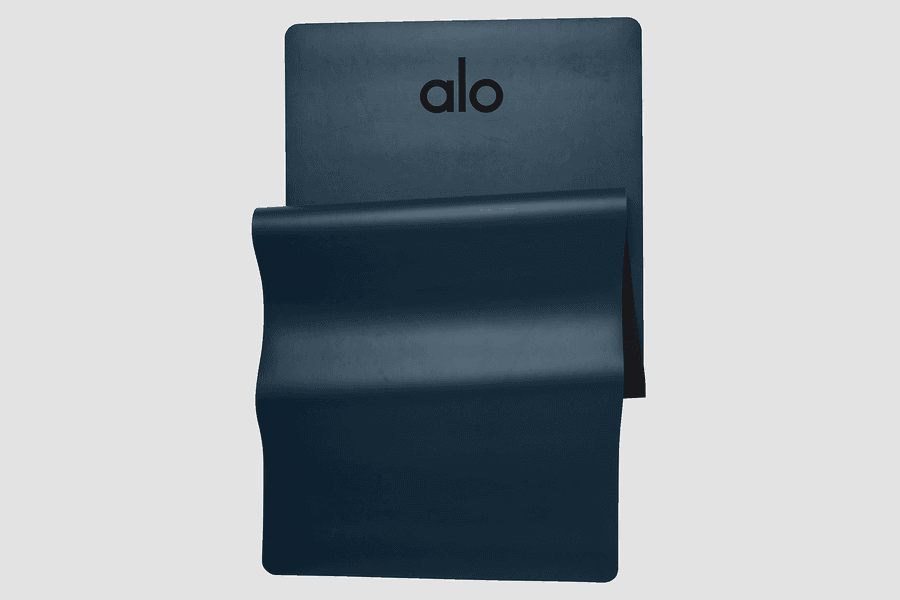
The Warrior is the comfort pick: plusher, 5 mm thick, 74.4 inches long, and $17 cheaper. It feels soft and secure under hands and knees, and T3 gave it a Recommends award for exactly that combination. The Liforme is the precision pick: a firmer, thinner 4.2 mm platform, a wider 26.8 inch surface, and the etched alignment lines GearLab named the best in its test. Both grip well with dry hands, but the wet-grip record favors the Liforme: GearLab praised its traction with sweaty palms while rating the Warrior's mediocre. Both wear the way polyurethane tops wear, with no long-term warranty on either side.
Get the Warrior if you want a soft, roomy mat for flows and heated classes. Get the Liforme if you want alignment feedback and a firmer base for balance work.
Get the Warrior if...
- You want the plusher, more cushioned feel (5 mm vs 4.2 mm)
- You want the longer mat (74.4 inches vs 72.8)
- You'd rather keep $17
- You like a soft landing for knees in floor work
Get the Liforme if...
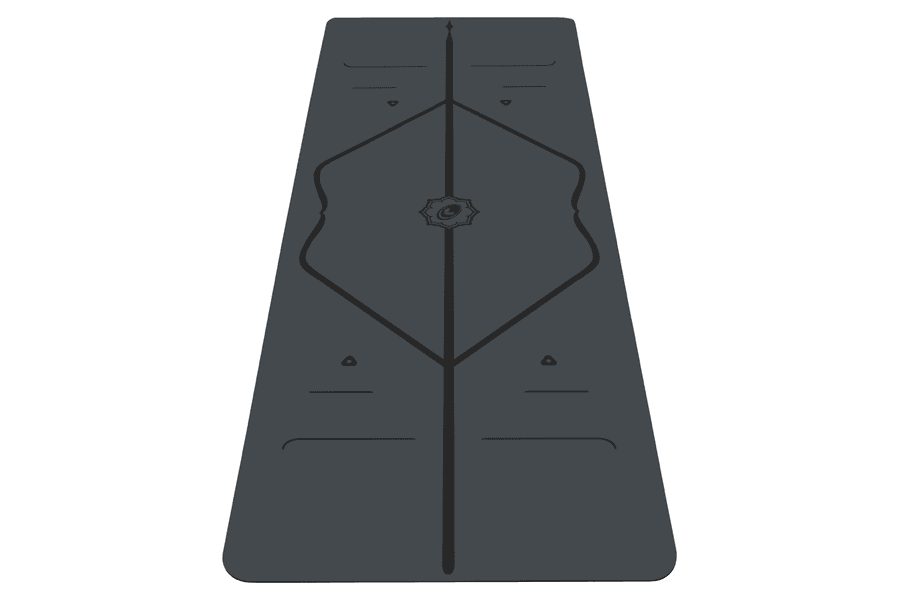
- You want the etched alignment lines for placement and form
- You prefer a firmer, more stable platform under balance poses
- You want the wider 26.8 inch surface at about 2.5 pounds less weight
- A biodegradable build and included carry bag appeal to you
Side by side
Price
The Warrior lists for $17 less.
$148
List price · check price at aloyoga.com
$165
List price · check price at Amazon
Thickness
The Warrior is 19% thicker.
5 mm0.2″
4.2 mm0.17″
Weight
The Liforme is 2.5 lbs lighter.
8 lbs3.6 kg
5.5 lbs2.5 kg
Size
The Warrior is 1.6″ longer; the Liforme is 0.4″ wider.
Same on both
- Polyurethane top over a natural rubber base
- Grippy from day one with dry hands
- Bigger footprint than a standard mat
- No formal warranty
- Gentle wipe-down cleaning only
Full specs
Dimensions
Materials & build
Buying
- Long84" × 26"
Comfort versus precision, at the top of the market
At $148 and $165, these are two of the most expensive standard mats in yoga, and they’re built from the same recipe: a grippy, sweat-absorbing polyurethane top over a natural rubber base. Where they differ is in what each brand decided the surface should do beyond gripping. Alo tuned the Warrior for comfort: plush, long, and handsome. Liforme tuned the Original for precision: firmer, wider, with an alignment system etched into the top.
Because the grip story is nearly identical, this choice is less about performance and more about personality. Here’s where each one actually differs.
Grip: a tie when dry, the Liforme ahead when wet
Both tops grip from the first class with no break-in, and with dry hands we’d call them equals. Sweat separates them. GearLab’s testers described the Liforme’s surface as gecko-like and rated its wet grip among the best they tested, crediting a moisture-wicking top over a waterproof middle layer. The Warrior’s record is mixed: T3’s reviewer found it stayed planted through sweaty flows and HIIT work, part of why it earned a T3 Recommends award, but GearLab’s standardized wet-grip test rated it mediocre.
Our read: for a normally damp practice, either is fine. If heated classes are your normal, the Liforme is the one with the clean testing record, and that’s a real point in its favor at these prices.
Feel: this is the real fork in the road
The Warrior is the plush one. Its 5 mm reads softer than the number, with a spongy give T3 described as comfortable under hands and knees through long sessions. Kneeling lunges, low hip openers, and seated work all land gently. The tradeoff is a slightly less crisp read on the floor during one-legged balances.
The Liforme is firmer and thinner at 4.2 mm, and that’s a choice, not a shortcoming. The dense rubber base keeps it comfortable, GearLab’s testers found, even on concrete and tile, while the lower, firmer platform gives standing balances a steadier foundation. If you love a soft landing, you’ll prefer the Warrior within one class. If you want the floor to feel close and solid, the Liforme is your mat.
The Liforme’s alignment lines
The feature gap between these mats is the Liforme’s “AlignForMe” system: a center line, placement markers, and angled guides etched into the surface. They’re fixed reference points for hand and foot placement, stance width, and centering, and GearLab named the Liforme its best mat for fine-tuning alignment. Home practitioners and teachers get the most from them; a settled practitioner may stop seeing them entirely.
The Warrior’s surface is a clean, uninterrupted field of color, which is part of its aesthetic appeal. There’s no version of the Warrior with guides, so if alignment feedback is on your list at all, the Liforme is the only one of the two offering it.
Size and weight
The Warrior is longer: 74.4″ against 72.8″. The Liforme is wider: 26.8″ against 26.4″. Both are comfortably bigger than a standard mat, so this only matters at the margins: taller practitioners lean Warrior, broad-shouldered ones lean Liforme. Alo also sells an 84″ Long Warrior, and Liforme an XL, if you need real acreage.
The Liforme is meaningfully lighter, 5.5 pounds against the roughly 8 Alo lists for the Warrior, and it comes with a carrying bag in the box. Neither is a light mat, and both roll fat. Call this section a clear Liforme win on practicality, a slight Warrior win on stretch-out room.
Durability, care, and the warranty nobody offers
The wear surface is the same material on both, so expect the same arc: polyurethane tops scuff, stain, and show mileage under heavy practice, on a timescale of a few good years rather than decades. T3 noted the Warrior’s surface picks up dirt and lint easily; Liforme says plainly that its materials are designed to biodegrade and that lifespan depends on how hard you use the mat. Care is the same for both: diluted mild soap or vinegar on a cloth, no machine washing, tops rolled outward, lotions kept away.
Neither brand backs its mat for long. Alo’s return window is 30 days; Liforme offers no warranty, just a 30-day money-back guarantee on purchases from its own site. At a combined $300 for this pair of price tags, that’s worth saying out loud. If lifespan coverage is what you want, this category isn’t where you’ll find it, and a Manduka PRO is the mat that solves that problem.
Price and where to buy
List prices are $148 for the Warrior and $165 for the Liforme, a $17 gap too small to matter. Availability differs more than price: the Warrior sells only through Alo’s site and stores, while the Liforme sells through liforme.com and on Amazon, where colorway pricing moves around. Check the current Liforme price at Amazon before paying list.
Value is a wash. You’re paying top-of-market money either way for the same core grip technology; the extras just point in different directions.
Bottom line
Get the Warrior if comfort is the point: it’s the plusher, longer, softer-landing mat, and for anything short of a genuinely hot room its grip keeps pace with the Liforme’s. It’s also, frankly, the better-looking of the two, if that’s allowed to matter.
Get the Liforme if you want your mat to give you information as well as grip: the alignment lines, the firmer footing under balances, the extra width. It’s the more purposeful tool, and the included bag and Amazon availability soften the top-of-market price a little. If you haven’t already, read our Warrior vs Lululemon The Mat comparison too; The Mat undercuts both of these on price with the same construction.
Alo Warrior
List price $148
Liforme Classic
List price $165
Frequently Asked Questions
- Which is better for hot yoga, the Alo Warrior or the Liforme?
- The Liforme has the stronger case. GearLab's testers praised its wet grip and moisture-wicking top layer, rating it among the best they tested. The Warrior's record is mixed: T3 found it stayed grippy through sweaty sessions, but GearLab's testers rated its wet grip mediocre. Both surfaces absorb sweat rather than letting it pool, so neither turns into a slide, but if heated classes are your normal, the Liforme is the safer pick. Truly heavy sweaters will want a towel on both eventually.
- Which feels better under your hands and knees?
- That's the real fork in the road. The Warrior is plusher and softer, with a spongy give T3's reviewer called comfortable through both flows and HIIT-style work. The Liforme is firmer and thinner, which reads as more stable under a standing balance but less forgiving under a kneeling lunge on a hard floor. Neither is wrong; they're tuned for different preferences.
- Which lasts longer?
- Plan on similar lifespans. The wear point on both is the polyurethane top, which scuffs, stains, and shows use with heavy practice on either mat. Liforme is explicit that its materials are designed to biodegrade and that lifespan depends on how hard you practice; Alo doesn't publish a lifespan claim at all. Neither offers a long-term warranty: Liforme gives a 30-day money-back guarantee on its own site, and Alo's return window is 30 days.
- Do the Liforme's alignment lines matter for experienced practitioners?
- Less than they do for beginners, but they're not useless. Teachers use them for demonstrating placement, and even settled practitioners use the center line for centering and the markers for consistent spacing between poses. GearLab named the Liforme its best mat for fine-tuning alignment. If you know you'd never look down at them, the Warrior's cleaner surface loses you nothing.
- Where can you buy each mat?
- The Liforme is the easier one to get: it sells through liforme.com with a 30-day money-back guarantee and also on Amazon, and it ships with a free carrying bag. The Warrior sells through aloyoga.com and Alo stores; Alo doesn't list it on Amazon. Both brands rotate colorways through the year.
- Which is easier to carry to class?
- The Liforme, clearly. It weighs about 5.5 pounds to the roughly 8 Alo lists for the Warrior, and it comes with a carry bag in the box. Neither is a light mat, and both have bigger-than-standard footprints that make a fatter roll, so if daily commuting is the priority, both brands sell lighter travel versions worth a look instead.
Related comparisons
- JadeYoga Harmony XW vs Alo Warrior
- Manduka PROlite Long & Wide vs Alo Warrior
- Manduka PRO vs Alo Warrior
- Alo Warrior vs Manduka PRO Terra 6mm
- Manduka GRP Adapt 2.0 Long vs Alo Warrior
- Manduka eKO Long vs Alo Warrior
- Alo Warrior vs Lululemon The (Big) Mat 5mm
- Alo Warrior vs Yoloha Unity Pro Cork
- JadeYoga Harmony XW vs Liforme Classic