Jade Fusion vs Yoloha Unity Pro Cork: Which One Should You Buy?
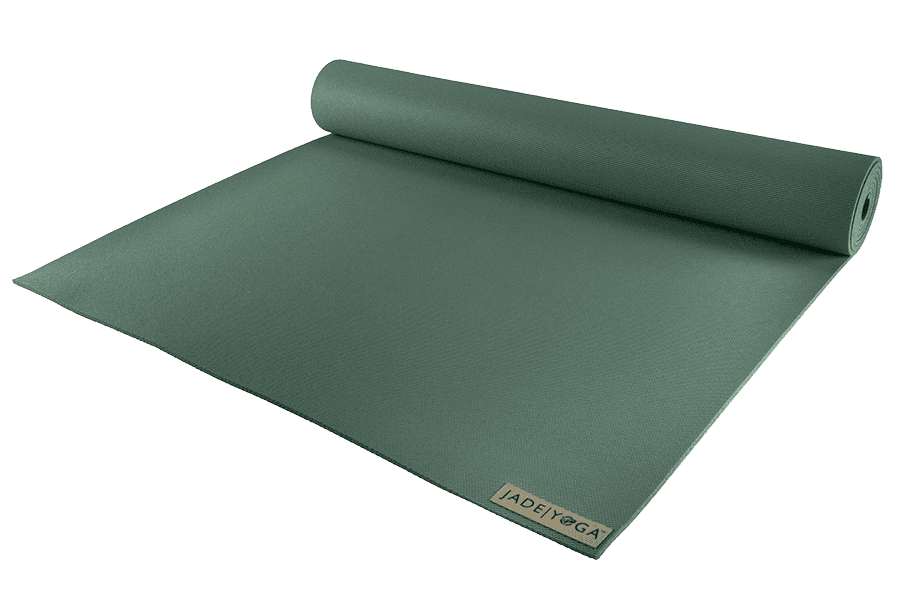
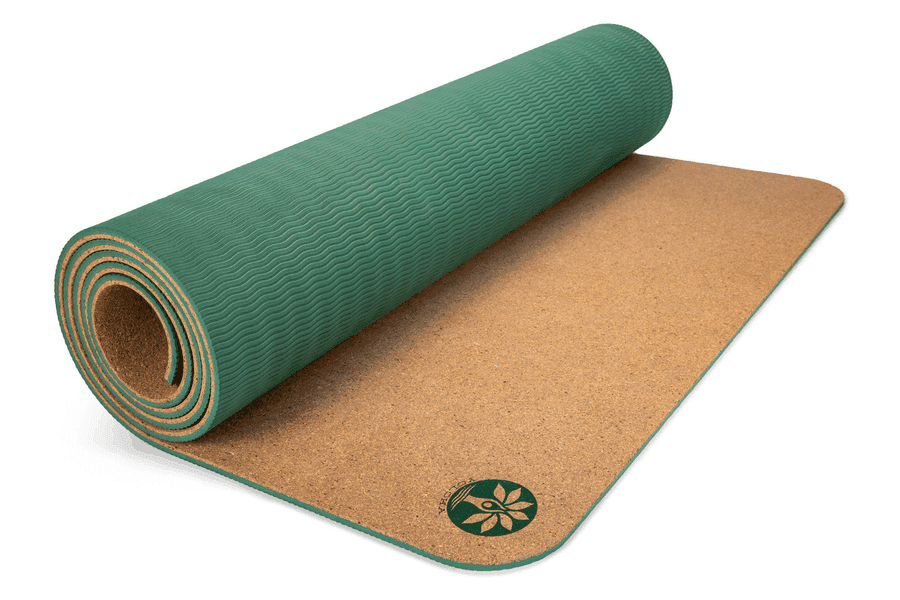
Two heavy, US-made mats that feel nothing alike. The Jade Fusion is 8 mm of springy open-cell rubber, Jade's thickest mat. The Yoloha Unity Pro is 6 mm of extra-firm cork and rubber over plant foam, and it's the bigger mat for $15.95 less. Your knees and your balance want different things here.
As an Amazon Associate, we earn from qualifying purchases made through links on this page. How this works
The quick answer
The Fusion is the cushion mat: 8 mm of Jade's open-cell rubber that grips from the first session and soaks up light sweat, at $174.95 for a 68 by 24 inch mat. The Yoloha is the firm one. GearLab scored it 66 out of 100 and rated it among the most stable mats it tested, but it grips best with a spritz of water, gets slick once sweat pools, and weighs 7 pounds.
If kneeling, floor work or a hard floor is what hurts, buy the Fusion. If your practice is mostly standing and balancing, you want a bigger mat, or you'd like to practice outside, buy the Yoloha.
Get the Jade Fusion if...
- Your knees or back hurt on hard floors and you want 8 mm of padding
- You want grip from the first session without spraying the mat
- Your practice leans restorative, Pilates or core work
- You want a written one-year warranty
Get the Yoloha Unity Pro if...
- You want a firm, stable surface for standing and balance poses
- You want 72 by 26 inches, or a size up to 84 by 30
- You'd like to practice outdoors, which Jade says its rubber mats aren't for
- You'd rather keep $15.95 and like a mostly renewable cork build
Side by side
Price
The Unity Pro lists for about $16 less.
$174.95
List price · check price at Amazon
$159
List price · check price at yolohayoga.com
Thickness
The Fusion is 33% thicker.
8 mm0.31″
6 mm0.24″
Weight
The Unity Pro is 1 lbs lighter.
8 lbs3.6 kg
7 lbs3.2 kg
Size
The Unity Pro is 4″ longer; the Unity Pro is 2″ wider.
Same on both
- Made in the USA
- Natural rubber in the top layer, so not for latex allergies
- Heavy, at 7 pounds or more
Full specs
Dimensions
Materials & build
Made in the USA, heavy, and very different underfoot
On paper these two have a lot in common. Both are made in the USA with natural rubber in the surface you touch, and each is heavy enough to stay wherever you first unroll them: about 8 pounds for the Jade Fusion and 7 for the Yoloha Unity Pro. List prices are $174.95 and $159.
Underfoot they go opposite ways. The Fusion is 8 mm of open-cell rubber, Jade’s thickest mat, pitched at restorative yoga, Pilates and core work. The Yoloha is 6 mm, a cork-and-rubber top on a plant foam base, and GearLab scored it 66 out of 100 in its March 2026 roundup. The Fusion isn’t in that roundup, so its side leans on Jade’s specs and owner reviews.
Kneeling and floor work: the Fusion, clearly
Eight millimeters of springy rubber is a lot more padding than the Yoloha’s six of firm cork and foam, and you feel it in a kneeling lunge or a long seated hold. Jade says Yoga Journal named the Fusion its Best Thick Mat for 2024, and 81 of the 87 cushioning mentions in its Amazon review summary are positive, with owners singling out knee support.
GearLab rated the Yoloha’s comfort and support 7 out of 10, and the firm cork keeps your weight on top of the mat. One reviewer on Yoloha’s own site found it hard on their feet rolling over the toes into down dog. If tender knees are why you’re shopping, the cork won’t fix them.
Balance poses: the cork holds you steadier
GearLab’s testers placed the Yoloha near the top of their lineup for stability and on its firm side for grounding. In tree pose or warrior three, a standing foot meets solid ground almost at once.
The Fusion moves more under one loaded foot. Jade’s rubber is dense enough that it never feels like cheap foam, and one Amazon owner says the thickness doesn’t throw off their balance poses. A practice full of one-legged work still favors the firmer mat.
Grip: Jade rubber works without a spray bottle
The Fusion grabs from the first session, and its open cells soak up light sweat. Owners talk about grip more than anything else, and Amazon’s review summary says they find it stays grippy when they work hard.
The Yoloha wants a little water. GearLab recommends spritzing it before practice, scored it 7.5 dry and 6 wet, and listed slick when wet among its cons, since water stays on top of the cork. Yoloha’s own page promises grip through heavy sweat with no towel needed, which is Yoloha’s claim, not GearLab’s finding.
Reviews on Yoloha’s site run both ways. One hot yoga regular retired their towel; another says that by the middle of class they’re standing in a pool of sweat.
After class: drying rubber, wiping cork
Anything that soaks up sweat needs to dry before you roll it, and you can’t hurry the Fusion in a sunny window: Jade warns against sunlight on its rubber mats, and its warranty excludes harsh cleaners. New rubber also smells; some Amazon owners barely notice it and others call it strong.
Cork is antimicrobial and needs little more than a quick clean after class, yet GearLab’s care score for the Yoloha was a 5, last of the 19. That category also rates how easy a mat is to carry, so the Yoloha’s bulk probably cost it more than the cork did.
Size, weight and the sun rule
The Fusion is 68″ × 24″ and the Yoloha 72″ × 26″, so you pay $15.95 more for the mat that is four inches shorter and two narrower.
Going bigger costs less with cork. Jade’s 74″ Fusion is $199.95 and the Fusion XW (80″ × 28″) is $249.95. Yoloha’s 80″ × 26″ Long is $179 and its 84″ × 30″ XL is $219.
GearLab weighed the Yoloha at 7.0 pounds, and heft is the one thing Fusion owners grumble about most. Jade also says its rubber mats aren’t for outdoor use, while GearLab picked out the Yoloha for practice outside.
Trees, sugarcane and a latex warning
The Fusion is tree-tapped rubber with no PVC, EVA or synthetic rubber in it, and Jade’s planting program has passed two million trees, one per mat sold. Yoloha’s pitch is a USDA certification covering 83% of the Unity Pro, which it says is made almost entirely of cork, natural rubber and sugarcane.
Both have natural rubber where your skin meets the mat. Jade’s own figure is 99% latex free, which still isn’t safe for an allergy, and Yoloha blends rubber into the cork. If you’re allergic, look at PVC or TPE instead.
A year of warranty, or 30 days to decide
Jade’s warranty runs a year on defects, and sun damage and harsh cleaners aren’t covered. We couldn’t find a trial period, so don’t plan on returning one you’ve practiced on.
Yoloha has no warranty. Returns are open for 30 days, with free return shipping on the 72″ and 80″ sizes, but Yoloha refuses mats that show dirt, marks or damage, and deducts $10 if the original packaging is gone.
Jade sells on Amazon, Yoloha only direct
List prices are $174.95 and $159. The 68″ Fusion comes in 4 colorways at last count at jadeyoga.com, and it’s worth a look at the Fusion’s Amazon listing too. Yoloha sells only through its own site, with plain cork or printed designs on offer; past sales have taken it down to $139.
For Jade’s thinner mat, see Jade Harmony vs Fusion; for the cork against lighter Jade rubber, see Jade Harmony vs Yoloha.
Bottom line
Buy the Fusion if floor comfort comes first: sore knees, restorative or Pilates work, or a hard floor. It grips from day one without any water and carries a year of warranty. Let it dry after sweaty sessions, store it away from windows, and know that the extra $15.95 gets you the smaller mat.
Buy the Yoloha if your practice is built on standing and balance work, if you want more room, or if you’d like to take it outside. It’s firmer, bigger and cheaper, but it grips best with a spritz of water and needs a towel once you really sweat. Heavy sweaters should read GRP Adapt 2.0 vs Yoloha first, since GearLab rated the Manduka best for hot yoga.
Jade Fusion
List price $174.95
Yoloha Unity Pro Cork
List price $159
Frequently Asked Questions
- Is the Jade Fusion or the Yoloha Unity Pro better for bad knees?
- The Fusion. It is 8 mm of springy natural rubber against the Yoloha's 6 mm, and Jade pitches it at restorative yoga, Pilates and core work. GearLab rated the Yoloha 7 out of 10 for comfort and support and describes it as extra-firm, which keeps you steady but doesn't pad a kneecap much. If balance matters as much to you as your knees, the Yoloha's firmness is the tradeoff to weigh.
- Which is better for hot yoga?
- Neither is ideal. The Fusion's open-cell rubber absorbs light sweat, and owners say it stays grippy when they work hard, but a soaked rubber mat eventually gets slippery and then needs time to dry. GearLab scored the Yoloha 7.5 dry and 6 wet, listed slick when wet among its cons, and suggests keeping a towel handy once sweat pools. For heated classes, GearLab's top pick was the Manduka GRP Adapt 2.0.
- Is the Yoloha Unity Pro really non-slip when wet?
- Yoloha's product page says so, promising grip through heavy perspiration with no towel needed. That is Yoloha's claim, not a test result. GearLab found it moderately grippy wet or dry, recommends spritzing it with water at the start of practice, and says to keep a towel nearby once sweat starts to pool, because water doesn't soak into the cork.
- Can you use either mat outside?
- Only the Yoloha. Jade says its natural rubber mats aren't intended for outdoor use and shouldn't be exposed to sunlight, and its warranty excludes sun damage. GearLab described the Yoloha's extra-firm build as one of the most stable bases it found for practicing outside.
- Are the Jade Fusion and Yoloha Unity Pro safe for a latex allergy?
- No. Jade describes its mats as 99% latex free, which still makes them unsuitable for people with latex allergies, and the Yoloha blends natural rubber into its cork top. If latex is a medical concern, look at PVC or TPE mats instead.
- Has GearLab tested the Jade Fusion?
- Not in its current roundup. GearLab's March 2026 test of 19 mats doesn't include the Fusion, and its only standalone Fusion review dates to January 2013 under an older scoring system, so we don't lean on it. The Yoloha is in the current roundup at 66 out of 100, tenth of 19. For the Fusion, Jade says Yoga Journal named it Best Thick Mat for 2024, and it holds 4.4 stars from about 610 Amazon ratings.
- Which one is bigger?
- The Yoloha. The standard Unity Pro is 72 by 26 inches against the Fusion's 68 by 24, and Yoloha also sells an 80 by 26 inch Long for $179 and an 84 by 30 inch XL for $219. Jade's bigger options are a 74 inch Fusion at $199.95 and the 80 by 28 inch Fusion XW at $249.95.
Related comparisons
- Manduka PRO vs Yoloha Unity Pro Cork
- Manduka PRO Long vs Yoloha Unity Pro Cork
- JadeYoga Harmony XW vs Yoloha Unity Pro Cork
- Alo Warrior vs Yoloha Unity Pro Cork
- Yoloha Unity Pro Cork vs b, halfmoon B Mat Strong 6mm
- Manduka PROlite Long & Wide vs Yoloha Unity Pro Cork
- Liforme Classic vs Yoloha Unity Pro Cork
- Manduka GRP Adapt 2.0 Long vs Yoloha Unity Pro Cork
- Manduka PRO Long vs JadeYoga Fusion 68"