Jade Harmony vs Jade Fusion: Which One Should You Buy?
Jade makes both of these mats from the same open-cell natural rubber, in the same American factories, with the same 68" x 24" footprint and the same tacky surface. What you're choosing is thickness and everything that follows from it: the Fusion carries 8 mm of rubber to the Harmony's 3/16 inch, which makes it Jade's cushioning specialist and also 8 pounds of mat at $75 more.
As an Amazon Associate, we earn from qualifying purchases made through links on this page. How this works
The quick answer
The Harmony is the default for a reason. It grips the same as the Fusion, weighs 3 pounds less, comes in three times the colors, and costs $99.95. The Fusion exists for one buyer: the person whose knees, wrists, or hips hurt on a standard mat. For that buyer it's arguably the best mainstream answer there is, with a perfect GearLab comfort score and a Yoga Journal best-thick-mat nod, and the weight and price are what that cushion costs.
If floor work doesn't hurt, get the Harmony and keep the $75. If it does, the Fusion is the one to get.
Get the Harmony if...
- A standard-thickness mat doesn't leave you sore
- You carry your mat: 4.8 pounds against 8 settles it
- You want real color choice, 12 options against 4
- You'd rather keep about $75
Get the Fusion if...
- Kneeling and floor work hurt on a normal mat
- Your practice leans restorative, yin, or Pilates
- You practice on concrete or tile
- You want maximum cushion without giving up Jade's grip
Side by side
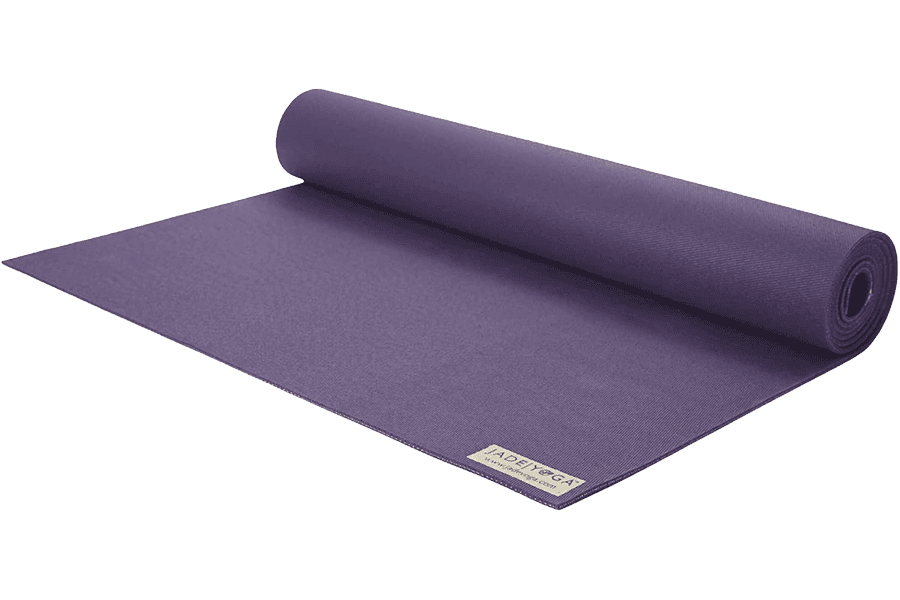
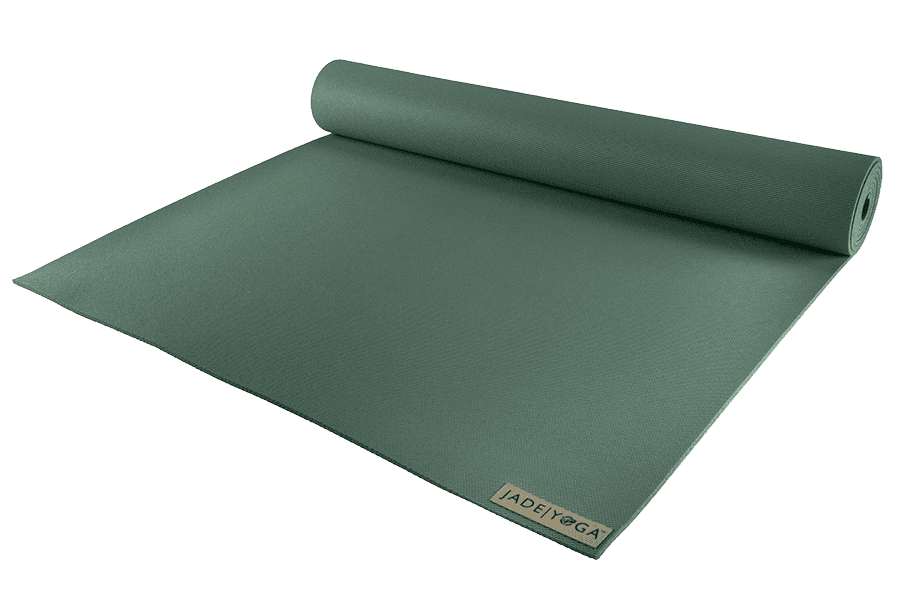
Price
The Harmony lists for about $75 less.
$99.95
List price · check price at Amazon
$174.95
List price · check price at Amazon
Thickness
The Fusion is 67% thicker.
4.8 mm0.19″
8 mm0.31″
Weight
The Harmony is 3.2 lbs lighter.
4.8 lbs2.2 kg
8 lbs3.6 kg
Size
Same length; same width.
Same on both
- Same open-cell natural rubber surface
- Same 68" x 24" footprint
- Made in the USA
- 1 year warranty
- A tree planted for every mat sold
- Same care rules: no sun, gentle cleaners only
Full specs
Dimensions
Materials & build
Buying
One recipe, two pours
Jade makes this comparison unusually simple. The Harmony and the Fusion are built from the same open-cell natural rubber, tapped from trees and made in the USA, and they share a tacky surface, a 68″ × 24″ footprint, a 1 year warranty, and Jade’s tree-planting program. Nothing about the material or the grip separates them.
What separates them is how much rubber you’re standing on. The Harmony is Jade’s standard mat at 3/16 of an inch. The Fusion pours 8 mm, over 5/16 of an inch, and that extra rubber turns it into a different kind of product: a cushioning specialist that weighs 8 pounds and lists at $75 more. Deciding between them mostly means deciding whether your body needs what the Fusion is selling.
Cushioning: the Fusion’s reason to exist
The Fusion is the mat for the practice that hurts. Kneeling lunges, low hip openers, forearm work, anything that parks bone on a hard floor, all of it lands differently on 8 mm of springy rubber. OutdoorGearLab gave the Fusion a perfect 10 for comfort and noted it smooths out uneven floors, and Yoga Journal named it a best thick mat. For restorative and yin practices, for Pilates floor work, or for anyone practicing on concrete or tile, it’s about the best mainstream answer there is.
The Harmony is a firm mat with a touch of natural spring, and for most bodies doing most practices it’s plenty. It supports a kneeling lunge on a wood studio floor without complaint. What it can’t do is protect sensitive joints on hard surfaces for long holds, and no standard-thickness mat really can.
The flip side: stability and float
Extra thickness isn’t free even before you pick the mat up. Standing balance poses feel subtly softer on the Fusion, the way grass feels softer than pavement, because your foot settles into the rubber before it finds solid ground. The Fusion is dense enough that this stays manageable, nothing like the wobble of cheap thick foam, but practitioners who live in tree pose and standing sequences consistently prefer a firmer, thinner platform, and between these two that’s the Harmony.
Grip: the same excellent surface
Nothing to decide here, which is worth saying explicitly. Both mats wear Jade’s tacky open-cell surface that grips from the first practice with no break-in, absorbs light sweat instead of letting it pool, and earned the brand its reputation. GearLab called the Fusion’s traction the best of any mat it tested, wet or dry, and the Harmony’s surface is the same idea in a thinner pour. Whatever you choose, the grip comes with it.
Weight: 8 pounds doesn’t commute
The Fusion weighs 8 pounds and rolls into a fat cylinder that fits no standard mat bag gracefully. GearLab scored its portability 3 out of 10, and we’d plan around the mat living wherever you practice. The Harmony, at 4.8 pounds, is an ordinary carry: over the shoulder, into a tote, onto a bike rack.
This is the spec that should stop impulse Fusion purchases. If your practice happens at a studio across town, the Fusion’s cushion does you no good sitting at home, and an 8 pound commute gets old within a week. Studio practitioners with sore knees are often better served by the Harmony plus a folded blanket under the knee, unglamorous as that sounds.
Sweat and the slow-drying problem
Open-cell rubber absorbs sweat, which is why the grip holds when palms get damp, and the Fusion simply has more cells to fill. GearLab found a soaked Fusion can take 2 to 3 days to dry fully, and sunning it dry isn’t an option because sunlight hardens natural rubber. The Harmony, with less than half the volume, turns around much faster.
For an occasional sweaty class this is trivia. For hot yoga several times a week it’s a schedule problem, and honestly neither of these mats is the right tool for that practice; a towel over whichever you buy is the workable setup.
Durability and care: identical rules
Same material, same aging, same fine print. Both surfaces soften and shed with heavy use, sweat accelerates the wear, and both carry Jade’s 1 year warranty with the same exclusions for sun damage and harsh cleaners. Cleaning is a damp cloth or diluted vinegar on either. Neither can live in a car or practice outdoors. The Fusion’s extra mass gives it more material to wear through, but its cushion is also its product, and cushion is what compression slowly takes; call lifespan a wash and treat both as multi-year mats, with CNN Underscored’s roughly ten year ceiling available to gentle owners of either.
The shared latex note applies too: Jade says its mats are 99% latex free but may carry trace latex proteins, so neither is the pick for a latex allergy.
Sizes and colors
The lines mirror each other: both come in the standard 68″, a 74″ length, and an oversized 80″ × 28″ XW cut. Tall Harmony buyers want the 74″ for $10 more; the 74″ Fusion runs $199.95, and the Fusion XW tops the range. Color is a Harmony landslide: around 12 colorways at last count against 4 for the Fusion, which currently means Midnight Blue, Purple, Slate Blue, and Jade Green.
Price and value
List prices are $99.95 for the Harmony and $174.95 for the Fusion, a $75 gap for the same material and footprint. Check current prices on the Harmony and the Fusion at Amazon; Jade prices hold steadier than most, but colorways drift.
The $75 buys exactly one thing, 3.2 extra millimeters of rubber, so the value question is whether your joints will collect on it. A buyer with genuinely sore knees uses that cushion every single practice and should consider it money well spent. A buyer whose knees are fine is paying $75 and 3 extra pounds for comfort they won’t notice. There’s no version of this where the Fusion is the safe default; the Harmony is the default, and the Fusion is the prescription.
Bottom line
Get the Harmony unless your body has filed a specific complaint. It’s the same grip and the same rubber at 60% of the price and weight, it comes in three times the colors, and it travels like a normal mat. Twenty years of studio floors have vouched for it.
Get the Fusion if floor work genuinely hurts, your practice leans restorative or Pilates, or your floor is concrete or tile. It’s the best cushioning in Jade’s line with none of the grip compromise thick mats usually make, and for the body that needs it, it’s worth every dollar and every pound. Just let it live where you practice, and give it time to dry.
Jade Harmony
List price $99.95
Jade Fusion
List price $174.95
Frequently Asked Questions
- Is the Jade Fusion better for bad knees than the Harmony?
- Yes, clearly. The Fusion's 8 mm of springy rubber is the reason the mat exists, and OutdoorGearLab gave it a perfect 10 for comfort, noting it smooths out uneven floors. The Harmony is a firm standard-thickness mat around 4.8 mm; it's comfortable for most practices, but if kneeling lunges or low hip work hurt on it, the Fusion is the fix.
- Is the Fusion too thick for balance poses?
- It's softer underfoot than the Harmony, and you can feel that in one-legged standing work, but it's dense rubber rather than squishy foam, so it stays workable. If your practice is heavy on balance poses, the Harmony's firmer, thinner platform is the steadier of the two. If your practice is mostly floor work, the tradeoff runs the other way.
- Do the Harmony and Fusion grip the same?
- Effectively yes. Both use Jade's tacky open-cell rubber surface, gripping from the first practice with no break-in, and both absorb light sweat rather than letting it pool. GearLab called the Fusion's traction the best of any mat it tested, and the Harmony's surface has the same character. Grip is not the reason to pick one over the other.
- How heavy is the Jade Fusion really?
- Eight pounds, and it rolls into a noticeably fat cylinder. GearLab scored its portability 3 out of 10, and we'd treat it as a mat that lives where you practice. The Harmony is 4.8 pounds and carries like a normal mat.
- Is the Jade Fusion good for hot yoga?
- Its grip handles sweat well, but there's a catch: all that open-cell rubber holds what it absorbs, and GearLab found a soaked Fusion can take 2 to 3 days to fully dry. You also can't speed that up in the sun without damaging the rubber. If you're in heated classes several times a week, the thinner Harmony with a towel is the more practical setup.
- What sizes do the Harmony and Fusion come in?
- Both start at 68" x 24" and both offer a 74" length and an oversized 80" x 28" XW version. Color range is where they differ: around 12 Harmony colorways at last count against 4 for the Fusion.
Related comparisons
- JadeYoga Harmony 68" vs Suga SugaMat
- JadeYoga Harmony 68" vs Manduka PRO Lite Terra 4.7mm
- JadeYoga Harmony 68" vs Manduka eKO Lite
- Manduka PROlite vs JadeYoga Harmony 68"
- JadeYoga Harmony 68" vs Manduka GRP Adapt 1.0
- JadeYoga Harmony 68" vs Manduka eKO Lite Long
- JadeYoga Harmony 68" vs Manduka GRP Adapt Lite 2.1 4mm
- JadeYoga Harmony 68" vs Lululemon The Mat 5mm
- Manduka PROlite Long vs JadeYoga Harmony 68"