Yoloha Unity Pro Cork vs B Mat Strong: Which One Should You Buy?
These two land closer on the spec sheet than almost any pair we cover. Both are 6 mm thick, both are about 26 inches wide, and $15 separates them. The Yoloha Unity Pro is cork and natural rubber over a plant-based foam core, made in the USA. The B Mat Strong is Spanish rubber, tacky from the second you unroll it. The decision comes down to grip, weight and what you want the mat made of.
As an Amazon Associate, we earn from qualifying purchases made through links on this page. How this works
The quick answer
The B Mat is the better performer. GearLab's review of the 4 mm Everyday, which uses the same rubber, put grip at 9 out of 10 and called it a favorite for hot yoga, while the Unity Pro scored 7 for grip and 66 of 100 overall, tenth of 19, with the lowest care and cleaning score in the field. The B Mat is also 2 pounds lighter, OEKO-TEX certified, covered for a year, and $15 cheaper.
The Yoloha's case is materials and sizes: 83% USDA-certified renewable content, naturally antimicrobial cork, USA manufacturing, and cuts up to 84 by 30 inches that almost nobody else offers in natural materials. Choose it for what it is made of, not for how it scores.
Get the Yoloha Unity Pro if...
- Cork over plant-based foam is the build you want, made in the USA
- You like the idea of a naturally antimicrobial surface
- You need 80 by 26 or 84 by 30 inches, which almost nobody makes in natural materials
- Grass, patios and outdoor practice are part of your week
Get the B Mat Strong if...
- You sweat; the rubber holds where cork gets slick
- You carry your mat; 5 pounds against 7 is the whole difference
- You want a written year of coverage and an OEKO-TEX certification
- You want to keep $15 and get the easier surface to clean
Side by side
Price
The B Mat Strong lists for $15 less.
$159
List price · check price at yolohayoga.com
$144
List price · check price at bhalfmoon.com
Thickness
Identical thickness.
6 mm0.24″
6 mm0.23″
Weight
The B Mat Strong is 2 lbs lighter.
7 lbs3.2 kg
5 lbs2.27 kg
Size
The Unity Pro is 1″ longer; same width.
Same on both
- 6 mm thick and firm rather than plush
- Natural rubber in the build, so neither suits a latex allergy
- Grippy from the first class with no break-in
- Both are direct purchases with no first-party Amazon listing
- Must stay indoors, out of direct sun
Full specs
Dimensions
Materials & build
Buying
- Long80" × 26"
- XL84" × 30"
- Strong Long85" × 26"
Two 6 mm premium mats, fifteen dollars apart
On paper these are about as close as two mats from different brands get. Both are 6 mm. Both are 26 inches wide. Both grip from the first class with no break-in, and both cost in the neighborhood of $150.
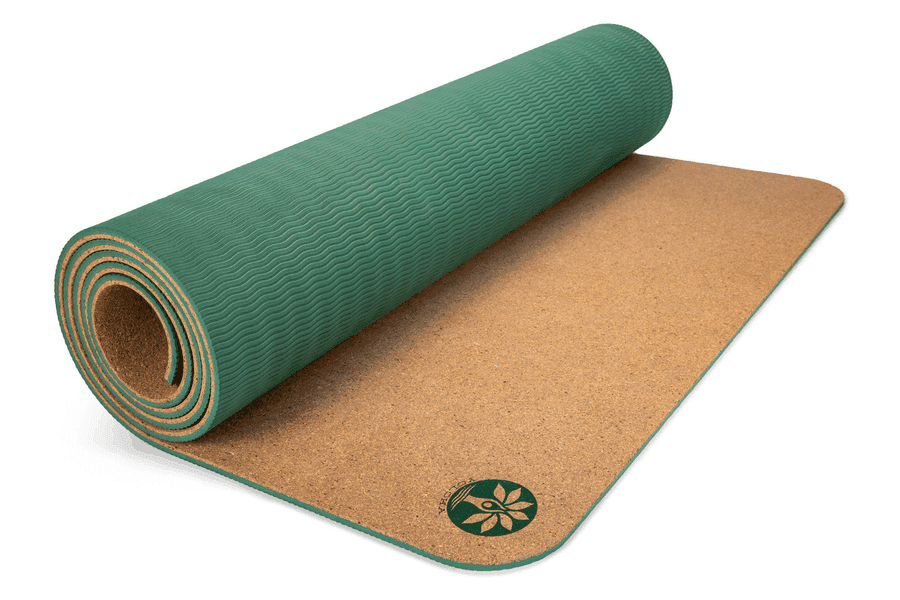
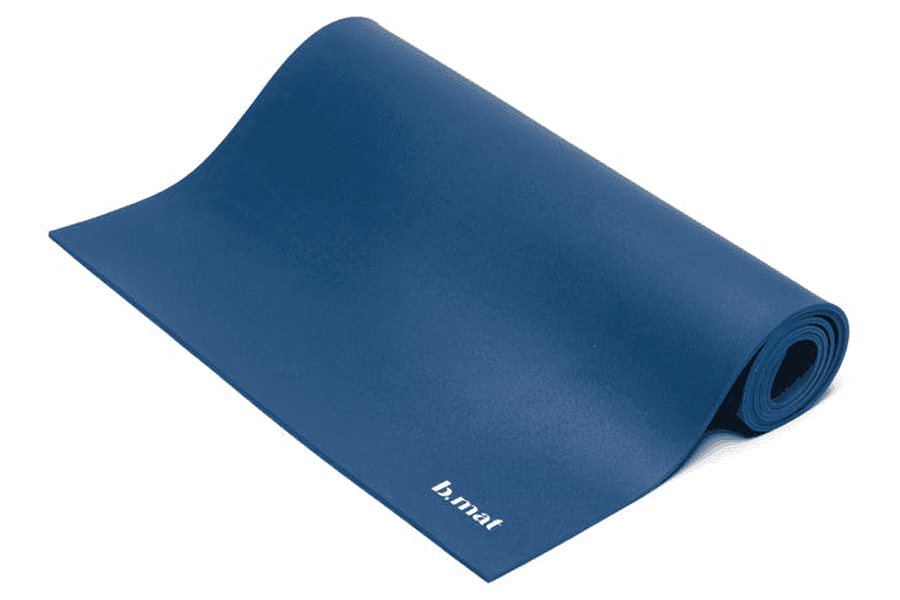
The difference is what they’re made of. The Yoloha Unity Pro is cork and natural rubber over a plant-based foam core, made in the USA. The B Mat Strong is Spanish rubber, tacky all the way through. That choice decides grip, weight, cleaning and coverage in one go.
Grip: rubber holds where cork gets slick
Cork does firm up with moisture, and Yoloha’s own tip is to sprinkle water where your hands and feet go before practice. Independent testing puts that in perspective: GearLab rated the Unity Pro 7.5 dry and 6 wet, scored its grip 7 of 10, and listed slickness when wet among its drawbacks, because water sits on cork rather than soaking in.
The B Mat’s rubber doesn’t need help. GearLab’s review of the 4 mm Everyday, which uses the same material as the Strong, put grip at 9 out of 10 and reported traction surviving standing water, naming it a favorite for hot yoga.
Yoloha markets its surface as unmatched and towel-free in wet or dry conditions. Testers found something more ordinary and kept a towel handy once sweat began to pool. That’s the gap in a sentence.
Weight: two pounds, and it matters
The Unity Pro is 7 pounds, which is Manduka PRO territory, and GearLab lists heavy and bulky among its cons. The B Mat Strong is 5.
Two pounds sounds small until the mat is on a shoulder for a walk to the studio several times a week. If the Yoloha lives permanently in a corner of a room, none of this applies and its size options start looking better instead.
Feel: grainy cork against aggressive tack
Cork reads as textured and slightly dry under a palm, quite unlike rubber. GearLab called the Unity Pro extra firm and among the most stable mats it tested, which suits standing work and outdoor practice. It’s also the one surface in this category that photographs nothing like it feels, so put a hand on one if you can.
The B Mat is the opposite: it grabs. The same testers found the rubber held hands and feet firmly enough that they gave up sliding into position and started picking their feet up, which they called a bad fit for gliding-heavy styles. It also collects dirt, hair and lint constantly and wants to live in a bag rather than a trunk.
Care: the cork mat is the harder one
This is where the Unity Pro’s score fell apart. GearLab rated its care and cleaning 5 out of 10, the lowest of the 19 mats in that test, because cork is porous, takes on moisture and wants thorough drying rather than a quick wipe.
Its compensation is genuine: cork is naturally antimicrobial, so what it does absorb is less likely to turn sour. The B Mat wipes down easily, though GearLab noticed water staining around the edges after its test period. Both should stay indoors, out of direct sun and hot cars.
Durability and what each brand promises
b, halfmoon writes down a one-year warranty, adds an OEKO-TEX Standard 100 certification, and describes its mats as built for two or more years of practice stored properly. GearLab found owners commonly reporting the top layer lifting where hands and feet land, so treat that as the realistic failure mode rather than a rare defect.
Yoloha offers 30-day returns and no warranty, and its largest 84 by 30 inch size is excluded from free return shipping. On durability itself the cork mat may actually hold up better, since cork resists compression well and the Unity Pro came through GearLab’s test period intact. Only one of the two puts anything in writing, though.
Sizes: Yoloha has the deeper bench
The Unity Pro comes in 72″ × 26″, an 80″ × 26″ Long at $179, and an 84″ × 30″ XL at $219, in natural cork or printed art designs. That 84 by 30 is one of very few genuinely wide mats made from natural materials.
b, halfmoon offers the standard 71″ × 26″ and an 85 inch Strong Long, in seven colorways at last count, plus the thinner B Mat Everyday at 4 mm. If width is your problem, only one brand here has an answer.
Materials and the environmental case
The Yoloha is the stronger product here and doesn’t have to stretch: 83% USDA-certified renewable materials, cork and natural rubber over a plant-based foam, made in the USA, fully vegan, with no PVC or plasticizers anywhere in it.
The B Mat is mostly natural rubber with some synthetic, made in Spain, with a certification that covers what is in it rather than where it came from. Both contain natural rubber, so the trace-latex caution applies to each, and anyone with a genuine allergy needs a PVC or TPE mat instead of either.
Bottom line
Get the B Mat Strong if you sweat or you carry your mat. It grips harder, weighs two pounds less, cleans more easily, carries a certification and a written year, and costs $15 less. On performance it’s the better mat by a clear margin.
Get the Unity Pro for what it’s made of and how big it goes: renewable cork over plant foam, made in the USA, naturally antimicrobial, and available at 84 by 30 inches. Those are real reasons to spend more, as long as you’re choosing the material rather than expecting better traction. For cork against a cheaper natural rubber mat, our Manduka eKO vs Yoloha comparison covers that angle. Both are direct purchases, from yolohayoga.com and b, halfmoon.
Yoloha Unity Pro Cork
List price $159
B Mat Strong 6mm
List price $144
Frequently Asked Questions
- Which grips better?
- The B Mat, on the available evidence. GearLab rated the Unity Pro 7.5 dry and 6 wet and listed slickness when wet among its drawbacks, because water sits on cork rather than soaking in. Its separate review of the B Mat Everyday, which carries the same rubber as the Strong, put grip at 9 out of 10 with traction surviving puddles. Yoloha markets the cork as an unmatched non-slip surface needing no towel; testers found something more ordinary and suggested sprinkling water on it first.
- What does cork feel like next to rubber?
- Grainy and slightly dry rather than tacky. The Unity Pro's top is cork blended with natural rubber, and GearLab called it extra firm and among the most stable mats it tested, which suits standing work. The B Mat is the opposite kind of surface: it grabs, to the point that testers gave up sliding into position and started picking their feet up. If you can put a hand on a cork mat before spending $159, do it, because photos convey none of it.
- Is two pounds a big difference?
- It is the most practical difference on this page. Seven pounds is Manduka PRO territory and it is the reason plenty of cork mat owners leave theirs where they unrolled it; GearLab lists heavy and bulky among the Unity Pro's cons. Five pounds behaves like a normal mat on a shoulder. If your mat commutes, this decides it before grip does.
- Which is harder to keep clean?
- The Yoloha, clearly. GearLab rated its care and cleaning 5 out of 10, the lowest of the 19 mats in that test, because cork is porous, takes on moisture and wants thorough drying rather than a quick wipe. Cork's compensation is that it is naturally antimicrobial, so what it does absorb is less likely to smell. The B Mat wipes down easily, though its grip collects dirt, hair and lint constantly and it stains around the edges with water over time.
- How do the warranties compare?
- b, halfmoon puts a year in writing, carries OEKO-TEX Standard 100, and tells buyers to expect a couple of years or more from a mat kept properly. Yoloha gives you a month to change your mind and nothing after that, and the 84 by 30 inch cut does not qualify for free return shipping. On durability itself the Yoloha may actually hold up better, since cork resists compression well, but only one of the two puts anything in writing.
- Which is the better environmental buy?
- The Yoloha, and it does not have to stretch. Yoloha builds the mat from 83% USDA-certified renewable materials, cork and natural rubber over plant-based foam, makes it in the USA, and calls it fully vegan with no PVC or plasticizers. The B Mat is mostly natural rubber with some synthetic, made in Spain, with a certification covering what is in it rather than where it came from. If renewable content is the deciding factor, that is the whole argument for the cork mat.
Related comparisons
- b, halfmoon B Mat Strong 6mm vs Manduka PRO Terra 6mm
- Yoloha Unity Pro Cork vs Manduka PRO Terra 6mm
- Manduka PRO vs b, halfmoon B Mat Strong 6mm
- Manduka PRO Long vs Yoloha Unity Pro Cork
- Manduka PRO vs Yoloha Unity Pro Cork
- JadeYoga Harmony XW vs Yoloha Unity Pro Cork
- Manduka PROlite Long & Wide vs b, halfmoon B Mat Strong 6mm
- Manduka GRP Adapt 2.0 Long vs b, halfmoon B Mat Strong 6mm
- Alo Warrior vs Yoloha Unity Pro Cork