Gaiam Premium vs Classic Print: Which One Should You Buy?
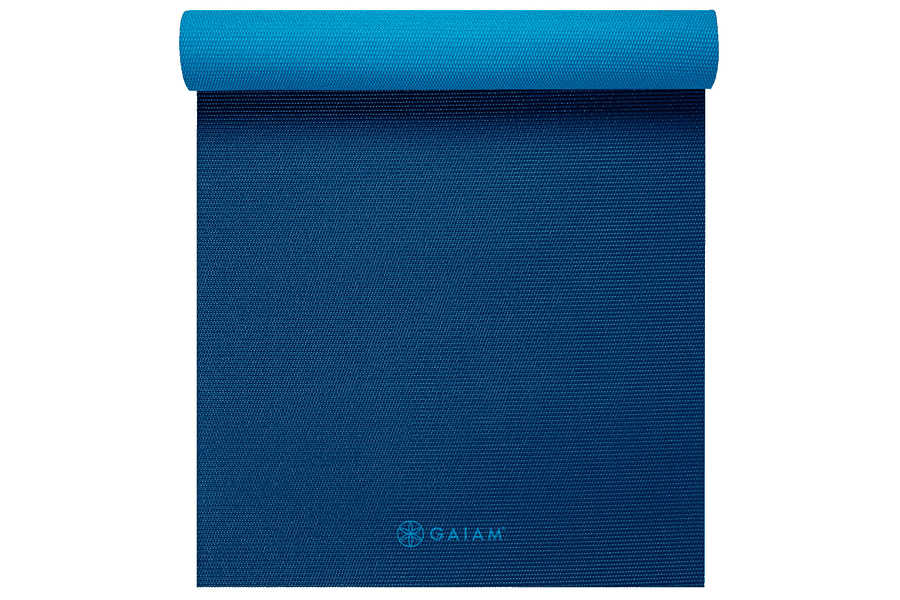
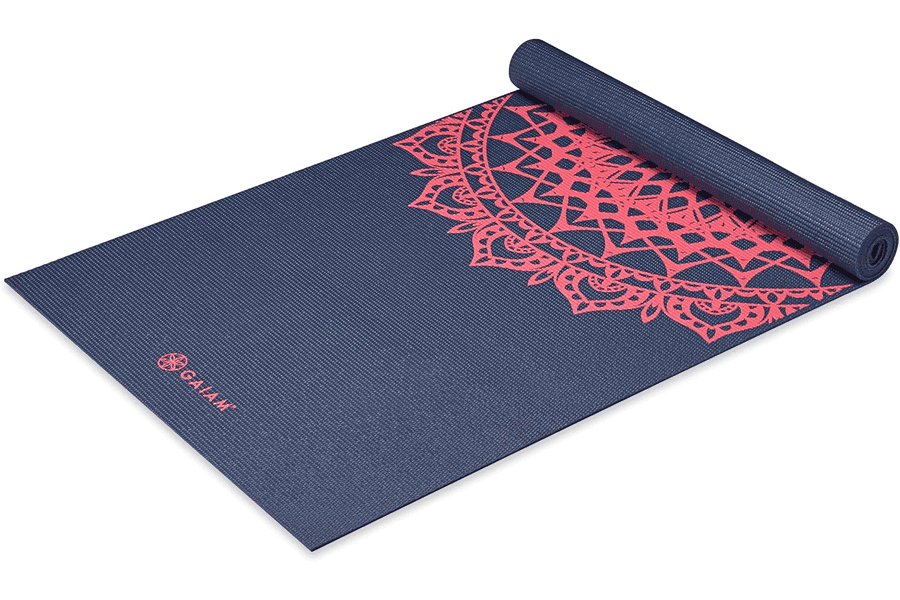
These are the two Gaiam mats you actually see in stores and Amazon carts, and the names tell you nothing about how they differ. The Premium is 6 mm of foam at $29.98 in two-tone colors; the Classic Print is 4 mm at $24.98 wearing Gaiam's rotating artwork. Same sticky PVC, same footprint, same guarantee. The five dollars is really a decision about thickness.
As an Amazon Associate, we earn from qualifying purchases made through links on this page. How this works
The quick answer
Underneath the print they are siblings: 68 by 24 inch latex-free PVC with a textured sticky finish that holds with dry hands and slips once palms sweat. The Premium carries 2 extra millimeters of foam and about a pound more heft, which is what you feel in kneeling poses and long floor holds. It's also the version OutdoorGearLab actually tested, scoring it 62 of 100 and naming it Best First Yoga Mat; the Classic Print wasn't in the lineup.
Get the Premium as the default first mat; cushion is the point of a budget PVC mat, and it has more of it. Get the Classic Print if you want the lightest, cheapest way onto the floor, a firmer and thinner feel under standing poses, or simply one of the prints.
Get the Gaiam Premium if...
- You kneel, stretch, or hold floor poses and want the 6 mm of cushion
- You want the version GearLab tested and named Best First Yoga Mat
- Two-tone reversible colors suit you fine
- An extra $5 for a third more foam sounds like the obvious trade it is
Get the Classic Print if...
- You want the lightest Gaiam, 2.1 pounds against 3.3
- Every dollar counts and $24.98 is the door price
- A thinner, firmer mat under standing poses appeals to you
- One of the printed designs is the thing that gets you practicing
Side by side
Price
The Classic Print lists for $5 less.
$29.98
List price · check price at Amazon
$24.98
List price · check price at Amazon
Thickness
The Gaiam Premium is 50% thicker.
6 mm0.24″
4 mm0.16″
Weight
The Classic Print is 1.2 lbs lighter.
3.3 lbs1.5 kg
2.1 lbs0.95 kg
Size
Same length; same width.
Same on both
- Identical 68″ × 24″ footprint
- Latex-free PVC, safe for latex allergies
- Sticky textured surfaces that turn slick once palms sweat
- Same lifetime guarantee against manufacturing defects
- Gaiam advises airing either mat for two to three days out of the box
Full specs
Dimensions
Materials & build
Buying
Five dollars, two millimeters
Gaiam’s catalog names tell you almost nothing, so here is the decoder for its two most-seen mats. The Premium is 6 mm of foam at $29.98 in two-tone solid colors. The Classic Print is 4 mm at $24.98 wearing a rotating set of printed designs. Underneath, both are the same latex-free sticky PVC in the same 68″ × 24″ cut with the same lifetime guarantee.
That makes this the rare comparison with one real variable. The five dollars is buying thickness, and everything below is about whether you want it.
Cushion: where the Premium earns its name
Two extra millimeters sounds like nothing and is not. On the 6 mm Premium, kneeling lunges, seated stretches, and long floor holds land on genuinely soft foam, which is why OutdoorGearLab scored it 62 of 100, praised its cushion for exactly those uses, and named it Best First Yoga Mat in a 19-mat test. On the 4 mm Classic Print, the same poses find the floor sooner, and sensitive knees will want a folded blanket under them on tile or hardwood.
The Classic Print wasn’t in GearLab’s lineup, but it is the same recipe in a thinner pour, so the Premium’s results are a fair guide to how it behaves. If cushioning is most of why you are buying a soft PVC mat, and for most first-mat buyers it is, the Premium is the version that delivers it.
The quiet advantage of the thinner mat
The Premium’s softness has a known cost: GearLab found its foam goes squishy in balance poses like tree, wobbling underfoot exactly when you want the floor’s opinion. The Classic Print’s 4 mm puts you closer to solid ground, which reads as slightly steadier in standing work.
It is a modest edge rather than a reason to buy, and if standing balances dominate your practice, no soft PVC mat is the right tool; firmer surfaces like Jade’s rubber or a dense premium mat do that job properly. But between these two, thinner means steadier, and some practitioners prefer it.
Sweat defeats both equally
No thickness fixes the surface. Both mats wear Gaiam’s textured sticky finish, which holds fine with dry hands and turns slick once palms sweat; GearLab’s testers found the Premium’s surface slippery enough as moisture built up to shake confidence in basic standing poses. A towel over the mat patches it.
If sweaty practice is the plan, the correct move at this end of the market is a different surface entirely: the roughly $67 IUGA’s absorbent polyurethane top, or natural rubber like the Jade Harmony, which we compare against the Premium directly.
Prints, odor, and the first week
The Classic Print’s designs are its reason to exist, and they rotate often enough that we won’t catalog them; if one of them is the thing that gets you on the mat, that is a legitimate purchase reason at $24.98. The Premium’s two-tone combos are quieter, and it reverses to its second color.
Two first-week notes apply, especially to prints. Gaiam itself warns that printed mats arrive with a strong odor and need two or three days of airing out before practice. And new printed surfaces can transfer dye to light clothing, so give a fresh mat a damp-towel wipe and skip the pale leggings for the first few sessions.
Weight and carry
The Classic Print is the lightest mat Gaiam sells at 2.1 pounds, against 3.3 for the Premium. Neither is a burden, but the thin mat rolls smaller and rides to class, the park, or a suitcase more gracefully, and for a mat that travels more than it cushions, that is a real argument for it.
How they age, and what the guarantee covers
Soft PVC wears by compression: the spots where hands and feet land pack down and the texture smooths out over a year or two of steady practice, sooner on the thinner mat because there is less foam to give. Practice a few times a month and either lasts years; practice daily and treat both as replaceable.
The lifetime guarantee on both covers manufacturing defects, which is generous at these prices and narrower than it sounds, since compression is wear rather than defect. Read it as a tiebreaker against other budget brands, not a lifespan promise.
Price and where to buy
Both sell everywhere Gaiam does. Check current prices on the Premium 6mm and the Classic Print at Amazon; street prices drift below list depending on the design. One catalog warning: Gaiam also sells Essentials, Performance, and Premium Reversible lines that look similar in thumbnails, and the Premium vs Premium Reversible page untangles the closest lookalike.
Bottom line
Get the Premium. For $5 more you get half again as much foam, and cushion is the entire point of a soft PVC mat; it is the version GearLab tested and named Best First Yoga Mat, and the version we would hand a beginner.
Get the Classic Print if the budget truly stops at $25, the lightest possible roll matters, you prefer a thinner and firmer feel, or one of its prints will genuinely get you practicing. Whichever you choose, the first sweaty class starts the upgrade conversation, and our IUGA vs Premium page is where it leads.
Gaiam Premium 6mm
List price $29.98
Gaiam Classic Print 4mm
List price $24.98
Frequently Asked Questions
- Are the Premium and Classic Print made of the same material?
- Yes, both are Gaiam's latex-free PVC with a textured sticky finish, made without the six most restricted phthalates. The difference is the pour: 6 mm of foam on the Premium against 4 mm on the Classic Print, which also drops the weight from about 3.3 pounds to 2.1. Grip behavior is the same on both: reliable with dry hands, slippery once sweat arrives.
- Which one is better for bad knees?
- The Premium, without much debate. Two extra millimeters of soft foam is exactly what a kneeling lunge on hardwood or tile notices, and the cushion is why GearLab recommends this construction for beginners, stretching, and floor work. On the 4 mm Classic Print, sensitive knees will want a folded blanket under them. If knees are the whole reason you're shopping, thicker mats like the Fusion exist, but at $30 the Premium is the sensible start.
- Is either mat good for hot yoga or sweaty practice?
- No. Both are closed-surface PVC, so sweat sits on top, and GearLab's testing of the Premium found the surface turning slippery enough as moisture built up to shake confidence in basic standing poses. These are dry-hands mats for gentle classes, stretching, and home videos. If you sweat, the correct budget move is a different surface entirely, like the IUGA's polyurethane top or a natural rubber mat.
- Do the prints smell or rub off?
- Gaiam itself warns that printed mats arrive with a strong odor and need two or three days of airing out before the first practice, and that advice is worth following for either mat. On printed Gaiam surfaces, dye can also transfer to light clothing when the mat is brand new, so give it a damp-towel wipe first and skip the pale leggings for the first few sessions.
- Did GearLab test the Classic Print?
- No. Its 19-mat lineup included three Gaiams, the Premium at 62 of 100 with the Best First Yoga Mat award, the Premium Reversible at 54, and the Performance Dry-Grip at 62, but not the Classic Print. Since the Classic Print is the same sticky PVC recipe in a thinner pour, the Premium's results are a fair guide: comfortable for floor work, wobblier in balances, weak once wet.
- When should I skip both and spend more?
- When sweat, daily practice, or standing balance work is already part of your routine. The upgrade paths from a $25 to $30 Gaiam are well marked: about $67 for the IUGA's sweat-absorbing polyurethane top, or about $100 for the Jade Harmony's tacky natural rubber. If you're stretching a few times a week or testing whether yoga sticks, either Gaiam does that job for the price of a class or two.
Related comparisons
- Gaiam Premium 6mm vs Gruper TPE 6mm
- Amazon Basics 1/4 Inch Thick TPE vs Gaiam Premium 6mm
- Gaiam Premium 6mm vs YogaAccessories Extra Thick Deluxe 1/4"
- Amazon Basics 1/4 Inch Thick TPE vs Gaiam Classic Print 4mm
- Gruper TPE 6mm vs Gaiam Classic Print 4mm
- YogaAccessories Extra Thick Deluxe 1/4" vs Gaiam Classic Print 4mm
- Manduka Begin vs Gaiam Premium 6mm
- Manduka Begin vs Gaiam Classic Print 4mm
- IUGA Eco Friendly Non Slip PU vs Gaiam Classic Print 4mm