Jade Level One vs Gaiam Dry-Grip: Which One Should You Buy?
Both of these are step-up mats for the beginner who has outgrown a $25 sticky mat, priced $3.48 apart. The Jade Level One is the cheapest way into the tacky natural rubber that made Jade a studio standard. The Gaiam Performance Dry-Grip is a smooth-topped, coated PVC mat that feels upscale with dry hands and has a lifetime guarantee behind it. The surfaces, not the prices, are where they part ways.
As an Amazon Associate, we earn from qualifying purchases made through links on this page. How this works
The quick answer
The Level One is the better yoga surface. Jade's open-cell rubber is tacky from the first practice and takes on light sweat rather than letting it bead, so grip holds as a class warms up. The Dry-Grip's coating is secure with dry palms, but GearLab scored its wet grip near the bottom of its 19-mat lineup and steers the mat toward stretch practice and slower flows; the name promises more than the surface delivers.
Get the Level One if yoga is the job and there's any chance you'll sweat doing it. Get the Dry-Grip if a latex allergy rules out rubber, you want the softer cushion and big-box availability, or your practice is genuinely slow and dry.
Get the Jade Level One if...
- You want grip that holds when your palms go damp
- Real natural rubber, made in the USA, matters at this price
- You like Jade's story: a tree planted for every mat sold
- You'd take a written 1 year warranty over defect-only lifetime paper
Get the Gaiam Dry-Grip if...
- A latex allergy makes natural rubber a non-starter
- You want the softer, thicker 5 mm cushion for floor work
- Buying from a big-box shelf today beats waiting on jadeyoga.com stock
- You prefer a smooth top to rubber's tacky, grabby feel
Side by side
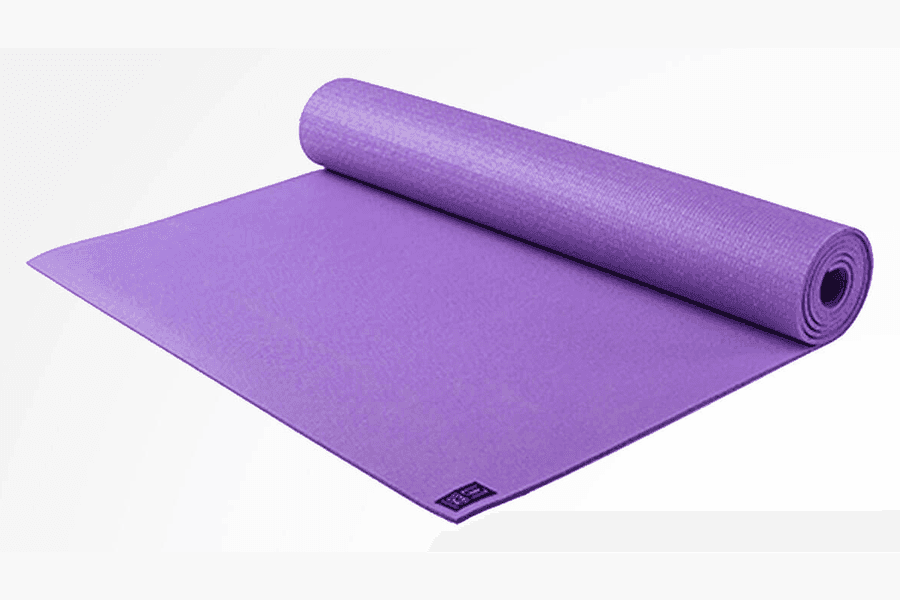
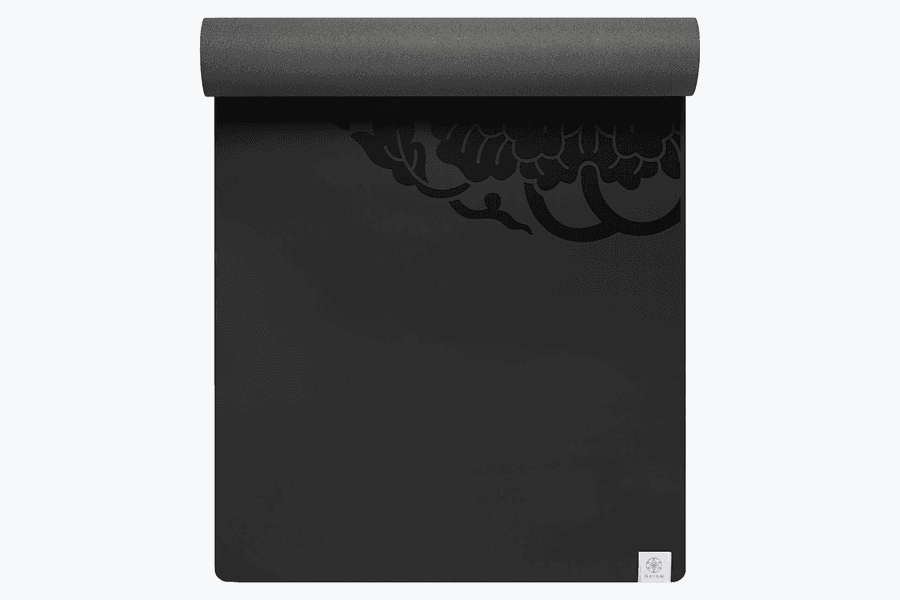
Price
The Level One lists for about $3 less.
$66.50
List price · check price at jadeyoga.com
$69.98
List price · check price at Amazon
Thickness
The Dry-Grip is 25% thicker.
4 mm0.16″
5 mm0.2″
Weight
The Level One is 0.3 lbs lighter.
4 lbs1.8 kg
4.25 lbs1.9 kg
Size
Same length; same width.
Same on both
- Step-up prices within $3.50 of each other
- Standard 68″ × 24″ footprints
- Firm enough for stable standing balances
- Neither includes a strap or bag
Full specs
Dimensions
Materials & build
Buying
The same $70, two different surfaces
Both of these are step-up mats for the practitioner who has outgrown a $25 sticky mat, and they land $3.48 apart: $66.50 for the Jade Level One, $69.98 for the Gaiam Performance Dry-Grip. The Jade is the cheapest way into the tacky natural rubber that made the brand a studio standard, made in the USA with a written warranty. The Gaiam is coated PVC with a smooth, sleek top that feels more expensive than it is, at least until your palms get damp.
With the prices tied, this page is a straight surface comparison, and one clear medical exception.
Grip: rubber keeps the promise the coating makes
Dry hands hold on either mat; the surfaces just feel different doing it, tacky and slightly grabby on the Jade, smooth and sleek on the Gaiam. Add sweat and they separate completely. Open-cell rubber takes light moisture into itself and keeps gripping as a class warms up, which is the entire reason people pay for Jade mats. The Dry-Grip’s coating handles light dampness at best: GearLab scored its wet grip near the bottom of a 19-mat lineup, found traction fell apart in sweaty sessions, and steers the mat toward stretch practice and slower flows.
If there is any chance your practice makes you sweat, the Level One is the better surface, and it costs less. That sentence decides this page for most readers.
The exception: latex allergies flip the verdict
The Gaiam is latex-free PVC, marketed as free of six common phthalates. Jade says its mats are 99 percent latex free, which is not the same thing as latex free; natural rubber can carry trace latex proteins. For a genuine latex allergy, the Dry-Grip is the only safe choice here, and everything else on this page is commentary.
Cushion and feel
The Gaiam is the softer, thicker mat, 5 mm to the Jade’s 4, and its cushion rates as a genuine strength for kneeling poses and floor-heavy practice. The Level One is firmer and a touch harder on the knees, which reads as steadiness under standing balances; a folded blanket under a sore knee closes the gap where it matters.
Weight is nearly a wash, 4 pounds against 4.25, and both carry to class without complaint. Neither is plush, and neither wobbles; these are stable, sensible platforms.
Materials and care
Jade’s environmental story is the stronger one and requires no squinting: tapped tree rubber, USA manufacture, and a tree planted for every mat sold, past two million by Jade’s count. The trade is care. Rubber stays out of hot cars and direct sun, wants washing more often because sweat soaks in rather than sitting on top, and Jade’s warranty excludes sun damage and harsh cleaners.
The Gaiam asks less of you: a wipe-down now and then, plus Gaiam’s standard advice to air the mat for two to three days out of the box. Its new-mat quirk is dye that can transfer onto clothing early on, so buff a fresh one with a damp towel first.
Stock, colors, and where to buy
This is the Gaiam’s most practical advantage. The Dry-Grip sells through Amazon and big-box stores in three colors, available today and easy to return. The Level One sells direct from jadeyoga.com in Classic Blue and Classic Purple only, and one of the two is regularly sold out.
Coverage favors Jade on paper quality if not length: a written 1 year warranty against Gaiam’s lifetime guarantee, which covers manufacturing defects only, on a coating GearLab already flags for limited long-term durability. Neither document covers ordinary wear, which is how both mats will actually age.
Price and value
At $66.50 and $69.98, money settles nothing, so value is about what each surface will still be doing for you in a year. A practice that grows more vigorous grows into the Jade’s grip; the same trajectory grows out of the Gaiam’s coating and into a towel. A practice that stays slow and dry never collects on the Jade’s advantage, and enjoys the Gaiam’s softer foam the whole time.
Bottom line
Get the Level One if the mat’s job is yoga and your practice has any heat in it, literal or otherwise. Real rubber grip at $66.50 with a written warranty is the best surface in this price bracket, and it’s the mat you won’t need to replace the first time a class gets sweaty. Accept two colors and rubber’s care rules.
Get the Dry-Grip if a latex allergy takes rubber off the table, or your practice is genuinely slow, dry, and floor-heavy and the softer cushion serves it. And if the smooth-top style is what draws you, the roughly $67 IUGA does that idea with grip that actually survives sweat; our Dry-Grip vs IUGA and Level One vs IUGA pages cover it from both sides.
Jade Level One
List price $66.50
Frequently Asked Questions
- Which mat grips better?
- With dry hands, both grip well; the Gaiam's smooth coating and Jade's tacky rubber just feel different doing it. With damp hands the comparison ends: open-cell rubber absorbs light sweat and keeps holding, while GearLab found the Dry-Grip's traction fell apart in sweaty sessions and rated its wet grip near the bottom of the lineup. If sweat is any part of your practice, the Jade is the better surface and it costs less.
- Is the Dry-Grip really 'dry grip' then?
- Read the name as describing the conditions it likes, not the ones it fixes. GearLab recommends it for stretch practice and slower flows, where its smooth top and above-average cushion genuinely shine. As a mat for keeping grip while you sweat, which is what the name suggests, independent testing says it underdelivers. Gaiam's honest use case is a dry, gentle practice with a more premium feel than its $30 mats.
- What about latex allergies?
- The Gaiam is the safe pick. It's latex-free PVC, marketed as free of six common phthalates. Jade is explicit that its mats are 99 percent latex free rather than latex free, so the Level One is out for a genuine latex allergy. This single fact settles the comparison for affected buyers regardless of everything else on the page.
- How do cushioning and feel compare?
- The Gaiam is the softer mat at 5 mm against the Jade's firmer 4 mm, and its cushion is one of its genuine strengths for kneeling poses and floor work. The Level One reads steadier underfoot and slightly harder on the knees; a folded blanket fixes that where it matters. Texture is the bigger difference day to day: Jade's surface is tacky and slightly grabby, the Gaiam's is smooth and sleek. Neither is plush and neither wobbles.
- Where can I actually buy each one?
- The Dry-Grip is everywhere Gaiam sells, which includes Amazon and big-box stores; seeing and squeezing it before buying is easy. The Level One sells direct from jadeyoga.com in Classic Blue and Classic Purple only, and one of the two colorways is regularly out of stock. If you need a mat this week and the Jade is sold out, that practical fact may make the choice.
- What do the warranties actually cover?
- Jade writes a 1 year warranty on the Level One, excluding sun damage and harsh cleaners. Gaiam covers the Dry-Grip for life, but against manufacturing defects only, and GearLab flagged its coating for limited long-term durability, which is wear rather than defect. Neither document covers how these mats really age, so treat Jade's written year as slightly more meaningful and neither as a lifespan promise.
Related comparisons
- Manduka X vs Gaiam Performance Dry-Grip 5mm
- Gaiam Performance Dry-Grip 5mm vs IUGA Eco Friendly Non Slip PU
- Manduka Begin vs Gaiam Performance Dry-Grip 5mm
- Manduka X vs JadeYoga Level One
- JadeYoga Level One vs IUGA Eco Friendly Non Slip PU
- Manduka Begin vs JadeYoga Level One
- Gaiam Performance Dry-Grip 5mm vs Hugger Mugger Earth Elements 5mm
- JadeYoga Level One vs Gaiam Performance Dry-Grip Long & Wide
- Manduka GRP Adapt 1.0 vs Gaiam Performance Dry-Grip 5mm