Manduka Begin vs Gaiam Dry-Grip: Which One Should You Buy?
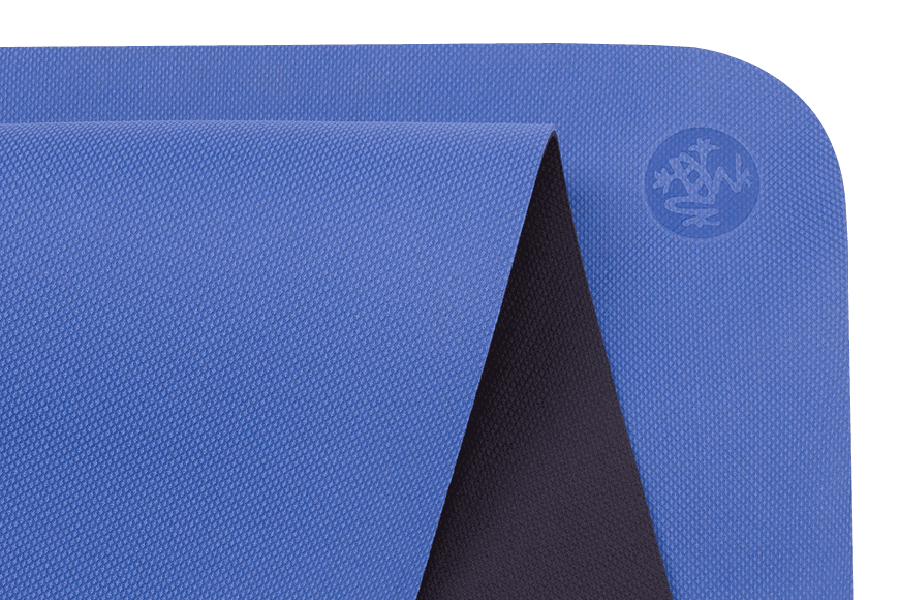
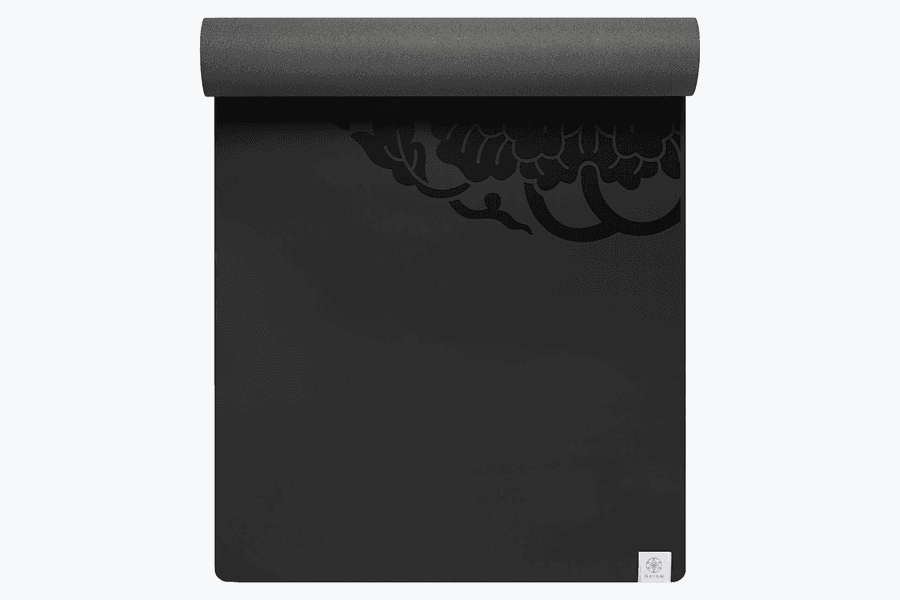
Both of these sell to the beginner who wants something nicer than a $25 sticky mat but isn't ready to spend $100. Manduka's Begin is $62 of light TPE with an alignment stripe down the middle; Gaiam's Performance Dry-Grip is $69.98 of coated PVC with a smooth top and a lifetime guarantee. They share a footprint, a thickness, and one weakness: sweat.
As an Amazon Associate, we earn from qualifying purchases made through links on this page. How this works
The quick answer
They differ most in what you feel and carry. The Begin is 2.5 pounds, the lightest mat Manduka makes, reversible, with a printed center stripe that gives home learners a reference line worth more than most specs at this price. The Dry-Grip is 4.25 pounds and softer, its smooth topcoat feels a class above its price with dry palms, and GearLab scored it 62 of 100; the Begin wasn't in the test lineup.
Learning from videos at home, take the Begin; the stripe does teacher-adjacent work and the light roll goes anywhere. For slow, dry, floor-heavy practice where softer cushion and an in-store purchase appeal, take the Dry-Grip. If your palms sweat in class, neither surface holds, and the same money is better spent on a Jade Level One or an IUGA.
Get the Manduka Begin if...
- You're learning at home and the alignment stripe would guide every session
- You want the featherweight carry, 2.5 pounds against 4.25
- You'd rather keep the $8 and pick from around ten colorways
- You want a reversible mat with a second color on the flip side
Get the Gaiam Dry-Grip if...
- You want the softer, more cushioned feel under knees and hips
- The smooth topcoat's upscale dry-hands feel appeals to you
- A lifetime guarantee beats Manduka's 30 day return window
- You'd like to see the mat in a big-box store before buying
Side by side
Price
The Begin lists for about $8 less.
$62
List price · check price at Amazon
$69.98
List price · check price at Amazon
Thickness
Identical thickness.
5 mm0.2″
5 mm0.2″
Weight
The Begin is 1.8 lbs lighter.
2.5 lbs1.1 kg
4.25 lbs1.9 kg
Size
Same length; same width.
Same on both
- Identical 68″ × 24″ footprint and 5 mm thickness
- Both latex-free, safe for latex allergies
- Closed surfaces that turn slick once palms sweat
- Honest starter mats from brands with deep catalogs above them
Full specs
Dimensions
Materials & build
Buying
Two step-up mats for the same beginner
Both of these court the beginner who wants something nicer than a $25 sticky mat without spending $100. Manduka’s Begin is $62 of light TPE with an alignment stripe printed down the middle. Gaiam’s Performance Dry-Grip is $69.98 of coated PVC with a smooth top that feels a class above its price. They share a 68″ × 24″ footprint, 5 mm of thickness, latex-free builds, and one weakness we’ll get to early, because it matters most.
The shared weakness: sweat beats both
Neither surface survives damp palms, and no other section of this page should be read before this one. GearLab scored the Dry-Grip’s wet grip near the bottom of its 19-mat lineup, found traction fell apart in sweaty sessions, and recommends it for stretch practice and slower flows; the name oversells the coating. TPE like the Begin’s behaves the same way once palms go damp, at every price and brand.
If you already know you sweat in class, spend this money on a surface that handles it: the Jade Level One puts real rubber under you at $66.50, and the roughly $67 IUGA adds the absorbent polyurethane top premium mats use. For a dry practice, read on; both mats here are legitimately good at that job.
The alignment stripe: the best feature at this price
The Begin’s printed center line gives you something to square hands, feet, and spine against, which is feedback that otherwise requires a teacher standing over you. Learning from videos at home, it earns its place every single session, and nothing on the Dry-Grip answers it.
Two honest caveats: it is printed rather than etched, so years of heavy use will fade it, and practitioners with a settled practice eventually stop seeing it. If you want guides that never wear off, that is Liforme territory at more than twice the price.
Feel: featherweight against substantial
Same thickness, very different presence. The Begin is 2.5 pounds, the lightest mat Manduka makes, slightly rubbery-soft to the touch and reversible to a second color. The Dry-Grip is 4.25 pounds of denser PVC; it feels sleeker and more planted, drapes flat on smooth floors, and its cushion rates well for kneeling and floor work.
The Gaiam’s heft is a genuine advantage under a moving practice, where light TPE mats can shift or bunch on hardwood. The Begin’s lightness is the advantage everywhere else: over a shoulder, in a tote, up a flight of stairs to class.
Materials: TPE against coated PVC
Both are latex-free, so both are safe with a latex allergy, which removes the usual tiebreaker in this price range. The Begin is TPE made in Taiwan; the Dry-Grip is PVC marketed as free of six common phthalates. Neither carries a third-party certification, and both should air out unrolled for a couple of days before the first practice.
Between the plastics there is no clean eco winner, and we won’t invent one. Buyers for whom materials are the deciding issue usually end up at natural rubber, which is the Level One conversation linked above.
What the testing does and does not cover
The Dry-Grip has the paper trail: 62 of 100 overall in GearLab’s current test, with its comfort rated well and its wet grip rated poorly, exactly the shape described above. The Begin wasn’t in the lineup, so its record is owner consensus: liked for the stripe, the weight, and the price, with the same damp-palms complaint every TPE mat collects.
We wouldn’t treat the missing test as a mark against the Begin; its construction is well understood. But if independent scoring gives you confidence at this price, only one of these has it.
Warranty and where to buy
Gaiam covers the Dry-Grip for life against manufacturing defects; Manduka gives the Begin a 30 day return window and nothing after. Both mats actually age by compression and surface wear, which neither document covers, and GearLab flagged the Gaiam’s coating for limited long-term durability, so treat the lifetime paper as a pleasant tiebreaker.
Both are easy buys: check current prices on the Begin and the Dry-Grip at Amazon. The Gaiam also sits on big-box shelves if seeing it in person matters; the Begin came in around ten colorways at last count against the Gaiam’s three.
Price and value
Eight dollars separates the lists, $62 against $69.98, so value here is about which extras you will actually use. The Begin’s stripe pays off daily for a home learner; the Gaiam’s cushion and heft pay off for a floor-heavy practice that stays put. Money spent on either is wasted only if sweat was the real problem, in which case neither extra ever gets the chance to matter.
Bottom line
Get the Begin if you are learning at home: the alignment stripe is the most useful feature either mat offers a new practitioner, the 2.5 pound roll goes anywhere, and it costs $8 less. It is the better first teacher of the two.
Get the Dry-Grip if your practice is slow, dry, and floor-heavy, and you want the softer, more substantial mat with a lifetime guarantee and a shelf you can see it on first. And when either mat starts costing you grip, the upgrade paths are already mapped: rubber via the Level One, or the same smooth-top idea done properly via the IUGA.
Manduka Begin
List price $62
Frequently Asked Questions
- Is either mat good for hot yoga or heavy sweat?
- No, and it's the most important thing on this page. The Dry-Grip's coating handles light moisture at best; GearLab rated its wet grip near the bottom of its 19-mat lineup and recommends it for stretch practice and slower flows. TPE mats like the Begin behave the same way once palms go damp. If sweat is part of your practice, spend this money on a Jade Level One's natural rubber or an IUGA's absorbent polyurethane top instead.
- Is the Begin's alignment stripe actually useful?
- For a new practitioner, it's the best feature at this price. A printed center line gives you something to square hands, feet, and spine against, feedback that otherwise requires a teacher watching you, and it earns its keep every session when you practice from videos. Two caveats: it's printed, so it fades over years of heavy use, and settled practitioners tend to stop seeing it entirely.
- What's the difference between TPE and coated PVC?
- TPE is a lighter foam, which is how the Begin gets to 2.5 pounds, and Manduka's version is latex-free and reversible. The Dry-Grip is denser PVC under a smooth topcoat, latex-free as well and marketed as free of six common phthalates. In practice TPE feels slightly rubbery and light, coated PVC feels sleeker and more substantial. Neither material handles sweat, and both should air out for a couple of days out of the box.
- Why is the Gaiam so much heavier?
- Density. Both mats are 5 mm thick with the same footprint, but PVC is simply heavier stuff than TPE foam, 4.25 pounds against 2.5. The weight buys the Gaiam a more planted feel that stays put on smooth floors, and costs it on the shoulder. If your mat rides to a class or park regularly, the Begin's weight is the kind of advantage you notice every time.
- How do the warranties compare?
- On paper, no contest: Gaiam covers the Dry-Grip for life against manufacturing defects, while Manduka gives the Begin only a 30 day return window. In practice both mats age the same way, by compression and surface wear that no warranty covers, and GearLab flagged the Dry-Grip's coating for limited long-term durability. Treat Gaiam's paper as a nice tiebreaker rather than a promise of a longer-lived mat.
- What's the upgrade path from these mats?
- When you outgrow either one, it's usually for grip. The Jade Level One at $66.50 puts real natural rubber under you at the same price point, and the IUGA at about $67 adds the sweat-absorbing polyurethane surface premium mats use. Within Manduka's own line, the X is the tougher TPE for mixed training, and the PRO family is the buy-once route. Both mats here are genuinely fine first mats; they're just not last mats.
Related comparisons
- Manduka X vs Gaiam Performance Dry-Grip 5mm
- Manduka Begin vs IUGA Eco Friendly Non Slip PU
- JadeYoga Level One vs Gaiam Performance Dry-Grip 5mm
- Gaiam Performance Dry-Grip 5mm vs IUGA Eco Friendly Non Slip PU
- Manduka Begin vs Hugger Mugger Earth Elements 5mm
- Manduka Begin vs JadeYoga Level One
- Gaiam Performance Dry-Grip 5mm vs Hugger Mugger Earth Elements 5mm
- Manduka Begin vs Gaiam Performance Dry-Grip Long & Wide
- Manduka GRP Adapt 1.0 vs Gaiam Performance Dry-Grip 5mm