Manduka eKO vs Yoloha Unity Pro Cork: Which One Should You Buy?
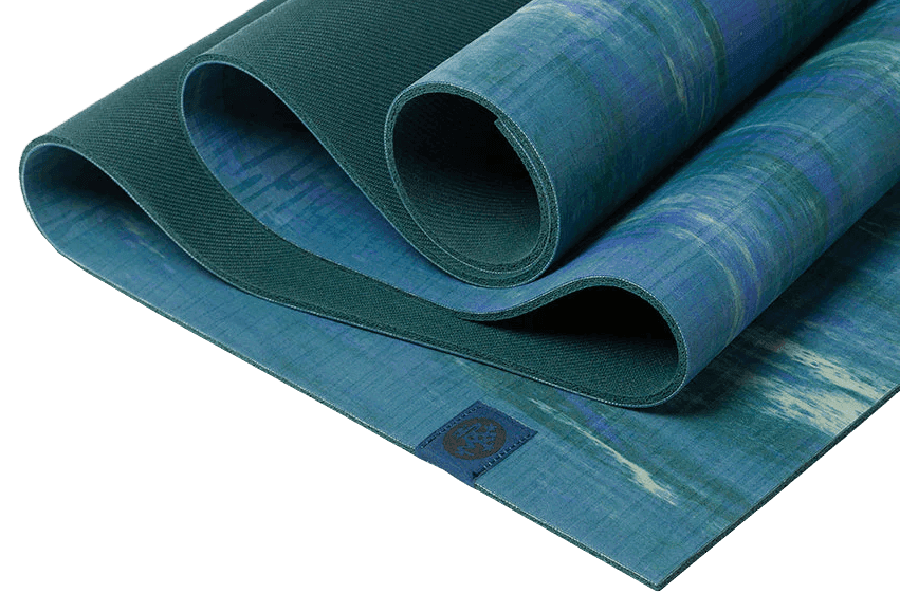
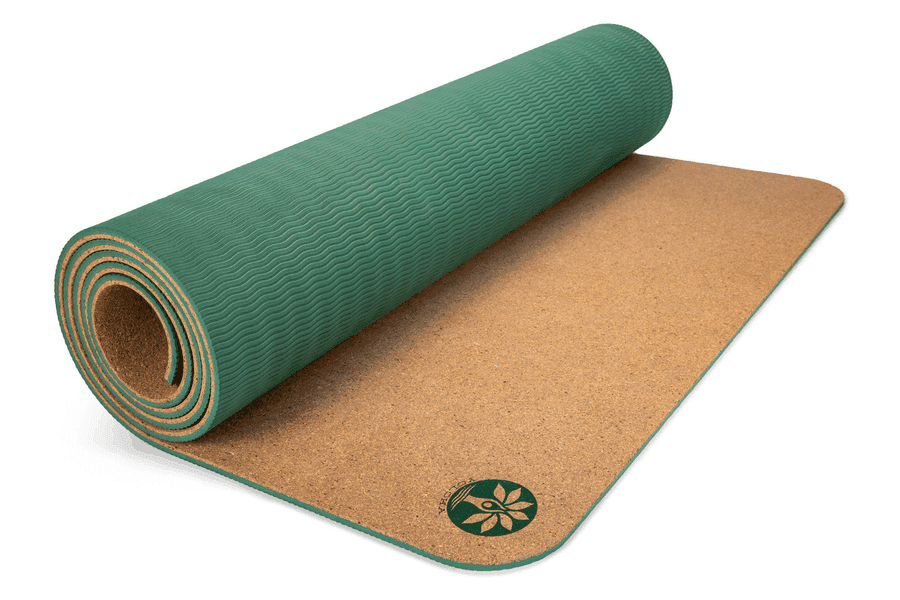
Both mats exist for people who don't want PVC underfoot, and both weigh about 7 pounds, so the eco decision doesn't cost you anything in heft either way. The eKO is 5 mm of Manduka's natural rubber at $114. The Yoloha Unity Pro is 6 mm of cork and rubber over a plant-based foam at $159. Testers have been much kinder to the cheaper one, which is the awkward fact this page has to deal with.
As an Amazon Associate, we earn from qualifying purchases made through links on this page. How this works
The quick answer
In GearLab's 19 mat test the eKO placed second overall at 87 of 100, with the best dry grip of anything they measured, while the Unity Pro placed tenth at 66 and drew the lowest care-and-cleaning score in the field. The Yoloha's case isn't performance. It's the build: cork and rubber over plant foam, 83% USDA-certified renewable content, made in the USA, naturally antimicrobial. It also comes in sizes up to 84 by 30 inches, which the eKO does not offer at all.
If you want the better mat for less money, get the eKO. If a cork surface, a fully renewable build, or an oversized cut is the specific thing you're shopping for, the Yoloha earns its $45 premium on those grounds alone.
Get the Manduka eKO if...
- You want the better-tested mat: 87 of 100 against 66
- You want the best dry grip in the category; GearLab scored it a perfect 10
- You'd rather keep $45, and buy somewhere with easy returns
- You want a smooth rubber surface rather than grainy cork
Get the Yoloha Unity Pro if...
- You want renewable materials: cork, rubber and plant foam, made in the USA
- You want cork's naturally antimicrobial surface for a shared or sweaty mat
- You need a bigger mat; Yoloha goes to 80 by 26 and 84 by 30 inches
- You practice outdoors, where cork handles grass and patios well
Side by side
Price
The eKO lists for $45 less.
$114
List price · check price at Amazon
$159
List price · check price at yolohayoga.com
Thickness
The Unity Pro is 20% thicker.
5 mm0.2″
6 mm0.24″
Weight
Identical weight.
7 lbs3.2 kg
7 lbs3.2 kg
Size
The Unity Pro is 1″ longer; same width.
Same on both
- About 7 pounds each; neither is a light carry
- Natural rubber in the build, so neither suits a latex allergy
- Firm, grounded feel rather than plush cushion
- 30-day returns rather than a real warranty
- Must stay out of direct sun and hot cars
Full specs
Dimensions
Materials & build
Buying
Two ways out of PVC
Both of these mats exist for people who would rather not practice on plastic. Manduka’s answer is natural tree rubber: 5 mm, 71″ × 26″, $114. Yoloha’s is a cork and rubber top over a plant-based foam core, 6 mm at $159, made in the USA.
They weigh the same, about seven pounds each, so the eco choice costs you nothing in heft either way. What it does cost is $45, and the testing doesn’t obviously support the premium. That’s the awkward fact this page has to deal with honestly.
What the testing says
GearLab put both through the same 19-mat lineup in 2026. The eKO finished second overall at 87 of 100. The Unity Pro finished tenth at 66. The eKO led on comfort and support, 9 of 10 against 7, on grip, 9 against 7, and on materials, 8 against 6.5. The Yoloha’s weakest score was care and cleaning at 5 of 10, the lowest in the entire field.
The summary verdicts are fair to both. The eKO was described as a mat that walks the comfort and support line perfectly with great dry grip for a less sweaty practice. The Unity Pro was called durable and eco-friendly with a stable, grounding feel and natural antimicrobial properties, heavier and more expensive than most.
Grip: the eKO measures better, wet or dry
GearLab rated the eKO’s dry grip a perfect 10, the best of anything it measured, and 7 wet. The Unity Pro came in at 7.5 dry and 6 wet. Both grip immediately with no break-in, which already puts them ahead of every PVC mat on the market for the first month of ownership.
Cork does firm up with moisture, and Yoloha’s own tip is to sprinkle water where your hands and feet go before practice. Independent testers put that in perspective: they listed slickness when wet among the mat’s drawbacks, because water sits on cork rather than soaking in. Yoloha markets the surface as unmatched and towel-free in wet or dry conditions; testers found something more ordinary and kept a towel nearby.
The eKO has its own sweat limit. Its closed surface lets moisture bead on top, and “more slippery when wet” is one of the three cons GearLab lists against it. Neither mat is the right tool for a dripping hot class, and if that’s your practice, our eKO vs GRP Adapt 2.0 comparison covers the mat built for it.
Feel: smooth rubber against grainy cork
The eKO’s surface is textured rubber, smooth to the touch, with a dense quality that makes the mat feel like it belongs to the floor. GearLab praised it on hard and soft ground alike and noted textured rails along the edges that add grip where hands land.
Cork is a different sensation entirely: grainy, slightly dry, and firmer than 6 mm suggests. GearLab called the Unity Pro extra-firm and among the most stable mats it tested, which suits standing work and outdoor practice. Whether you like it under bare skin is genuinely personal, and product photos convey none of it. If you can put a hand on a cork mat before buying, do.
Cushion: the thinner mat is the more comfortable one
The Yoloha is 6 mm to the eKO’s 5, and still scored lower on comfort and support, 7 against 9. Density explains it: the eKO’s rubber gives a millimeter and holds, while the Yoloha’s build reads as firm all the way down.
Firm isn’t a flaw. Plenty of practitioners want a hard, stable platform, and the Unity Pro delivers exactly that. But if your knees are the reason you’re shopping, the extra millimeter on the Yoloha isn’t the help it looks like on paper.
Care: cork is the higher-maintenance surface
This is where the Yoloha’s score fell apart. Cork is porous, so it takes on moisture and wants gentle, thorough drying rather than a quick wipe, and it doesn’t clean like a rubber sheet. GearLab rated its care and cleaning 5 of 10 against 8 for the eKO, which it noted cleans easily.
The offsetting point is real: cork is naturally antimicrobial, so what it does absorb is less likely to turn sour. Beyond that the rules match. Both mats live indoors, out of direct sun and hot cars, and both arrive with a rubber smell that airs out over the first week. Neither goes in a washing machine.
Durability and coverage: thin paperwork on both sides
Neither brand stands behind these mats for long. Manduka gives the eKO a 30-day return window and no warranty, which is a strange gap for the company whose PVC mats carry a lifetime guarantee. Yoloha also offers 30 days, and its largest 84 by 30 inch size is excluded from free return shipping.
On wear, the eKO ages the way rubber does: owners report surface flaking after a few years of heavy practice, and GearLab lists creasing among its drawbacks. The Unity Pro held together through GearLab’s test period and cork resists compression well, so durability is arguably the Yoloha’s quiet strength even as the rest of the scorecard went the other way.
Materials: the reason to pay more
If renewable content is what you’re shopping for, the Yoloha is the stronger product and doesn’t have to stretch to say so. Yoloha builds it from 83% USDA-certified renewable materials, cork and natural rubber over a plant-based foam, makes it in the USA, and calls it fully vegan with no PVC or plasticizers anywhere in it.
The eKO is biodegradable natural rubber that Manduka describes as non-Amazon harvested, with over 30% recycled rubber in the current build. That’s meaningful and more modest. Both contain natural rubber, so the trace-latex caution applies to each; anyone with a latex allergy needs a PVC or TPE mat instead of either of these.
Sizes and looks
Yoloha has the deeper bench for bigger bodies. The Unity Pro comes in 72″ × 26″, an 80″ × 26″ Long at $179, and an 84″ × 30″ XL at $219, in natural cork or printed art designs. Manduka’s eKO runs the standard 71″ × 26″ and a 79″ Long, in five colorways at last count, plus thinner eKO Lite and SuperLite versions for travel.
If you want a mat wider than 26 inches without leaving the natural materials aisle, the Yoloha XL is one of the few options that exists.
Price and where to buy
List prices are $114 and $159. The eKO sells through manduka.com and Amazon, discounts fairly often, and returns painlessly. The Yoloha is direct-only through yolohayoga.com.
Since neither carries a warranty, the return window is the entire safety net in both cases, and Amazon’s is the more forgiving of the two. Factor that in before spending $45 more on a surface you have never touched.
Bottom line
Get the eKO unless you have a specific reason not to. It scored 87 of 100 against the Yoloha’s 66, grips better wet and dry, cushions better despite being thinner, cleans more easily, and costs $45 less. For most practitioners looking to leave PVC behind, that’s the straightforward answer.
Get the Unity Pro for what it genuinely is: a renewable, USA-made cork mat with a naturally antimicrobial surface, an extra-firm grounded platform, sizes up to 84″ × 30″, and a look nothing else has. Those are real reasons to spend more, as long as you’re choosing the material rather than expecting better performance. If cork appeals but you want to see it against the alignment-mat option, our Liforme vs Yoloha page covers that angle.
Manduka eKO
List price $114
Yoloha Unity Pro Cork
List price $159
Frequently Asked Questions
- Which mat grips better?
- The eKO, on every number we can find. GearLab rated its dry grip a perfect 10 and its wet grip 7, the joint best in a 19 mat test, against 7.5 and 6 for the Unity Pro. Cork does firm up with moisture, and Yoloha's own tip is to sprinkle a little water where your hands and feet go before practice, but GearLab still listed slickness when wet among the mat's drawbacks because water sits on cork rather than soaking in. Neither mat is the right tool for a genuinely dripping class.
- What does a cork mat actually feel like?
- Grainy, and it's the thing people react to most. The Unity Pro's top is cork blended with natural rubber, so it reads as textured and slightly dry under the hand rather than tacky. GearLab found it extra firm and among the most stable mats it tested, which suits standing work. The eKO's rubber is smoother and softer to the touch. If you can put a hand on a cork mat before buying, do it; product photos don't convey the texture at all.
- Is the Yoloha harder to keep clean?
- Yes, and this is where its score suffered most. GearLab rated its care and cleaning 5 out of 10, the lowest of the 19 mats in that test, against 8 for the eKO. Cork is porous, so it takes on moisture and wants gentle, thorough drying, and it doesn't wipe clean the way a rubber sheet does. The offsetting point in Yoloha's favor is that cork is naturally antimicrobial, so what it does absorb is less likely to smell.
- Which one is more comfortable?
- The eKO, slightly, despite being thinner. GearLab scored its comfort and support 9 of 10 against 7 for the Unity Pro, even though the Yoloha is 6 mm to the eKO's 5. Density is the reason: the eKO's rubber is dense enough to feel planted without going hard, while the Yoloha's build reads as extra firm. If you kneel a lot, try both; if you can't, the eKO is the safer bet on the testing.
- How eco-friendly is each mat really?
- The Yoloha has the stronger story and doesn't hide the details: cork and natural rubber over a plant-based foam, 83% USDA-certified renewable content, no PVC or plasticizers, made in the USA, and fully vegan. The eKO is biodegradable natural rubber that Manduka says is non-Amazon harvested, with over 30% recycled rubber in the current build, which is meaningful but more modest. Both are real alternatives to PVC; only one of them is built almost entirely from plants.
- Where do you buy them, and what happens if you don't like it?
- The eKO sells through manduka.com and Amazon, discounts fairly often, and comes with a 30-day return window that Amazon makes painless. The Yoloha is direct-only through yolohayoga.com, also with 30 days, and its largest 84 by 30 inch size isn't eligible for free return shipping. Neither brand offers a warranty on these mats, so the return window is the whole safety net in both cases.
Related comparisons
- Manduka eKO vs Lululemon The (Big) Mat 5mm
- Lululemon The Mat 5mm vs Manduka eKO
- JadeYoga Harmony 74" vs Manduka eKO
- Manduka PRO vs Yoloha Unity Pro Cork
- Manduka PRO Long vs Yoloha Unity Pro Cork
- JadeYoga Harmony XW vs Yoloha Unity Pro Cork
- Manduka eKO vs Suga SugaMat
- Alo Warrior vs Yoloha Unity Pro Cork
- Yoloha Unity Pro Cork vs b, halfmoon B Mat Strong 6mm