Manduka X vs Retrospec Solana 1/2": Which One Should You Buy?
Both of these are marketed at people who do more than yoga, and they solve it in opposite directions. The X is 5 mm of firm TPE that Manduka now sells as a hybrid fitness mat. The Solana is half an inch of NBR foam for a third of the price, with a nylon strap in the box. The gap is stability against padding.
As an Amazon Associate, we earn from qualifying purchases made through links on this page. How this works
The quick answer
The X is 71 by 24 inches, 5 mm, 3.4 pounds, textured the same on both faces, and holds 4.4 stars across roughly 2,266 Amazon ratings. The Solana half inch is 72 by 24, 12.7 mm, 3 pounds, at $24.99 with 4.4 stars across about 9,232 ratings and a six month defect warranty. Neither has been through GearLab's roundup.
Get the X if you stand on the mat: yoga, pilates, anything that needs a floor that does not move under one foot. Get the Solana if you kneel, lie down, or work out on a hard surface where half an inch of foam is the point.
Get the Manduka X if...
- Balance poses matter and you want a firm floor
- You want the same surface on both sides
- You want a mat that handles shoes and outdoor use
- You want 3.4 pounds that still feels solid
Get the Retrospec Solana 1/2" if...
- Your knees and elbows want padding
- You'd rather spend $25 than $72
- You want a carry strap in the box
- Most of your session happens on the floor
Side by side
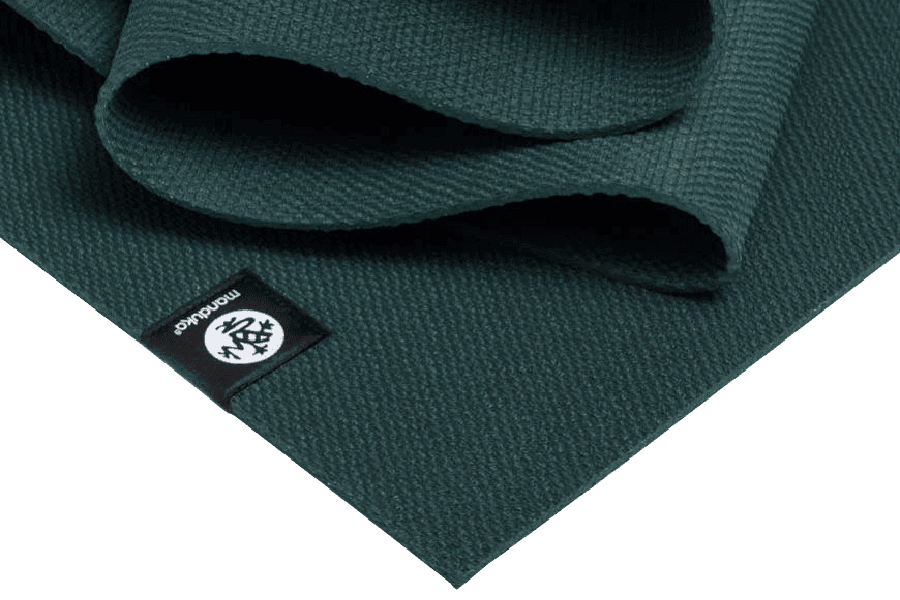
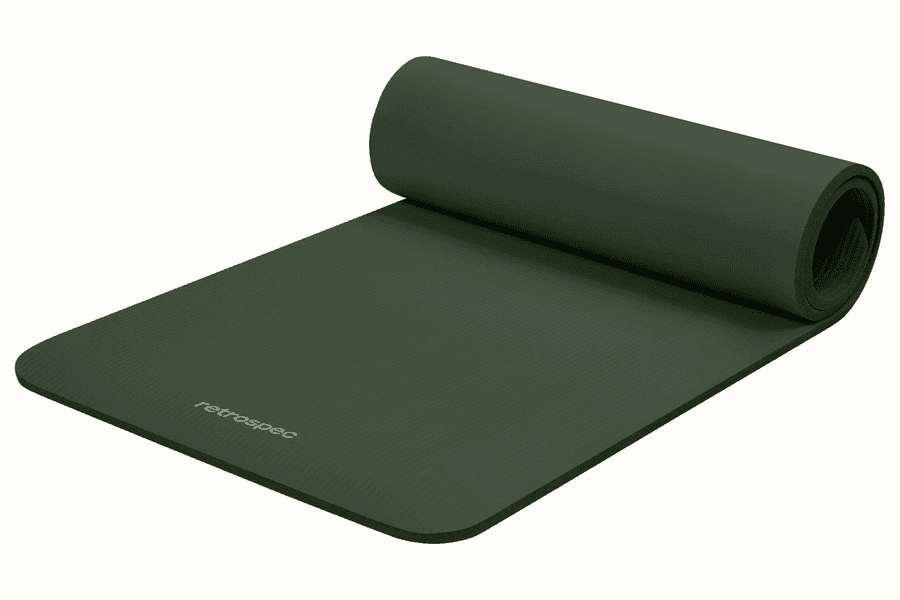
Price
The Solana 1/2" lists for about $47 less.
$72
List price · check price at Amazon
$24.99
List price · check price at Amazon
Thickness
The Solana 1/2" is 154% thicker.
5 mm0.2″
12.7 mm0.5″
Weight
The Solana 1/2" is 0.7 lbs lighter.
3.7 lbs1.7 kg
3 lbs1.36 kg
Size
The Solana 1/2" is 1″ longer; same width.
Same on both
- Closed-cell surfaces, so sweat sits on top
- 24 inches wide, around 71 to 72 inches long
- 3 to 3.4 pounds
- No long warranty on either
Full specs
Dimensions
Materials & build
Buying
Firm and thin, or soft and thick
Both of these get sold to people who do more than yoga, and they answer that in opposite directions. The Manduka X is 5 mm of firm TPE at $72. The Retrospec Solana is 12.7 mm of soft NBR foam at $24.99, with a nylon strap in the box.
Neither has been through GearLab’s roundup, so there are no test scores to lean on here. What there is: 9,232 Amazon ratings at 4.4 stars for the Solana, 2,266 at 4.4 for the X, and half an inch of thickness between them.
About the Manduka X rename
This mat sold for years as the Manduka X Yoga Mat, and plenty of reviews still call it that. Manduka now lists it as the X Hybrid Fitness Mat 5mm and pitches it at mixed movement, outdoor training and the throw-it-in-the-car workflow.
Nothing structural changed. It is the same 71″ × 24″, 5 mm high-density TPE mat made in Taiwan, in around seven colorways. The rename says out loud what the mat always was.
It matters here because it changes how to read the price. As a dedicated yoga mat at $72 the X has stiff competition. As one surface for yoga, weights and a park, it is doing something the Solana was never built for.
Standing poses favour the X
Half an inch of soft foam compresses unevenly under one foot. In tree pose or warrior three your ankle spends the hold correcting for the mat rather than holding the shape, which is work with nothing to show for it.
The X is firm enough that a standing foot gets a flat read on the floor. That is what 5 mm of dense TPE is for, and it is why almost every mat built for yoga sits between 4 and 6 mm rather than going thicker.
Floor work favours the Solana
Kneeling, lying on your spine, elbow planks on a hard floor: the Solana’s extra padding is a genuine improvement there, and no amount of TPE density substitutes for it. If your knees complain in low lunges, this is the mat that fixes it for $25.
That makes it a better product than the X for stretching, physio homework, and core work on a wooden or concrete floor. It is worth being clear about that rather than pretending the expensive mat wins every row.
Grip: fine dry, both give up wet
The X’s textured TPE has usable traction from the first session, on both faces, with no break-in. The Solana’s ribbed foam grips too, though the surface moves underneath you because the mat itself compresses.
Wet, neither one holds. Both are closed-cell, so sweat sits on top with nowhere to go, and texture stops mattering the moment your palms are damp. For heated classes you want rubber or a polyurethane top, which means something like Manduka’s eKO rather than either of these.
Two years, two different endings
TPE is the least durable of the common mat materials. The X’s surface dents and can flake within a couple of years of frequent use, faster if it sits in sunlight. Manduka gives it a 30 day return window and no warranty at all.
NBR foam compresses and takes a permanent set, so the plush half inch you buy is measurably thinner where you kneel by year two. Retrospec covers defects for six months, plus a 30 day return window. Neither of those promises addresses the way these mats actually wear out.
Weight, bulk, and what fits in a bag
The Solana is 3 pounds and the X is 3.7, so the cheaper mat is marginally lighter. Rolled, that reverses hard: half an inch of foam does not compress, and the Solana makes a fat cylinder that will not fit most mat bags.
The X rolls slim and fits anything. If the mat commutes with you, that difference is bigger than the four ounces on the scale, though the Solana at least includes the strap and Manduka sells its own separately.
Shoes, outdoors, and mixed training
Manduka repositioned this mat as the X Hybrid Fitness Mat, and it is the more sensible pick for anything that involves footwear, a garden, or a garage floor. Dense TPE takes that better than a yoga rubber mat would.
The Solana handles it too, up to a point. Soft foam under a shoe tears more easily and the ribbed surface traps grit that is a nuisance to clean out. For occasional outdoor use it is fine; for regular use it is the mat that wears first.
Price and honest value
Check the current prices on the Manduka X and the Solana. The X holds close to its $72 list; the Solana moves around its $24.99 by colorway.
On a spec sheet the Solana wins nearly everything measurable: thicker, cheaper by $47, a strap included, a warranty, and four times the owner ratings. What the X buys is a firm standing platform, seven colorways, and a surface that takes abuse. If your practice is all floor work, that $47 is hard to defend.
Bottom line
Get the Manduka X if you stand on the mat. Yoga, pilates, anything with balance in it wants a floor that does not sink, and the X is also the mat you can take outside or use in trainers without worrying about it.
Get the Solana if you kneel, lie down, or work out on concrete. It is the better pad for that and a third of the price. If you want more of it, the 1 inch Solana is the same mat at double the thickness for $39.99, which pushes it further from yoga still.
Manduka X
List price $72
Retrospec Solana 1/2"
List price $24.99
Frequently Asked Questions
- Is half an inch too thick for yoga?
- For standing work, mostly yes. Soft foam at 12.7 mm compresses unevenly under one foot, so your ankle works harder in tree pose and warrior three than it should. For floor-based practice, stretching and physio it is a real advantage. If yoga is the main use and you want cushioning, a 6 mm mat is the sensible middle.
- Does the Manduka X grip better?
- Dry, yes. Its textured TPE has usable traction from the first session, which the Solana's ribbed foam also does but with more give underneath. Wet, both give up, because both are closed surfaces that leave sweat sitting on top. Neither is a hot yoga mat and no amount of texture changes that.
- How long does each one last?
- TPE is the least durable of the common mat materials, and the X's surface can dent and flake within a couple of years of frequent use, faster in sunlight. NBR foam compresses and takes a permanent set on a similar timeline. Manduka gives the X 30 day returns and no warranty; Retrospec covers the Solana for six months against defects with a 30 day return window.
- Can I use the X for lifting or outdoor workouts?
- That is what Manduka repositioned it for. It sells as the X Hybrid Fitness Mat now, and the TPE holds up to shoes and rough ground better than a yoga-specific rubber mat would. The Solana handles that too, though soft foam under a shoe tears more easily and the ribbed surface picks up grit outdoors.
- Which is better value?
- The Solana, on pure numbers. It is thicker, includes a strap, has a warranty, and costs $47 less. What the X buys is density, a firmer standing platform, seven colorways, and a brand that will still be selling parts of this line in five years. If you only do floor work, that $47 is hard to justify.
- What about the 1 inch Solana?
- Same mat at 25.4 mm and $39.99, 4 pounds, with 4.5 stars across roughly 14,894 ratings. It doubles down on padding and makes standing poses harder still. Pick it only if you are buying a floor-work pad rather than a yoga mat; for anything upright, the half inch is already the limit.
Related comparisons
- Manduka X vs Gaiam Performance Dry-Grip 5mm
- Amazon Basics 1/2 Inch Extra Thick vs Retrospec Solana 1/2"
- Manduka X vs Gaiam Performance Dry-Grip Long & Wide
- Manduka X vs IUGA Eco Friendly Non Slip PU
- Manduka X vs JadeYoga Level One
- Manduka X vs Hugger Mugger Earth Elements 5mm
- Retrospec Solana 1/2" vs Gaiam Essentials Fitness Mat 10mm
- Manduka X vs 42 Birds The Robin
- Manduka X vs JadeYoga Travel 68"