Manduka X vs Retrospec Solana 1": Which One Should You Buy?
The Solana 1 inch is one of the best-selling exercise mats on Amazon, and a lot of people land on it while shopping for yoga. The Manduka X is 5 mm of firm TPE built for mixed training. Twenty millimeters of thickness separate them, and that difference decides almost everything else on this page.
As an Amazon Associate, we earn from qualifying purchases made through links on this page. How this works
The quick answer
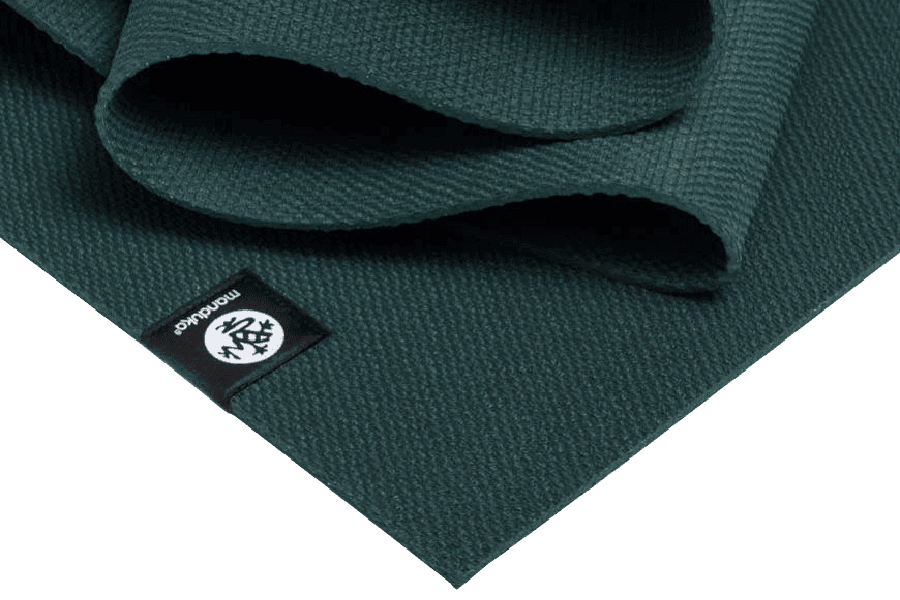
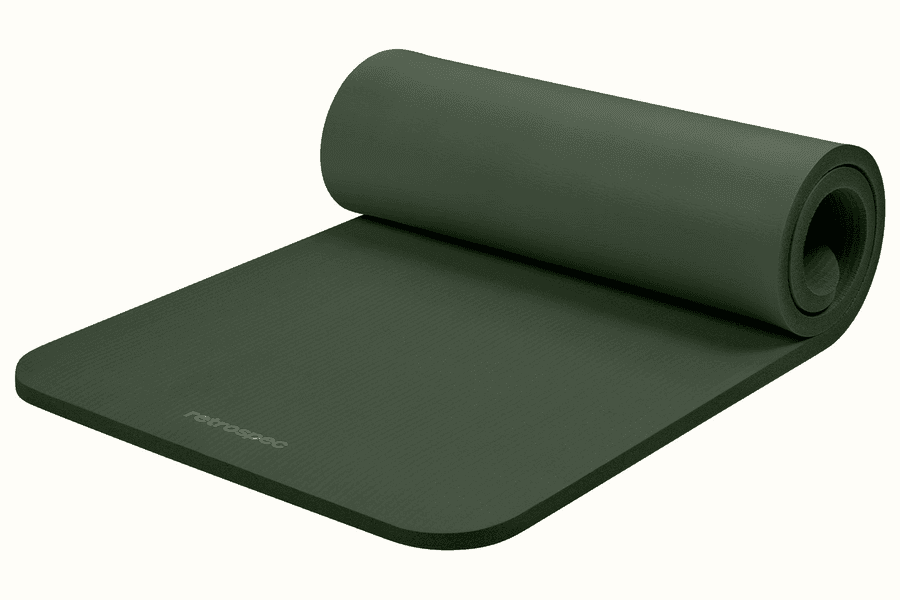
The X is 71 by 24 inches, 5 mm, 3.4 pounds, textured on both faces, and holds 4.4 stars across roughly 2,266 Amazon ratings. The Solana 1 inch is 72 by 24, 25.4 mm of NBR foam, 4 pounds, $39.99, with 4.5 stars across about 14,894 ratings, a nylon strap, and a six month defect warranty. Neither appears in GearLab's roundup.
Get the X if you are doing yoga or anything else standing up, because an inch of foam is unstable under one foot. Get the Solana if the mat is for stretching, physio, core work or knee-heavy training, where the padding is the whole reason to buy it.
Get the Manduka X if...
- You need a floor that stays put under one foot
- Yoga or pilates is the main use
- You want a mat that rolls small and thin
- You want the same textured surface on both sides
Get the Retrospec Solana 1" if...
- Knees, elbows or spine need serious padding
- You work out on concrete or a hard floor
- You'd rather spend $40 than $72
- You want a carry strap in the box
Side by side
Price
The Solana 1" lists for about $32 less.
$72
List price · check price at Amazon
$39.99
List price · check price at Amazon
Thickness
The Solana 1" is 408% thicker.
5 mm0.2″
25.4 mm1″
Weight
The X is 0.3 lbs lighter.
3.7 lbs1.7 kg
4 lbs1.81 kg
Size
The Solana 1" is 1″ longer; same width.
Same on both
- Closed-cell surfaces, so sweat sits on top
- 24 inches wide, around 71 to 72 inches long
- 3 to 4 pounds
- No long warranty on either
Full specs
Dimensions
Materials & build
Buying
An inch of foam against 5 mm of TPE
The Solana 1″ is one of the biggest sellers in its category, with 4.5 stars across roughly 14,894 Amazon ratings, and a lot of people find it while shopping for a yoga mat. It is 25.4 mm of NBR foam for $39.99, with a nylon strap included.
The Manduka X is 5 mm of firm TPE at $72, sold now as a hybrid fitness mat. Twenty millimeters of thickness separate them, and that one number decides most of what follows.
You cannot balance well on an inch of foam
Soft foam sinks unevenly under one foot. Tree pose and warrior three turn into a negotiation with the mat, where your ankle is correcting for the surface instead of holding the shape. That is not a beginner’s imagination; it is what an inch of compressible foam does.
The X does not deflect. A standing foot gets a flat read on the floor, which is the entire reason yoga mats cluster between 4 and 6 mm instead of chasing thickness.
Where the inch is worth having
Kneeling work, spinal rolls, elbow planks, and anything you do lying on a hard floor. For those the Solana is straightforwardly better than the X, and better than most yoga mats at any price. Padding is a real feature, not a consolation prize.
If the mat is mainly for stretching, physio homework, or floor strength work in a room with concrete under the carpet, the Solana is the right product and the cheaper one.
Grip: the firm mat wins dry, both lose wet
The X’s textured TPE gives your foot something solid to push against, on both faces, from the first session. The Solana’s ribbed foam has grip of its own but it moves underneath you as it compresses, which reads as slipping even when the surface is holding.
Wet, both give up entirely. Closed-cell surfaces leave sweat sitting on top and texture stops helping once your palms are damp. Neither belongs in a heated room without a towel, and if that is your practice, look at rubber instead.
Size and storage
The Solana is 72″ × 24″, an inch longer than the X’s 71″ × 24″. Same width, and neither is generous by current premium standards.
Rolled, they are not comparable. The X is a slim cylinder that fits any mat bag. The Solana at an inch thick is a log that fits none of them, and no studio cubby is going to take it. The included strap helps your shoulder, not the bulk.
Weight
3.7 pounds for the X and 4 for the Solana. Both are light enough to carry without complaint, and the X is the easier one to actually move around because of its shape rather than its mass.
For reference, a dense studio mat like the Manduka PRO runs 7.5 pounds. Neither mat on this page is in that territory, which is part of why both get pitched at people who train in different places.
How each one gives out
TPE dents and flakes where hands and feet land, usually inside a couple of years of frequent use and sooner in sunlight. It is the least durable common mat material, and Manduka backs the X with 30 day returns and no warranty.
NBR foam compresses permanently, so the inch you paid for is noticeably less than an inch at the kneeling spots by year two. Retrospec covers manufacturing defects for six months alongside a 30 day return window, which is more coverage than the X gets and still not coverage for this.
Price and what you are really buying
Check the current prices on the Manduka X and the Solana 1″. The gap is about $32 at list, and the Solana in particular moves with colorway sales.
On numbers the Solana wins: thicker, longer, cheaper, a strap, a warranty, six times the ratings. What it does not give you is a stable surface to stand on, which happens to be the main job of a yoga mat. The listing does not make that trade obvious, so it is worth spelling out.
Colors, versions, and the X rename
The X ships in one size, 71″ × 24″, in around seven colorways. It also has a newer name: Manduka sells it as the X Hybrid Fitness Mat rather than the X Yoga Mat, with no change to the TPE, the dimensions or the Taiwanese factory behind it.
The Solana comes in thirteen colorways and two thicknesses. The other one is the half inch at $24.99, which is cheaper, lighter and much closer to behaving like a yoga mat than the version on this page.
So if a color pulled you toward this listing rather than the thickness, buy the half inch. Same mat, same strap, same six month warranty, same palette, without the balance problem.
Bottom line
Get the Manduka X if yoga or pilates is the reason you are buying. It is firm, ready on day one, tough enough for shoes and outdoor use, and it rolls into a bag. It is also a consumable that you will replace in a few years, which the price does not quite admit.
Get the Solana 1″ if the mat is for floor work on a hard surface. It is excellent at that and cheap. If you want something closer to a yoga mat from the same line, the half inch Solana at $24.99 is the more sensible compromise.
Manduka X
List price $72
Retrospec Solana 1"
List price $39.99
Frequently Asked Questions
- Is a 1 inch mat usable for yoga?
- For floor sequences and restorative work, yes. For standing poses it fights you. An inch of soft foam sinks under one foot and lets your ankle correct for the mat instead of the pose, which makes balance work harder than it should be. If yoga is the main event, the half inch Solana or a 6 mm mat is a much better fit.
- Which grips better?
- The X, dry, because firm textured TPE gives your foot a flat surface to push against. The Solana's ribbed foam has grip of its own but moves underneath you. Wet, both fail: they are closed surfaces and sweat has nowhere to go. Neither one belongs in a heated class without a towel over it.
- How long do they last?
- Two years or so of frequent use from either, with different endings. TPE dents and can flake at the spots where hands and feet land. NBR foam compresses and never comes back, so an inch becomes three quarters of an inch where you kneel. Retrospec covers defects for six months; Manduka gives the X 30 day returns and no warranty.
- Which is easier to carry and store?
- The X, comfortably. At 3.4 pounds and 5 mm it rolls to a slim cylinder that fits a normal mat bag. The Solana is 4 pounds and an inch thick, so rolled it is a big log that will not fit most bags or a studio cubby. Retrospec includes a nylon strap, which helps with the shoulder but not the bulk.
- Can I use the X outdoors or with shoes?
- Yes, and that is how Manduka pitches it now, as the X Hybrid Fitness Mat. TPE handles shoes, grass and rough floors better than a yoga rubber mat. The Solana handles it too, but soft foam under a shoe cleat or a rough patio tears sooner, and the ribbed surface traps grit that is a nuisance to clean out.
- Is the Solana the better buy?
- On a spec sheet, yes: thicker, cheaper, a strap included, a warranty, and five times as many owner ratings. What you give up is a stable standing surface, which is the whole job of a yoga mat. That trade is good if you are buying a workout pad and bad if you are buying a yoga mat, and the listing does not make that clear.
Related comparisons
- Amazon Basics 1 Inch Extra Thick vs Retrospec Solana 1"
- Manduka X vs Gaiam Performance Dry-Grip 5mm
- Manduka X vs Gaiam Performance Dry-Grip Long & Wide
- Manduka X vs IUGA Eco Friendly Non Slip PU
- Manduka X vs JadeYoga Level One
- Manduka X vs Hugger Mugger Earth Elements 5mm
- Manduka X vs 42 Birds The Robin
- Manduka X vs JadeYoga Travel 68"
- Manduka X vs Suga SugaMat