Manduka X vs Liforme: Which One Should You Buy?
These two sit at opposite ends of what a mat can be asked to do. The Manduka X is a $72 TPE mat aimed at people whose workout is not only yoga, and it survives being hosed off in a driveway. The Liforme is a $165 yoga mat with an alignment system etched into the surface and one of the better grip records in the category. The gap is $93, and it buys very specific things.
As an Amazon Associate, we earn from qualifying purchases made through links on this page. How this works
The quick answer
The Liforme is the better yoga mat, and it isn't close on the things yoga asks for. GearLab rated its grip 9 of 10 dry and 7 wet and named it their pick for fine-tuning alignment, its top layer takes on sweat rather than sitting under it, and the etched guides give you fixed reference points for hand and foot placement. The X is the better general fitness mat: 5 mm of dense TPE, textured on both sides, closed-cell so nothing soaks in, and cheap enough that scuffing it in a garage doesn't sting. Owner reviews on the X's grip split hard once sweat enters the picture.
If your practice is yoga and you care about grip and form, pay for the Liforme. If your mat also has to handle weights, HIIT, and outdoor work, the X is the more sensible $72.
Get the Manduka X if...
- Your mat needs to handle strength work and cardio, not only yoga
- You want a closed-cell surface you can hose off and wipe dry
- You'd rather keep about $93
- You want a mat you can use outdoors without worrying about it
Get the Liforme if...
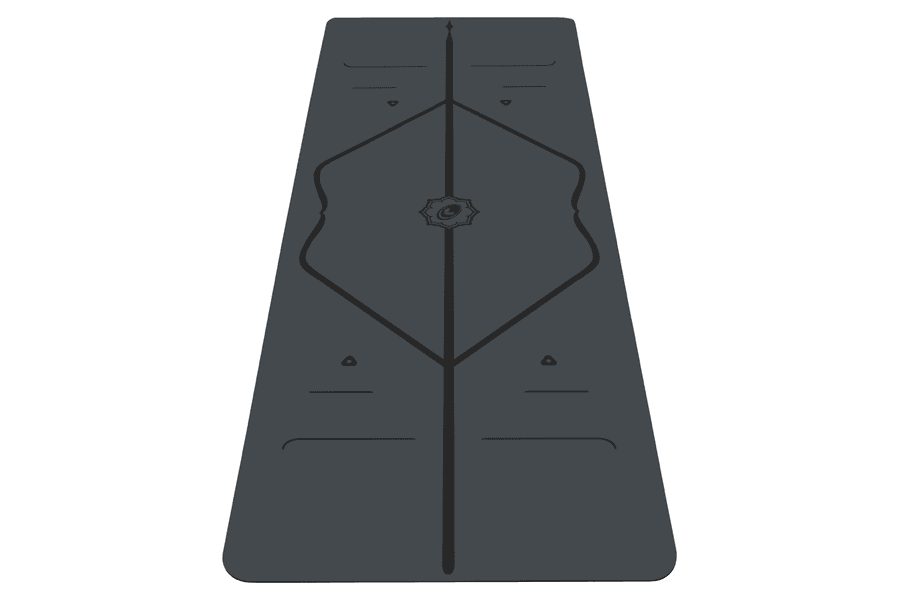
- You want the etched alignment lines for placement and consistency
- You practice in a warm room and need grip that survives sweat
- You want a wider, longer surface, 26.8 by 72.8 inches against 24 by 71
- A biodegradable build and an included carry bag matter to you
Side by side
Price
The X lists for $93 less.
$72
List price · check price at Amazon
$165
List price · check price at Amazon
Thickness
The X is 19% thicker.
5 mm0.2″
4.2 mm0.17″
Weight
The X is 1.8 lbs lighter.
3.7 lbs1.7 kg
5.5 lbs2.5 kg
Size
The Liforme is 1.8″ longer; the Liforme is 2.8″ wider.
Same on both
- No long-term warranty; both brands stop at a 30 day return window
- Wipe-clean care with diluted mild soap, no machine washing
- Grip well with dry hands from the first session, no break-in
- Sold on Amazon as well as through the brand
Full specs
Dimensions
Materials & build
Buying
A training mat and a yoga instrument
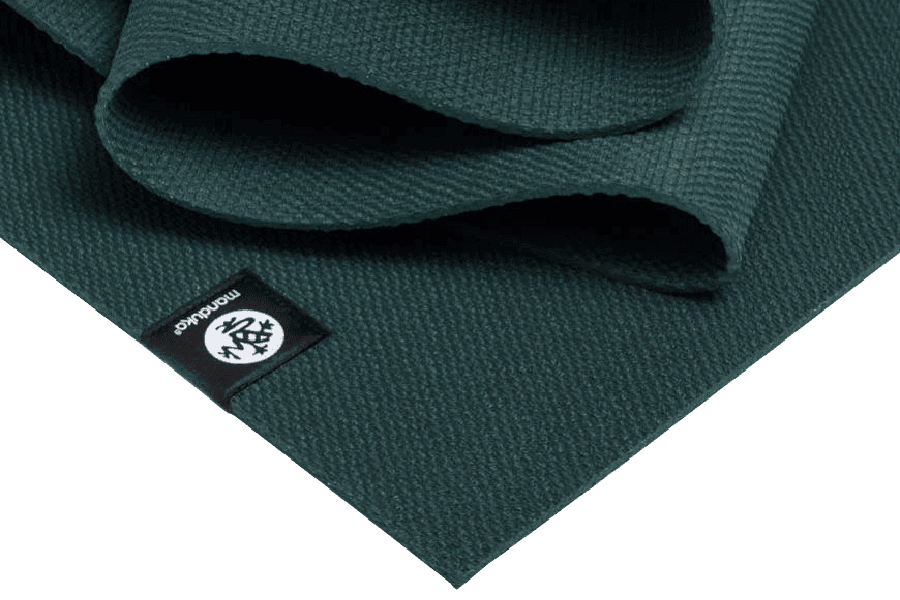
The Manduka X is $72 of high-density TPE, textured on both faces, closed-cell, and sold by Manduka as a hybrid fitness mat rather than a yoga mat. It is meant to take weights, intervals, and pavement. The Liforme is $165 of eco polyurethane over natural rubber, with an alignment system etched into the top, and it is meant to do one thing extremely well.
The gap is $93, which is more than the X costs. That only makes sense if your practice actually uses what the Liforme adds, so it is worth going through what it adds.
Grip: the Liforme has the record, the X has an argument
OutdoorGearLab rated the Liforme 9 of 10 for dry grip and 7 for wet, and named it their pick for fine-tuning alignment in a 19 mat test where it placed 6th overall at 76 of 100. Its top layer moves moisture down and away from your palms instead of leaving it under them, which is why it holds up in a warm room.
The X was not in that test. Its crosshatch texture grips well with dry hands and nobody disputes that. Sweat is where owner reviews fall apart: some report no slipping at all while dripping, others describe it as very slippery in hot yoga and say they bought a towel for it. Closed-cell construction is the reason. Sweat has nowhere to go, so it sits on top. For an unheated practice this is a non-issue; for a heated one it is the whole issue.
There is a second-order effect worth naming. Because the X keeps sweat on top, a wet patch stays a wet patch until you wipe it, which in a long class means the slick spot is exactly where your hands keep landing. The Liforme moves that moisture out of the contact area, so the surface you touch on the tenth chaturanga resembles the surface you touched on the first. That is what the absorbent construction is buying, more than the raw grip number shows.
The etched lines, and whether you would use them
The Liforme’s alignment system is a center line, placement markers, and angled guides pressed into the surface rather than printed on it. They give you fixed references for hand and foot position, stance width, and centering. GearLab called them the best implementation of the idea they tested, and they help most when you are practicing at home with nobody watching your form.
The X has a plain textured field and no version with guides. If you know you never look down at your mat, that costs you nothing and the Liforme’s headline feature is $93 you would be spending on something you ignore. If you are still learning spacing, or you teach, the lines are the single best reason to pick the Liforme over anything else at this price.
Feel and cushioning
The X is 5 mm of dense TPE, rated by Manduka for impact absorption. It is firm and it stays firm, which is what you want if the mat sees jumping or kneeling on concrete. It does not have the plush give some people want from a yoga mat.
The Liforme is thinner at 4.2 mm and GearLab scored its comfort and support 7 of 10, mid-pack. The rubber base is dense enough that testers found it comfortable even on hard floors, and the lower profile gives standing balances a steadier read on the ground. Neither of these is a soft mat. Between them the X has slightly more material under you and the Liforme has the better-tuned base.
Density is the reason two mats a millimeter apart can feel so different. The X is tuned to absorb impact and spring back, which is what a training mat needs. The Liforme is tuned to stay put and stay flat, which is what a yoga mat needs, and its rubber base is heavy enough that it does not shift under a strong transition. Neither approach is a compromise of the other; they were designed against different requirements.
Size and weight
The X is 71 by 24 inches. That 24 inch width is narrower than a standard mat and it shows up in wide-legged poses, where a foot lands on the floor rather than the mat. The Liforme is 72.8 by 26.8 inches, nearly three inches wider and almost two longer, which is enough room that most people stop noticing the edges.
Weight goes the other way: 3.7 pounds against 5.5, with GearLab measuring the Liforme at 6.2 on their own scale. The Liforme does ship with a carry bag, which helps if you walk to a studio, but the X is the easier mat to move.
Durability and care
The cheaper mat is the tougher one here. The X is built on a woven scrim Manduka rates for cross-training, it wipes or hoses clean, and owners report months of near-daily use with little wear. Nothing soaks into it, so there is no odor problem and no drying routine.
The Liforme’s polyurethane top is its wear surface, and it scuffs and marks under heavy practice. Liforme says plainly that its materials are designed to biodegrade and that lifespan depends on how hard you use the mat, which is honest and also a warning. Care is a damp cloth with diluted mild soap, no machine washing, and it needs to dry before it gets rolled.
What either brand stands behind
Not much, on either side. Manduka gives the X a 30 day return window and nothing else; the lifetime guarantee people associate with the brand covers the PRO line, not everything Manduka sells. Liforme offers no warranty at all, just a 30 day money-back guarantee on purchases from its own site.
At $165 that is worth saying out loud. If coverage matters to you more than features, neither of these is the answer, and our Manduka PRO vs Liforme comparison covers the mat that does offer it.
Price and where to buy
List prices are $72 and $165. Both sell on Amazon as well as through the brand, and both move around by colorway, so it is worth comparing the current Manduka X price at Amazon and the current Liforme price at Amazon before buying either at list.
Value depends entirely on the use case. For a mixed fitness routine, the X does more of the work for less money. For a serious yoga practice in a warm room, the Liforme is the mat that actually solves the problem, and $165 buys a solution rather than a compromise.
Colorways and other versions
Manduka sells the X in seven colorways at last count, all solid, and it looks like gym equipment because it is. There is no long version, no wide version, and no travel version, so the mat you see is the whole line.
Liforme runs much deeper. The Classic comes in more than a dozen colorways, and the same grip surface and alignment system appear in a Travel version at roughly 3.5 pounds and in larger sizes. If you like what the Liforme does but not what it weighs, that Travel version is the one to look at rather than dropping to a different brand. Worth noting on price: liforme.com serves British pounds to some visitors, so a number that looks like a discount is often just a different currency. The US list is $165.
Bottom line
Get the X if your mat has a second job. It handles strength work, cardio, and outdoor sessions, it takes a hose, and it costs little enough that treating it roughly is fine. For an unheated yoga practice on top of all that, it is perfectly good.
Get the Liforme if yoga is the job and the room gets warm. Better grip when wet, a wider and longer surface, and alignment guides you will either use constantly or never touch. Decide honestly which of those two you are before spending the $93, and if the answer is somewhere in the middle, our Manduka X vs IUGA comparison covers a cheaper mat with the same absorbent surface.
Manduka X
List price $72
Liforme Classic
List price $165
Frequently Asked Questions
- Is the Liforme worth more than twice the price of the Manduka X?
- For a yoga-only practice, we think so, though it's a lot of money. You get measurably better grip, a surface built for sweat, more room in both directions, and the alignment guides GearLab called the best of any mat they tested. For a mixed routine where the mat also sees dumbbells and burpees, the answer flips: the Liforme's polyurethane top scuffs, and $165 is a lot to spend on something you'll drag onto a garage floor.
- Which is better for hot yoga?
- The Liforme, clearly. Its top layer wicks moisture down away from your palms and GearLab rated its wet grip 7 of 10. The Manduka X is closed-cell, so sweat sits on the surface, and owner reviews are split: some report it holds fine while they're dripping, others say it became slippery in a heated class and they bought a towel for it. If most of your classes are heated, the X is the wrong mat.
- Do the alignment lines actually help?
- More for newer practitioners and teachers than for everyone. The center line and the placement markers give you something to check hand and foot position against, which is genuinely useful when you're learning spacing or practicing at home without a teacher watching. If you know you'd never look down at the mat, the X's plain surface costs you nothing, and you'd be paying $93 for a feature you ignore.
- Which one lasts longer?
- The X, for most owners, and it isn't the more expensive mat. Dense TPE takes abrasion well, Manduka builds it around a woven scrim it rates for cross-training, and owners report months of near-daily use with little visible wear. The Liforme's polyurethane top is the wear surface, and Liforme itself says the materials are designed to biodegrade and that lifespan depends on how hard you practice. Neither brand offers coverage past 30 days.
- How different are the sizes?
- Enough to notice. The X is 71 by 24 inches, narrower than a standard mat, which is fine for flowing and tight for wide-legged poses. The Liforme is 72.8 by 26.8 inches, a bit longer and almost three inches wider, which gives you room in a wide stance and keeps your hands on the mat in a low lunge. The Liforme is also heavier: 5.5 pounds against 3.4.
- Which is easier to travel with?
- The X, on weight alone, at 3.4 pounds against 5.5, though neither is a travel mat. The Liforme does ship with a carry bag, which softens the difference if you walk to a studio. If packing is the actual problem, both brands sell thinner versions, and a dedicated travel mat will beat either of these into a suitcase.
Related comparisons
- Manduka X vs Gaiam Performance Dry-Grip 5mm
- Manduka X vs Gaiam Performance Dry-Grip Long & Wide
- Manduka X vs IUGA Eco Friendly Non Slip PU
- Manduka X vs JadeYoga Level One
- Manduka X vs Hugger Mugger Earth Elements 5mm
- JadeYoga Harmony XW vs Liforme Classic
- Manduka X vs 42 Birds The Robin
- Manduka X vs JadeYoga Travel 68"
- Liforme Classic vs Yoloha Unity Pro Cork