Manduka X vs Gruper TPE 6mm: Which One Should You Buy?
These are the same material, which makes this an unusually direct comparison. Both are TPE, both are closed-cell, both are textured on two faces. The Gruper is thicker, lighter, cheaper by $44, and ships with a strap and a bag. The X is denser and carries Manduka's name. Whether that is worth $44 is a fair question and we will answer it plainly.
As an Amazon Associate, we earn from qualifying purchases made through links on this page. How this works
The quick answer
The X is 71 by 24 inches, 5 mm, 3.4 pounds, seven colorways, 4.4 stars across roughly 2,266 Amazon ratings, made in Taiwan. The Gruper is 72 by 24, 6 mm, 2.6 pounds, eight colorways, 4.4 stars across about 10,543 ratings, with a carry strap and storage bag included and $27.99 on the price tag. Neither is in GearLab's roundup.
Get the Gruper if this is a first mat, a spare, or a travel mat, because it is the same class of material for a quarter of the money. Get the X if you want the firmer, denser surface for standing work and mixed training, and know that you are paying a brand premium on a material that wears out either way.
Get the Manduka X if...
- You want a firmer, denser TPE underfoot
- The mat sees shoes, outdoor use or cross-training
- You want a brand that stands behind the product
- You want the same textured surface on both faces
Get the Gruper TPE if...
- You'd rather keep about $44
- You want 2.6 pounds to carry instead of 3.4
- You want the extra millimeter of cushioning
- You want a strap and a storage bag included
Side by side
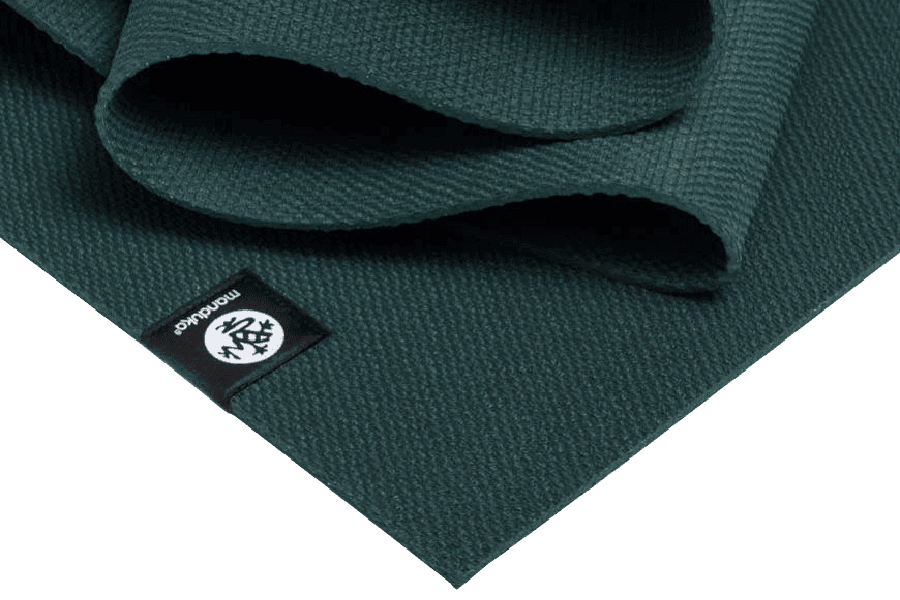
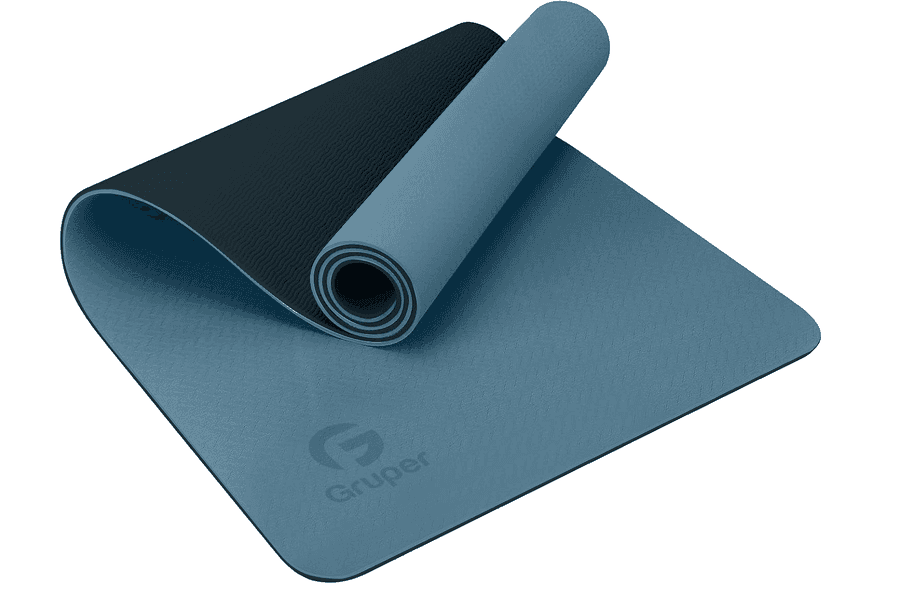
Price
The Gruper lists for about $44 less.
$72
List price · check price at Amazon
$27.99
List price · check price at Amazon
Thickness
The Gruper is 20% thicker.
5 mm0.2″
6 mm0.24″
Weight
The Gruper is 1.1 lbs lighter.
3.7 lbs1.7 kg
2.6 lbs1.18 kg
Size
The Gruper is 1″ longer; same width.
Same on both
- TPE construction, no PVC and no latex
- Closed-cell, so sweat sits on the surface
- 24 inches wide, around 71 to 72 inches long
- No published warranty on either mat
Full specs
Dimensions
Materials & build
Buying
- 8 mm72" × 24"
The same material at four times the price
Both of these are TPE. Both are closed-cell. Both are textured on two faces and neither will absorb a drop of sweat. The Gruper is 6 mm and 2.6 pounds for $27.99, with a carry strap and a storage bag in the box. The Manduka X is 5 mm and 3.7 pounds for $72, with nothing else.
That makes this a cleaner comparison than most, because the material science is identical. The question is what $44 buys inside one category, and the answer is smaller than the price suggests.
Density is what the X actually sells
The X is a millimeter thinner and noticeably firmer. A standing foot gets a flatter read on the floor, which shows up in balance poses and in long standing holds where a softer mat lets your arch sink.
The Gruper’s softer 6 mm is the kinder surface to kneel on and the worse one to balance on. That trade runs through every price bracket and it does not disappear just because both mats are made of the same stuff.
Grip: a tie you should not be happy about
Dry, both are fine. The X uses a uniform texture on both faces; the Gruper puts a fine S-pattern on top and a corrugated grip underneath. Either grips well enough in a cool room that you will not think about it.
Damp, both fail, and the failure is the material rather than the brand. If sliding hands are the reason you are shopping, neither of these solves it. That job needs natural rubber or a polyurethane top, which is a different aisle entirely.
Both wear out on a similar schedule
TPE compresses, dents and eventually flakes where hands and feet land, typically inside one to two years of frequent use and faster in sunlight. Nothing about Manduka’s version escapes that; it is a property of the material.
Neither mat carries a published warranty. Manduka gives the X 30 day returns; Gruper publishes nothing at all, which leaves the Amazon return window. If you want a mat that outlives both of these, Manduka’s PROlite is the dense PVC option with the lifetime guarantee behind it.
Size and weight
The Gruper is 72″ × 24″ and the X is 71″ × 24″. Same width, an inch of length in the cheap mat’s favour, and neither is generous at 24 inches wide.
On the scale the Gruper wins again at 2.6 pounds against 3.7. It also comes in an 8 mm version at 3.1 pounds if you want more cushioning from the same listing.
What the X does that the Gruper does not
Manduka sells this now as the X Hybrid Fitness Mat, and the pitch is durability under conditions a yoga mat is not built for: trainers, outdoor ground, dragging it around a garage. The denser TPE genuinely handles that better.
The Gruper is a home yoga mat. It will survive a session in a park, but the softer foam tears sooner under a shoe and the corrugated underside picks up grit. If the mat has a second job, the X earns some of its premium there.
What owners say
The Gruper holds 4.4 stars across roughly 10,543 Amazon ratings, which is a large enough sample to trust. The X holds 4.4 across about 2,266. Same score, very different price, and no obvious reliability gap in the reviews.
The recurring criticism on both is the same one: the surface wears and the mat does not last. That complaint is fair on both and it is the material talking, not the manufacturing.
Price and value
Check current prices on the Manduka X and the Gruper. The X sits close to its $72 list; the Gruper hovers around $27.99 and dips lower on colorway sales.
The strap and bag are worth a few dollars on their own, and Manduka sells its equivalents separately. Add that to the price gap and the Gruper is delivering most of the same mat for roughly a quarter of the outlay.
Support, stock, and buying the same mat twice
The Gruper exists as an Amazon listing. There is no brand store worth visiting, no published warranty, and no guarantee the same mat will be there in two years when this one wears out. At $27.99 that is a fair trade and part of why the price works.
Manduka has kept this mat in its line for years with a returns process and real customer support behind it. It renamed the X Yoga Mat to the X Hybrid Fitness Mat without changing the 71″ × 24″, 5 mm Taiwanese TPE underneath it.
Knowing you can buy the same mat again is worth something. On a product with a two year lifespan it is worth less than it sounds, and almost certainly not the full $44.
Bottom line
Buy the Gruper unless you have a specific reason not to. As a home yoga mat used a few times a week it does what the X does, it is longer and lighter and thicker, and it comes with the accessories. Nobody should feel underequipped practicing on it.
Buy the X if the mat is doing cross-training, outdoor work, or anything involving footwear, where its density and toughness earn some of the difference. As a pure yoga mat at $72 it faces stiff competition, including from mats that grip when you sweat, which neither of these does.
Manduka X
List price $72
Gruper TPE 6mm
List price $27.99
Frequently Asked Questions
- Is the Manduka X worth four times the Gruper?
- For most people, no. TPE is TPE, and both mats will wear out on a similar timeline. The X's density genuinely helps in standing poses and it takes shoes and outdoor use better, so if the mat is doing cross-training work the extra money buys something. As a home yoga mat used a few times a week, the Gruper does the same job.
- Which is more stable in balance poses?
- The X. It is a millimeter thinner and noticeably denser, so a standing foot gets a flatter read on the floor. The Gruper's softer 6 mm gives more underfoot, which is kinder on knees and worse in tree pose. That is the trade at almost every price point, and it does not disappear because both mats are the same material.
- How long does TPE last?
- One to two years of frequent use before the surface dents, flakes or compresses, faster in sunlight. It is the least durable of the common mat materials. Neither mat carries a published warranty, so the Amazon return window is the practical protection on both. Budget for a replacement rather than expecting either to last a decade.
- Do either of them work for hot yoga?
- No. Both are closed-cell, so sweat sits on the surface with nowhere to go, and texture stops helping the moment your palms are damp. If heated classes are the plan, a polyurethane-topped or natural rubber mat is the category to shop in, and neither of these is close.
- What comes in the box?
- The Gruper includes a carry strap and a storage bag, which cost a few dollars separately and add up to a real part of its value at $27.99. The X comes as a mat and nothing else. Manduka sells straps and bags separately, which is normal for the brand and slightly irritating at $72.
- Is there a better mat around $70?
- Several, if yoga is the only use. A 5 mm PVC or rubber mat in the $60 to $80 range will outlast either of these and grip better. The X's argument is not that it is the best yoga mat at $72, it is that it is a durable general-purpose surface. Judged only as a yoga mat, it faces stiff competition.
Related comparisons
- Amazon Basics 1/4 Inch Thick TPE vs Gruper TPE 6mm
- Manduka X vs Gaiam Performance Dry-Grip 5mm
- Gaiam Premium 6mm vs Gruper TPE 6mm
- Manduka X vs Gaiam Performance Dry-Grip Long & Wide
- Gruper TPE 6mm vs Gaiam Essentials 6mm
- YogaAccessories Extra Thick Deluxe 1/4" vs Gruper TPE 6mm
- Manduka X vs IUGA Eco Friendly Non Slip PU
- Gaiam Premium Reversible 6mm vs Gruper TPE 6mm
- Manduka X vs JadeYoga Level One