Manduka PROlite vs Manduka X: Which One Should You Buy?
Same brand, same 71" × 24" footprint, different job descriptions. The PROlite is a yoga mat, full stop: dense German PVC, lifetime guarantee, a surface that rewards years of practice. The Manduka X is a hybrid fitness mat: 5 mm of double-sided TPE at 3.4 pounds, made to survive burpees and dumbbells as well as down dogs, for $40 less. Whether the X's flexibility is a feature or a compromise depends entirely on your week.
As an Amazon Associate, we earn from qualifying purchases made through links on this page. How this works
The quick answer
The PROlite is the better yoga mat: denser and more stable under balance work, wildly more durable, and covered by Manduka's lifetime guarantee. The X is the better everything mat: lighter by more than a pound, grippy in dry conditions from day one, tough enough for shoes and mixed training, and $72 instead of $112. Its TPE is the shortest-lived material Manduka sells, and there's no warranty behind it.
If yoga is the main event, get the PROlite; it outlasts several X mats and practices better every year. If your mat splits time between yoga, HIIT, and core days, get the X, which handles that mix better than any dedicated yoga mat would.
Get the PROlite if...
- Yoga is the main thing happening on this mat
- You want a decade-plus mat with the guarantee to match
- You want the denser, more stable surface for balance work
- You want around 13 colors and four sizes to choose from
Get the X if...
- Your mat does yoga, HIIT, and strength days in one week
- You want the lightest mat here (3.4 pounds)
- You'd rather keep the $40
- You want dry grip on day one, no break-in
Side by side
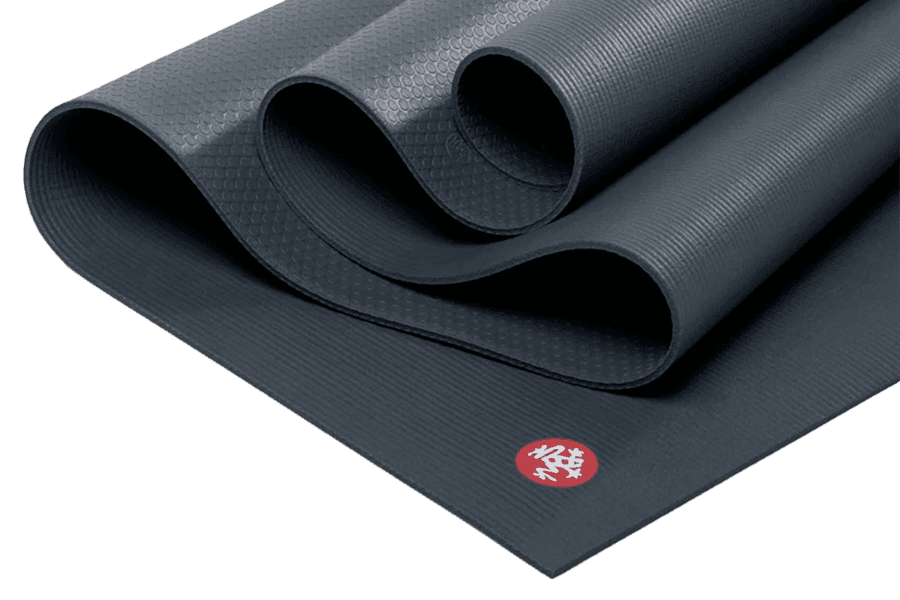
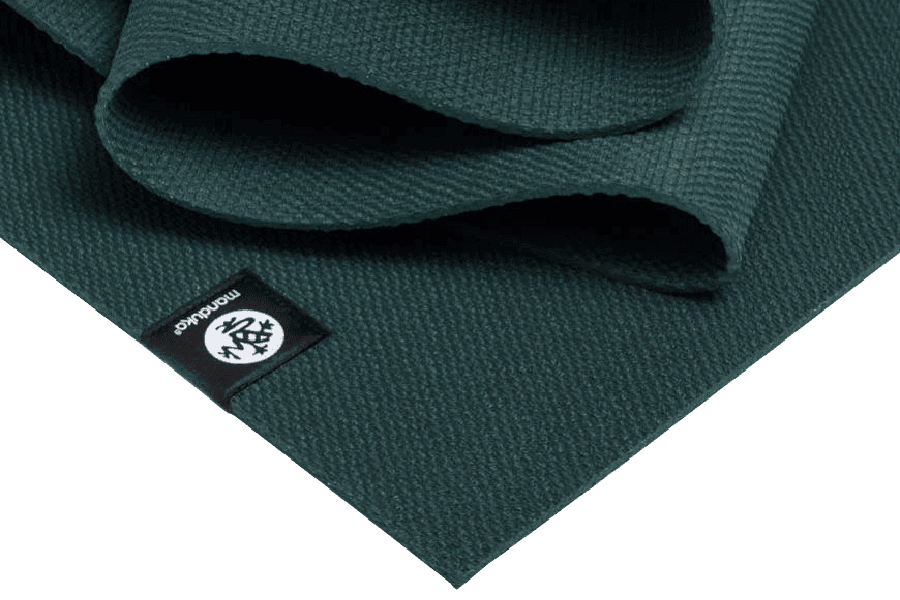
Price
The X lists for $40 less.
$112
List price · check price at Amazon
$72
List price · check price at Amazon
Thickness
The X is 6% thicker.
4.7 mm0.19″
5 mm0.2″
Weight
The X is 1.2 lbs lighter.
4.6 lbs2.1 kg
3.4 lbs1.5 kg
Size
Same length; same width.
Same on both
- Made by Manduka
- Same 71" × 24" footprint
- Closed-cell surface (sweat can't soak in)
- Light enough to carry to class
- Lies flat without curling
Full specs
Dimensions
Materials & build
Buying
One job vs every job
Manduka builds the PROlite to do one thing across decades and the X to do many things across a week. The PROlite is the company’s portable yoga classic: 4.7 mm of dense German PVC at $112, guaranteed for life. The X, renamed the X Hybrid Fitness Mat to make the point, is 5 mm of double-sided TPE at $72, engineered to shrug off shoes, sliders, and dumbbells between yoga sessions.
They share a 71″ × 24″ footprint, which makes the comparison unusually direct: same space on the floor, very different ideas about what happens on it.
As a yoga mat: the PROlite pulls away
For pure yoga the PROlite is simply the stronger surface. Its compressed PVC holds firm under a planted foot, which is what keeps tree pose and half moon from turning into ankle exercises, and the fabric-like top rewards years of practice by gripping better with age. It’s the mat Manduka points serious practitioners toward when the 6 mm PRO is too much weight.
The X acquits itself respectably in a flow; 5 mm of TPE is cushioned, and the surface holds fine while your palms stay dry. But TPE is airier than PVC, so it gives more under concentrated weight, and the surface doesn’t improve with time; it just slowly wears. Good enough for yoga-some-days is exactly the standard it was built to, and exactly where it stays.
As a workout mat: the X earns its name
Flip the workload toward HIIT, core circuits, or strength work and the mats trade places. The X is double-sided, tolerates athletic shoes, and takes dragged equipment and burpee abuse as designed use rather than misuse. At 3.4 pounds it also moves through a gym bag or car trunk more easily than anything else in Manduka’s range short of a travel mat.
Doing that work on the PROlite is possible and inadvisable. Shoes scuff and grind a surface meant for skin, the wear pattern isn’t a warranty matter, and you’d be sacrificing a $112 decade mat to save a $72 purchase. If mixed training is a real part of your week, that alone justifies the X’s existence.
Grip and the break-in tax
Out of the box, the X wins: its textured TPE grips dry hands and feet from the first session. The PROlite ships slick, and its first few weeks are its worst; Manduka’s advice is now simply to practice on it until the slickness resolves, the old salt-scrub tip having been retired. Once broken in, the PROlite’s grip surpasses the X and keeps improving.
Neither mat handles sweat well. Both are closed-cell, so moisture stays on the surface, and a heated class or heavy sweater wants a towel over either. For real sweat management in this price range, Manduka’s GRP Adapt line is the tool, not either of these.
Durability: decades vs a few years
The gap here is as wide as Manduka’s catalog gets. The PROlite carries the lifetime guarantee, roughly 10 years of regular use in the fine print with one replacement, and its construction is the kind GearLab keeps finding in service after five to twenty years. TPE sits at the other end of the material spectrum: light and affordable, but it compresses, nicks, and wears through within a few years of steady use, and the X accordingly gets a 30 day return window and nothing more.
Care rules barely differ, which is a point for both: two closed-cell mats, wipe down and go. The X’s TPE prefers to stay out of long sun exposure; the PROlite genuinely doesn’t care.
Sizes and colors
The X comes in exactly one size, 71″ × 24″, in around 7 colorways. The PROlite line runs four cuts, a 68″ Short through the 79″ Long and 79″ × 30″ Long & Wide, in about 13 colors. Tall practitioners have no X option at all, which quietly settles this page for anyone over six feet.
Price and value
List prices are $112 for the PROlite and $72 for the X, with colorway sales moving both. Check current prices on the PROlite and the X before deciding.
As a yoga investment the PROlite is the cheaper mat over time; one guaranteed decade against replacing worn TPE every few years isn’t much of a contest. The X’s value case is breadth, not longevity: $72 covers yoga, HIIT, and strength days on one surface, which for a mixed-training week can beat owning a yoga mat that hates half your workouts.
Bottom line
If yoga is the main thing on your mat, buy the PROlite. It’s the better surface for the practice this year and a far better one in five, and the guarantee means the higher price is mostly a timing difference.
If your mat’s week includes burpees, dumbbells, and shoes, buy the X and use it hard; that’s what it’s for, and no dedicated yoga mat, the PROlite included, will thank you for that workload. Just go in knowing you’re buying a few good years, not a decade, and that a deepening yoga practice will eventually want a mat of its own.
Manduka PROlite
List price $112
Manduka X
List price $72
Frequently Asked Questions
- Is the Manduka X good for yoga, or just for workouts?
- It's genuinely usable for yoga; Manduka sells it as a hybrid, not a compromise. The 5 mm TPE is cushioned and grips well dry. What it lacks is the PROlite's density under balance poses, the longevity, and the surface that improves with years of practice. As a mat for a mixed week it's great; as a dedicated yoga mat it's outclassed by the PROlite.
- Why is the Manduka X called the X Hybrid Fitness Mat?
- Manduka renamed it to match how people actually use it. The X was pitched at cross-training from the start: a double-sided TPE build that tolerates shoes, sliders, and equipment better than a classic yoga surface. Same mat, clearer label. Older reviews under the plain Manduka X name cover the product you'd buy today.
- How durable is the X's TPE compared to the PROlite's PVC?
- Not close. TPE is light and inexpensive but compresses and wears within a few years of regular use, which is why the X carries no warranty beyond Manduka's 30 day returns. The PROlite's dense PVC is the same construction GearLab keeps finding in service after five to twenty years, and Manduka guarantees it for roughly a decade of regular use.
- Which grips better, the PROlite or the X?
- Out of the box, the X; its textured TPE holds fine in dry conditions from the first session, while a new PROlite is slick for a few weeks until use breaks in the surface. A broken-in PROlite pulls ahead for grip and keeps improving. Both are closed-cell, so neither absorbs sweat and hot classes want a towel on either.
- Can I do HIIT or strength work on the PROlite instead?
- You can, but it's the wrong tool and an expensive one to chew up. Shoes and dragging equipment scuff a surface designed for bare hands and feet, and the wear won't be covered as a defect. The X's double-sided TPE was built for exactly that abuse at half the price, which is the entire case for it.
- How big is the weight difference?
- The X is 3.4 pounds to the PROlite's 4.6, both in the same 71" × 24" size. Either commutes easily; the X just disappears on a shoulder, and it's the one you'd toss in a gym bag without thinking. Neither approaches the heft of Manduka's 7.5 pound PRO.
Related comparisons
- Manduka PROlite vs JadeYoga Harmony 2.0 68"
- Manduka PROlite vs JadeYoga Harmony 74"
- Manduka X vs Gaiam Performance Dry-Grip 5mm
- Manduka X vs Gaiam Performance Dry-Grip Long & Wide
- Manduka X vs IUGA Eco Friendly Non Slip PU
- Manduka PROlite vs Lululemon The Mat 5mm
- Manduka PROlite vs JadeYoga Harmony 68"
- Manduka PROlite vs b, halfmoon B Mat Everyday 4mm
- Manduka X vs Hugger Mugger Earth Elements 5mm