Manduka X vs Gaiam Premium 6mm: Which One Should You Buy?
Both of these turn up in home gyms as much as in yoga studios, and they weigh almost exactly the same, but they are built for different work. The Manduka X is firm closed-cell TPE that expects burpees, dumbbells and shoes. The Gaiam Premium is soft PVC foam that expects a knee, a stretch, and a beginner's first few months. The $42 between them buys density and toughness, not thickness.
As an Amazon Associate, we earn from qualifying purchases made through links on this page. How this works
The quick answer
The Gaiam is the thicker mat at 6 mm and the softer one everywhere. GearLab, which still gave it a best buy award as a first yoga mat, found the foam unstable under balance poses, rated its wet grip 4 out of 10, and flagged that it compresses with use. The X is 5 mm of dense, double-sided TPE that stays planted under jump landings, tolerates shoes and dragged equipment, and runs three inches longer.
If the mat serves a mixed training week or you are over about five foot six, get the X. If you practice gentle yoga a few times a month and want to spend $30, the Gaiam does that job honestly.
Get the Manduka X if...
- Your mat sees shoes, weights, sliders or circuit work
- You do standing balances, where soft foam gets wobbly
- You want the longer mat: 71 inches against 68
- You would rather practice on TPE than PVC
Get the Gaiam Premium if...
- You are starting out and not sure yoga will stick
- Your practice is mostly seated, restorative, or stretching
- You want the softest landing for knees and wrists
- You would rather spend $30 and keep the other $42
Side by side
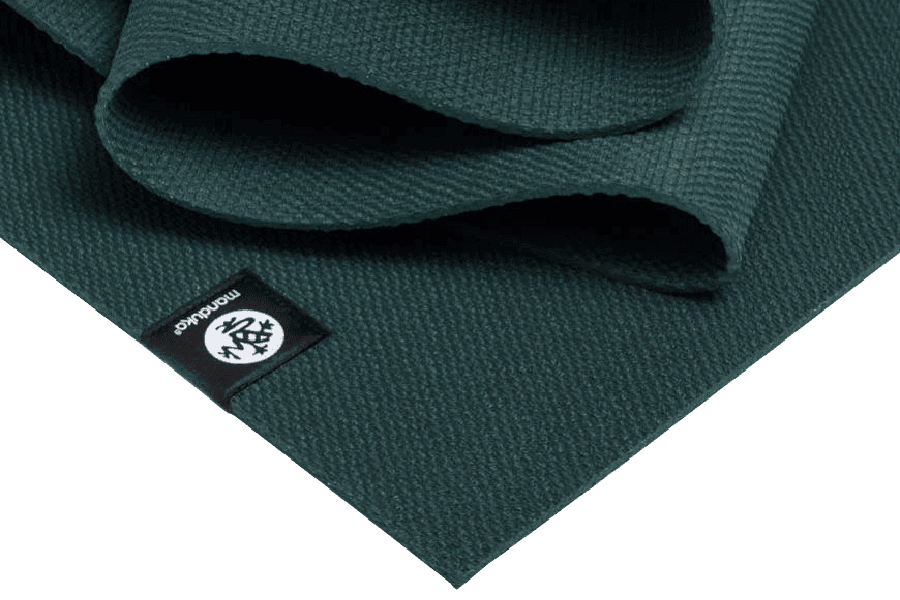
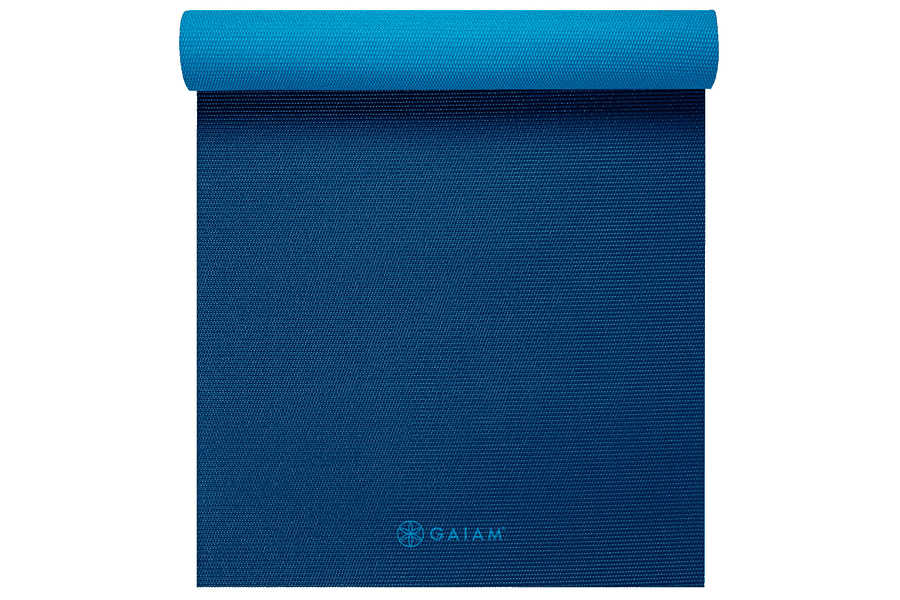
Price
The Gaiam Premium lists for about $42 less.
$72
List price · check price at Amazon
$29.98
List price · check price at Amazon
Thickness
The Gaiam Premium is 20% thicker.
5 mm0.2″
6 mm0.24″
Weight
The Gaiam Premium is 0.1 lbs lighter.
3.4 lbs1.5 kg
3.3 lbs1.5 kg
Size
The X is 3″ longer; same width.
Same on both
- Both weigh a little over 3 pounds and carry easily
- 24 inches wide
- Closed surfaces that do not absorb a drop of sweat
- Wipe-clean care with no machine washing
- Both prefer to stay out of long sun exposure
Full specs
Dimensions
Materials & build
Buying
Almost the same weight, built for different work
Both of these show up in home gyms as often as in studios, and they weigh within a tenth of a pound of each other: 3.4 pounds for the Manduka X, 3.3 for the Gaiam Premium. From there they part ways completely.
The X, sold by Manduka as a hybrid fitness mat, is firm closed-cell TPE that expects burpees, dumbbells and shoes. The Gaiam is soft PVC foam that expects a knee, a stretch and a beginner’s first few months. The $72 against $29.98 gap is buying density and toughness, not height: the cheaper mat is the thicker one.
Firm against soft, and why it matters
The Gaiam’s 6 mm of light foam gives under a knee and keeps giving, which feels genuinely kind in floor work. GearLab, which still recommends the mat to beginners, rated comfort and support 6.5 of 10 and noted that pressing a hand into the foam leaves the print for a moment.
Stand on one leg and that softness turns against you. The same testers found the surface unstable under balance poses, with a foot sinking and tilting. The X’s 5 mm of denser TPE gives a little and then holds, which is what tree pose and warrior three want underneath them.
What the X tolerates that the Gaiam won’t
This is the X’s whole reason for existing. Its firmer, double-sided textured TPE treats athletic shoes, sliders and dragged equipment as normal use, and it stays planted under jump landings and loaded carries. Run that workload on soft foam and the Gaiam dents, scuffs and compresses fast.
No lifetime guarantee covers wear from use a mat wasn’t built for, so if your mat serves a whole training week rather than a yoga practice alone, the $42 isn’t really optional. If it only ever sees bare feet and gentle stretching, the Gaiam will be fine.
Grip: closed surfaces, both of them
Neither mat absorbs a drop. GearLab rated the Gaiam 6 of 10 dry and 4 wet, with hands slipping noticeably once things got sweaty, and listed poor wet grip among its three downsides. The X’s textured TPE behaves the same way: fine with dry hands from the first session, no break-in needed, and out of its depth once your palms are damp.
If heated classes are your regular practice, buy neither. A natural rubber mat or an absorbent polyurethane top solves that problem and these don’t; our Jade Harmony vs Gaiam Premium comparison covers what the rubber route costs.
Size
The X is 71″ × 24″ against the Gaiam’s 68″ × 24″. Same width, three more inches of length, which matters above about five foot six and doesn’t below it. Both are narrow by current standards; 24 inches is the old default and plenty of newer mats run 26.
Neither line offers a longer version. Genuinely tall buyers on a budget are better served by a 72 inch or 74 inch mat from elsewhere than by either of these.
Durability and two very different guarantees
The Gaiam’s foam takes a set under regular use, which GearLab called its main durability concern. A casual practice a few times a month can get years out of one; daily use flattens it within a couple. Gaiam covers the mat for life, which is unusual at $29.98 and worth having, though guarantees at any price address manufacturing defects rather than foam softening from normal use.
TPE compresses and wears on its own schedule too, and the X gets no warranty at all: Manduka offers a 30-day return window. What the X buys is headroom rather than paperwork. It keeps its few years even when the use includes shoes and circuits, where the Gaiam’s clock runs fast under anything beyond yoga.
Materials, smell, and care
The X is TPE, made in Taiwan, with no PVC in it, which some buyers care about and which also makes it lighter for its density. The Gaiam is latex-free PVC foam. Neither carries a third-party certification.
Gaiam asks you to unroll its mats and air them out for two to three days before the first session, and publishes a guide on removing the new-mat smell, which tells you how often people ask. The X arrives milder. After that both are wipe-clean mats that prefer to stay out of long sun exposure, and neither belongs in a washing machine.
Price and value
List prices are $72 and $29.98, and both move with colorway sales. Check the current price on the Manduka X at Amazon and the Gaiam at Amazon before deciding.
The expensive mistake here is buying the Gaiam for a mixed-training week and grinding it down inside a year, which turns $42 saved into a second purchase. The other expensive mistake is buying the X for a twice-monthly stretching habit that a $30 mat would have served indefinitely. Match the mat to the workload and the choice makes itself.
Bottom line
Get the Manduka X if shoes, weights or circuits come anywhere near your mat, if you do a lot of standing balance work, or if you’re over about five foot six. It does yoga competently and everything else far better.
Get the Gaiam Premium if you’re starting out, practice gently, or want the softest landing for knees and wrists at $30. It’s an honest product with honest limits: wobbly under one leg, slippery once you sweat, and destined to flatten under heavy use. When it does, that’s the signal to leave this tier rather than to buy another one. Our PROlite vs Gaiam Premium comparison covers what the next step up buys.
Manduka X
List price $72
Gaiam Premium 6mm
List price $29.98
Frequently Asked Questions
- The Gaiam is thicker. Why would I pay more for the X?
- Because thickness and support are not the same thing. The Gaiam fills 6 mm with soft, light foam that keeps giving under a knee, which feels kind in floor work and unstable the moment you stand on one leg; GearLab's testers found exactly that and rated comfort and support 6.5 of 10. The X's 5 mm of denser TPE gives a little and then holds, which is what a standing balance wants underneath it.
- Can I use either mat for weights or HIIT?
- Only the X, which is the point of it. Its firmer double-sided textured TPE treats athletic shoes, sliders and dragged equipment as normal use, and it stays put under jump landings. Run that workload on the Gaiam's soft foam and it dents, scuffs and compresses fast, and no lifetime guarantee covers wear from use it was not built for. Manduka sells the X as a hybrid fitness mat rather than a yoga mat for this reason.
- Which one is better for hot yoga?
- Neither, and we would steer you away from both. Both have closed surfaces that absorb nothing, so sweat sits on top with nowhere to go. GearLab rated the Gaiam 6 out of 10 dry and 4 wet, with hands slipping noticeably once things got sweaty, and the X's textured TPE behaves the same way. If heated classes are your regular practice, you want natural rubber or an absorbent polyurethane top, plus a towel.
- How long does each mat last?
- The X, longer, but neither is a decade mat. TPE compresses and wears on its own schedule, and Manduka backs the X with a 30-day return window and no warranty. The Gaiam's soft foam takes a set under regular use, which GearLab called its main durability concern; a casual practice can get years out of one, while daily use flattens it within a couple. Gaiam does cover the mat for life, though guarantees at any price address defects rather than foam softening from normal use.
- Is the X actually good for yoga?
- It is competent rather than special. It grips dry hands from the first session with no break-in, cushions adequately at 5 mm, and its density makes it steadier than any soft foam mat under balance work. What it is not is grippy when damp, and it has none of the tack of a rubber mat. A deepening yoga practice eventually points at a PROlite-class mat; the X is the one to own if that practice sits alongside a lot of other training.
- Which is easier to carry?
- Effectively a tie, and both are easy. The X lists at 3.4 pounds and the Gaiam at 3.3, so the difference is noise; GearLab called the Gaiam fairly portable in its test. If weight is a deciding factor for you, neither of these is the problem, and the mats to avoid are the 7 pound rubber and PVC flagships.
Related comparisons
- Gaiam Premium 6mm vs Gruper TPE 6mm
- Manduka X vs Gaiam Performance Dry-Grip 5mm
- Amazon Basics 1/4 Inch Thick TPE vs Gaiam Premium 6mm
- Gaiam Premium 6mm vs YogaAccessories Extra Thick Deluxe 1/4"
- Manduka X vs Gaiam Performance Dry-Grip Long & Wide
- Manduka X vs IUGA Eco Friendly Non Slip PU
- Manduka X vs Hugger Mugger Earth Elements 5mm
- Manduka X vs JadeYoga Level One
- Manduka X vs 42 Birds The Robin