Manduka PROlite vs GRP Adapt 1.0: Which One Should You Buy?
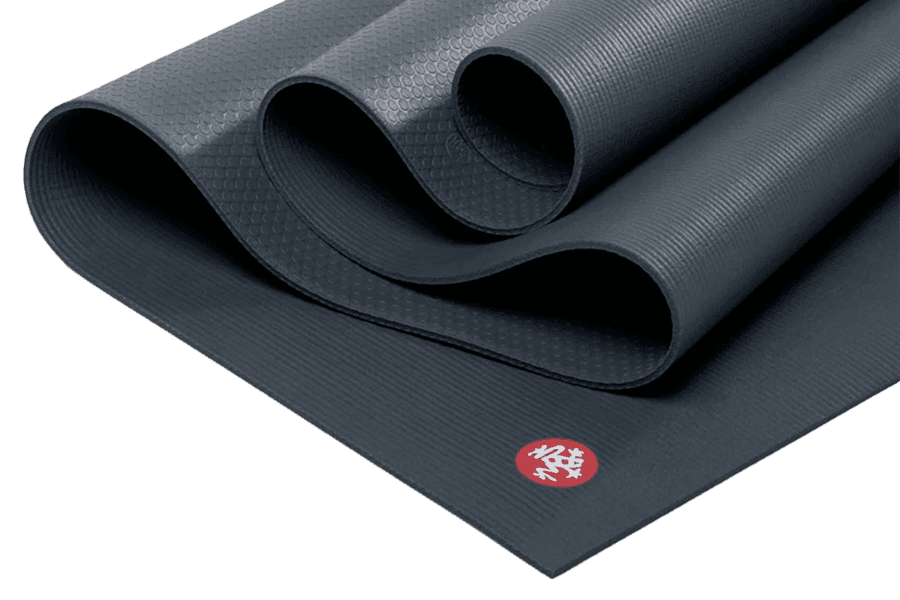
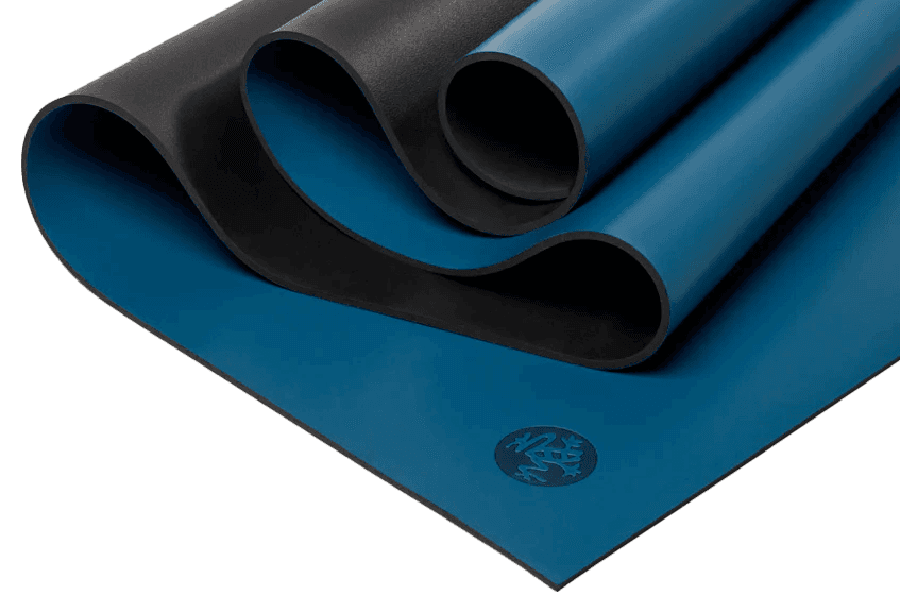
Sort yourself by sweat and this comparison mostly solves itself. The PROlite is Manduka's durable everyday PVC mat: closed-cell, slick until broken in, guaranteed for life, and unhappy under wet palms. The GRP Adapt 1.0 is the original version of Manduka's hot yoga mat: a polyurethane top over natural rubber that drinks sweat and grips hardest when damp, at $94 in two colorways. One mat is built to last through anything; the other is built to perform in conditions that defeat the first.
As an Amazon Associate, we earn from qualifying purchases made through links on this page. How this works
The quick answer
The PROlite is the better all-around mat: firmer support, a surface that lasts decades, the lifetime guarantee, and half a pound less to carry. The GRP Adapt 1.0 beats it soundly in one arena, moisture: absorbent polyurethane grip from day one that holds through a dripping class, at $18 less, with the tradeoffs of a faster-wearing surface, drying and cleaning chores, and no warranty.
If you do hot yoga or your hands sweat in any class, get the GRP Adapt; the PROlite will fight you every damp practice. If your practice is dry, get the PROlite and enjoy owning one mat for a very long time.
Get the PROlite if...
- Your practice is mostly dry; sweat isn't the problem
- You want a decade-plus mat with the guarantee to match
- You want zero upkeep: wipe it down and forget it
- You want around 13 colors instead of 2
Get the GRP Adapt 1.0 if...
- You do hot yoga or sweat through regular classes
- You want strong grip on day one, no break-in
- You'd rather keep the $18
- You're fine air-drying the mat and cleaning it regularly
Side by side
Price
The GRP Adapt 1.0 lists for $18 less.
$112
List price · check price at Amazon
$94
List price · check price at Amazon
Thickness
The GRP Adapt 1.0 is 6% thicker.
4.7 mm0.19″
5 mm0.2″
Weight
The PROlite is 1.2 lbs lighter.
4.6 lbs2.1 kg
5.8 lbs2.6 kg
Size
Same length; the GRP Adapt 1.0 is 2″ wider.
Same on both
- Made by Manduka
- Same 71" length
- Firm, supportive cushioning
- Lies flat without curling
Full specs
Dimensions
Materials & build
Buying
Start with your palms
How much you sweat decides this page, so decide that first. The PROlite is Manduka’s everyday PVC mat: closed-cell, durable to a fault, $112, and at its best in a dry room. The GRP Adapt 1.0 is the first generation of Manduka’s hot yoga mat, a polyurethane surface bonded to a natural rubber body that absorbs moisture and grips hardest exactly when the PROlite gives up.
The 1.0 matters partly for its price. Since the redesigned GRP Adapt 2.0 arrived at $128, the original has held at $94, making it the cheapest way into Manduka’s absorbent-grip technology while stock lasts, and it’s the version Amazon still carries.
Grip: opposite strategies for wet hands
These two surfaces handle moisture in opposite ways. The PROlite’s closed-cell PVC repels it; sweat beads and pools, and once palms are wet the surface turns treacherous until a towel intervenes. The GRP Adapt’s polyurethane absorbs it; sweat vanishes into the top layer and traction actually improves as the class heats up. In a heated room the difference isn’t subtle, it’s the whole product.
Dry rooms narrow the gap. The GRP Adapt still starts grippier, since it needs no break-in, while a new PROlite runs slick for its first few weeks until practice wears the surface in. But a broken-in PROlite is a genuinely grippy dry mat, and at that point the GRP Adapt’s advantage lives entirely in the sweat.
Cushioning and footprint
The GRP Adapt is slightly thicker on paper, 5 mm to 4.7, and its rubber core carries a bit more spring than the PROlite’s dense PVC, which reads firmer underfoot. Neither is a plush mat; both hold stable in balances. The GRP Adapt also spreads 26″ wide to the PROlite’s 24″, welcome real estate in wide-armed flows, at the cost of a bulkier roll.
Weight favors the PROlite: 4.6 pounds to 5.8. Both commute fine; the PROlite just does it more gracefully, and its slimmer roll fits standard mat bags that the 26″ GRP Adapt strains.
Durability: the guarantee sits on one side
The PROlite belongs to the PRO series, so it carries Manduka’s lifetime guarantee, about 10 years of regular use in the fine print with one replacement, authorized-seller receipt required. GearLab’s long-running finding that these PVC mats survive five to twenty years of service backs the paperwork up.
The GRP Adapt gets a 30 day return window, and its absorbent polyurethane top is the reason: surfaces that drink sweat also collect it, and with heavy use they darken, scuff, and wear in a way closed-cell PVC doesn’t. The maintenance list is real too. The mat should air-dry fully before rolling, wants regular gentle cleaning so absorbed sweat doesn’t build up, and reacts badly to harsh cleaners. Hot yoga practitioners accept all of this as the cost of grip that works soaked; nobody else needs to.
The latex note
One hard filter before anything else: the GRP Adapt’s body is natural rubber latex, and Manduka does not recommend it for people with latex sensitivities. The PROlite is PVC through and through, no latex anywhere. With a latex allergy in the house, this comparison ends here and the PROlite wins by forfeit.
The 1.0 vs 2.0 question
Buying a GRP Adapt in 2026 means picking a generation. The 2.0 brought an upgraded Satin Grip surface, quicker moisture absorption, 20% recycled content, four colorways, and a Long size, and it earned OutdoorGearLab’s top hot yoga pick; it also costs $128. The 1.0 covered here keeps the original surface and sells for $94 in two colorways, La Rana and Terracotta, standard 71″ size only.
The $34 gap is meaningful. If you want the best version of the absorbent surface and expect years of hot classes, the 2.0 justifies itself. If you want to find out whether absorbent grip changes your practice, the 1.0 is the cheaper experiment, while it lasts; first-generation stock doesn’t get restocked forever.
Sizes and colors
The PROlite offers the deeper catalog: 68″ Short, 71″ standard, a 79″ Long, and a 79″ × 30″ Long & Wide, in around 13 colorways. The GRP Adapt 1.0 is one size and two colors, and tall hot yoga practitioners have to step up to the 2.0 line for its 79″ Long. Selection is a clean PROlite win, as it usually is against specialist mats.
Price and value
List prices are $112 for the PROlite and $94 for the GRP Adapt 1.0. Check current prices on the PROlite and the GRP Adapt 1.0; discontinued-generation stock in particular can swing well below list.
Per year of ownership the PROlite is the cheaper mat, as a guaranteed decade of PVC beats an absorbent surface that wears in a few years of hard hot classes. But that calculation assumes the PROlite can do your practice at all. For a dedicated hot yoga student it can’t, not comfortably, and the per-year savings mean nothing on a mat you’d have to fight every class.
Bottom line
Dry practice: PROlite. It’s the better long-term surface, the better travel companion, and the only one of the two with a warranty, and after its break-in weeks the grip holds up fine in unheated classes.
Sweaty practice: GRP Adapt, without hesitation. Absorbent grip is the feature that matters and the PROlite simply doesn’t have it. At $94 the 1.0 is the value route into that feature; step up to the 2.0 if you want the refined surface, more colors, or the Long size. Just know you’re buying a consumable performance tool, not an heirloom.
Manduka PROlite
List price $112
Frequently Asked Questions
- What's the difference between the GRP Adapt 1.0 and 2.0?
- Manduka redesigned the mat recently. The 2.0 costs $128 with an upgraded Satin Grip surface, faster moisture absorption, 20% recycled content, more colors, and a Long size; it's the version OutdoorGearLab picked as its top hot yoga mat. The 1.0 stays on sale at $94 in two colorways, standard size only, and is the version Amazon carries. Same basic recipe in both: polyurethane top, natural rubber body, made in Spain.
- Is the GRP Adapt really that much better when sweaty?
- Yes, it's a different category of wet grip. The polyurethane top absorbs moisture, so sweat disappears into the surface instead of pooling under your palms the way it does on the closed-cell PROlite. On the PROlite, wet hands mean a towel, full stop. The GRP Adapt holds traction bare through heated classes, which is the entire reason the mat exists.
- Does the GRP Adapt 1.0 get Manduka's lifetime guarantee?
- No, that's PRO-series only, so the PROlite is covered and the GRP Adapt isn't; it gets a 30 day return window. Polyurethane tops also genuinely wear faster than PVC: absorbent surfaces gradually show darkening, scuffs, and wear patches with heavy use. Treat the GRP Adapt as a performance purchase with a shorter service life, not a decade mat.
- What maintenance does the GRP Adapt need that the PROlite doesn't?
- The absorbency that makes it grip is also a chore. The GRP Adapt should air-dry fully before being rolled up, wants regular cleaning so absorbed sweat doesn't accumulate in the surface, and harsh cleaners damage the polyurethane. The PROlite is closed-cell: wipe it and you're done, and it tolerates sun and neglect the GRP Adapt can't.
- Is the GRP Adapt safe with a latex allergy?
- No. Manduka lists the materials as polyurethane and natural rubber latex and doesn't recommend it for people with latex sensitivities. The PROlite's PVC build contains no latex, making it the safe choice of these two for allergy sufferers.
- Which is easier to carry, the PROlite or the GRP Adapt 1.0?
- The PROlite, at 4.6 pounds against 5.8, and its 24" width rolls into a slimmer tube than the GRP Adapt's 26". Neither is a burden by heavy-mat standards. The GRP Adapt gives some of that weight back as usable width: two extra inches of surface is welcome in wide-armed balances and floor work.
Related comparisons
- Manduka PROlite vs JadeYoga Harmony 2.0 68"
- Manduka PROlite vs JadeYoga Harmony 74"
- Manduka GRP Adapt 1.0 vs Suga SugaMat
- Manduka PROlite vs Lululemon The Mat 5mm
- Manduka PROlite vs JadeYoga Harmony 68"
- JadeYoga Harmony 68" vs Manduka GRP Adapt 1.0
- Manduka PROlite vs b, halfmoon B Mat Everyday 4mm
- Manduka PROlite vs Suga SugaMat
- Manduka PROlite vs Yoga Design Lab Combo 3.5mm