Manduka PROlite vs Jade Harmony 2.0: Which Should You Buy?
The Manduka PROlite and Jade Harmony 2.0 look closely matched on a spec sheet. Both are firm studio mats around 4.8mm thick and 4.7 pounds. Their surfaces, care needs and expected lifespans are quite different.
As an Amazon Associate, we earn from qualifying purchases made through links on this page. How this works
The quick answer
Harmony 2.0 has the better grip from day one and handles light moisture more naturally. PROlite takes time to break in and needs a towel for sweaty hands, but it is longer, easier to clean, latex free and backed by a lifetime guarantee.
Get Harmony 2.0 if immediate traction matters most. Get the PROlite if you want easy care and expect to keep the same mat for many years. With only $2.05 between them, choose the surface you prefer.
Get the PROlite if...
- You want a mat built for long-term use
- A 71-inch surface fits you better
- You prefer a sealed surface that wipes clean
- You need a latex-free mat
Get Harmony 2.0 if...
- You want strong grip immediately
- Your hands get mildly sweaty
- FSC-certified natural rubber matters to you
- You do not mind more careful cleaning and drying
Side by side
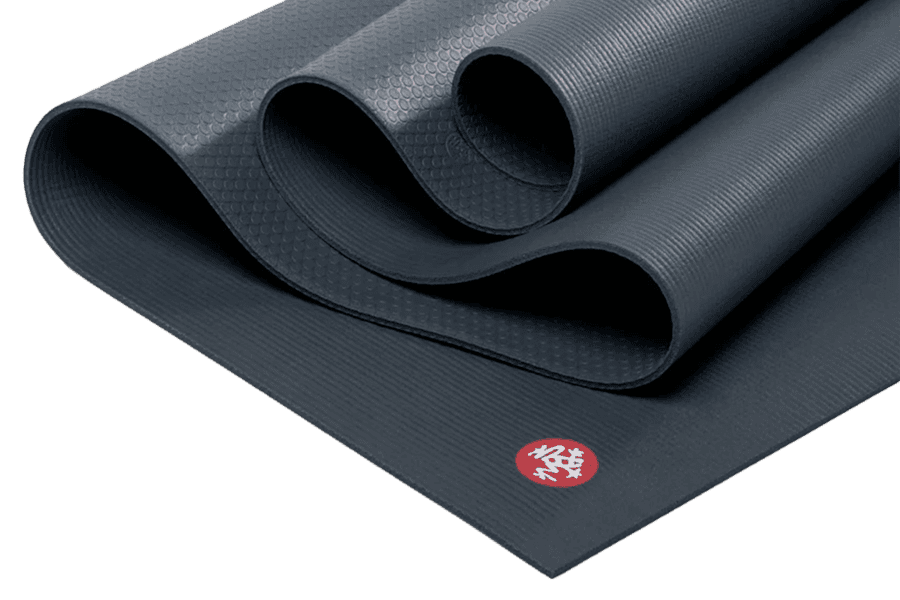
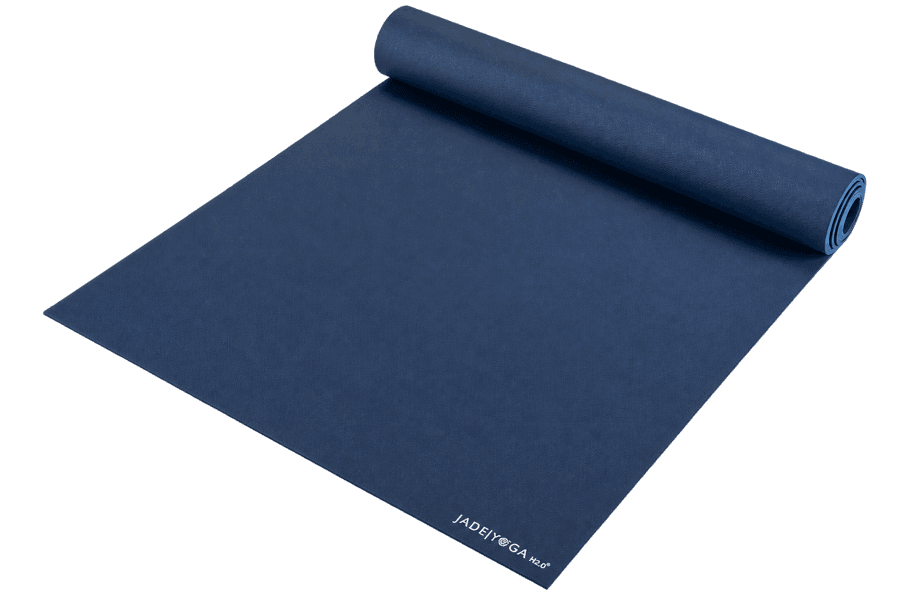
Price
The Harmony 2.0 lists for about $2 less.
$112
List price · check price at Amazon
$109.95
List price · check price at jadeyoga.com
Thickness
The Harmony 2.0 is 2% thicker.
4.7 mm0.19″
4.8 mm0.19″
Weight
The PROlite is 0.2 lbs lighter.
4.6 lbs2.1 kg
4.8 lbs2.18 kg
Size
The PROlite is 3″ longer; same width.
Same on both
- Nearly identical thickness and weight
- Firm, stable support
- 24-inch width
- OEKO-TEX certification
- Longer sizes available
- Current direct availability
Full specs
Dimensions
Materials & build
Buying
These specs are close, but the surfaces are not
The PROlite and Harmony 2.0 are almost the same thickness and weight. The PROlite is 4.7mm thick and weighs 4.6 pounds. Harmony 2.0 is 4.8mm and about 4.8 pounds. Their list prices differ by only $2.05, so price does not settle this comparison either.
The useful differences are under your hands. Manduka uses a sealed PVC surface that takes time to wear in. Jade uses open-cell natural rubber that feels grippy right away. We would choose the PROlite for easy care and long ownership, and Harmony 2.0 for anyone who does not want to wait for good traction.
Harmony 2.0 has much better grip when new
Jade’s rubber surface is tacky from the first class. GearLab named Harmony 2.0 its eco-friendly dry-grip pick and found the traction unusually strong. That can be reassuring in down dog and standing balances, though the texture may feel rough and can catch a foot during a sliding transition.
A new PROlite can feel slick. Manduka now recommends regular use as the break-in method, and no longer advises scrubbing the surface with salt. Grip improves, but the closed-cell top does not absorb sweat. Once your hands are wet, plan on using a towel.
Harmony handles light moisture better because its open cells take in some sweat. It is not a dedicated hot-yoga mat, and a very wet class can still overwhelm it. For ordinary dry or mildly sweaty practice, Jade is the clear winner here.
Cushioning is close enough to call a tie
A tenth of a millimeter is not a meaningful cushioning difference. Both mats feel firm and stable rather than soft. The PROlite’s dense PVC has a flatter, more solid feel, while Harmony’s rubber has a little more spring and a more obvious surface texture.
Either one should suit a general studio practice. People with very sensitive knees may want a 6mm mat or a separate knee pad. We would not choose between these two based on the thickness figures alone.
PROlite gives you three more inches of length
Both mats are 24 inches wide, and the 0.2-pound weight difference is barely worth considering. Length matters more. The standard PROlite is 71 inches long, compared with 68 inches for this Harmony 2.0. That extra room is useful if you are around five foot nine or taller and want your head and feet to stay on the mat.
Jade sells a 74-inch Harmony 2.0 for $10 more. Manduka offers a 68-inch Short, the standard 71-inch mat, and a 79-inch PROlite Long. The standard versions are both manageable for a studio commute, though neither is a true travel mat.
PROlite is the safer long-term purchase
The PROlite has a long record of staying in service for many years. Its PVC does not dry out like natural rubber, and Manduka covers it with a lifetime guarantee. The terms describe roughly ten years of regular use, one replacement, and proof of purchase from an authorized seller.
Jade says Harmony 2.0 is tougher and longer lasting than the original Harmony, but this version is still relatively new. Its written warranty lasts one year. Natural rubber also changes with age, especially when it is exposed to sunlight or harsh cleaners. We expect the PROlite to last longer, even though Harmony 2.0 may hold up better than its predecessor.
The PROlite is easier to keep clean
Sweat stays on top of the PROlite instead of soaking in. Wipe it after practice and let it dry before rolling. That sealed surface is useful in shared studios because it is less likely to hold moisture and odor.
Harmony 2.0 needs more care. Its open rubber takes in moisture, so it should dry fully after a sweaty class. Keep it away from direct sun, alcohol, essential oils, and strong cleaning products. The rubber can also pick up dust, lint, and pet hair more readily than the smoother PROlite.
Jade has the stronger materials story
Harmony 2.0 is made in Spain from FSC-certified natural rubber and carries OEKO-TEX certification. Jade says the factory uses 100% renewable energy, and the company plants a tree for every mat sold. Those are meaningful advantages if you want to avoid PVC.
The PROlite is PVC, also made in Germany with OEKO-TEX Standard 100 certification. Its environmental case rests mainly on longevity. It is also latex free. Harmony contains natural rubber and may contain latex, so anyone with a rubber or latex allergy should buy the PROlite.
A two-dollar gap should not influence the choice
The PROlite lists for $112, while Harmony 2.0 is $109.95. Check the current PROlite price and the Harmony 2.0 price at JadeYoga before buying, but do not let a small sale erase the practical differences.
Manduka offers better warranty coverage and likely lower long-term cost. Jade gives you better grip immediately and more responsible rubber sourcing. Both are reasonable at their list prices. The right surface is worth more than the $2.05 between them.
Bottom line
Get the PROlite if you want a low-maintenance mat that can last a decade. It is longer, latex free, easy to wipe down, and backed by the stronger warranty. Be prepared for a break-in period and keep a towel nearby when your hands get sweaty.
Get Harmony 2.0 if grip is your first concern. It feels secure from day one, handles some moisture, and uses certified natural rubber. You will need to protect it from sun and let it dry carefully. For another view of the same tradeoffs with more cushioning, see our Manduka PRO vs Harmony 2.0 comparison.
Manduka PROlite
List price $112
Jade Harmony 2.0
List price $109.95
Frequently Asked Questions
- Which has better grip, PROlite or Harmony 2.0?
- Harmony 2.0 has much better grip when new. Its tacky rubber surface works immediately, while PROlite can feel slick until regular use wears in the surface. PROlite still needs a towel when sweat collects on its closed-cell top.
- Which is better for hot yoga?
- Harmony 2.0 is the better of these two because its open-cell rubber can absorb some moisture. Heavy sweat can still overwhelm it, so frequent hot-yoga students may prefer a purpose-built absorbent mat and should keep a towel nearby.
- Is Harmony 2.0 thicker than the PROlite?
- Only by 0.1mm. Harmony 2.0 is 4.8mm and PROlite is 4.7mm, a difference too small to matter in normal practice. Both provide firm support rather than soft foam cushioning.
- Which mat lasts longer?
- PROlite has the stronger long-term record and Manduka's lifetime guarantee. Jade says Harmony 2.0 is tougher than the original Harmony, but the new version has less ownership history and its warranty lasts one year.
- Does Harmony 2.0 contain latex?
- Yes. Jade warns that its natural rubber may contain latex and should be avoided by people with rubber or latex allergies. PROlite is latex-free PVC.
- Which mat is easier to carry?
- They are almost equal. PROlite weighs 4.6 pounds and Harmony 2.0 weighs about 4.8 pounds, and both are 24 inches wide. PROlite is three inches longer, while Harmony makes a slightly shorter roll.
Related comparisons
- Manduka PRO Lite Terra 4.7mm vs JadeYoga Harmony 2.0 68"
- Manduka PROlite vs JadeYoga Harmony 74"
- Lululemon The Mat 5mm vs JadeYoga Harmony 2.0 68"
- Manduka PROlite vs Lululemon The Mat 5mm
- Manduka PROlite vs JadeYoga Harmony 68"
- Suga SugaMat vs JadeYoga Harmony 2.0 68"
- Manduka PROlite Long vs JadeYoga Harmony 2.0 68"
- Manduka PROlite vs b, halfmoon B Mat Everyday 4mm
- Manduka GRP Adapt Lite 2.1 4mm vs JadeYoga Harmony 2.0 68"