Manduka PROlite vs Gaiam Dry-Grip: Which One Should You Buy?
On paper these two look related: both are PVC mats with sealed surfaces, both are latex-free, and both carry lifetime guarantees. In practice they're a class apart. The PROlite is a thinner cut of the same German-made construction as Manduka's PRO, the mat that took first place in GearLab's 19-mat test. The Dry-Grip is Gaiam's step-up mat, softer and $42 cheaper. Here's where the money goes.
As an Amazon Associate, we earn from qualifying purchases made through links on this page. How this works
The quick answer
The PROlite is the better mat by most measures that count: denser and more stable underfoot, 3 inches longer, built on a construction with a documented decade of service, and backed by a lifetime guarantee with known fine print. Its flaw is the slick break-in every PRO-series mat has. The Dry-Grip is comfortable and light, and its topcoat feels secure with dry hands, but GearLab rated its wet grip near the bottom of the same test and flagged the coating's long-term durability. Its lifetime guarantee covers defects, not that wear.
If yoga is a habit you expect to keep, the PROlite's decade of service makes the $42 gap small. If your practice is gentle, dry, and occasional, the Dry-Grip is a comfortable mat for a fair price.
Get the PROlite if...
- You practice regularly and want one mat for the next decade
- You want the firmer, more stable surface for balance work
- You want the extra 3 inches of length (71 vs 68)
- You want grip that improves with use instead of a coating that wears
Get the Dry-Grip if...
- You'd rather keep the $42
- You want the softer, more forgiving feel under knees
- Your practice is slow, dry, and a few times a month
- You want the slightly lighter mat (4.25 pounds vs 4.6)
Side by side
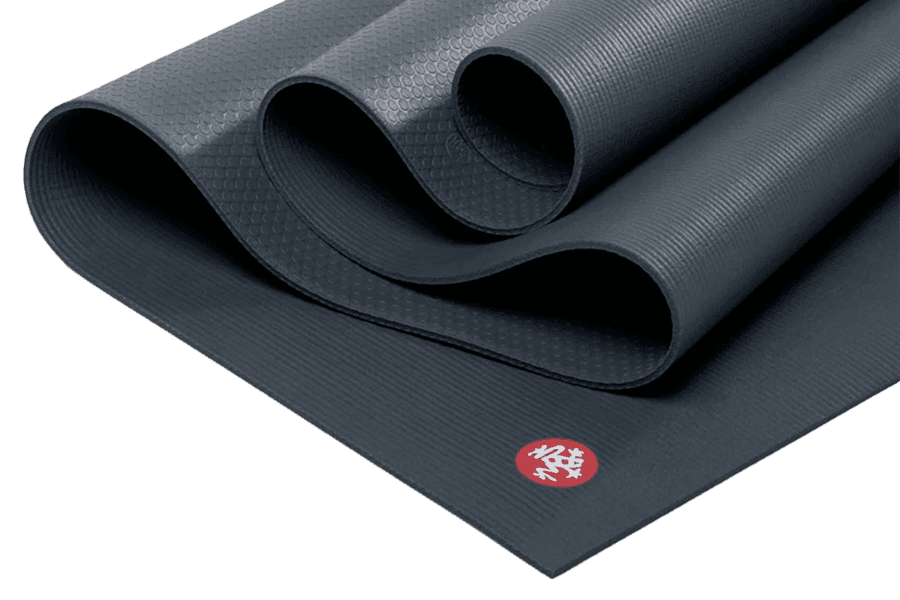
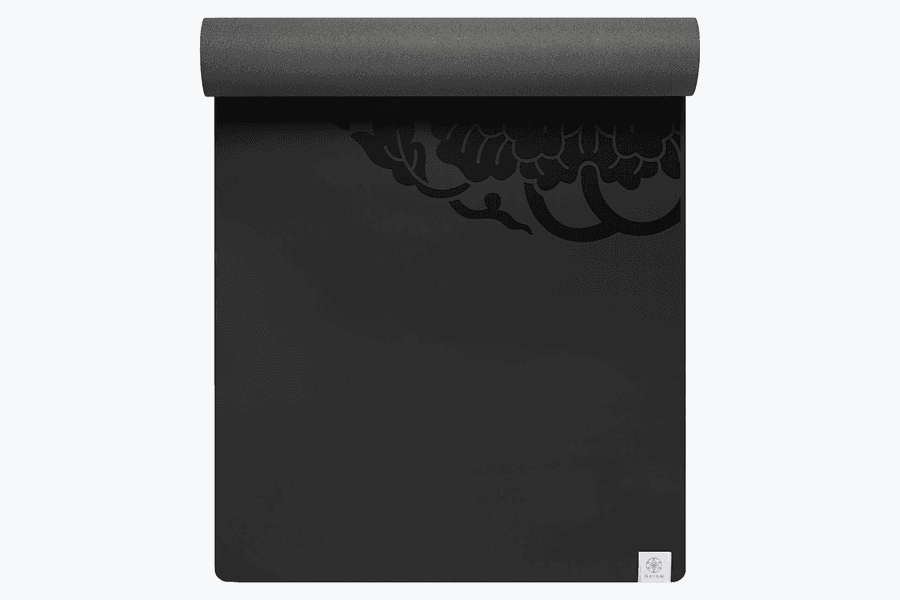
Price
The Dry-Grip lists for about $42 less.
$112
List price · check price at Amazon
$69.98
List price · check price at Amazon
Thickness
The Dry-Grip is 6% thicker.
4.7 mm0.19″
5 mm0.2″
Weight
The Dry-Grip is 0.3 lbs lighter.
4.6 lbs2.1 kg
4.25 lbs1.9 kg
Size
The PROlite is 3″ longer; same width.
Same on both
- Sealed PVC surfaces, so sweat stays on top
- Latex-free, safe for latex allergies
- Lifetime guarantees that cover defects, not wear
- A towel is mandatory for hot yoga on either
- Wipe-down cleaning
Full specs
Dimensions
Materials & build
Buying
Grip: a coating against a surface that earns it
The Dry-Grip feels secure immediately with dry hands; its topcoat is tackier out of the box than a new PROlite, which ships slick and needs a few weeks of practice before its grip comes in (Manduka has retired its old salt-scrub advice and says the slickness resolves with use). For the first month, the Gaiam is honestly the grippier mat.
The lines cross after that. The PROlite’s broken-in surface keeps improving and holds for years, while GearLab flagged the Dry-Grip’s coating as a durability concern, and a topcoat that thins is a topcoat that stops gripping. Despite the name, GearLab also rated the Dry-Grip’s wet grip near the bottom of its test, recommending the mat for stretch practice and slower flows rather than sweaty rooms.
Sweat: bring a towel to either
Both surfaces are sealed, so sweat has nowhere to go: it pools on top, and wet palms slide. That’s the shared PVC weakness, and no coating name changes it. An occasional heated class works on either mat with a good towel over it.
If sweat is a regular part of your practice, neither of these is the right purchase. An absorbent-top mat like Manduka’s GRP Adapt line or the Liforme, or open-cell rubber like the Jade Harmony, solves the problem these two can only towel over.
Feel: dense support against soft comfort
The Dry-Grip is the softer mat, 5 mm with enough give that GearLab found it comfortable for slow, unheated practice. Knees and seated poses land gently on it, and beginners often read that softness as quality.
The PROlite is 4.7 mm of much denser material, and density is what actually supports you: it compresses less under a planted hand or a standing foot, so balance poses feel steadier and wrists sink less in downward dog. If your only mats so far have been soft budget foam, the PROlite’s firmness takes a class or two to appreciate and then becomes the point.
Size: 3 inches the Dry-Grip gives up
Both mats are 24″ wide, but the PROlite runs 71″ long to the Dry-Grip’s 68″. If you’re under about five foot eight, 68 inches is fine. Taller than that and downward dog starts pushing hands or heels toward the edges, which is a permanent small annoyance in a mat you might own for years.
Manduka also sells the PROlite Long at 79″ and a Long & Wide at 79″ × 30″; Gaiam’s answer is a longer, wider Dry-Grip variant sold separately. On weight they’re nearly twins, 4.6 pounds for the PROlite and 4.25 for the Dry-Grip, and both carry easily.
Durability: where the $42 actually goes
The PROlite’s dense closed-cell PVC wears so slowly that decade-old PRO-series mats are routine sightings in studios, and Manduka’s lifetime guarantee (defined in the fine print as roughly ten years of regular use, one replacement, authorized sellers only) backs that record. The Dry-Grip’s body will last, but its grip lives in a topcoat that GearLab flagged as a long-term weak point, and when the coating goes, so does the reason you bought the mat.
Gaiam’s lifetime guarantee is unusual and welcome at this price, but like Manduka’s it covers defects, not wear, and a thinning topcoat is wear. Spread over years of regular practice, the PROlite is very likely the cheaper mat.
Price and where to buy
List prices are $112 for the PROlite and $69.98 for the Dry-Grip. Both sell on Amazon, where prices move by colorway, so check the current PROlite price at Amazon and Dry-Grip price at Amazon before buying. Note that Manduka honors its guarantee on Amazon only when the mat is sold and shipped by Amazon itself, not by a marketplace reseller.
Two new-mat quirks worth knowing: the PROlite starts slick, as covered above, and GearLab found the Dry-Grip’s surface dye can transfer onto clothing at first, so buff it with a towel and give it Gaiam’s recommended two to three days of airing out.
Bottom line
Get the PROlite if you practice regularly and expect to keep practicing. It’s firmer, longer, and built on the most durable construction in yoga; the price gap shrinks every year you don’t replace it.
Get the Dry-Grip if your practice is gentle, dry, and a few times a month, or you’re not yet sure yoga will stick. It’s a comfortable, decent mat at a fair price, and $42 is a real saving on an experiment. Just don’t buy it for hot yoga, and don’t expect the coating to last the way the PROlite’s surface does.
Manduka PROlite
List price $112
Frequently Asked Questions
- Is the Gaiam Dry-Grip a budget version of the Manduka PROlite?
- Only on the surface. Both are latex-free PVC with sealed tops, but the construction quality differs sharply. The PROlite is dense, German-made, and wears so slowly that decade-old PRO-series mats are common; the Dry-Grip is softer and lighter, and GearLab flagged its topcoat's durability as a weak point. The Dry-Grip is a reasonable mat at $69.98. It just isn't a smaller bill for the same thing.
- Which is better for hot yoga?
- Honestly, neither. Both surfaces are sealed, so sweat pools on top and wet palms slide, and GearLab rated the Dry-Grip's wet grip near the bottom of its test despite the name. The PROlite with a good towel works for occasional heated classes. If hot yoga is your regular practice, buy a mat with an absorbent top instead, like Manduka's GRP Adapt line or the Liforme.
- What should I know when either mat is new?
- Different quirks. The PROlite ships slick and needs a few weeks of practice before its grip arrives; Manduka has retired its old salt-scrub advice and now says the slickness resolves with use. The Dry-Grip's issue is cosmetic: GearLab found the surface dye transferred onto clothing at first (a towel buff helps), and Gaiam says to unroll and air the mat for two to three days to release the new-mat smell.
- How do the lifetime guarantees compare?
- Both cover manufacturing defects rather than wear. Manduka's fine print defines lifetime as roughly ten years of regular use, one replacement, with proof of purchase from an authorized seller (on Amazon, sold and shipped by Amazon itself). Gaiam's guarantee is unusual at this price, but the wear GearLab worried about, a coating that thins with use, is exactly what guarantees don't cover. The PROlite is the mat that rarely needs its paperwork.
- How do the sizes compare?
- Both are 24 inches wide, but the PROlite is 71 inches long to the Dry-Grip's 68. Three inches matters if you're taller than about five foot eight, where downward dog can push hands or feet off a 68 inch mat. The PROlite also comes in Long (79 inches) and Long & Wide (79 by 30) versions; the Dry-Grip has a longer, wider sibling in Gaiam's lineup as well.
- Which should a beginner buy?
- It depends on your confidence in the habit. If you're still finding out whether yoga sticks, the Dry-Grip at $69.98 (or an even cheaper starter mat) is the sensible test. If you already practice weekly and know you'll continue, the PROlite is the rare beginner purchase you won't outgrow, and its firm surface is actually easier to balance on than softer budget mats.
Related comparisons
- Manduka PROlite vs JadeYoga Harmony 74"
- Manduka X vs Gaiam Performance Dry-Grip 5mm
- Manduka PROlite vs Lululemon The Mat 5mm
- Manduka PROlite vs JadeYoga Harmony 68"
- JadeYoga Level One vs Gaiam Performance Dry-Grip 5mm
- Gaiam Performance Dry-Grip 5mm vs IUGA Eco Friendly Non Slip PU
- Manduka PROlite vs b, halfmoon B Mat Everyday 4mm
- Manduka PROlite vs Suga SugaMat
- Manduka Begin vs Gaiam Performance Dry-Grip 5mm