Jade Harmony vs Gaiam Dry-Grip: Which One Should You Buy?
On paper these are neighbors: similar thickness, mid-range prices, both easy to find. In practice the Harmony is a natural rubber mat that grips through sweat, and the Dry-Grip is a coated PVC mat that grips until sweat shows up. Which one to buy depends almost entirely on what your palms do in a hard class.
As an Amazon Associate, we earn from qualifying purchases made through links on this page. How this works
The quick answer
The Harmony's open-cell rubber grips from the first practice and keeps gripping as it gets damp, the trait Wirecutter singles out and the reason it has been a studio fixture for two decades. The Dry-Grip is comfortable and perfectly capable with dry hands, but GearLab rated its wet grip near the bottom of a 19-mat test and recommends it for stretch practice and slower flows. The Gaiam answers with a $30 lower price, a latex-free build, and, oddly, the longer guarantee.
If sweat is part of your practice, even occasionally, get the Harmony. If your practice is dry and gentle, or a latex allergy rules out rubber entirely, the Dry-Grip is a fair buy at $69.98.
Get the Harmony if...
- Your palms sweat and you want grip that survives it
- You want natural rubber instead of PVC
- You want the mat Wirecutter has recommended for years
- You can follow rubber care rules (no sun, gentle cleaners)
Get the Dry-Grip if...
- You'd rather keep about $30
- You have a latex allergy; the Gaiam is latex-free PVC
- Your practice is slow, unheated, and mostly dry
- Lifetime coverage on paper beats 1 year for you
Side by side
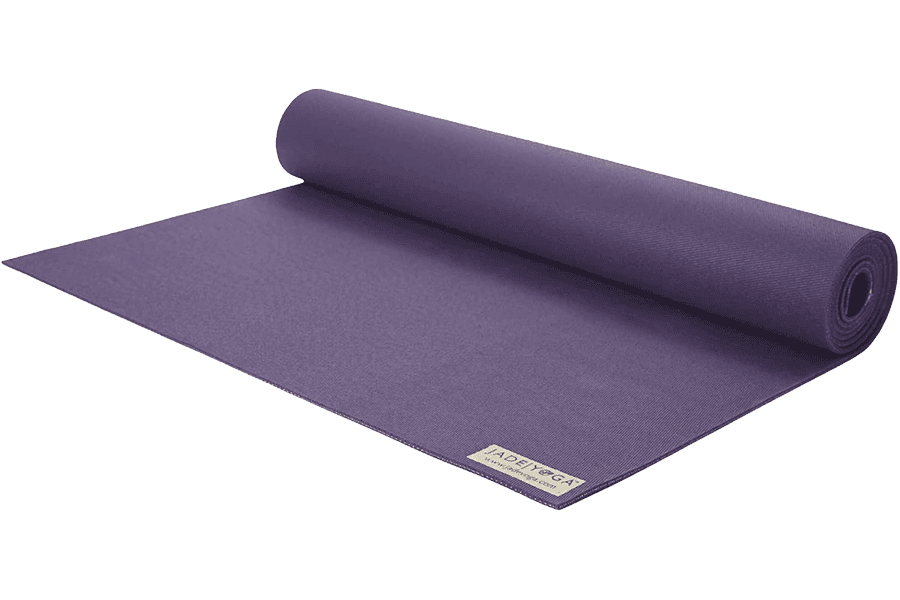
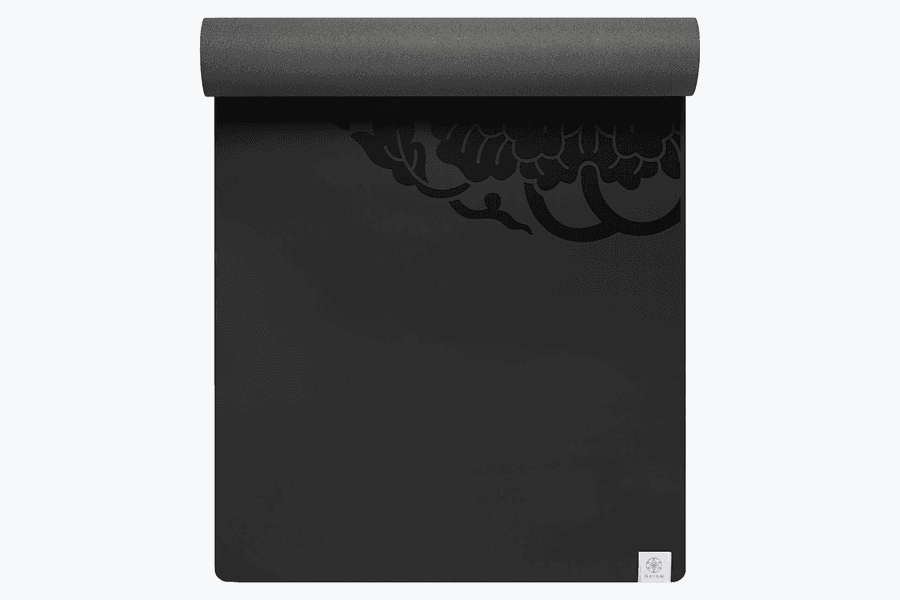
Price
The Dry-Grip lists for about $30 less.
$99.95
List price · check price at Amazon
$69.98
List price · check price at Amazon
Thickness
The Dry-Grip is 4% thicker.
4.8 mm0.19″
5 mm0.2″
Weight
The Dry-Grip is 0.5 lbs lighter.
4.8 lbs2.2 kg
4.25 lbs1.9 kg
Size
Same length; same width.
Same on both
- 68″ × 24″ footprint
- Around 5 mm of cushion
- A new-mat smell that airs out in a few days
- Light enough to carry to class without complaint
Full specs
Dimensions
Materials & build
Buying
Two mid-range mats that behave nothing alike
These two sit close enough on price and thickness that they end up on the same shortlist constantly: the Jade Harmony at $99.95, the Gaiam Performance Dry-Grip at $69.98, both around 5 mm, both easy to buy online. Under the surface they’re from different branches of the mat family tree. The Harmony is open-cell natural rubber, tacky the moment you unroll it. The Dry-Grip is PVC with a smooth topcoat that promises moisture handling.
One of those designs holds up when your palms get wet and one doesn’t, and since that single difference decides the comparison for most buyers, we’ll start there.
Grip: the Harmony keeps working when sweat starts
With dry hands both mats are secure. The Harmony feels tacky and organic under the palm; the Dry-Grip feels smooth and slightly silky, and GearLab found its dry traction perfectly adequate for slower practice.
Moisture splits them cleanly. The Harmony’s open-cell rubber absorbs sweat as it lands and keeps gripping through a damp class, the specific trait Wirecutter credits in its long-running recommendation of this mat. The Dry-Grip went the other way in testing: GearLab rated its wet grip near the bottom of a 19-mat lineup, found traction fell apart in sweaty sessions, and recommends it for stretch practice and slower flows rather than hot or dynamic classes. The topcoat handles light dampness at best, whatever the name suggests.
So the sorting rule is simple: if your practice ever makes your palms more than faintly damp, the Harmony is the only one of these two doing its job that day.
Cushion and feel
Thickness is nearly identical, 4.8 mm of rubber against 5 mm of PVC, but the materials read differently underfoot. The Harmony’s rubber is dense and springy, with a firm, connected feel that supports balance work well. The Dry-Grip is softer and more forgiving; GearLab’s testers rated its comfort highly and liked it for exactly the gentle, joint-friendly practice it grips well enough to serve.
Neither mat is a plush knee-saver, and if that’s the priority you’d shop a different category entirely. Between these two, pick by practice style: firmer and more stable (Harmony) versus softer and more forgiving (Dry-Grip).
Size and weight: effectively a tie
Both mats are 68″ × 24″, the standard cut. The Dry-Grip is half a pound lighter, 4.25 pounds to the Harmony’s 4.8, which you will not notice on a shoulder. This is the one section where nothing should sway your decision, with a single exception: if you need a longer or wider mat, Jade sells the Harmony in 74″ and 80″ × 28″ XW sizes, while the Dry-Grip comes in one size only.
Durability, care, and an inverted warranty
The Harmony wears like the natural material it is. Hard daily use softens and eventually sheds the rubber over a few years, though CNN Underscored puts the ceiling around ten years with careful ownership. Careful ownership is the catch: rubber hates sunlight and harsh cleaners, Jade excludes sun damage from its warranty, and a hot car will ruin the mat faster than practice will.
The Dry-Grip’s weak points are its topcoat and its dye. GearLab flagged limited long-term durability, and its testers found the surface dye transferred onto clothing when the mat was new, worth a towel buff before first use. It is, however, the more tolerant mat to own: PVC doesn’t care about sun the way rubber does.
The coverage runs opposite to the prices: Gaiam backs its $69.98 mat for life while Jade gives the Harmony 1 year. Both guarantees cover defects rather than wear, so read them as statements of confidence more than insurance.
Allergies and eco credentials point opposite ways
If you have a latex allergy, buy the Gaiam and skip the rest of this section. It’s latex-free PVC, marketed as free of six common phthalates. Jade says its mats are 99% latex free, which means trace latex proteins may be present, and Jade itself doesn’t recommend them for latex-allergic practitioners.
On environmental grounds the positions flip. The Harmony is natural rubber tapped from trees, made in the USA, and Jade plants a tree for every mat sold, a program past two million trees. The Dry-Grip is PVC, the least-loved material in the category from an environmental standpoint, with no stated country of origin. Neither mat carries a third-party certification.
Price and where to buy
List prices are $99.95 and $69.98, a gap of about $30, and the street usually widens it: the Dry-Grip is a perennial discount item at big-box retailers while the Harmony mostly holds list. Check the current price of the Harmony at Amazon and the Dry-Grip at Amazon.
Whether the $30 buys anything depends on the sweat question from the top of this page. For dry, gentle practice it mostly doesn’t, and the Gaiam is the value pick. The moment sweat enters the picture, the Harmony is the only mat here worth any price.
Bottom line
Get the Harmony if you sweat, practice with any intensity, or just want the proven rubber mat that studios have run for twenty years. It asks more of you as an owner, shade and gentle cleaners, and gives back grip that doesn’t quit mid-class. Get the Dry-Grip if your practice is slow, dry, and unheated, if a latex allergy rules rubber out, or if you want lifetime coverage and a softer landing for $30 less.
If you land on the Harmony, double-check which version you’re buying; the original Harmony and the newer Harmony 2.0 are different mats with different specs. And if the Dry-Grip’s wet-grip problem is the dealbreaker but its price isn’t, the polyurethane-topped mats in our Lululemon vs IUGA comparison solve exactly that problem at both price points.
Jade Harmony
List price $99.95
Frequently Asked Questions
- Which grips better when you sweat?
- The Harmony, and it isn't close. Its open-cell rubber absorbs moisture and keeps gripping as classes get damp, which is the specific trait Wirecutter credits in recommending it. The Dry-Grip's coating handles light moisture at best: GearLab rated its wet grip near the bottom of a 19-mat test and found traction fell apart in sweaty sessions. Despite the name, the Gaiam is a dry-conditions mat.
- Which is safer for a latex allergy?
- The Gaiam, clearly. The Dry-Grip is PVC, marketed as latex-free and free of six common phthalates. Jade says its mats are 99% latex free, which is another way of saying they may contain trace latex proteins, and Jade doesn't recommend them for latex-allergic practitioners. If you have a genuine latex allergy, this question settles the comparison by itself.
- How long does each mat last?
- Both are multi-year mats with different wear patterns. The Harmony's rubber softens and sheds with hard use over a few years, though CNN Underscored puts the ceiling around ten years with careful ownership: no sun, gentle cleaners. The Dry-Grip's weak points are its coating and dye; GearLab flagged limited long-term durability. Coverage is inverted from the prices: Gaiam offers a lifetime guarantee, Jade 1 year with sun damage excluded. Both guarantees cover defects, not wear.
- Is this the Jade Harmony or the Harmony 2.0?
- This comparison covers the original Harmony, made in the USA and listed at $99.95 for the 68 inch size. The newer Harmony 2.0 is a separate mat: made in Spain, about $10 more, with FSC and OEKO-TEX certifications, and it's the version in GearLab's current lineup. Reviews and awards for one don't automatically apply to the other, so check which version a review covers.
- Do these mats smell when new?
- Both do, differently. The Harmony has natural rubber's earthy smell, which fades over days to weeks in a ventilated room. The Dry-Grip has a new-PVC smell, and Gaiam's own care instructions say to air it out for two to three days before first use. GearLab also found the Gaiam's surface dye transferred onto clothing when new, so give it a towel buff before your first class.
- Can I practice outside or keep either mat in my car?
- Not the Harmony. Sunlight hardens and degrades natural rubber, and Jade excludes sun damage from its warranty; a hot car is the classic way owners ruin rubber mats. The Dry-Grip's PVC is the more tolerant material for careless storage, which is a genuine point in its favor if your mat lives in a trunk between classes.
Related comparisons
- JadeYoga Harmony 68" vs Suga SugaMat
- Manduka X vs Gaiam Performance Dry-Grip 5mm
- JadeYoga Harmony 68" vs Manduka eKO Lite
- Manduka PROlite vs JadeYoga Harmony 68"
- JadeYoga Harmony 68" vs Manduka GRP Adapt 1.0
- JadeYoga Level One vs Gaiam Performance Dry-Grip 5mm
- Gaiam Performance Dry-Grip 5mm vs IUGA Eco Friendly Non Slip PU
- JadeYoga Harmony 68" vs Manduka eKO Lite Long
- Manduka Begin vs Gaiam Performance Dry-Grip 5mm