Manduka PRO vs Retrospec Solana 1": Which One Should You Buy?
A full inch of foam is more than four times the thickness of a Manduka PRO, and that number is doing all the work in this comparison. The Solana is an exercise mat that gets sold as a yoga mat; the PRO is a yoga mat that studios have used for twenty years. Which one suits you depends almost entirely on whether you spend your time standing up or lying down.
As an Amazon Associate, we earn from qualifying purchases made through links on this page. How this works
The quick answer
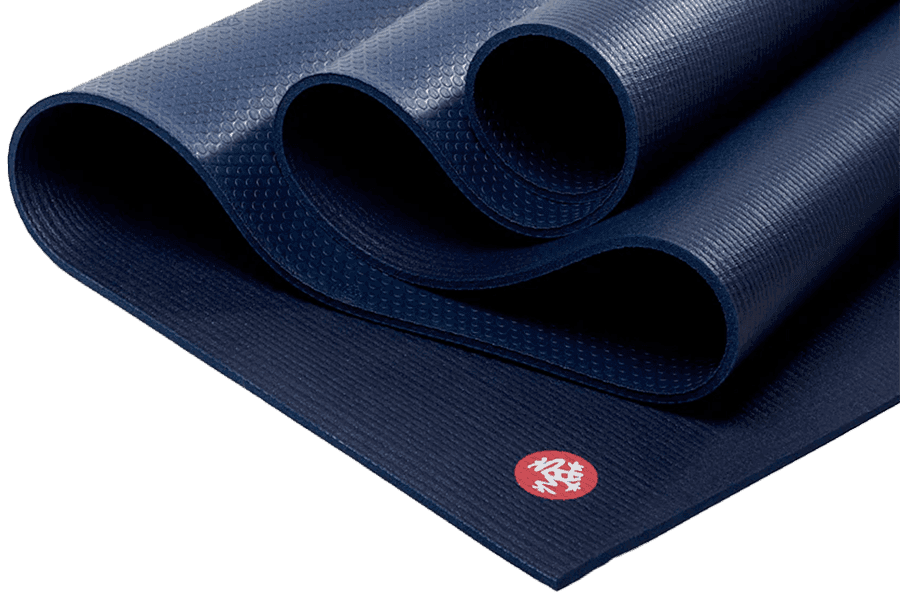
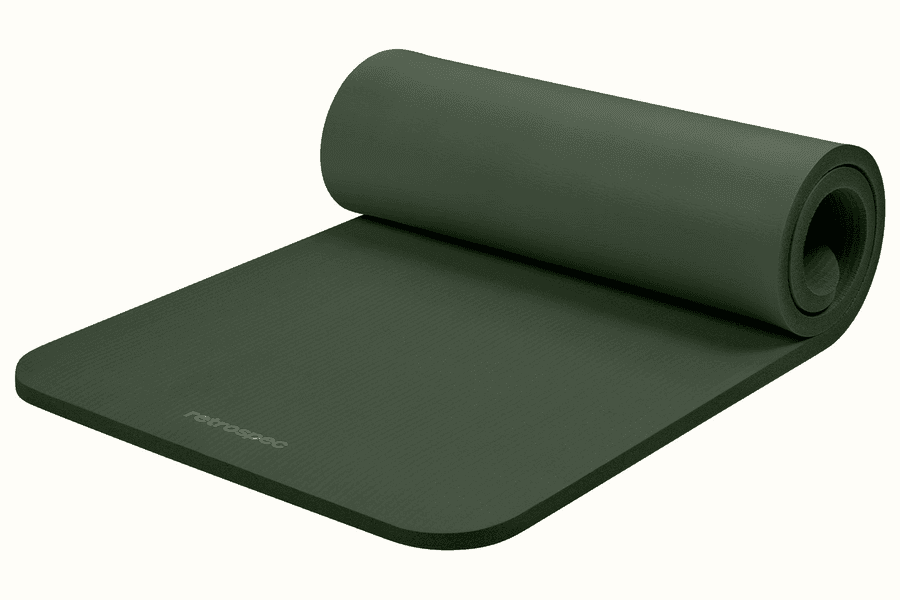
The PRO is 6 mm of dense closed-cell PVC that behaves like a firm floor, and it won GearLab's 2026 test of 19 mats at 91 out of 100. The Solana 1" is 25 mm of soft NBR foam with a ribbed surface and a carry strap, for about $40, and it holds a 4.5 star average across roughly 14,900 Amazon ratings.
If you do yoga, get the PRO. If what you actually do is stretching, mat Pilates, physio exercises, or floor work with sore knees and hips, the Solana is the better tool and it costs a quarter as much. An inch of foam is wonderful under a kneecap and unusable under a standing leg in tree pose.
Get the Manduka PRO if...
- Your practice includes standing poses and balance work
- You want a stable surface that doesn't shift when you push off it
- You want a mat that lasts a decade rather than a season
- You want 26 inches of width and a lifetime guarantee
Get the Retrospec Solana 1" if...
- Your knees, hips or spine need real padding on a hard floor
- You mostly stretch, do Pilates, or follow along with floor workouts
- You want a carry strap included and 4 pounds to carry
- You'd rather keep about $104
Side by side
Price
The Solana 1" lists for about $104 less.
$144
List price · check price at Amazon
$39.99
List price · check price at Amazon
Thickness
The Solana 1" is 323% thicker.
6 mm0.24″
25.4 mm1″
Weight
The Solana 1" is 4 lbs lighter.
8 lbs3.6 kg
4 lbs1.81 kg
Size
The Solana 1" is 1″ longer; the PRO is 2″ wider.
Same on both
- Closed-cell, so sweat sits on the surface
- 72 inches or so of length
- Wipe clean with mild soap and water
- Both need airing out before the first session
Full specs
Dimensions
Materials & build
Buying
These are not competing products
A full inch of foam is more than four times a Manduka PRO’s 6 mm, and that number tells you almost everything. The Solana 1″ is a cushioning pad for floor work that Amazon files under yoga mats. The PRO is a yoga mat that studios have used for twenty years. They end up on the same search results page and they are built for different sessions.
The numbers that look comparable are the footprint, 72″ × 24″ against 71″ × 26″, and the fact that both are closed-cell so neither absorbs sweat. Everything else points in opposite directions, starting with price: $39.99 against $144.
What an inch of foam does to a standing pose
On 25 mm of soft NBR your standing foot sinks, and it sinks unevenly, because the pressure under your heel is different from the pressure under the ball of your foot. Your ankle then spends the pose stabilising the mat as well as you. Tree, warrior three and half moon all get harder, and not in a way that teaches you anything.
The PRO is the other extreme. GearLab scored it a perfect 10 for comfort and support in its 2026 test of 19 mats, which is a score about how well the surface holds you rather than how soft it is. Nothing moves. If standing sequences are most of what you do, that firmness is the single most useful thing a mat can offer.
What an inch of foam is genuinely good at
Kneeling, lying, rolling, and anything where a hard floor is the enemy. Retrospec’s own listing leads with mat Pilates, somatic stretching and general floor exercise rather than yoga flows, and that is an accurate description. For physio work, core work on your back, or a practice built around seated and supine shapes, an inch of foam is a pleasure.
The PRO in those same positions is firm. Not punishing, but firm. Plenty of people with sensitive knees keep a dense mat and put a folded blanket where they need it, which preserves the footing and costs nothing. That is worth trying before you buy a mat you cannot balance on.
NBR foam, and what it does over time
NBR is nitrile butadiene rubber foam, the material in gym mats and camping pads. It is light for its bulk, cheap to make and extremely cushioned. The trade-offs are consistent across every product that uses it: it takes permanent dents where weight sits, it tears at the edges sooner than PVC or rubber, and it comes out of the packaging smelling strongly. Retrospec tells buyers to unroll the mat and air it for a day or two.
The PRO’s PVC does the opposite. GearLab scored it a perfect 10 for materials and has testers still using the same mat after 20 years. It also arrives with a mild odor of its own, which fades in a couple of weeks and never comes back.
Grip: ribs against a broken-in surface
The Solana relies on a ribbed texture, which does hold a bare foot on a hard floor reasonably well. The problem is that the foam itself moves before the surface does, so what you feel is not slipping so much as squirming. Once your hands are damp the ribs offer very little.
The PRO scored 9 out of 10 dry and 7 out of 10 wet with GearLab, with the caveat that a new one is slippery for the first few weeks. Manduka retired its salt-scrub advice and now says regular use sorts it out. Neither mat is a hot yoga mat; if that is your practice, look at natural rubber or an absorbent top, or the GRP Adapt 2.0 on the Manduka side.
Weight and carrying
The Solana is 4 pounds and ships with a nylon carrying strap, though a one inch mat rolls into a bulky cylinder that is awkward on a shoulder even when it is light. The PRO is 8 pounds and rolls tight, which is a different kind of inconvenience.
GearLab lists heft as one of the PRO’s two drawbacks, and it is the reason a lot of PROs never leave the room they were unrolled in. If you want the same construction in something carryable, the PROlite is 4.6 pounds.
Warranties: ten years against six months
Manduka’s lifetime guarantee reads in the fine print as roughly ten years of regular use, one replacement, and proof of purchase from an authorized seller. Amazon purchases qualify only when the mat is sold and shipped by Amazon itself, which is worth checking on the listing before you order.
Retrospec puts yoga mats under the general category in its warranty policy: six months against manufacturing defects, plus a 30 day return window for unused product. Neither of those covers foam denting, which is how these mats actually end.
Price and value
List prices are $144 and $39.99. Check the current price on the PRO at Amazon and the Solana 1″ at Amazon, where the Solana holds a 4.5 star average across roughly 14,900 ratings.
That rating is worth taking seriously, but read what people are using it for. Most of the enthusiasm comes from stretching, home workouts and knee comfort rather than yoga practice. As an exercise pad at $40 it is very good value. As a yoga mat at $40 it is the wrong shape of product.
Bottom line
Buy the Retrospec Solana 1″ if your floor is hard, your joints complain, and your session happens mostly on the ground. It is comfortable, roomy, cheap and it comes with a strap. Do not expect to balance on it.
Buy the Manduka PRO if you practice yoga in the usual sense. It won GearLab’s 2026 test at 91 out of 100 and it will still be usable in a decade. If the price is the obstacle rather than the format, our PRO vs Gaiam Premium comparison covers a cheaper mat that is still a yoga mat.
Manduka PRO
List price $144
Retrospec Solana 1"
List price $39.99
Frequently Asked Questions
- Is an inch of foam too much for yoga?
- For most yoga, yes. The problem is not comfort, it is feedback: on 25 mm of soft foam your standing foot sinks unevenly, your ankle works overtime, and poses like tree, warrior three and half moon get genuinely harder in a way that is not useful. Retrospec's own listing leads with stretching, Pilates and floor exercise rather than yoga flows, which is a fair description of what the mat is for.
- What is NBR foam?
- Nitrile butadiene rubber foam, the same closed-cell material used in gym mats and camping pads. It is very light for its bulk, very cushioned, and cheap to make. The trade-offs are that it dents under pressure and does not spring back quickly, it tears at the edges more easily than PVC or rubber, and it usually arrives with a strong smell. Retrospec tells buyers to unroll the mat and air it for a day or two.
- Which one grips better?
- The PRO, once it is broken in. GearLab rated it 9 out of 10 for dry grip and 7 out of 10 wet, though a new PRO is slick for the first few weeks until regular use resolves it. The Solana's ribbed surface holds well enough on a hard floor and against a bare foot, but the foam moves under your hand before the surface does, which is a different kind of insecurity. Neither is a good hot yoga mat.
- How long will each mat last?
- The PRO is the outlier in this category: GearLab has testers still on the same one after 20 years, and Manduka's lifetime guarantee works out to roughly ten years of regular use with one replacement, bought from an authorized seller. Retrospec warrants its mats against manufacturing defects for six months and takes returns within 30 days. Soft NBR foam typically shows permanent dents where your knees and elbows land within a year of steady use.
- Can I use the Solana for yoga if I'm a beginner?
- You can, and plenty of people do, but it will make balance poses harder than they need to be and you will not learn much about your own alignment on a surface that gives that much. If the appeal is the price rather than the padding, Retrospec's own half-inch Solana is steadier and about $15 cheaper, and there are 6 mm mats around $25 that behave much more like a normal yoga mat.
- Is the PRO comfortable enough for kneeling?
- For most people, yes, but it is firm rather than plush. GearLab gave it a perfect 10 for comfort and support, which reflects support more than softness. If you have knees that genuinely hurt on a firm surface, the honest answer is that a folded blanket on top of a PRO beats an inch of foam under a standing pose, and costs nothing.
Related comparisons
- Amazon Basics 1 Inch Extra Thick vs Retrospec Solana 1"
- Manduka PRO vs Alo Warrior
- Manduka PRO vs b, halfmoon B Mat Strong 6mm
- Manduka PRO vs Yoloha Unity Pro Cork
- Manduka PRO vs JadeYoga Harmony XW
- Manduka PRO vs Lululemon The (Big) Mat 5mm
- Manduka PRO vs JadeYoga Fusion 68"
- Manduka PRO vs Lululemon The Mat 5mm
- Manduka PRO vs Liforme Classic