Manduka PRO vs PRO Long & Wide: Which One Should You Buy?
This is the least apples-to-apples matchup in the Manduka PRO line. The material is identical, but the Long & Wide is a 79" × 52" slab that weighs 22 pounds and costs twice as much. It's less a yoga mat you carry around and more a soft floor you install in one room of your house. Before comparing them line by line, it's worth deciding which of those two things you're actually shopping for.
As an Amazon Associate, we earn from qualifying purchases made through links on this page. How this works
The quick answer
The standard PRO is a yoga mat. The Long & Wide is the same material sold as a practice surface: 52 inches wide instead of 26, 22 pounds instead of 7.5, and $288 instead of $144. Nothing about the feel, grip, or durability changes between them.
Most people should buy the standard PRO. Get the Long & Wide only if you have a dedicated spot at home where it can stay unrolled, because at 22 pounds you won't be rolling it up and taking it anywhere often.
Get the PRO if...
- Your mat travels to a studio or gym
- You don't have a spot where a roughly 6.5 by 4.5 foot mat can live unrolled
- You want the full color lineup instead of two choices
- You'd rather keep $144
Get the Long & Wide if...
- You practice at home in a dedicated space and hate stepping off the mat
- Your hands or feet keep landing on bare floor in wide poses
- You want room for floor workouts or stretching next to a partner
- You want one seamless surface instead of two mats pushed together
Side by side
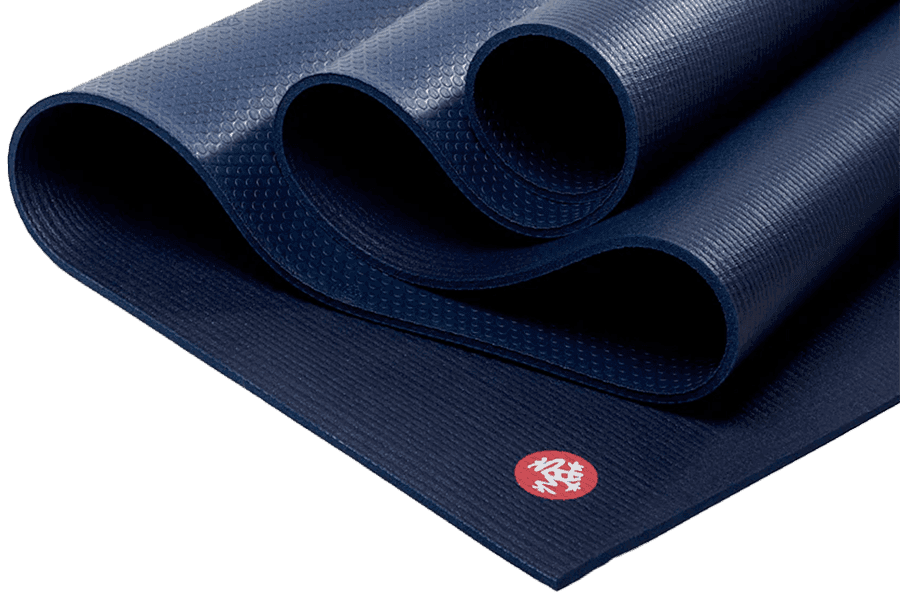
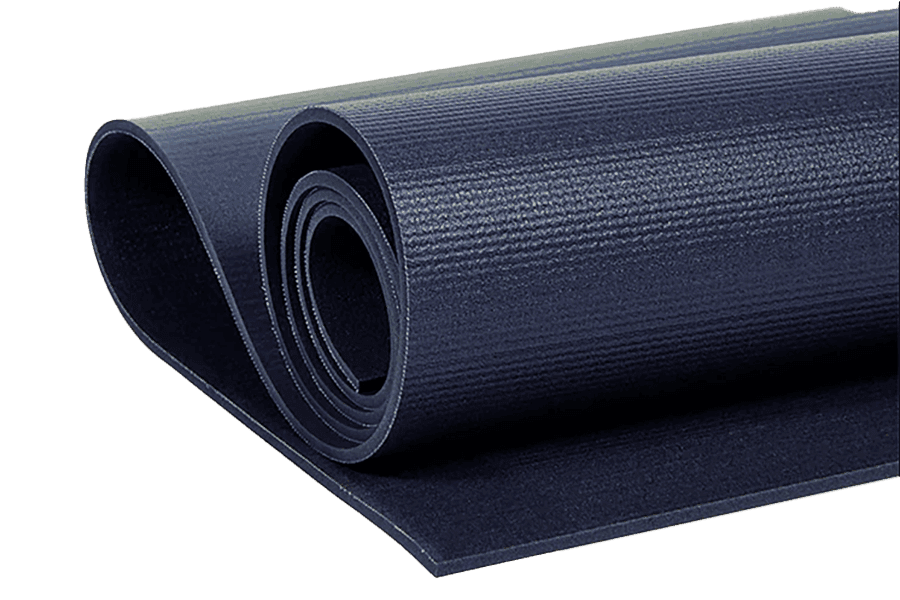
Price
The PRO lists for $144 less.
$144
List price · check price at Amazon
$288
List price · check price at Amazon
Thickness
Identical thickness.
6 mm0.24″
6 mm0.24″
Weight
The PRO is 14.5 lbs lighter.
7.5 lbs3.4 kg
22 lbs10 kg
Size
The Long & Wide is 8″ longer; the Long & Wide is 26″ wider.
Same on both
- 6 mm thick
- Closed-cell PVC
- Fabric-like top surface
- Made in Germany
- Lifetime guarantee
- OEKO-TEX certified
- Needs a break-in period
Full specs
Dimensions
Materials & build
These solve two different problems
Material-wise, there’s nothing to compare here. The Long & Wide is built from the same 6 mm of dense German-made PVC as the standard PRO, with the same fabric-like top, the same dot-pattern bottom, and the same lifetime guarantee. What Manduka changed is the shape of the product itself. The standard PRO is a yoga mat. The Long & Wide is a 79″ × 52″ practice surface that happens to be sold in the mat aisle.
So the honest way to frame this decision isn’t which mat wins. It’s whether you’re buying something to carry to class or something to install in a room. Almost everyone reading this wants the first thing, and for them the standard PRO is the answer. The rest of this review is really about figuring out whether you’re in the small group the Long & Wide exists for.
The footprint is the whole story
The numbers: the standard PRO is 71″ × 26″, the Long & Wide is 79″ × 52″. That’s exactly double the width, 8 more inches of length, and more than twice the surface area. The scale drawing above is worth a long look, because 52 inches wide is not a slightly bigger mat. It’s wider than a twin bed.
What the width changes in practice: wide-legged standing poses, side-lying stretches, and anything where your hands walk out sideways all stay on the mat instead of finding bare floor. You stop doing the little mid-flow shuffle to re-center yourself. And there’s comfortably room for a second person to stretch alongside you, which is how a lot of owners end up using it.
One thing the Long & Wide is not: the longest PRO. The PRO Long runs 85″ to the Long & Wide’s 79″. If your only problem is being tall, the Long solves it for well under half the Long & Wide’s price, and our PRO vs PRO Long comparison covers that decision.
A 22 pound mat stays home
The standard PRO already has a reputation as a heavy mat at 7.5 pounds. The Long & Wide weighs 22. It technically rolls up, into something closer to a rolled area rug than a yoga mat, and no mat bag or strap we know of fits it. Nobody is taking this thing on a bus.
We’d go further: you won’t want to move it between rooms very often either. The realistic life of a Long & Wide is unrolled, semi-permanently, in one spot. That’s fine for the mat itself, since dense closed-cell PVC holds up to living unrolled and wipes clean where it lies. But it means the purchase only makes sense if that spot exists in your home. If your practice space doubles as a living room that needs the floor back every evening, 22 pounds of re-rolling gets old within a week.
Underfoot, they are the same mat
Whichever you pick, the practice feel is identical. Both give you 6 mm of PVC dense enough to feel firm rather than plush, which is what makes the PRO line so stable under balance poses and so supportive under knees on hard floors. It’s the build that led OutdoorGearLab to rank the standard PRO first out of 19 mats it tested, with a perfect comfort and support score.
The shared flaws carry over too. Both start out slippery and need a few weeks of regular use to break in; Manduka has retired its old salt-scrub advice and now says the slickness simply resolves with practice. And both are closed-cell, so sweat pools on the surface instead of soaking in. With dry hands the broken-in grip is excellent; with wet hands you’ll want a towel. If you run hot, that’s true across this whole product line, and a grippier rubber mat like the Jade Harmony may suit you better than either PRO.
Do you have the room?
Before buying the Long & Wide, measure. The mat itself needs a clear 6 foot 7 by 4 foot 4 patch of floor, and you’ll want a little margin around it so you can step on and off without catching an edge. In practice that means a dedicated corner of a bedroom, a home office with the desk pushed aside, a garage gym, or an actual spare room.
It’s worth thinking about the floor under it too. The Long & Wide works on hardwood, tile, and low carpet. On thick carpet, any mat this dense gets a slightly waterbed feel in standing poses; that’s a property of the carpet, not the mat, but it surprises people who set up a home studio in a carpeted room.
Durability and the guarantee
Both mats should outlast your interest in replacing them. Dense closed-cell PVC is about the most durable mat material there is; GearLab’s testers found instructors’ PRO mats five to twenty years old still in near-mint condition. A Long & Wide that lives unrolled in a low-traffic corner arguably has an easier life than a commuting mat, and it shrugs off use as a general workout surface for bodyweight training and stretching. We just wouldn’t drop loaded barbells on it.
The lifetime guarantee covers both mats with the same fine print: a lifetime means roughly ten years of regular use, performance-affecting wear is covered but cosmetic wear is not, one replacement per purchase, and you need proof of purchase from an authorized seller. Amazon counts when the mat is sold and shipped by Amazon itself. On a $288 purchase, that guarantee is a meaningful part of the value case.
Price: one of these costs double
List prices are $144 for the standard PRO and $288 for the Long & Wide. Street prices move, so check the current price on both the standard PRO and the Long & Wide before deciding; the standard mat’s many colorways get discounted far more often than the Long & Wide’s two.
Here’s the math that clarifies the decision. Two standard PROs cost exactly one Long & Wide, and side by side they cover a similar area. What the extra money actually buys is one seamless surface with no ridge down the middle, one guarantee, and no mats creeping apart mid-practice. If you’d genuinely use the width, that’s worth paying for once. If you’re stretching the budget to get it because bigger seems better, the standard PRO plus $144 in your pocket is the better outcome.
Also know what the money doesn’t buy: color choice. The Long & Wide comes in Black or Midnight at last count, while the standard PRO comes in around 14 colorways.
Bottom line
Buy the standard PRO if there’s any chance your mat leaves the house. It’s the same material and the same guarantee in a shape you can actually carry, it costs half as much, and it fits in a studio row. This is the right call for the large majority of people comparing these two.
Buy the Long & Wide if you have a dedicated home practice space and the budget, and you’re tired of your hands and feet landing off the mat. As a semi-permanent home studio floor it’s genuinely excellent, and nothing else in Manduka’s line gives you this much uninterrupted surface short of the even bigger PRO Squared. Just be honest with yourself about whether it will really stay unrolled, because that’s the only way this mat makes sense.
Manduka PRO
List price $144
Frequently Asked Questions
- How big is the Manduka PRO Long & Wide compared to the standard PRO?
- The Long & Wide is 79" × 52" (200 × 132 cm), against the standard PRO's 71" × 26". That's exactly twice the width and more than twice the total surface area, on the same 6 mm of dense PVC. Laid out, it covers a patch of floor about six and a half feet by four and a half feet.
- Can you take the PRO Long & Wide to a yoga class?
- Realistically, no. It weighs 22 pounds, rolls into a bundle the size of a small rug, and its 52" width would take up two people's worth of space in a studio row. Manduka sells it as a home and studio-owner surface, and that's how owners use it. If you need a bigger mat you can still carry, the 85" PRO Long is the one to look at.
- Is the Manduka PRO Long & Wide worth $288?
- Only if it will live unrolled in a dedicated space. Keep in mind that two standard PROs also cost $288 and cover a similar area, so what the Long & Wide really sells is a single seamless surface with no gap or ridge down the middle, under one lifetime guarantee. If you just need extra length rather than width, the 85" PRO Long costs $164 and solves that for about half the price.
- What colors does the PRO Long & Wide come in?
- Black or Midnight at last count, and that's it. The standard PRO comes in around 14 colorways. Manduka treats the Long & Wide as functional equipment rather than a style item, so if color matters to you, this mat makes the choice for you.
- Is the PRO Long & Wide good for workouts besides yoga?
- It's well suited to bodyweight training, stretching, and pilates-style floor work. The 6 mm closed-cell PVC is dense enough that you don't sink into it, sweat stays on the surface, and it wipes clean. We wouldn't treat it as gym flooring for dropped weights, but as a general home exercise surface it handles far more than yoga.
- Do both mats have the same lifetime guarantee?
- Yes. Both are covered by Manduka's lifetime guarantee with the same fine print: a lifetime is defined as roughly 10 years of regular use, wear that affects performance is covered but cosmetic wear is not, one replacement per purchase, and you need proof of purchase from an authorized seller. Amazon counts when the mat is sold and shipped by Amazon.
Related comparisons
- Manduka PRO vs b, halfmoon B Mat Strong 6mm
- Manduka PRO vs Alo Warrior
- Manduka PRO vs Yoloha Unity Pro Cork
- Manduka PRO vs JadeYoga Harmony XW
- Manduka PRO vs Lululemon The (Big) Mat 5mm
- Manduka PRO vs Lululemon The Mat 5mm
- Manduka PRO vs Liforme Classic
- Manduka PRO vs JadeYoga Fusion 68"
- Manduka PRO vs JadeYoga Harmony 74"