Manduka eKO Long vs Lululemon The (Big) Mat: Which One Should You Buy?
Both of these exist because a standard mat is too small for a lot of people. The Big Mat is 84 by 28 inches for $128; the eKO Long is 79 by 26 for $124. Both are 5 mm. The Lululemon is the bigger mat and the Manduka is the better performer, and $4 is not going to decide it for you.
As an Amazon Associate, we earn from qualifying purchases made through links on this page. How this works
The quick answer
The Big Mat covers about 15% more floor, and the extra four inches of width is the part people notice in a wide stance. GearLab gave the standard version of The Mat a perfect 10 for comfort and support and ranked it fourth of 19. The eKO Long is the more secure surface by a distance, with the highest dry grip score GearLab recorded, and it is the only one of the two that ever discounts.
Buy the Big Mat if size is the reason you are shopping. Buy the eKO Long if grip matters more than the last few inches.
Get the eKO Long if...
- You want the best dry grip in independent testing
- You want grip from the first unroll with no break-in
- You want the option of an Amazon discount
- 79 inches is enough mat for you
Get the Big Mat if...
- You want 84 by 28 inches of floor
- You're taller than about six foot two
- Wide stances put a hand off the edge of your current mat
- You want a surface that absorbs sweat as you warm up
Side by side
Price
The eKO Long lists for $4 less.
$124
List price · check price at Amazon
$128
List price · check price at lululemon.com
Thickness
Identical thickness.
5 mm0.2″
5 mm0.2″
Weight
The Big Mat is 0.9 lbs lighter.
8 lbs3.6 kg
7.1 lbs3.2 kg
Size
The Big Mat is 5″ longer; the Big Mat is 2″ wider.
Same on both
- 5 mm thick
- Natural rubber in the build
- Oversized: 79 inches or longer
- Roll into a tube that won't fit a standard mat bag
- Wipe clean, never machine wash
Full specs
Dimensions
Materials & build
Two oversized mats, four dollars apart
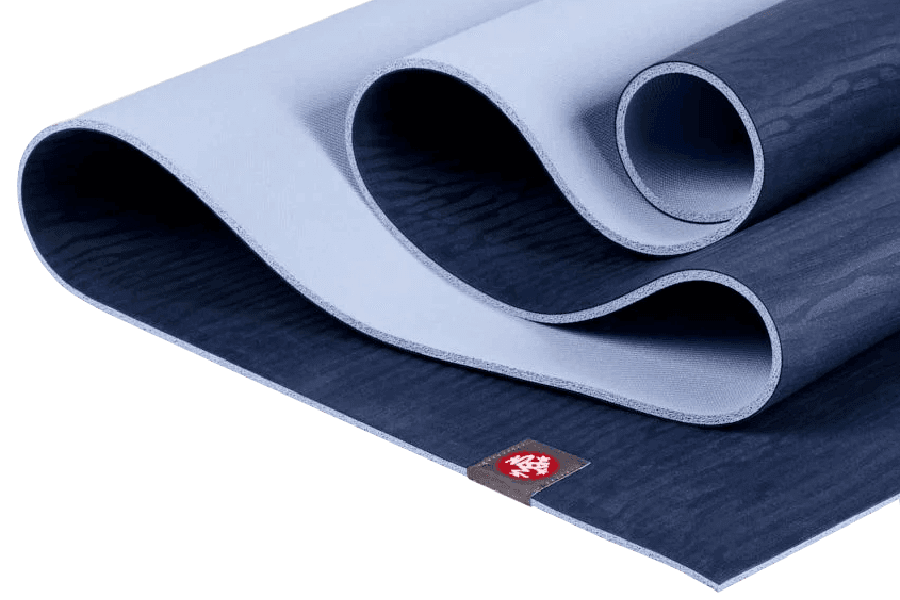
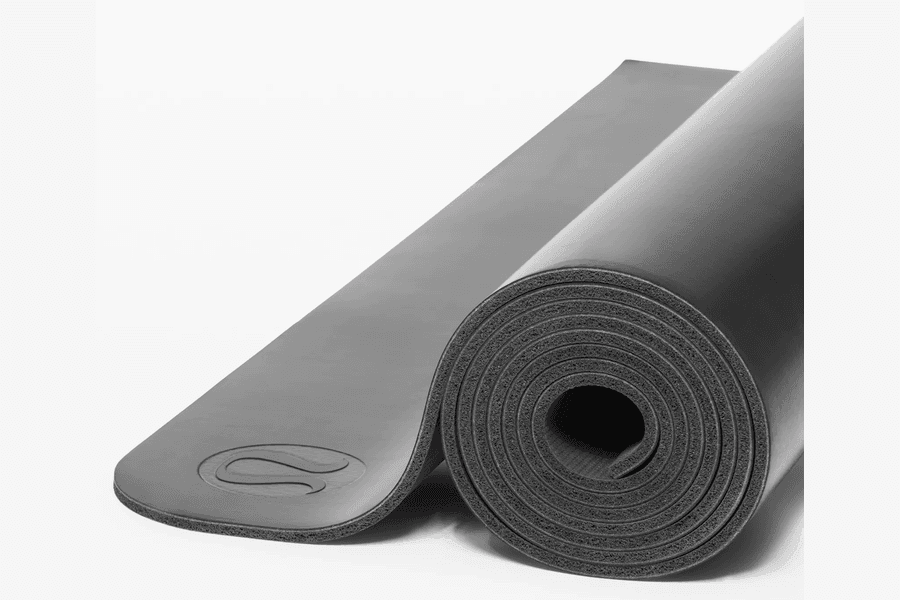
Both of these exist because standard mats are too small for a lot of people. The eKO Long is 79″ × 26″ of textured natural rubber for $124. The Big Mat is 84″ × 28″ of polyurethane over FSC-certified rubber for $128. Both are 5 mm thick.
The Lululemon is the bigger mat and the Manduka is the better performer, which is roughly the whole page. GearLab ranked the eKO second of 19 with 87 points and the standard version of The Mat fourth with 81.
Five inches longer and two wider
The Big Mat wins the measurement it was built for. Eighty-four inches by 28 covers about 15% more floor than 79 by 26, and the extra width is the part people notice: a wide stance keeps both hands on the mat rather than one on the floor.
The eKO Long is still generous, and 79 inches is enough for most people up to about six foot two. If you are taller than that, or broad, the Big Mat is the one that solves the problem. Manduka has no wider option in the eKO line.
Grip: the eKO is the more secure surface
GearLab measured the eKO at 10 out of 10 dry, the highest score in its field, and 7 wet. The rubber texture grips from the first unroll with nothing to break in.
The Lululemon surface tested at 6.5 dry and 4.5 wet, which is mid-pack. Its polyurethane face is meant to absorb sweat and get tackier as you warm up, and it does, but it starts from a lower baseline than the rubber. The textured rubber underside is offered as the drier alternative; most owners pick a side in the first week and stay there.
Sweat: absorbed against beaded on top
The Big Mat’s top layer takes moisture in, so in a warm room it improves rather than degrading, up to the point of saturation. The cost is drying and care: it wants a light wipe rather than a soaking, and GearLab scored The Mat 7 out of 10 for care and cleaning.
The eKO is closed-cell rubber, so nothing soaks in and sweat sits on the surface. That makes it easier to clean, and GearLab scored it 8, but in a genuinely hot class it is the more slippery of the two once palms are wet. Neither is the mat we would pick for hot yoga; the Manduka GRP Adapt 2.0 measured 8.5 wet.
Both 5 mm, and both comfortable
GearLab gave the standard version of The Mat a perfect 10 for comfort and support, level with the Manduka PRO, and the eKO 9. Both are dense rather than soft, so knees are protected without the sinking feeling of foam.
The Big Mat is the same construction as the standard Mat in a larger cut, so nothing about the feel changes with the size. This is the row where these two are closest, and it is not where the decision gets made.
Eight pounds against seven
The eKO Long is 8 pounds and the Big Mat 7.1. Both roll into long, thick tubes that will not fit a standard mat bag, and neither is a mat you carry regularly.
If you need something in this size that travels, there is no good answer from either brand. The honest options are a lighter full-length mat, or a second mat that folds, which is what the Manduka PRO Travel is for.
Rubber wear against a wearing top layer
Manduka gives the eKO line 30 days of returns and nothing after, since natural rubber is meant to wear and eventually break down. It also smells strongly for the first week or two and is not safe with a latex allergy. GearLab scored its materials 8 out of 10.
Lululemon covers mats under its Quality Promise, which has no stated term and is handled case by case. The mat’s weak point is documented by owners: the polyurethane face can go patchy or flake at the hands and feet after a year or two of daily practice, and it does not recover.
Price, colors and where to buy
$124 against $128, which is close enough to ignore. Lululemon sells only through its own site and stores and rarely discounts; the eKO Long is on manduka.com and Amazon, where colorways drift below list. Check the eKO Long at Amazon before paying full price, which is the one place either mat gets cheaper.
Neither gives you much to choose from: the Big Mat comes in black at last count and the eKO Long in midnight only at last count.
Bottom line
Buy the Big Mat if the size is the point. Eighty-four by 28 inches is the most floor you can buy from a mainstream brand, the cushioning is top of the field, and it handles sweat better than the rubber does.
Buy the eKO Long if grip matters more than the last few inches. It is the more secure surface by a wide margin in testing, it is available at a discount on Amazon, and 79 inches covers most tall practitioners. Our Mat vs Big Mat page covers the Lululemon size decision on its own.
Manduka eKO Long
List price $124
Lululemon The (Big) Mat 5mm
List price $128
Frequently Asked Questions
- How much bigger is the Big Mat?
- About 15% more area: 84 by 28 inches against 79 by 26. Length is close enough to argue about, since 79 inches suits most people up to around six foot two, but the four extra inches of width is the difference between a hand on the mat and a hand on the floor in a wide stance. Manduka has no wider option in the eKO line.
- Which one grips better?
- The eKO. GearLab measured it at 10 out of 10 dry, the highest score in a 19-mat field, and 7 wet, against 6.5 and 4.5 for the standard version of The Mat. The Lululemon's polyurethane top absorbs sweat and gets tackier as a class warms up, but it starts from a lower baseline than the rubber does.
- Which handles sweat better?
- The Lululemon, in the sense that its coating takes moisture in rather than letting it bead on the surface. The eKO is closed-cell rubber, so sweat sits on top, which makes it easier to clean and more slippery once palms are wet. Neither is a hot yoga specialist; the Manduka GRP Adapt 2.0 measured 8.5 out of 10 wet grip, the best of anything tested.
- What warranty do they have?
- Manduka gives its rubber eKO line 30 days of returns and nothing after, since the material is meant to wear and biodegrade. Lululemon covers mats under its Quality Promise, which has no stated term and is judged case by case. Neither is coverage you would buy the mat for.
- Can you buy the Big Mat cheaper anywhere?
- Not really. Lululemon sells only through its own site and stores, with no Amazon listing and little discounting, and the Big Mat comes in black at last count. The eKO Long is on manduka.com and Amazon, where colorway prices drift below list, so it is the one of the two that can be had for less.
- Does the eKO smell?
- Yes, strongly of rubber for the first week or two before it fades. It is natural rubber, so it is not safe with a latex allergy. The Lululemon's rubber is under a polyurethane coating so it smells much less, and its own weak point is that the coating can go patchy at the hands and feet after a year or two of daily practice.
Related comparisons
- Manduka GRP Adapt 2.0 vs Lululemon The (Big) Mat 5mm
- Manduka GRP Adapt 2.0 Long vs Lululemon The (Big) Mat 5mm
- Manduka eKO vs Lululemon The (Big) Mat 5mm
- Manduka PROlite Long & Wide vs Lululemon The (Big) Mat 5mm
- Manduka PROlite Long vs Lululemon The (Big) Mat 5mm
- Lululemon The Mat 5mm vs Manduka eKO Long
- Manduka eKO Long vs Alo Warrior
- Alo Warrior vs Lululemon The (Big) Mat 5mm
- JadeYoga Harmony XW vs Lululemon The (Big) Mat 5mm