Lululemon The Mat vs Liforme: Which One Should You Buy?
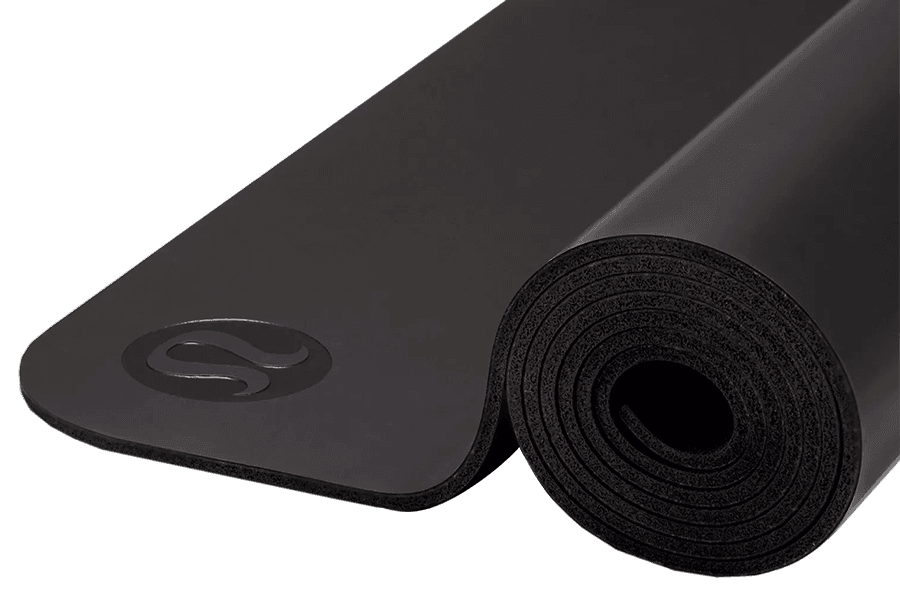
These two mats solve the sweaty-palm problem the same way: an absorbent polyurethane top over a natural rubber base, grippy from the very first class. The difference is what sits on top. The Liforme etches an alignment system into its surface and charges $165 for it; The Mat keeps things plain at $118 with a little more cushion. Here's how to decide whether the lines are worth $47.
As an Amazon Associate, we earn from qualifying purchases made through links on this page. How this works
The quick answer
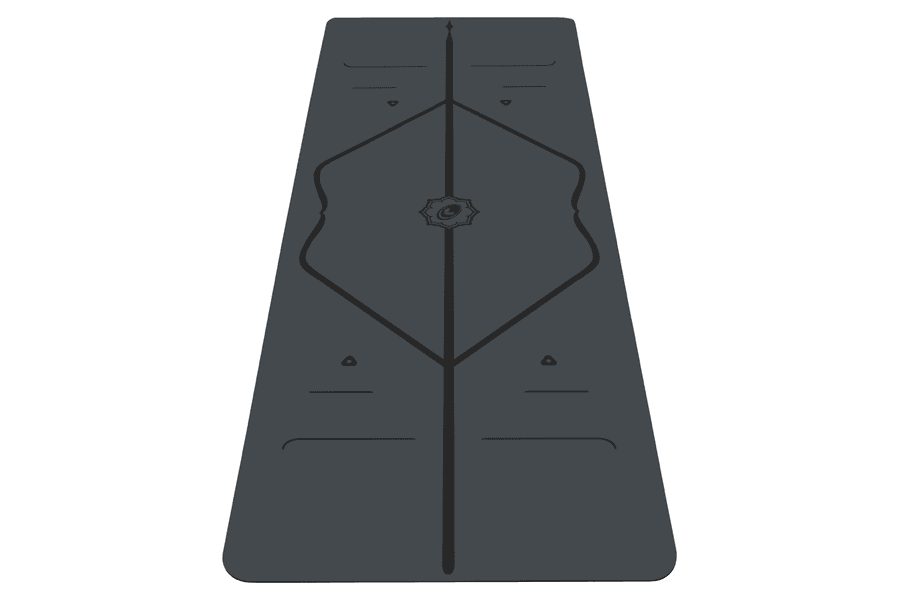
Performance-wise these are closer than their prices suggest. Both grip immediately, both handle sweat well, and both wear the way polyurethane tops do. The Liforme's case is precision: etched alignment lines GearLab named the best in its test, a wider 26.8 inch surface, and a firmer, thinner 4.2 mm platform that some practitioners prefer for balance. The Mat's case is simpler: more cushion at 5 mm, a reversible rubber side, and a $47 lower price.
If the alignment lines speak to you, the Liforme is the best version of that idea. Everyone else gets the same core grip experience from The Mat and keeps $47.
Get The Mat if...
- You'd rather keep $47
- You want more cushion (5 mm vs 4.2 mm)
- You like the reversible rubber side for slower practice
- You don't need lines to tell you where your hands go
Get the Liforme if...
- You want alignment feedback etched into the mat itself
- You want the wider 26.8 inch surface
- You prefer a firmer, thinner platform for balance work
- A biodegradable, PVC-free build matters to you
Side by side
Price
The Mat lists for $47 less.
$118
List price · check price at lululemon.com
$165
List price · check price at Amazon
Thickness
The Mat is 19% thicker.
5 mm0.2″
4.2 mm0.17″
Weight
The Mat is 0.3 lbs lighter.
5.2 lbs2.4 kg
5.5 lbs2.5 kg
Size
The Liforme is 1.8″ longer; the Liforme is 0.8″ wider.
Same on both
- Polyurethane top over a natural rubber base
- Grip that holds with damp palms
- No break-in period
- Around five and a half pounds
- No long-term warranty either way
Full specs
Dimensions
Materials & build
Buying
The $47 question: lines or cushion?
Strip away the branding and these mats share a spine: an absorbent polyurethane top over a natural rubber base, grippy from the first class, wet palms or dry. The Liforme charges $165 and spends its premium on an etched alignment system and a slightly bigger footprint. The Mat charges $118 and gives you more cushion and a reversible second surface instead.
Since grip won’t separate them, the decision comes down to which extras you’d actually use. That’s a genuinely personal call, and this page is mostly about helping you make it honestly.
Grip and sweat: call it a tie
Both surfaces do the same trick: sweat soaks into the top instead of pooling under your palms, so traction holds as class heats up. GearLab’s testers praised both mats on exactly this count. They found The Mat kept its grip in classes run at 90 to 105 degrees, and described the Liforme’s stickiness as gecko-like, with a moisture-wicking top and a waterproof middle layer protecting the base.
Neither needs a break-in period, and neither turns slick when things get sweaty. If you came to this page to settle a grip debate, we can’t help you; buy on the other differences. As always, if you drip heavily in heated classes, a towel eventually joins either mat.
The alignment system is the Liforme’s whole pitch
The Liforme’s surface carries its “AlignForMe” system: a center line, end-to-end markers, and angled guides etched into the material rather than printed on it. They give you fixed reference points for hand and foot placement, stance width, and centering, and GearLab named the Liforme its best mat for fine-tuning alignment. Teachers like demonstrating on it for the same reason.
Whether that’s worth $47 depends entirely on your practice. Home practitioners without an instructor’s eye, and anyone actively rebuilding their form, use the lines constantly. Practitioners with a settled practice tend to stop noticing them within a month. The Mat’s top is a clean, unmarked field, and plenty of people prefer exactly that.
Cushion and stability: 5 mm vs 4.2 mm
The Mat carries 0.8 mm more material, and you can feel it in kneeling and seated work, especially on hard floors. If sensitive knees are part of your reality, The Mat is the more comfortable platform, and its reversible rubber side adds a slightly cushier surface option the Liforme doesn’t have.
The Liforme’s counterargument is that its dense rubber base supports better than 4.2 mm suggests; GearLab’s testers found it comfortable even on concrete and tile. And thinner has a real upside: a firmer, lower platform reads as more stable under standing balances. Neither mat is plush, to be clear. These are performance surfaces, not cushions.
Size, weight, and what’s in the box
The Liforme is the bigger mat: 72.8″ × 26.8″ against The Mat’s 71″ × 26″. The extra width is the part you’ll notice, particularly with broad shoulders or wide-stance poses. Weights are nearly identical, 5.5 pounds against 5.24, so carrying is a wash.
The Liforme also ships with a carrying bag included, a small courtesy that The Mat doesn’t match. If you need more length, Lululemon sells an 84″ version of The Mat, and Liforme makes an XL; both cost more.
Durability and warranties: matched wear, matched shrugs
Both mats wear at the same place, the polyurethane top, and in the same ways: scuffs, stains, and gradual surface fatigue under heavy practice. The Mat is known to stain with sweat over time; hard daily use wears the Liforme’s grippy top down too. Care is the same gentle ritual for both: diluted mild soap on a cloth, no machine washing, no harsh cleaners.
Neither brand offers real long-term coverage. Lululemon has its Quality Promise with no defined term. Liforme is more explicit: no warranty at all, because the mat is deliberately built from biodegradable materials and lifespan depends on use. Purchases from liforme.com carry a 30-day money-back guarantee. If warranty coverage matters to you, this whole category disappoints; that’s what mats like the Manduka PRO are for.
The eco angle
The Liforme leads here. It’s PVC-free, built on natural rubber with an eco-polyurethane surface, and designed to biodegrade in one to five years under normal landfill conditions, a claim almost nothing else in the category makes. The Mat counters with FSC-certified natural rubber sourcing, which is meaningful but more modest. If end-of-life impact is a deciding factor for you, the Liforme is the stronger story.
Price and where to buy
List prices are $118 and $165. The Mat sells only through Lululemon, so check the price at Lululemon’s site. The Liforme sells through its own site and also on Amazon, where prices move around by colorway; check the current Liforme price at Amazon before paying list.
On pure value, The Mat wins: same grip technology, more cushion, $47 less. The Liforme’s premium only makes sense if the alignment system or the eco story is a feature you’ll actually use.
Bottom line
Get The Mat if you want this construction at its best price. It grips like the Liforme, cushions a little better, flips over for a second surface, and leaves $47 in your pocket for a mat wash and a towel.
Get the Liforme if the etched lines would genuinely guide your practice, or if biodegradability is the tiebreaker. It’s the best version of the alignment-mat idea, and its grip lives up to the reputation. If you’re still mapping the premium field, our PRO vs Liforme and The Mat vs Alo Warrior comparisons cover the neighbors on either side.
Lululemon The Mat 5mm
List price $118
Liforme Classic
List price $165
Frequently Asked Questions
- Are the Liforme's alignment lines worth the extra money?
- If you practice at home or you're actively working on form, yes. The etched markers give you fixed reference points for hand and foot placement and spacing, GearLab named the Liforme its best mat for fine-tuning alignment, and traveling teachers gravitate to it for the same reason. If your practice is settled and you never think about placement, the lines become decoration, and The Mat delivers the same grip for $47 less.
- Which is better for hot yoga?
- It's close to a tie, and both are strong. Each mat pairs an absorbent polyurethane top with a rubber base, so sweat soaks in instead of pooling under your palms. GearLab's testers praised the Liforme's wet grip specifically, and found The Mat held traction in classes run at 90 to 105 degrees. Either works for heated practice; genuinely heavy sweaters will still want a towel on both.
- Is the Liforme's 4.2 mm thickness enough cushion?
- For most people, yes, with a caveat. The dense rubber base is supportive for its thickness, and GearLab's testers found it comfortable even on concrete and tile. But it is measurably thinner than The Mat's 5 mm, and if you have sensitive knees and do a lot of kneeling work on hard floors, The Mat's extra layer is the more comfortable choice. The flip side: thinner and firmer means a more stable base under balance poses.
- Which mat lasts longer, and what about warranties?
- Expect similar lifespans, because both wear at the same place: the polyurethane top. Both stain and scuff with heavy use, and both brands stop short of real coverage. Lululemon offers its Quality Promise with no defined term, while Liforme offers no warranty at all, just a 30-day money-back guarantee on purchases from its own site. Liforme is upfront about why: the mat is built to biodegrade, and lifespan depends on how hard you use it.
- Are these mats safe for a latex allergy?
- Be careful with both. Each is built on a natural rubber base, and natural rubber can carry trace latex proteins. If you have a serious latex allergy, a PVC or TPE mat sidesteps the question entirely; the Manduka PRO is the usual recommendation in that situation.
- Where can you actually buy these mats?
- The Mat sells only through Lululemon, online or in stores. The Liforme is easier to find: liforme.com ships directly and includes a 30-day money-back guarantee, and the mat also sells on Amazon. The Liforme ships with a free carrying bag, which takes a little sting out of the $165 price.
Related comparisons
- JadeYoga Harmony 74" vs Lululemon The Mat 5mm
- Manduka PROlite Long vs Lululemon The Mat 5mm
- Lululemon The Mat 5mm vs JadeYoga Harmony 2.0 68"
- Manduka PROlite vs Lululemon The Mat 5mm
- Lululemon The Mat 5mm vs Manduka GRP Adapt 2.0
- Lululemon The Mat 5mm vs Manduka eKO
- Lululemon The Mat 5mm vs b, halfmoon B Mat Everyday 4mm
- Lululemon The Mat 5mm vs Manduka PRO Lite Terra 4.7mm
- Lululemon The Mat 5mm vs Yoga Design Lab Combo 3.5mm