Manduka PRO vs Jade Voyager: Which One Should You Buy?
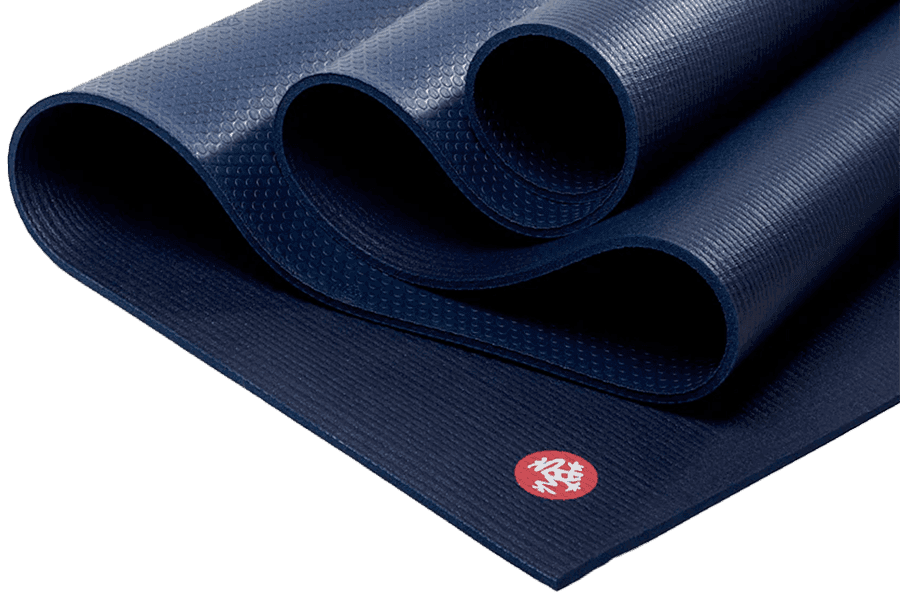
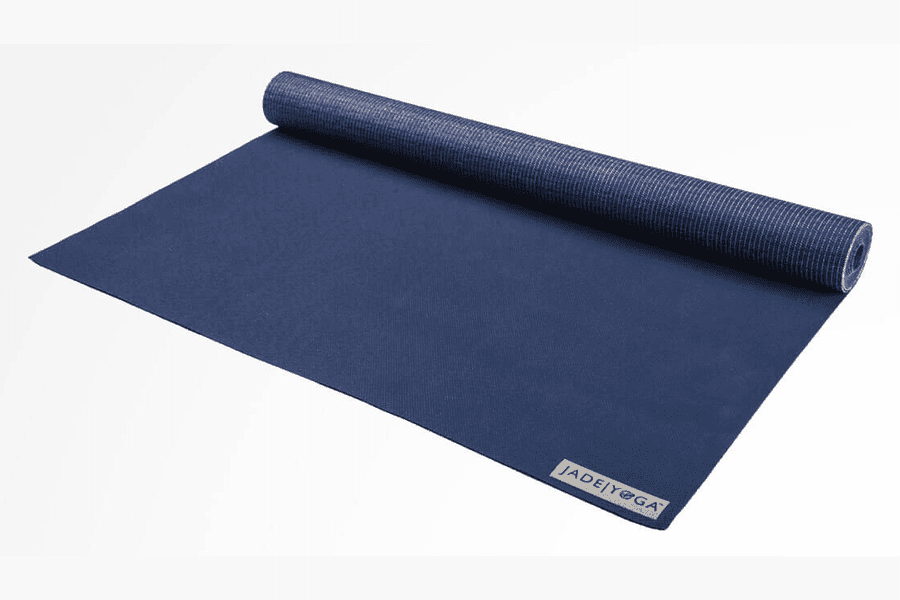
One of these mats weighs five times what the other does and costs nearly three times as much. The Manduka PRO is a dense 6 mm slab meant to live in one room for years. The Jade Voyager is a sheet of natural rubber thin enough to fold down to roughly the size of a yoga block. What makes this worth comparing at all is that OutdoorGearLab rated their grip identically, so the gap between them is cushion and lifespan, not traction.
As an Amazon Associate, we earn from qualifying purchases made through links on this page. How this works
The quick answer
The PRO is the mat you practice on. It took the top overall score in GearLab's yoga mat test, 91 of 100, with a perfect 10 for comfort and support, 10 for materials, and Manduka's lifetime guarantee behind it. The Voyager is the mat you pack. It finished 18th of 19 in that same test at 51 of 100, almost entirely because of comfort: 2 of 10, since 1.6 mm of rubber leaves your kneecap on the floor. Grip is where they meet. GearLab scored both 9 of 10 dry and 7 of 10 wet, so the Voyager gives up padding, not hold.
If you are buying one mat and it stays home, buy the PRO. If you already own a mat and you travel, the Voyager is a $50 accessory rather than a replacement.
Get the PRO if...
- You want one mat for the next decade with a lifetime guarantee behind it
- You practice on hardwood, tile, or concrete and need real padding under your knees
- You want the highest-scoring mat in GearLab's test, 91 of 100
- Hauling 7.5 pounds to class once or twice a week doesn't bother you
Get the Voyager if...
- You already own a full-size mat and need something for hotels and holidays
- You want a mat that folds into a carry-on instead of strapping to the outside
- You want Jade's rubber grip in your bag for about $94 less
- You're fine laying it over carpet or a studio rental mat instead of a bare floor
Side by side
Price
The Voyager lists for about $94 less.
$144
List price · check price at Amazon
$49.95
List price · check price at jadeyoga.com
Thickness
The PRO is 275% thicker.
6 mm0.24″
1.6 mm0.06″
Weight
The Voyager is 6 lbs lighter.
7.5 lbs3.4 kg
1.5 lbs0.68 kg
Size
The PRO is 3″ longer; the PRO is 2″ wider.
Same on both
- Strong dry grip; GearLab scored both 9 of 10
- Wipe-down care only, no machine washing
- Made in a country the brand states openly
- Solid colorways rather than printed patterns
Full specs
Dimensions
Materials & build
Buying
One mat stays put, the other goes in a bag
The Manduka PRO is 6 mm of dense closed-cell PVC, 7.5 pounds, made in Germany, and sold at $144 with a lifetime guarantee attached. The Jade Voyager is 1.6 mm of natural rubber, about 1.5 pounds, made in the USA, and sold at $49.95. Jade says it folds down to roughly the size of a yoga block, and that is the entire product pitch.
Normally that would end the comparison, since one of these is a piece of furniture and the other is luggage. What keeps it interesting is the grip data. OutdoorGearLab rated both mats 9 of 10 for dry traction and 7 of 10 for wet, so the Voyager is not giving up hold to save weight. It is giving up everything else.
Grip: the same score from two different surfaces
The PRO grips through friction and surface area. Its fabric-like top has no tack to it at all, and new owners often find the first few weeks slippery until the finish opens up with use. Manduka used to recommend a salt scrub to speed that along and has since dropped the advice, saying the slickness resolves on its own. Once it does, GearLab’s testers rated it 9 of 10 dry, which is as good as anything in their lineup.
The Voyager grips through tack, immediately. Open-cell natural rubber is sticky from the moment you unfold it, with no break-in period and no waiting. It earned the same 9 of 10. Wet, both landed on 7, which is solid but well behind the 8.5 GearLab gave the mat it named best for hot yoga. If grip alone decided this page, you would buy the cheaper mat.
One practical difference sits underneath those matching scores. The PRO has enough mass that it does not move on a wood floor no matter what you do on it. The Voyager weighs almost nothing, so on deep pile carpet owners report it creeping and bunching under a planted foot. On hard floors it stays where you put it like any Jade mat. If the room you would use it in is heavily carpeted, that is the one place its grip rating stops predicting how the mat behaves.
Cushion: the difference is not subtle
GearLab scored the PRO 10 of 10 for comfort and support, the only perfect mark it shares with one other mat in a 19 mat test, and scored the Voyager 2 of 10. Those numbers describe what you feel. Six millimeters of dense PVC keeps a kneecap off a hardwood floor in a low lunge and stays supportive under a forearm plank. The PRO is firm rather than plush, so it does not sink under you, and that firmness is why it works for people with cranky knees.
At 1.6 mm, the Voyager is a grip surface laid over whatever is underneath it. On tile or concrete you feel the floor within the first minute. On carpet it is fine, and over a studio’s rental mats it is genuinely pleasant, since the padding is already handled and you are just adding a clean layer you trust. Owners who buy it expecting a thin mat are happy. Owners who buy it expecting a light mat are not.
Weight and packing
The PRO weighs 7.5 pounds, which GearLab confirmed on its own scale. That is heavy enough to matter on a walk to the studio and heavy enough that most owners leave it where it lives. It rolls thick, it does not fold, and no amount of strap design changes what 7.5 pounds feels like over a shoulder for fifteen minutes.
Jade lists the Voyager at just over 1.5 pounds; GearLab measured 1.8. Either way it disappears into a backpack, and unlike almost every other mat, it folds flat rather than rolling, so it lies along the bottom of a suitcase instead of taking up a corner. Folding does leave creases over time, which is the price of the format.
Sweat, odor, and cleaning
These two handle moisture in opposite ways. The PRO is closed-cell, so nothing soaks in. Sweat sits on the surface, which is hygienic and easy to wipe but means puddles in a heated room, and most PRO owners in hot classes keep a towel on it. GearLab scored its care and cleaning 8 of 10 and its materials a perfect 10.
The Voyager is open-cell and pulls moisture in, which helps grip and hurts everything else. It has to dry fully before it gets folded away or it will start to smell, and thin rubber that stays damp in a suitcase is exactly the wrong situation. Diluted mild soap on a cloth is right for both mats. Neither goes in a washing machine, and harsh cleaners will void Jade’s warranty.
Durability and what the warranties actually cover
The PRO is the longest-lived mat most people will ever own. Manduka’s lifetime guarantee reads better than its fine print, which works out to roughly ten years of regular use and one replacement, with proof of purchase from an authorized seller. Amazon counts only when the mat is sold and shipped by Amazon itself. Even discounted for that, it is far more coverage than anything else in the category, and the dense PVC lasts long enough to make a claim realistic rather than theoretical.
Jade covers the Voyager for one year and excludes sun damage and harsh cleaners. Thin natural rubber wears differently from thick PVC: it loses tack slowly, it can tear at the edges, and it takes a permanent crease along the fold lines. Jade also plants a tree for every mat it sells, more than two million so far, which is a program rather than a certification but worth knowing if that matters to you.
The undersides say something about the intent of each mat. The PRO has a dot-pattern grip layer meant to hold it in place through years on the same floor. The Voyager has a scrim visible through the rubber, which is what lets a sheet that thin survive being folded and unfolded a few hundred times. Neither is a flaw. They are answers to two different engineering problems.
Size and the versions each brand offers
The PRO is 71 by 26 inches, and Manduka sells it in four more shapes: a 85 inch Long, a Long & Wide, and a 78 inch Squared for people who want a practice area rather than a lane.
The Voyager comes one way: 68 by 24 inches, in five colorways at last count. That is at the short end of standard, so anyone over about five foot eight will notice the ends. If you want a travel mat with a bit more under you, Jade’s Travel mat is thicker at the cost of packing flat, and we compare a similar pair in our eKO Superlite vs Jade Travel piece.
Price and where to buy
List prices are $144 for the PRO and $49.95 for the Voyager, a gap of about $94. The PRO moves on Amazon, where colorway pricing swings around and the lifetime guarantee holds only when the seller is Amazon itself, so check the current PRO price at Amazon against Manduka’s own site before deciding.
Jade does not run an Amazon storefront for the Voyager, so it comes from jadeyoga.com or a yoga retailer. Its price barely moves. On cost per year of practice the PRO wins easily, which is the fair way to read a $94 gap when one mat carries a decade of coverage.
If you can only buy one of them
Buy the PRO. That holds for almost everyone, including people who travel a fair amount, because a mat you practice on four times a week matters more than a mat you practice on four times a year. The Voyager works as a sole mat in one situation: you practice on carpet, or you always practice somewhere that supplies mats and you only want a surface of your own on top of theirs.
The reverse, buying the Voyager first and adding a real mat later, tends to go badly. A 1.6 mm mat on a hard floor makes beginners think they dislike yoga rather than that they dislike kneeling on wood. If $144 is more than you want to spend right now, a cheaper full-thickness mat is a better first purchase than a travel mat, and our PRO vs Gaiam Premium comparison covers the budget end of that choice.
Bottom line
Buy the PRO if this is the mat you practice on. It took the top overall score in GearLab’s test at 91 of 100, it is the most comfortable mat there, and Manduka stands behind it longer than anyone stands behind anything else in the category. The cost is weight, and you feel that every time you carry it.
Buy the Voyager as a second mat. It grips as well as the PRO, weighs a fifth as much, and costs $94 less, and it will make you miserable if you try to use it on a hard floor five days a week. If you want one mat that travels and still cushions, look at the middle of the market instead: our PRO vs Jade Harmony comparison covers the full-size rubber option.
Manduka PRO
List price $144
Jade Voyager
List price $49.95
Frequently Asked Questions
- Can the Jade Voyager replace a full-size mat like the Manduka PRO?
- Not for a regular practice on a hard floor. At 1.6 mm the Voyager is a grip layer, not a cushion, and GearLab scored its comfort and support 2 of 10. Kneeling lunges, forearm work, and anything that puts a bone against the ground will hurt on tile or hardwood. It works as a full-time mat only if you practice on carpet, and it works well as a topper over a studio's rental mats. For daily practice, the PRO's 6 mm is doing a job the Voyager was never built to do.
- Which is better for hot yoga?
- Neither is the right tool, for opposite reasons. The PRO's closed-cell surface keeps sweat on top of the mat, which is hygienic but means puddles, and most owners run a towel over it in a heated room. The Voyager's open-cell rubber absorbs sweat instead, which helps grip, but it also holds odor and takes longer to dry, and 1.6 mm of mat in a 105 degree room is uncomfortable regardless. GearLab gave both a 7 of 10 for wet grip, which is respectable but well short of the 8.5 its top hot yoga pick earned.
- How thin is 1.6 mm in practice?
- A little over a sixteenth of an inch. Jade's own copy says the Voyager folds to about the size of a yoga block, and that's accurate. Laid out on a wood floor you feel the floor through it almost immediately, which is the whole tradeoff. GearLab measured it at 1.6 mm, matching Jade's 1/16 inch claim, and put its measured weight at 1.8 pounds against Jade's stated 1.5.
- Does Manduka's lifetime guarantee really mean lifetime?
- It means roughly ten years of regular use and one replacement, with proof of purchase from an authorized seller. Amazon counts only when the mat is sold and shipped by Amazon itself. That's narrower than the word suggests, but it is still far more coverage than almost anything else in the category, and the PRO's dense PVC genuinely does last long enough to make a claim worth filing. Jade covers the Voyager for one year, excluding sun damage and harsh cleaners.
- Does the Voyager slide around on hotel carpet?
- Sometimes. Owners consistently report that it stays put on hardwood, tile, and the flat industrial carpet in most hotel gyms, but that it can bunch and creep on deep plush carpet. It has no weight to hold it down, which is the price of a 1.5 pound mat. On a hard floor it behaves like any Jade mat and stays where you put it.
- Which is the better value?
- The PRO, if you only buy one. It costs about $94 more but comes with roughly a decade of coverage and the best comfort scores in GearLab's test, so the cost per year of practice is low. The Voyager is good value on its own terms, at $50 for a genuinely grippy mat that fits in a backpack, but it is a second mat. Buying it instead of a full-size mat is how people end up unhappy with it.
Related comparisons
- Manduka eKO Superlite vs JadeYoga Voyager
- Manduka PRO vs b, halfmoon B Mat Strong 6mm
- Manduka eKO Superlite Long vs JadeYoga Voyager
- Manduka PRO vs Alo Warrior
- Manduka PRO vs Yoloha Unity Pro Cork
- Manduka PRO vs JadeYoga Harmony XW
- Manduka PRO vs Lululemon The (Big) Mat 5mm
- JadeYoga Voyager vs Manduka PRO Travel
- Manduka PRO vs Lululemon The Mat 5mm