Manduka eKO Superlite vs Jade Voyager: Which One Should You Buy?
These are the two mats people usually mean when they say travel yoga mat: both natural rubber, both around a sixteenth of an inch thick, both fold flat into a carry-on, and the prices nearly match. The differences live in the details: surface feel, length, weight, and what happens when you sweat on them.
As an Amazon Associate, we earn from qualifying purchases made through links on this page. How this works
The quick answer
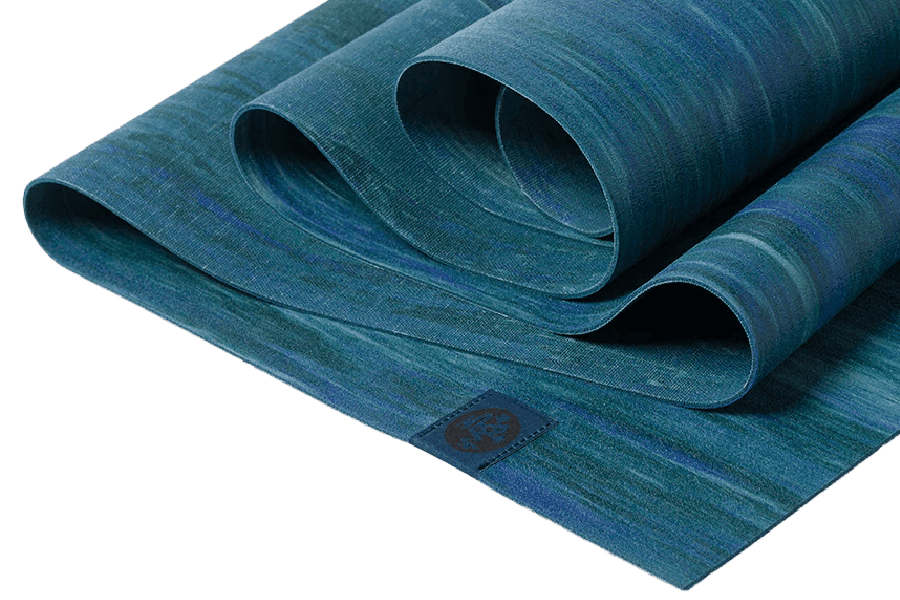
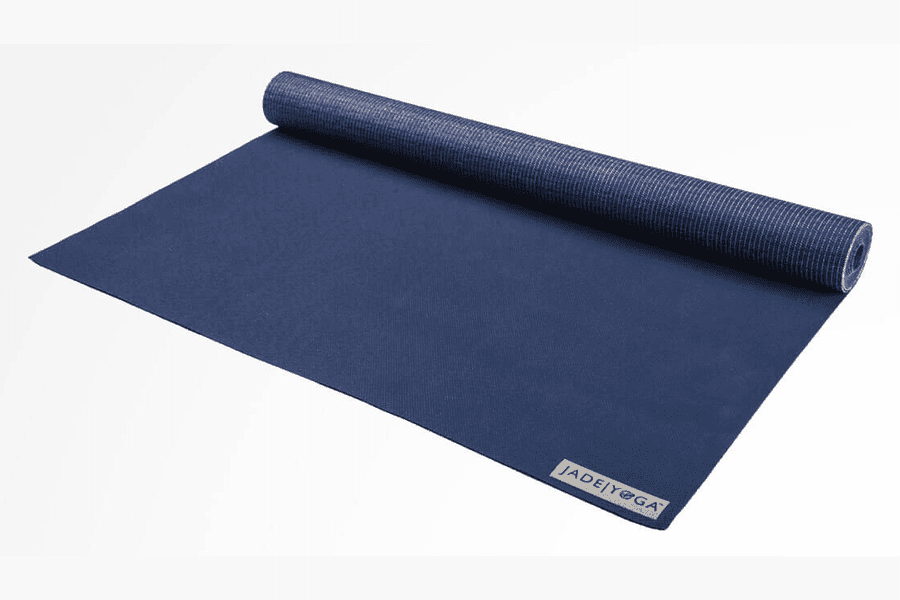
The Superlite is the slightly bigger tool: 71 inches long to the Voyager's 68, 2.2 pounds to 1.5, with a closed-cell surface that keeps sweat on top where it dries fast, and around 19 colorways to choose from. The Voyager is the lighter, tackier one: Jade's open-cell rubber grips immediately, absorbs moisture instead of letting it pool, is made in the USA, and carries a 1 year warranty where Manduka offers only a 30 day return window. Neither is a cushion; at this thickness you feel the floor, by design.
Taller practitioners and heavy sweaters should lean Superlite for the length and the fast-drying surface. If minimum weight and Jade's tacky grip are the point, the Voyager is the better pack.
Get the Superlite if...
- You're close to six feet tall (71 inches vs 68)
- You'd rather sweat sit on the surface and dry fast
- You want the bigger colorway range
- You might want the 79 inch Long version instead
Get the Voyager if...
- You want the lightest mat here (1.5 pounds vs 2.2)
- You prefer Jade's tacky, open-cell grip
- You want an actual warranty (1 year vs returns only)
- Made in the USA matters to you
Side by side
Price
The Voyager lists for about $4 less.
$54
List price · check price at Amazon
$49.95
List price · check price at jadeyoga.com
Thickness
The Voyager is 7% thicker.
1.5 mm0.06″
1.6 mm0.06″
Weight
The Voyager is 0.7 lbs lighter.
2.2 lbs1 kg
1.5 lbs0.68 kg
Size
The Superlite is 3″ longer; same width.
Same on both
- Natural rubber, about 1.5 mm thick
- 24 inches wide
- Folds flat for a suitcase or backpack
- A travel layer, not an everyday cushion
- Rubber care rules: no sun, gentle cleaners
Full specs
Dimensions
Materials & build
Buying
The two default answers to the travel mat question
Ask a well-traveled yogi what mat to pack and you’ll almost always hear one of these two names. Manduka’s eKO Superlite and Jade’s Voyager are built to the same brief: natural rubber, roughly a sixteenth of an inch thick, folds flat into a carry-on, priced around fifty dollars. On paper they’re the closest pair we cover.
The differences that remain are small but concrete: three inches of length, seven tenths of a pound, two kinds of rubber surface, and two very different ideas of after-sale coverage. For a mat you’ll live with on the road, small differences are the whole review.
Surface and grip: closed cell vs open cell
Here’s the one structural difference. The Voyager uses Jade’s open-cell rubber: tacky the moment you touch it, absorbing moisture as you practice, the same surface behavior that made the Harmony a studio fixture. The Superlite’s rubber is closed-cell, so sweat stays on top rather than soaking in, with a textured finish that does better damp than smooth mats manage.
In practice: the Voyager feels grippier out of the box and through a normally sweaty session, while the Superlite is easier to wipe down and dries almost instantly at this thickness. Truly heavy sweaters end up with a towel on either, which is the standing truth of every mat this thin. If you’re used to practicing on a Jade or a Manduka rubber mat at home, each travel mat feels like its sibling; familiarity is a legitimate tiebreaker here.
Length: three inches that matter for tall travelers
The Superlite is 71″ × 24″; the Voyager is 68″ × 24″. Under six feet tall, both fit fine. Near or over it, the Superlite’s extra three inches keep hands and heels on rubber in long positions, and Manduka goes one further with a 79″ Superlite Long at $58. Jade offers the Voyager in one size only; its longer travel option means stepping up to the thicker, pricier Jade Travel line.
Weight and packing: the Voyager travels lighter
Both fold flat, and neither will crowd a suitcase, but the degrees differ. The Superlite folds to roughly the footprint of a laptop sleeve at 2.2 pounds. The Voyager folds smaller, to about the size of a yoga block, and at 1.5 pounds it’s the lightest mat we cover; in a backpack it registers as a folded shirt. Fold creases are normal on both, and Jade recommends keeping the Voyager rolled between trips to minimize them.
If you’re packing a checked bag, this section is a tie. If you’re a carry-on minimalist counting ounces, the Voyager wins it.
Cushion: neither, on purpose
At 1.5 and 1.6 mm these mats are grip layers, not padding, and it’s worth being clear-eyed about what that means: kneeling poses on a hard hotel floor are unpadded on both, full stop. The intended use is over carpet, over a studio loaner mat, or under a practice that lives on feet and hands. Jade says outright that the Voyager isn’t resilient enough for daily practice, and the same practical advice fits the Superlite: both are second mats, not replacements for a real one.
Durability and a lopsided warranty comparison
Mats this thin hold up better than you’d guess, because there’s no foam to compress; wear shows up as surface aging rather than flattening. Both live by rubber rules: out of the sun, gentle cleaners, never a hot car. Sun exposure is the classic killer for both brands’ rubber.
Coverage is where the two part ways. Jade backs the Voyager with a 1 year warranty, sun damage and harsh cleaners excluded. Manduka offers the Superlite 30 day returns and nothing after, unusual for a brand that famously guarantees its PRO line for life. A year of coverage on a fifty dollar travel mat isn’t a huge sum, but it’s strictly more than the alternative.
Colors, origin, and eco notes
The Superlite is the peacock of Manduka’s rubber lineup, with around 19 colorways at last count; the Voyager offers five. Origin flips the other direction: the Voyager is made in the USA like Jade’s other mats, and Jade plants a tree for every mat sold, a program past two million trees. The Superlite is made in Taiwan from natural tree rubber. Both brands pitch the rubber as sustainably harvested; neither mat carries a third-party certification, so weigh those claims accordingly.
Price and where to buy
List prices sit four dollars apart, $54 for the Superlite and $49.95 for the Voyager, close enough that price shouldn’t decide anything here. Check the current price of the Superlite at Amazon; the Voyager sells through jadeyoga.com rather than Amazon.
Bottom line
Get the Superlite if you’re tall, if you want sweat wiping off a closed surface instead of soaking in, or if the color wall appeals; the 71″ cut and the 79″ Long option make it the safer fit for more bodies. Get the Voyager if minimum pack size and weight are the mission, if you already love Jade’s tacky feel, or if you’d like an actual warranty behind a mat that lives in luggage.
And if what you really need is a travel mat with some cushion in it, both brands sell a thicker tier; our Jade Travel vs Voyager page covers Jade’s version of that upgrade.
Jade Voyager
List price $49.95
Frequently Asked Questions
- Can either mat be your only mat?
- Only if you genuinely prefer firm ground contact or practice on carpet. At roughly 1.5 mm, kneeling poses on hard floors are unpadded on both, and Jade explicitly says the Voyager isn't resilient enough for daily practice. Both are designed as second mats: over studio rentals, on hotel carpet, folded into a tote. If you need one mat for everything, look at a full-thickness mat and add one of these later.
- Which grips better?
- Different mechanisms, both effective. The Voyager's open-cell rubber is tacky from the first use and absorbs moisture as you practice, the same surface behavior Jade's full-size mats are loved for. The Superlite is closed-cell, so sweat stays on the surface, but its textured rubber does better than smooth mats and the whole mat dries fast at this thickness. Heavy sweaters will want a towel on either; that's true of every travel mat this thin.
- How durable are mats this thin?
- Better than the thickness suggests, because there's no foam to compress; wear shows as surface aging rather than flattening. Both live by rubber rules: shade, gentle cleaners, no hot cars. Coverage differs, though. Jade backs the Voyager with a 1 year warranty (sun damage excluded), while Manduka covers the Superlite with 30 day returns only. Treated as travel gear, both last years.
- How small do they pack?
- Both fold flat rather than roll. The Superlite folds to roughly the footprint of a laptop sleeve; the Voyager folds smaller, to about the size of a yoga block, and at 1.5 pounds it disappears into a backpack. Fold creases are normal on both, and Jade recommends storing the Voyager rolled between trips to minimize them.
- What sizes and colors are available?
- The Superlite comes in 71 by 24 inches, with a 79 inch Long version at $58 for taller travelers, in around 19 colorways at last count, the biggest palette in Manduka's rubber lineup. The Voyager comes in one 68 by 24 inch size in five colorways at last count.
- Where is each mat made?
- The Voyager is made in the USA, like Jade's other mats, and Jade plants a tree for every mat sold. The Superlite is made in Taiwan from natural tree rubber. Both brands market the rubber as sustainably harvested; neither mat carries a third-party certification.
Related comparisons
- Manduka eKO Superlite Long vs JadeYoga Voyager
- JadeYoga Voyager vs Manduka PRO Travel
- Manduka eKO Superlite vs JadeYoga Travel 68"
- Manduka eKO Superlite vs JadeYoga Level One
- Manduka eKO Superlite vs IUGA Eco Friendly Non Slip PU
- Manduka Begin vs JadeYoga Voyager
- JadeYoga Voyager vs Gaiam Classic Print 4mm
- Manduka eKO Superlite vs Gaiam Classic Print 4mm
- JadeYoga Voyager vs IUGA Eco Friendly Non Slip PU