Manduka eKO vs Yoga Design Lab Combo: Which One Should You Buy?
The Manduka eKO lists at $114 and the Yoga Design Lab Combo at $117. In OutdoorGearLab's current nineteen mat test the eKO scored 87 and came second overall; the Combo scored 52 and came seventeenth. That is the widest score gap we have run into between two mats at the same price, so the case for the Combo has to be specific, and it is.
As an Amazon Associate, we earn from qualifying purchases made through links on this page. How this works
The quick answer
The eKO won every scored category: comfort 9 to 6, grip 9 to 4, materials 8 to 5, cleaning 8 to 6. It has the best dry grip GearLab has measured, a straight 10 out of 10, and it grips from the first session with nothing to break in. Its own faults are weight, creasing, and a wet score of 7 that is well below its dry.
Buy the eKO unless you practice hot and are already using a mat towel. The Combo's argument is that it is the towel, and that the whole thing goes in a washing machine afterwards. Outside that case the numbers are not close.
Get the Manduka eKO if...
- You want the best dry grip in the test, scored 10 out of 10
- You want 5 mm of dense rubber rather than 3.5 mm with fabric on top
- You practice in a room temperature studio or at home
- You want a mat that will still be good in three years
Get the Yoga Design Lab Combo if...
- You practice hot and sweat enough to need a towel anyway
- You want to machine wash the mat instead of wiping it
- You want a printed design rather than a plain colorway
- You want the lighter of the two by a couple of pounds
Side by side
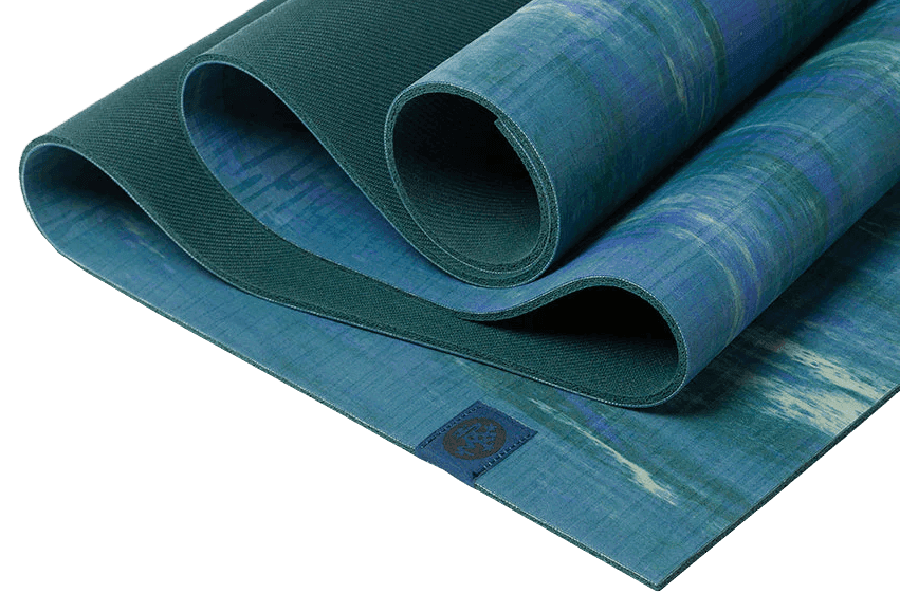
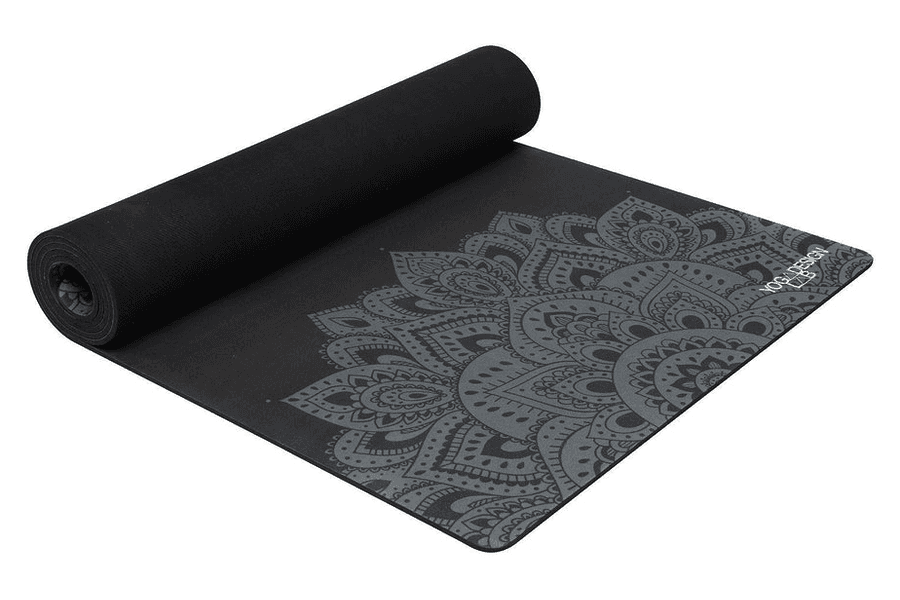
Price
The eKO lists for $3 less.
$114
List price · check price at Amazon
$117
List price · check price at Amazon
Thickness
The eKO is 43% thicker.
5 mm0.2″
3.5 mm0.14″
Weight
The Combo is 2.1 lbs lighter.
7 lbs3.2 kg
4.9 lbs2.2 kg
Size
The eKO is 1″ longer; the eKO is 2″ wider.
Same on both
- Natural rubber bases, so neither is safe with a latex allergy
- No warranty from either brand, just 30 day returns
- Both need to dry fully before being rolled away
- Around 70 inches long
Full specs
Dimensions
Materials & build
Buying
Same money, thirty five points apart
The Manduka eKO lists at $114 and the Yoga Design Lab Combo at $117. In OutdoorGearLab’s current nineteen mat test the eKO scored 87 and came second overall. The Combo scored 52 and came seventeenth.
That is the widest score gap between two similarly priced mats we have run into. It does not mean nobody should buy the Combo, but it does mean the case for it has to be specific, and it is.
Where the gap came from
Comfort and support: 9 for the eKO, 6 for the Combo. Grip: 9 against 4. Materials: 8 against 5. Care and cleaning: 8 against 6. The eKO won every scored category, and grip and comfort together carry 65 percent of the weighting.
The eKO’s cons were heavier, creases easily, and more slippery when wet. The Combo’s were slippery for dry and wet grip, collects lint, and narrow. Its pros were machine washable, easy to clean, towel and mat combo, and absorbs sweat, which is a coherent product description rather than a list of performance wins.
The eKO has the best dry grip in the test
10 out of 10 dry, tied for the highest GearLab measured, and 7 wet. Great traction when dry and no break in period lead its pros. It is natural rubber with a moulded texture and textured outer rails, and it plants from the first session with nothing to break in.
The Combo measured 4 dry and 4 wet, the lowest of any full size mat in the test. Microfiber on its own is slick. It becomes grippy once it takes on moisture, which is the whole design, so a standardised dry test is close to the worst case for it.
Owners who practise hot report the Combo works well for them, and that is consistent with how the surface behaves rather than contradicting the score. What it means is that the Combo has one operating condition and the eKO does not need one.
For a heated class, neither one is straightforward
The eKO is closed cell, so sweat sits on the surface. More slippery when wet is in its cons and its wet score of 7, while good by the standards of the test, is well below its dry 10. A heavy sweater on an eKO still wants a towel.
The Combo is the towel. That is the argument for it: no separate towel to buy, align, and stop bunching, and the whole thing goes in the washing machine afterwards. If you have been practising on a mat plus a Yogitoes and hating the shuffle, the Combo removes it.
If you want a mat that grips wet without needing to be wet first, neither is the answer and the Manduka GRP Adapt 2.0 at 8.5 wet is.
Five millimetres of rubber against three and a half
The eKO is 5 mm of dense natural rubber foam, and GearLab described it as a stable foundation that works on hard and soft ground. Nine out of ten for comfort and support is near the top of the test.
The Combo is 3.5 mm with a fabric layer on top. On carpet it is fine. On tile or hardwood it is thin, and kneeling work will have you reaching for a folded blanket. Yoga Design Lab does sell a 5.5 mm version of the Combo if that is the problem.
Seven pounds against five
The eKO is 7 pounds on Manduka’s spec, measured at 6.3 by GearLab, and heavier is the first item in its cons. The Combo is 4.9 pounds, measured at 4.6.
Neither is a travel mat. The Combo is the easier carry by a couple of pounds and it also packs down smaller, since a thin mat rolls tighter. If you walk or cycle to a studio, that difference is worth more than it sounds.
A damp cloth against a laundry cycle
The eKO wipes clean and dries in minutes. Rubber does not like oil based cleaners or direct sun, so use water or a very diluted mild soap and store it out of a window. Creases easily is its other quirk, and the fix is to avoid folding it and to avoid cinching the roll tight.
The Combo goes in the machine on cold and gentle, then hangs to dry for several hours. That handles sweat properly in a way wiping never does. It also collects lint constantly, so expect to be picking hair off it between washes.
Neither carries a warranty. Manduka gives 30 days on the eKO, Yoga Design Lab gives 30 days on unused mats only.
Both use rubber, and both rule out a latex allergy
The eKO is natural tree rubber with over 30 percent recycled content, sourced outside the Amazon, and Manduka states plainly that it is not recommended for latex sensitivities. The Combo’s base is natural rubber too, with a recycled PET microfiber top.
So the allergy question does not separate them. If that is your constraint, the mats to look at are TPE or PVC: the Manduka X or the Manduka PROlite. GearLab scored materials 8 to 5 in the eKO’s favour, which reflects the rubber content and the build quality rather than the recycled fabric.
Size and looks
The eKO is 71″ × 26″ and the Combo is 70″ × 24″. Narrow is in the Combo’s cons and two inches of width is the kind of thing you notice in a wide legged fold. Manduka sells a 79 inch eKO Long if you need the length.
The Combo wins on appearance without much argument. Nineteen printed designs in the 3.5 mm against five plain colorways on the eKO, and the prints hold up because they are dyed into the fabric. That is a legitimate reason to buy a mat, as long as you know what it costs you in performance.
Bottom line
At three dollars apart, buy the Manduka eKO. It is the second highest scoring mat in the test, it has the best dry grip GearLab has measured, it is far better cushioned, and it will outlast the Combo. Check the price on Amazon, since it discounts more often there than on manduka.com.
Buy the Yoga Design Lab Combo if you practise hot, you are already using a mat towel, and you want the two to be one thing you can throw in the wash. It is on Amazon in a long list of prints. Outside that specific case, the numbers are not close.
Manduka eKO
List price $114
Frequently Asked Questions
- Why is the Manduka eKO so much higher rated?
- It won every scored category in OutdoorGearLab's test: comfort and support 9 to 6, grip 9 to 4, materials 8 to 5, care and cleaning 8 to 6. Grip and comfort carry 65% of the weighting between them, so those two account for most of the 35 point gap. Its dry grip of 10 out of 10 was tied for the highest GearLab has measured on any mat.
- Is the Yoga Design Lab Combo actually slippery?
- In a dry room, yes. GearLab measured 4 out of 10 both dry and wet, the lowest pair of any full size mat in its test, and slippery for dry and wet grip leads its cons. Microfiber on its own is slick and becomes grippy once it takes on moisture, which is the whole design. Owners who practice hot report it works for them, so read the score as describing one operating condition rather than the mat being broken.
- Which is better for hot yoga?
- Neither is straightforward. The eKO is closed cell, so sweat sits on the surface, and more slippery when wet is in its cons, with a wet score of 7 against its dry 10. The Combo is designed to be soaked but scored 4 wet in standardised testing. If you want a mat that grips wet without needing to be wet first, the Manduka GRP Adapt 2.0 scored 8.5 wet and is the mat built for that.
- How much thinner is the Combo?
- 3.5 mm against the eKO's 5 mm, and the eKO's rubber is denser as well. GearLab scored the Combo 6 out of 10 for comfort and support against 9 for the eKO. On carpet the Combo is fine; on tile or hardwood it is thin enough that kneeling work will have you reaching for a folded blanket. Yoga Design Lab sells a 5.5 mm version if that is the problem.
- Does the Manduka eKO crease?
- Yes, and creases easily is in GearLab's cons for it. Roll it loosely with the top surface out and store it standing rather than folded or under other things, and the creases stay away. It is also the heavier mat at 7 pounds on Manduka's spec, measured at 6.3, against the Combo's 4.9 measured at 4.6.
- Can either be used with a latex allergy?
- No. The eKO is natural tree rubber and Manduka states plainly that it is not recommended for latex sensitivities. The Combo's base is natural rubber too, under its recycled PET microfiber top. If you need latex free, the mats to look at are TPE or PVC: the Manduka X or the Manduka PROlite are the usual answers.
Related comparisons
- Yoga Design Lab Combo 3.5mm vs b, halfmoon B Mat Everyday 4mm
- Manduka eKO vs Lululemon The (Big) Mat 5mm
- Lululemon The Mat 5mm vs Manduka eKO
- JadeYoga Harmony 74" vs Manduka eKO
- Lululemon The Mat 5mm vs Yoga Design Lab Combo 3.5mm
- Manduka PROlite vs Yoga Design Lab Combo 3.5mm
- Manduka PROlite Long vs Yoga Design Lab Combo 3.5mm
- JadeYoga Harmony 74" vs Yoga Design Lab Combo 3.5mm
- Manduka eKO Lite Long vs Yoga Design Lab Combo 3.5mm