Manduka eKO vs Gruper TPE 6mm: Which One Should You Buy?
The Gruper is a lot of mat for under $30: 6 mm of TPE, 2.6 pounds, a strap and a storage bag included, and 4.4 stars from roughly 10,500 Amazon buyers. The eKO is Manduka's natural rubber mat, which GearLab placed second of 19 in its 2026 test. The distance between them is mostly grip and mostly weight, in opposite directions.
As an Amazon Associate, we earn from qualifying purchases made through links on this page. How this works
The quick answer
The eKO scored 87 out of 100 with GearLab, including a perfect 10 for dry grip, the best result in the field. It is 7 pounds of closed-cell natural rubber made in Taiwan, with over 30% recycled content in the current version. The Gruper is a two-layer TPE mat with a fine texture on top and a corrugated grip underneath, and at 2.6 pounds it is a third of the eKO's weight.
Start with the Gruper if you are new and not sure this will stick. Move to the eKO if you already practice regularly, want serious traction, and can live with a heavy mat that smells of rubber for the first couple of weeks.
Get the Manduka eKO if...
- Grip is what you keep fighting with your current mat
- You practice several times a week
- You want natural rubber rather than a petroleum foam
- You want 26 inches of width and a mat that stays put
Get the Gruper TPE if...
- You're new and don't want to spend $114 to find out
- You want 2.6 pounds to carry rather than 7
- You want 6 mm of cushion with a strap and bag included
- You'd rather keep about $86
Side by side
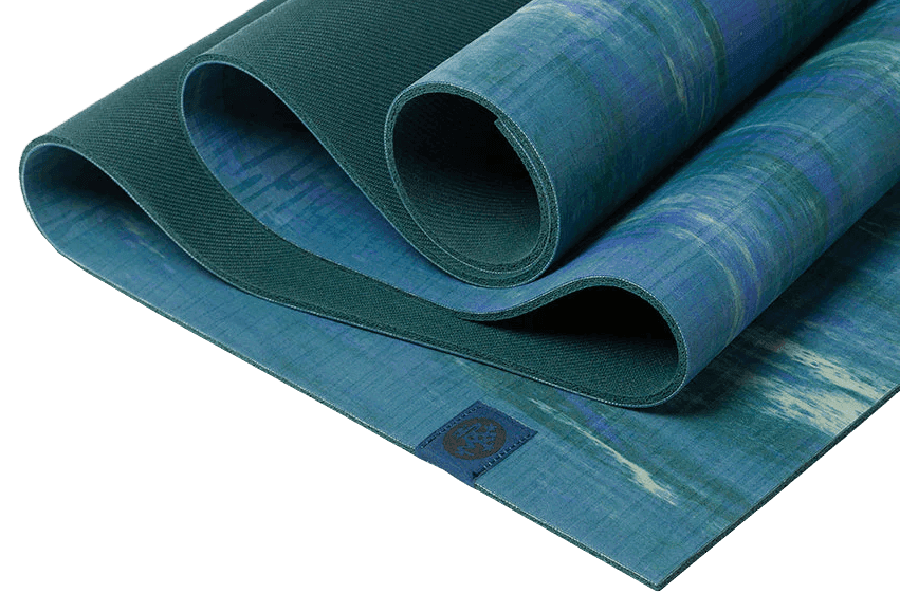
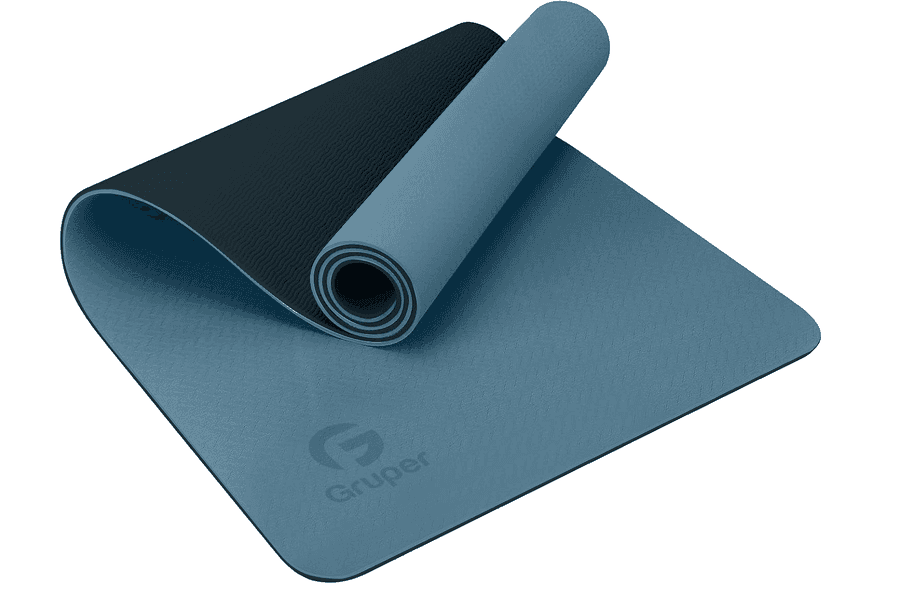
Price
The Gruper lists for about $86 less.
$114
List price · check price at Amazon
$27.99
List price · check price at Amazon
Thickness
The Gruper is 20% thicker.
5 mm0.2″
6 mm0.24″
Weight
The Gruper is 4.4 lbs lighter.
7 lbs3.2 kg
2.6 lbs1.18 kg
Size
The Gruper is 1″ longer; the eKO is 2″ wider.
Same on both
- Around 71 to 72 inches long
- Neither absorbs sweat into the mat
- Textured on both faces
- Both degrade if left in the sun
Full specs
Dimensions
Materials & build
Buying
Four times the price, a third of the weight
The Gruper is a lot of mat for under $30: 6 mm of TPE, 2.6 pounds, a carry strap and a storage bag in the box, and 4.4 stars across roughly 10,500 Amazon ratings. It is a sensible first mat and plenty of people never need more.
The eKO is $114 of natural rubber that GearLab placed second of 19 in its 2026 test at 87 out of 100, with the best dry grip result in the field. It also weighs 7 pounds, which is three times the Gruper.
Grip: this is what the money buys
GearLab gave the eKO a perfect 10 for dry grip. Natural rubber is tacky by nature and Manduka texturises it, so your hands stay where you put them in a normal room. Wet grip came in at 7 out of 10, which is mid-pack, because closed-cell rubber leaves sweat on the surface.
The Gruper has a fine S-pattern texture on top and a corrugated grip underneath, which is a thoughtful design at the price. Dry, it does its job. Damp, the texture stops mattering, because closed-cell TPE has nowhere to put the moisture. That is how every budget foam mat behaves.
Feel: thicker and softer against thinner and denser
The Gruper is a millimetre thicker and much softer, so kneeling is more comfortable on it. Standing is the reverse: soft foam compresses unevenly under one foot, and the eKO does not move at all. GearLab rated the eKO 9 out of 10 for comfort and support, which measures how well the surface holds you.
Most people who try both prefer the eKO once they are flowing and reach for the Gruper for restorative work. A folded blanket on the eKO closes most of the kneeling gap.
Weight is the eKO’s real cost
Manduka specs the eKO at 7 pounds; GearLab measured 6.3. Either way it is heavy for a 5 mm mat, and that mass is exactly why it never creeps on a wood floor mid-sequence. It is also a genuine burden if you carry a mat any distance.
The Gruper at 2.6 pounds with a strap and bag included goes anywhere without thought. If you want Manduka rubber that travels, the eKO Lite is the lighter version of this mat.
Natural rubber against thermoplastic foam
The eKO is tapped tree rubber made in Taiwan, and the current version carries over 30% recycled content. GearLab rated its materials 8 out of 10. It is not suitable for anyone with a latex allergy, which matters more than most spec-sheet lines.
TPE is a petroleum product, though a cleaner one than PVC and free of the plasticizers that make PVC hard to recycle. It contains no latex, which makes the Gruper the safe option for allergy sufferers. It is also the softest of the common mat materials and wears fastest.
The rubber smell
This is the eKO’s best-known flaw and worth knowing before you spend $114. Natural rubber comes out of the wrapper smelling strongly, and it takes a couple of weeks of unrolled airing to settle. The mat holds about 4.1 stars across roughly 700 Amazon ratings, which is modest for a mat that scored 87 with GearLab, and odor is the recurring theme.
TPE has a milder smell that fades faster, and Gruper asks you to keep the mat out of prolonged sun and away from washing machines and dryers.
How long each one lasts
The eKO’s rubber loses tack slowly over years and is degraded fast by sunlight, but it is a dense, well-built mat. The catch is paperwork: Manduka’s lifetime guarantee covers the PRO and PROlite lines, not the eKO, which gets a 30 day return window.
The Gruper compresses and tears sooner than rubber or PVC, particularly where hands and feet land, with visible wear inside a year or two of daily use. Gruper publishes no warranty at all, so the Amazon return window is your only protection.
Sizes
The eKO is 71″ × 26″, two inches wider than the Gruper’s 24″ and an inch shorter than its 72″. Width is what people notice. Manduka also sells an eKO Long at 79″ × 26″.
Gruper offers the same mat at 8 mm and 3.1 pounds if you want more cushion, with the usual caveat that softer costs you stability.
Price and value
List prices are $114 and $27.99, and the Gruper’s street price shifts by colorway. That is about $86 of difference, and nearly all of it is buying grip and build quality rather than size or features. The Gruper actually gives you more in the box, with a strap and a storage bag Manduka charges extra for.
Four Grupers cost roughly one eKO. If you are early in a practice and unsure it will stick, that maths favours starting cheap and upgrading later with a clearer idea of what bothers you. If you already know your hands slide, the cheap mat is a detour.
Bottom line
Buy the Gruper if you are new, want something light, or need a cheap second mat. It is competent for home practice a couple of times a week and it will not survive daily studio use.
Buy the Manduka eKO if grip is what you want and you can live with a heavy mat that smells for a fortnight. It is the second-highest scoring mat in GearLab’s 2026 test and the grippiest dry surface in it.
Manduka eKO
List price $114
Gruper TPE 6mm
List price $27.99
Frequently Asked Questions
- How much better is the eKO's grip?
- GearLab measured 10 out of 10 dry and 7 out of 10 wet, the best dry grip of the 19 mats it tested in 2026. The Gruper has not been through an independent test we would cite, but TPE behaves predictably: the S-pattern texture works fine with dry hands and gives up once your palms are damp, because closed-cell foam leaves the moisture on top. Natural rubber is simply tackier.
- The Gruper is thicker. Is it more comfortable?
- For kneeling, yes: 6 mm of soft TPE cushions more than 5 mm of dense rubber. Standing is the other way round, because foam compresses unevenly under one foot and the eKO does not. GearLab rated the eKO 9 out of 10 for comfort and support, which is a measure of how well the surface holds you rather than how soft it feels.
- Is the eKO's weight a problem?
- It can be. Manduka specs it at 7 pounds and GearLab measured 6.3, against the Gruper's 2.6. That heft keeps the mat planted on slick floors and makes a twenty minute walk to a studio a real consideration. Manduka's eKO Lite and eKO Superlite are the lighter versions if the weight is the sticking point.
- What about the rubber smell?
- It is real and it is the eKO's most common complaint. Natural rubber comes out of the wrapper smelling strongly, and it takes a couple of weeks of airing to settle. The mat sits at about 4.1 stars across roughly 700 Amazon ratings, lower than its test scores would suggest, and odor turns up repeatedly in the reviews. TPE has a milder smell that fades faster.
- Do either of these come with a warranty?
- Barely. Manduka's lifetime guarantee covers the PRO and PROlite lines, not the eKO, which gets a 30 day return window. Gruper publishes no warranty at all, so your protection is the Amazon return window. That is worth knowing before you spend either amount.
- Which is the better environmental choice?
- The eKO, on the balance of what each company publishes. It is natural rubber with over 30% recycled content in the current version, made in a facility Manduka names. TPE is a petroleum product, though a cleaner one than PVC and free of the plasticizers that make PVC hard to recycle. Neither claim should decide the purchase on its own.
Related comparisons
- Amazon Basics 1/4 Inch Thick TPE vs Gruper TPE 6mm
- Gaiam Premium 6mm vs Gruper TPE 6mm
- Gruper TPE 6mm vs Gaiam Essentials 6mm
- YogaAccessories Extra Thick Deluxe 1/4" vs Gruper TPE 6mm
- Manduka eKO vs Lululemon The (Big) Mat 5mm
- Lululemon The Mat 5mm vs Manduka eKO
- Gaiam Premium Reversible 6mm vs Gruper TPE 6mm
- JadeYoga Harmony 74" vs Manduka eKO
- Manduka eKO vs JadeYoga Harmony 2.0 68"