Manduka eKO Lite vs Gaiam Performance Dry-Grip: Which One Should You Buy?
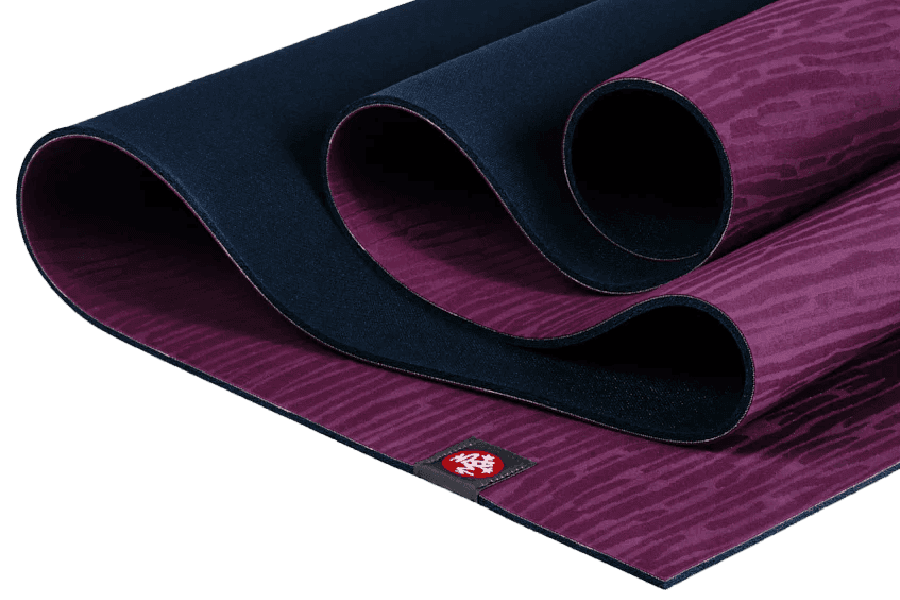
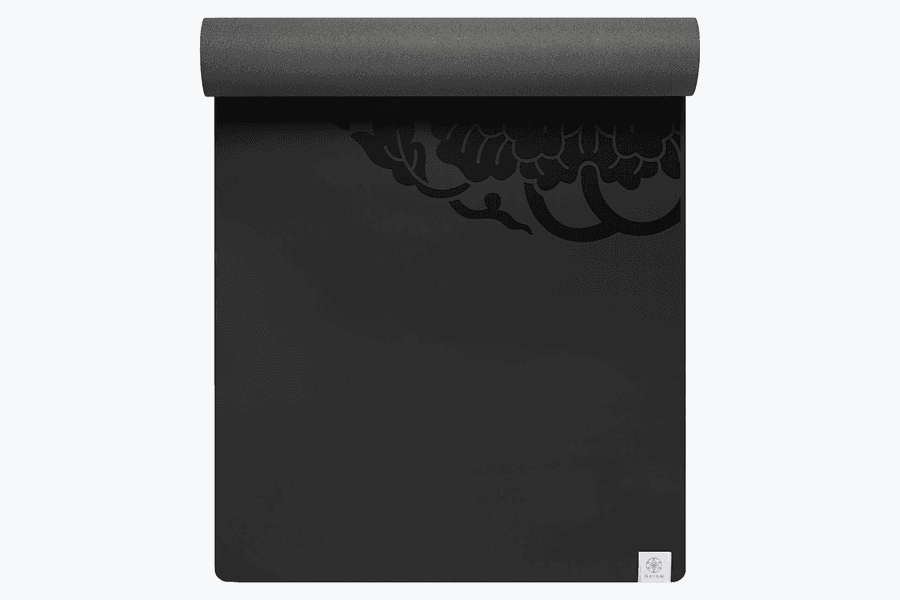
The Manduka eKO Lite is natural rubber cut thin enough to carry to class. The Gaiam Performance Dry-Grip is PVC with a topcoat that Gaiam sells as a moisture upgrade. Both grip well with dry hands, and both give up once you're properly sweating, so the decision comes down to material, length, cushion, and which warranty you'd rather have.
As an Amazon Associate, we earn from qualifying purchases made through links on this page. How this works
The quick answer
The eKO Lite is the nicer object: tapped tree rubber with over 30% recycled content, three inches longer, and tackier under a dry hand. The Dry-Grip is the more comfortable one, with GearLab scoring its cushion 8 out of 10 against the eKO Lite's firmer 4 mm, and it's latex-free with a lifetime guarantee for about $26 less.
If you want a natural surface and the extra length, get the eKO Lite. If you want cushion, coverage, or a latex-free build, get the Dry-Grip. Neither one works bare-handed in a heated room, so don't buy either expecting that.
Get the eKO Lite if...
- You want a natural rubber surface instead of PVC
- You're tall enough that 71 inches beats 68
- Recycled content and a renewable material are worth paying for
- You want the tackier surface under a dry hand
Get the Dry-Grip if...
- You want more cushion under your knees
- A latex allergy rules natural rubber out
- You'd rather have a lifetime guarantee than no warranty at all
- You'd rather keep about $26
Side by side
Price
The Dry-Grip lists for about $26 less.
$96
List price · check price at Amazon
$69.98
List price · check price at Amazon
Thickness
The Dry-Grip is 25% thicker.
4 mm0.16″
5 mm0.2″
Weight
The Dry-Grip is 0.8 lbs lighter.
5 lbs2.2 kg
4.25 lbs1.9 kg
Size
The eKO Lite is 3″ longer; same width.
Same on both
- Closed surface that sweat sits on top of
- Grippy dry, slippery once wet
- 24" width
- Wipe-down cleaning
- No third-party certification
- A longer size in the line
Full specs
Dimensions
Materials & build
Buying
Two step-up mats that both stop short of hot yoga
Both of these are the mat you buy after your first cheap one. The Manduka eKO Lite is $96 of natural rubber cut to 4 mm so it stays carryable. The Gaiam Performance Dry-Grip is $69.98 of PVC with a topcoat that Gaiam markets as a moisture-wicking upgrade over its starter mats.
Here is the thing neither product page will tell you: both are closed-surface mats, and closed-surface mats lose their grip once your palms are properly wet. Whatever else separates these two, the sweat answer is the same on both, so we will get that out of the way first and then spend the page on the differences that are real.
Grip: fine dry, gone once you sweat
Dry, the eKO Lite is the better surface. Its textured rubber is tacky from the first unroll with no break-in, and it holds a hand in downward dog through a normal unheated class without any thought. Manduka describes the eKO line’s grip as reliable in dry conditions, which is a careful way of putting it, and the carefulness is the point.
The Dry-Grip’s topcoat feels smooth and slightly silky rather than tacky, and it works. GearLab measured 6.5 out of 10 for dry traction, comfortably adequate for slower practice, and summed the mat up as not the grippiest sticky mat but a lovely choice for a stretch practice.
Wet is where the name on the Gaiam box gets embarrassing. GearLab rated its wet grip 3.5 out of 10, second from the bottom of a 19 mat lineup, and the eKO Lite’s sealed rubber is no better: sweat beads and sits on top of it exactly the way it does on the PVC. If you practice in a heated room, neither of these is the mat, and you should be reading our Harmony vs GRP Adapt 2.0 comparison instead.
Cushion: the thinner mat is the more comfortable one
This is the result that surprises people. The Dry-Grip is 5 mm against the eKO Lite’s 4, only a millimeter more, but GearLab scored its comfort and support 8 out of 10 and described the cushion as ideal: easy on the joints, firm enough to stay stable, and it does not shift on the floor.
The eKO Lite is dense and firm rather than plush. Rubber compresses under load and 4 mm runs out of material fast, so kneeling lunges and long seated holds find the floor sooner, especially on tile or concrete. On wood or carpet it is perfectly pleasant. If your knees are the reason you are shopping, the cheaper mat is genuinely the better answer here.
Feel: rubber tack against a smooth topcoat
The two surfaces are nothing alike under a hand, and preference is a fair reason to decide. The eKO Lite feels warm and organic, with the slight drag that makes people give up on synthetic mats. It also collects lint and pet hair the way tacky rubber always does, and a foot sliding forward between poses catches a little.
The Dry-Grip is smooth and slick to the touch in a way that reads as cheap for about a week and then stops registering. It sheds lint, wipes clean in seconds, and lets a foot slide where you want it to. Nobody has ever called it a luxurious surface, and nobody has to.
Size and weight
The eKO Lite is 71 inches long against the Dry-Grip’s 68, and both are 24 wide. Three inches sounds trivial until you lie down: anyone around five foot nine or taller notices the difference in savasana, and the Gaiam’s 68″ cut is the older, shorter standard.
Weight runs the other way, 4.25 pounds to 5, which is real but not decisive; both go over a shoulder without complaint. Each line has one larger option. Manduka sells a 79″ eKO Lite Long at $104, and Gaiam sells the 78″ × 26″ Dry-Grip Long & Wide if you want room in both directions.
Durability and an upside-down warranty
The eKO Lite wears the way natural rubber does. The surface softens and sheds over a few years of hard practice, sweat speeds that up, and direct sun ruins it outright, so no hot cars and no outdoor sessions. Cleaning is a damp cloth, never a harsh cleaner. Owners who treat it gently get years out of it; owners who do not get eighteen months.
The Dry-Grip’s weak point is its topcoat, which is an extra wear layer the mat has to keep. GearLab scored its materials 4 out of 10, one of the two lowest results in its 19 mat field, flagged limited long-term durability, and found the surface dye rubbing off onto clothing when the mat was new. Buff it with a damp towel before the first session and skip pale leggings for a week. PVC does at least not care about sunlight the way rubber does.
The coverage runs backwards from the prices. Gaiam backs the cheaper mat with a lifetime guarantee against defects. Manduka gives the eKO Lite a 30 day return window and nothing after it, because the lifetime guarantee stays with the PRO series. Neither guarantee covers the wear that actually retires these mats, but one of them exists.
Materials, latex, and what each brand is selling
On environmental grounds the eKO Lite has the better story by a distance. It is tree rubber built in Taiwan with over 30% recycled content, and rubber is a renewable input. The Dry-Grip is PVC, the least-loved material in the category, with no stated country of origin. Neither mat carries a third-party certification.
The allergy line points the other way, and it is absolute. Tree rubber means latex, so the eKO Lite is off the list for anyone with a genuine latex allergy. The Dry-Grip is latex-free PVC that Gaiam also markets as free of the six worst phthalates, and it is one of the few mats sold on grip that a latex-allergic practitioner can actually use.
Price and value
List prices are $96 and $69.98, about $26 apart, and the street usually widens it. The Dry-Grip is a perennial discount item at big-box retailers while Manduka discounts by colorway in bursts. Check the current price on the eKO Lite and the Dry-Grip before you commit.
The honest accounting is that $26 buys material, length, and feel, not performance. In GearLab’s testing the Gaiam is the more comfortable mat with the better warranty; the Manduka is the nicer thing to touch, the longer cut, and the one made from something that grows on a tree. Decide which of those you care about, because the grip is a wash.
Bottom line
Get the eKO Lite if you want a natural rubber surface, you are tall enough for the 71″ length to matter, or recycled content and a renewable material are worth paying for. It feels better under a hand than anything Gaiam sells, and that counts for something you touch four times a week.
Get the Dry-Grip if you want more cushion, a latex-free build, a lifetime guarantee, and $26 back. It is a better mat than its marketing deserves and a worse one than its name promises. Just do not buy either of these expecting to practice hot yoga bare-handed, because on that question they fail together.
Frequently Asked Questions
- Is the Manduka eKO Lite or the Gaiam Dry-Grip better for hot yoga?
- Neither, honestly. Both are closed-surface mats, so sweat pools on top instead of soaking in, and grip disappears once your palms are properly wet. GearLab rated the Dry-Grip's wet traction 3.5 out of 10, second from the bottom of a 19 mat field, and the eKO Lite's sealed rubber behaves the same way. If you practice heated, you want an absorbent polyurethane top like the Manduka GRP Adapt 2.0 or the Liforme, or a grippy towel over whichever mat you own.
- Which one is more comfortable for kneeling?
- The Dry-Grip, despite being only a millimeter thicker. GearLab scored its comfort and support 8 out of 10 and described the cushion as ideal: easy on the joints, firm enough to stay supportive, and stable on the floor. The eKO Lite's 4 mm of dense rubber runs out sooner, so low lunges and long seated holds on tile or concrete find the floor faster. Neither is a plush mat.
- Does the Gaiam Dry-Grip actually grip when wet?
- Not really, whatever the name implies. GearLab measured 6.5 out of 10 dry and 3.5 wet, and summed the mat up as not the grippiest sticky mat but a lovely choice for a stretch practice. It handles light dampness. It does not handle a heated class, and buying it specifically because of the name is the most common mistake people make with this mat.
- Is the Manduka eKO Lite safe with a latex allergy?
- No. The eKO Lite is natural tree rubber, which means latex, and no coating changes that. The Dry-Grip is latex-free PVC that Gaiam also markets as free of the six worst phthalates, so it's the safe choice of the two. That matters more than it sounds, because almost every mat that grips well when wet is built on natural rubber, which leaves latex-allergic practitioners shopping a short list.
- Which one lasts longer?
- The eKO Lite, if you look after it. Natural rubber softens and sheds slowly over years, and its real enemy is care rather than use: direct sun hardens it, hot cars ruin it, and harsh cleaners attack the surface. The Dry-Grip has a topcoat to lose instead, and GearLab scored its materials 4 out of 10, one of the two lowest results in its test, flagging limited long-term durability. The coverage runs the opposite way: Gaiam gives a lifetime guarantee against defects, Manduka gives the eKO Lite a 30 day return window and nothing after.
- Do either of these come in a longer size?
- Both do. Manduka sells a 79" eKO Lite Long at $104, and Gaiam sells the Performance Dry-Grip in a 78" x 26" Long & Wide, which adds width as well as length. If you need a bigger mat, compare those two rather than the standard sizes, because the Gaiam gains two inches of width in its larger cut and the Manduka does not.
Related comparisons
- Manduka X vs Gaiam Performance Dry-Grip 5mm
- JadeYoga Harmony 68" vs Manduka eKO Lite
- Manduka eKO Lite vs Suga SugaMat
- JadeYoga Level One vs Gaiam Performance Dry-Grip 5mm
- Gaiam Performance Dry-Grip 5mm vs IUGA Eco Friendly Non Slip PU
- Manduka Begin vs Gaiam Performance Dry-Grip 5mm
- JadeYoga Harmony 74" vs Manduka eKO Lite
- Gaiam Performance Dry-Grip 5mm vs Hugger Mugger Earth Elements 5mm
- Manduka eKO Lite vs Yoga Design Lab Combo 3.5mm