Manduka Begin vs Yoga Design Lab Combo 3.5mm: Which One Should You Buy?
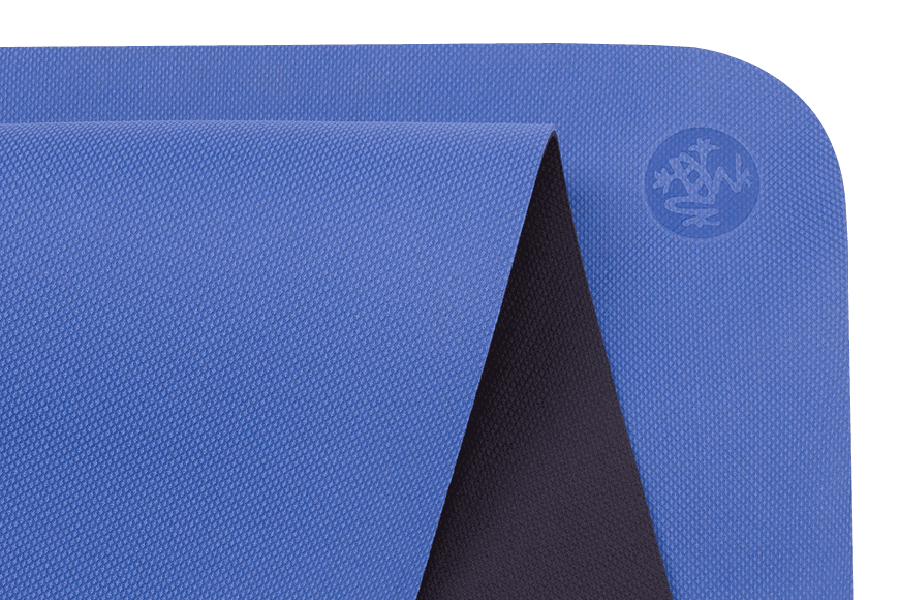
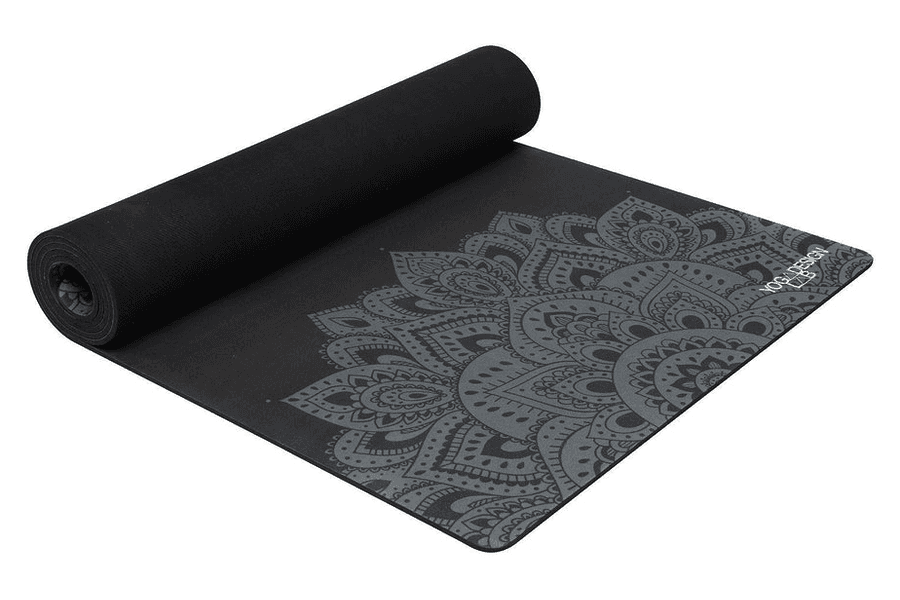
These two are aimed at different problems. The Manduka Begin is a starter mat: 5 mm of TPE with an alignment stripe printed down the middle, light and easy to keep clean, at $62. The Yoga Design Lab Combo bonds a recycled microfiber towel to a rubber base so the towel can never slide out from under you, prints it, and lets the whole thing go in the wash, at $117. Here's which one suits which practice.
As an Amazon Associate, we earn from qualifying purchases made through links on this page. How this works
The quick answer
The Begin is $55 cheaper, half the weight, thicker under your knees, and needs nothing more than a wipe-down. Its alignment stripe is genuinely useful while you are learning placement at home, and no mat in Manduka's premium line has one. The Combo's argument is hygiene and heat: it washes in a machine, it is built for practitioners who already lay a towel over their mat, and it comes in 19 printed designs. Set against that, GearLab scored it 4 out of 10 for grip both wet and dry, ranked it 17th of 19 and rated its comfort 6, and its rubber base means it is not latex safe.
Get the Begin if you are starting out in a normal room. Get the Combo if you already practice on a towel and want to stop managing two objects.
Get the Begin if...
- You are new and want an alignment line to work from
- You want the lighter mat: 2.5 pounds against 4.9
- You want more padding, at 5 mm against 3.5
- You'd rather keep about $55
Get the Combo if...
- You already practice on a mat plus a towel and want one object
- You want to machine wash your mat
- You want a printed design rather than a plain color
- You want the extra two inches of length
Side by side
Price
The Begin lists for $55 less.
$62
List price · check price at Amazon
$117
List price · check price at Amazon
Thickness
The Begin is 43% thicker.
5 mm0.2″
3.5 mm0.14″
Weight
The Begin is 2.4 lbs lighter.
2.5 lbs1.1 kg
4.9 lbs2.2 kg
Size
The Combo is 2″ longer; same width.
Same on both
- Same 24 inch width, narrow by current standards
- No warranty beyond a 30-day return window
- Both under 71 inches long
- Neither is a confident choice for a heated room
Full specs
Dimensions
Materials & build
Buying
- Combo 5.5mm70" × 24"
- Combo Flow 1.5mm70" × 24"
A first mat and a mat built around sweat
The Manduka Begin is $62 of TPE with an alignment stripe printed down the middle, sold to somebody starting out and priced accordingly. The Yoga Design Lab Combo is $117 and takes a different route entirely: bond a recycled microfiber towel to a rubber base so the towel can never slide out from under you, print it, and let the whole thing go in the wash.
That is a $55 gap between two mats aimed at different problems. The Begin is trying to be a sensible starter surface. The Combo is trying to replace the mat-plus-towel setup hot yoga practitioners already carry.
Grip: neither is as good as its listing suggests
The Begin is closed-cell TPE, which grips well enough for a dry, unheated class and stops there. Nothing absorbs, so moisture sits on the surface and your palms start to travel in down dog. That is not a knock on this mat specifically; it is what closed-surface mats under $70 do.
The Combo depends on the room doing its part. Dry microfiber slides; soaked microfiber grips. GearLab’s standardized testing scored it 4 out of 10 both wet and dry, ranked it 17th of 19, and testers wrote that it was more slippery than they hoped during practice. Yoga Design Lab’s own listings carry thousands of reviews averaging close to five stars, many from hot yoga practitioners describing genuine experience. Both things are true, and they describe different rooms.
The alignment stripe is the Begin’s one real feature
A straight line down the center of the mat gives you a visual reference for centering yourself and lining up hands, feet and hips. Beginners consistently find it useful in the first months, and no mat in Manduka’s premium line includes one, the PRO included.
It is not magic, and for anyone with a settled practice it is decoration. But if you are learning at home with nobody correcting your placement, it is a fair thing to be paying for. The Combo offers nothing comparable; its printed designs are decorative.
Five millimeters against three and a half
The Begin is the thicker mat, 5 mm against 3.5, and its TPE is soft, so it is the more forgiving of the two under knees. It is still a soft mat by studio standards and gives up some stability in balance poses because of it.
The Combo is thin, and GearLab rated its comfort 6 out of 10. On tile or concrete you feel the floor through it, and the top layer feels like practicing on a thin towel, which is what it is. Yoga Design Lab sells the same Combo in 5.5 mm at $131 if that is the sticking point.
One of these goes in the washing machine
Yoga Design Lab prefers hand washing to extend the mat’s life but allows a gentle machine cycle without a center agitator, using mild soap. If you sweat heavily and hygiene is the thing that actually bothers you about your current setup, that is the strongest argument on this page.
The Begin cannot go in a machine, but it does not need to. Closed cell TPE wipes clean with a damp cloth and mild soap, nothing soaks into it, and there is no towel layer to hold odor. Low maintenance is a genuine feature of cheap synthetic mats.
Size and weight
The Combo is two inches longer, 70″ against 68″, and both are 24 inches wide, which GearLab listed among the Combo’s drawbacks. Above about five foot ten you will hang off either one, and neither model comes in a longer version.
Weight goes the other way and by more than you would guess: 2.5 pounds for the Begin against 4.9 for the Combo, which has a rubber base under the fabric. The Combo ships with a carry strap; the Begin does not. If the mat rides a shoulder to class most days, the Begin is the easier object to own.
How each wears out, and what either brand owes you
The Begin’s TPE surface wears with vigorous practice, dents where knees land, and tends to tear from the first nick at the edges. A few years under regular use is a fair expectation, less if you are on it daily. Manduka’s lifetime guarantee belongs to the PRO series, so the Begin gets a 30 day return window and nothing after.
The Combo is a textile bonded to rubber, so it pills, fades and loses loft with washing, and it collects lint on the way; GearLab rated its materials 5 out of 10. Yoga Design Lab takes back unused mats within 30 days and offers no warranty, so once you have practiced on it, it is yours. Its rubber base also means it is not safe with a latex allergy, where the Begin’s TPE is.
Price, prints and where to buy
List prices are $62 and $117, and both drift below list. Manduka’s colorway sales bring the Begin close to $50 with some regularity, which widens the gap rather than closing it. Check the Begin at Amazon and the Combo at Amazon before paying list on either.
On looks the Combo wins easily, with 19 printed designs in the 3.5 mm at last check against ten solid colorways for the Begin. Water based inks on recycled PET microfiber is also a better materials story than plain TPE, if that is part of the decision.
Bottom line
Buy the Begin if you are starting out, practicing in a normal room, and want the alignment stripe while you learn. It is $55 cheaper, half the weight, thicker under your knees, and easy to keep clean. Its limit is sweat, and you will find it quickly if you run warm.
Buy the Combo if you already practice on a towel and want to stop managing two objects, or if laundering the mat solves a real problem for you. Go in knowing testers found it slippery when dry and thin under the knees. If sweat is the whole reason you are shopping, our GRP Adapt 2.0 vs Combo page covers the mat built specifically for heated rooms, and Begin vs Gaiam Premium compares the Begin against the usual first-mat recommendation.
Manduka Begin
List price $62
Frequently Asked Questions
- Is the Yoga Design Lab Combo good for hot yoga?
- The evidence splits. Yoga Design Lab designed it for sweat, and its listings carry thousands of reviews averaging close to five stars, many from hot yoga practitioners describing genuine experience. GearLab's standardized testing scored it 4 out of 10 both wet and dry, ranked it 17th of 19, and testers wrote that it was more slippery than they hoped during practice. The pattern owners describe is that dry microfiber slides and soaked microfiber grips, so the mat depends on the room doing its part.
- What does the Manduka Begin alignment stripe actually do?
- It is a straight line down the center of the mat that gives you a visual reference for centering yourself and lining up hands, feet and hips. Beginners consistently find it useful in the first months, especially practicing at home without a teacher correcting placement. If you already have a settled practice, it is decoration, and no mat in Manduka's premium line includes one.
- Can you really put the Combo in a washing machine?
- Yes, with conditions. Yoga Design Lab prefers hand washing to extend the mat s life but allows a gentle machine cycle in a machine without a center agitator, using mild soap. That is a real feature if hygiene is what bothers you about your current setup. The Begin cannot go in a machine, but nothing soaks into closed-cell TPE, so a damp cloth and mild soap is all it needs.
- Which is more comfortable?
- The Begin, on padding. It is 5 mm of soft TPE against the Combo's 3.5 mm, and GearLab rated the Combo's comfort 6 out of 10. On tile or concrete you feel the floor through the Combo, and its top layer feels like practicing on a thin towel because that is what it is. Yoga Design Lab sells the same Combo in 5.5 mm at $131 if thickness is the sticking point.
- How long does each one last?
- A few years of regular use from either, less if you practice daily. The Begin's TPE surface wears with vigorous practice, dents where knees land, and tends to tear from the first nick at an edge. The Combo is a textile bonded to rubber, so it pills, fades and loses loft with washing and collects lint along the way; GearLab rated its materials 5 out of 10. Neither carries a warranty past a 30-day return window.
- Which is safe with a latex allergy?
- The Begin. It is TPE, with no PVC and no latex. The Combo has a natural rubber base under its microfiber top, so it is not safe if you react to latex. That single fact settles the comparison for some buyers before grip or price enter into it.
Related comparisons
- Manduka Begin vs IUGA Eco Friendly Non Slip PU
- Yoga Design Lab Combo 3.5mm vs b, halfmoon B Mat Everyday 4mm
- Lululemon The Mat 5mm vs Yoga Design Lab Combo 3.5mm
- Manduka Begin vs Gaiam Performance Dry-Grip 5mm
- Manduka PROlite vs Yoga Design Lab Combo 3.5mm
- Manduka PROlite Long vs Yoga Design Lab Combo 3.5mm
- Manduka Begin vs Hugger Mugger Earth Elements 5mm
- JadeYoga Harmony 74" vs Yoga Design Lab Combo 3.5mm
- Manduka eKO Lite Long vs Yoga Design Lab Combo 3.5mm